

14-Day Money-Back Guarantee
0
The short answer
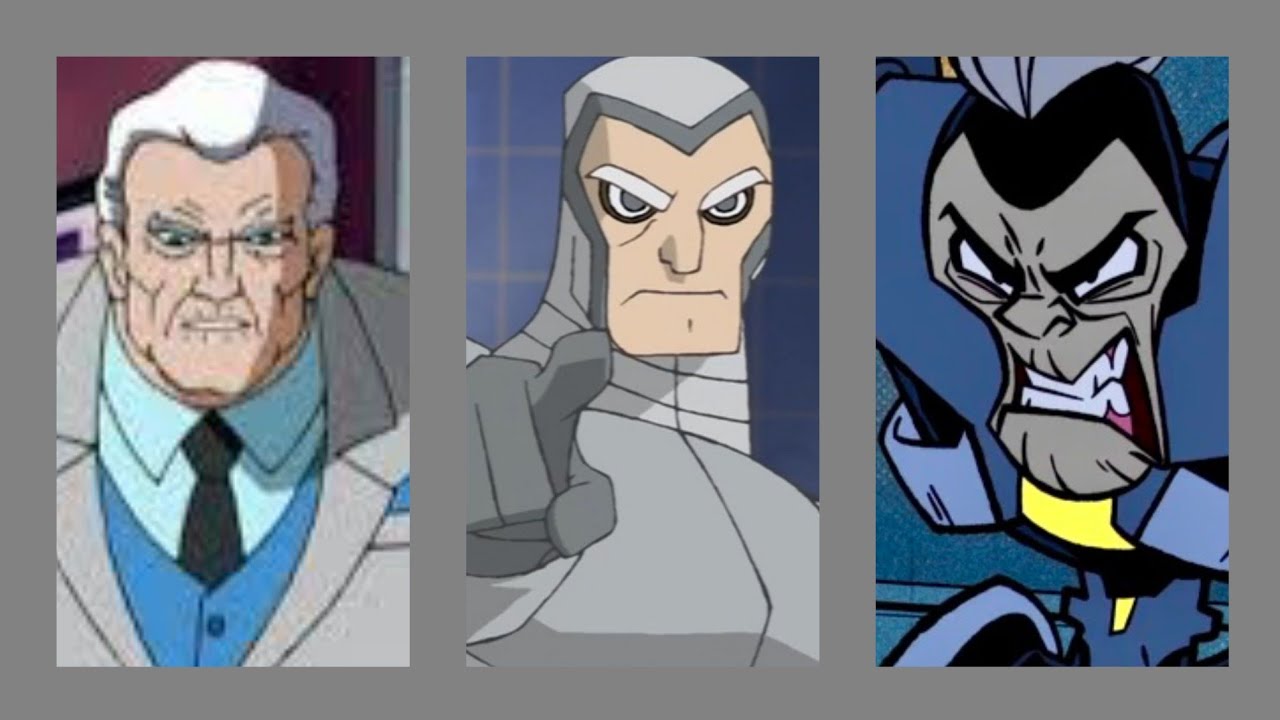
Silvermane is Silvio Manfredi, head of the family of the same name within the Maggia, first seen in 1969 in Amazing Spider-Man #73. Ageing fast, he devotes his criminal career to holding off death, even if it means trading his body for a cybernetic frame. Origins, powers and rivalries: we cover it all below.
There is a category of Spider-Man enemies that long avoided the modern spotlight, preferring the hushed shadows of Manhattan's mob back rooms. They are not alien gods, nor ravenous symbiotes, nor scientists gone astray. They are men in three-piece suits, one hand resting on a telephone receiver, deciding who lives and who dies in the Hell's Kitchen neighbourhood. Among them, one Italian-American patriarch reigned long before Wilson Fisk ever settled into the Kingpin's chair. His name: Silvio Manfredi, alias Silvermane, the Maggia's cybernetic godfather.
Created in June 1969 by Stan Lee and John Romita Sr. during the golden era of the late-1960s Amazing Spider-Man, Silvermane first appeared in The Amazing Spider-Man #73. Since then he has survived five decades of comics, one death, a cybernetic rebirth, gang wars against Hammerhead, clashes with Kingpin's organisation, and an eternal rivalry with The Hood for control of the New York underworld.
Yet if you ask a modern fan to name Spider-Man's great villains, they will start with the Green Goblin, Doctor Octopus, Venom, Kraven, Mysterio, the Vulture, the Lizard, Sandman, the Chameleon. Silvermane might come thirtieth, if he is mentioned at all. That injustice of memory deserves an article of its own. Here, in depth, is the portrait of one of the most original, most tenacious and most tragically obsessed enemies Peter Parker has ever had to fight. All of it placed back within the vast ecosystem of Spider-Man's iconic enemies and of his great story arcs.
Silvio Manfredi: from Sicily to Manhattan, the making of a godfather
Silvio Manfredi was not born in New York. He emigrated from Sicily in the 1930s, at a time when the Italian mob was extending its reach from Palermo all the way to the ports of the American east coast. That Sicilian lineage is essential to understanding the character: unlike the Spider-Man villains born of deranged science or arachnid mysticism, Silvermane belongs to a criminal tradition that predates super-heroes. He stands for the old world of crime, the world of families, blood oaths, codes of honour broken reluctantly and territorial wars settled over veal parmigiana in a Brooklyn trattoria.
His early years in New York place him in the service of the Maggia, a criminal organisation invented by Marvel Comics in the 1960s to avoid the legal problems tied to depicting the Cosa Nostra directly. Silvermane climbs the ranks methodically, from plain enforcer to head of a crew, then godfather of an entire family. That patient rise, spread over several fictional decades, gives the character a historical depth that is rare in super-hero comics, where villains usually turn up fully grown and already masters of their criminal craft. Within Marvel's editorial landscape it brings him close to Kingpin, or to Delilah, the assassin in the service of organised crime.
One of Silvermane's central paradoxes is his appearance: the man is old. Old from his very first appearance in 1969. Silver hair, hence the nickname Silvermane, literally 'silver mane'; a face lined with wrinkles; a stooped frame. That openly embraced old age, in a genre where almost every villain is in his prime, gives the character a singular status. He is not merely a criminal: he is a weary patriarch, aware that his time is running short, obsessed with leaving behind a lasting empire and, above all, with warding off his own death.
The Maggia: Marvel's Italian shadow
To understand Silvermane is to understand the Maggia. In the Marvel universe this fictional organisation occupies the place the real Sicilian mafia occupies in our world. Split into several rival families, the Maggia historically controls the docks, smuggling, illegal betting, prostitution, part of New York's unions, along with branches in arms and drug trafficking. Its main historical bosses include Silvermane for the Manfredi family, Hammerhead for a rival faction, Nefaria for a particularly violent branch, and later Caesar Cicero or Fortunato.
The Maggia stands apart from the more recent superhuman underworld embodied by The Hood and his cabal of overpowered villains. Where The Hood recruits super-villains directly to build a modern criminal army, the Maggia works the old way: human soldiers armed with machine guns, a few specialist killers, the occasional bent scientist or a super-powered mercenary hired for a one-off job. That conservative approach to crime makes Silvermane a peculiar villain, almost anachronistic in the post-2000 Marvel universe. He stands for a bygone age, a world in which organised crime was still distinct from superhuman chaos.
That historical dimension also explains why Silvermane spent so long at open war with Wilson Fisk. When the Kingpin emerges in the 1970s as the new dominant figure in New York crime, he is a direct threat to the Maggia's traditional families. Silvermane sees in this newcomer, younger, richer, more visible, but with no mob roots, a usurper who must be crushed. The rivalry carries on into contemporary comics, with the rise of The Rose as Fisk's troublesome heir, which complicates the map of Manhattan's underground power still further.
Amazing Spider-Man #73 (1969): the first encounter
Silvermane's entrance in The Amazing Spider-Man #73, dated June 1969, is a model of its kind. Stan Lee is then writing in the second half of his run on the title, and John Romita Sr. draws with that particular elegance which defined Spider-Man's look for decades. The backdrop is the late Silver Age, a time when villains were beginning to step out of laboratories and fanciful costumes to explore figures that were more realistic, more adult, more firmly rooted in the real world.
Silvermane's first arc revolves around an ancient tablet, the 'Tablet of Life and Death', an artefact said to contain a formula capable of granting immortality. The Maggia godfather becomes obsessed with the object. He sends his men to steal it from a museum. He then commissions a scientific decoding from Curt Connors, yes, the same Curt Connors who, in his mutated form, would become the Lizard, whose wife Martha Connors is one of the great collateral victims. That crossover of science and crime is typical of the Marvel style: villains are never isolated, they form a network, they cross paths, manipulate one another and betray one another.
Spider-Man muscles in on the affair to stop the Maggia getting its hands on the tablet. The confrontation is fascinating because it breaks with the usual formula: Silvermane neither flies, nor possesses superhuman strength, nor wears high-tech armour. He is an old man surrounded by armed bodyguards. The fight is not physical: it is strategic, tactical, almost intellectual. Peter Parker has to weave between gunmen, disarm the henchmen and work his way up to the godfather without being shot. That confrontation opens a brand-new chapter in the wall-crawler's rogues' gallery, which until then had favoured costumed super-villains.
For anyone who wants to explore the wall-crawler's rogues' gallery more widely, our cosplay guide to the iconic villains captures the visual richness of that gallery, while the full Spider-Man character gallery places each figure back within its narrative ecosystem.
The obsession with immortality: the youth serum
Silvermane's second major arc, published in The Amazing Spider-Man #75 in 1969, is one of the most unsettling, and most symbolically powerful, moments in the character's entire career. Having decoded the tablet, Silvermane obtains the rare ingredients the immortality formula requires. Curt Connors, under duress, prepares the serum. Silvermane drinks it, convinced he will at last ward off the death that has been circling him for years.
The outcome is one of the great twists of the Stan Lee era. The serum works, far too well. Silvermane grows younger before Spider-Man's astonished eyes. He becomes a grown man again, then a young man, then a teenager, then a child, then a baby, then a foetus, before vanishing altogether. The Maggia godfather has not won immortality: he has erased himself from existence by running back up his own timeline into nothingness. That tragic, poetic ending could have closed the book on the character for good. Instead it made him one of the most death-obsessed villains in all of comics, because Silvermane came back, again and again.
This obsession with eternal life echoes through other warped scientific figures in the Spider-Man universe. One thinks obviously of Miles Warren, alias the Jackal, the geneticist who plunged into human cloning out of obsession with Gwen Stacy, or of Stunner, the super-villainess Doctor Octopus created virtually. In all three characters, the fear of vanishing leads to extreme transgressions: surgery, cloning, cyborgisation. Silvermane is the first of that thematic line, and probably the most radical.
POSTER - RETRO COMICS

Retro Comics Spider-Man Poster
22,90 €
A graphic tribute to the pages that saw Silvermane born in the late 1960s. The retro palette, the thick linework and the print grain recreate the atmosphere of the Amazing Spider-Man of the Stan Lee and John Romita Sr. era.
Discover →The godfather returns: the first resurrection
Silvermane comes back to the comics a few years after his foetal disappearance, having managed, through overlapping schemes and further scientific manipulation, to regain an adult form. The writers of the 1970s handle that resurrection with a characteristic blend of seriousness and tragic irony: the godfather has escaped oblivion, but his obsession with longevity has become more devouring still. Every passing year brings him back towards the threshold he thought he had crossed.
During this period Silvermane occasionally allies himself with other figures from the Spider-Man gallery. He crosses paths with the Tinkerer, the discreet scientist who arms the wall-crawler's worst enemies, he commissions hits carried out by Boomerang or by other specialist killers, he negotiates fragile alliances with figures on the criminal scene such as The Beetle, before his turn to heroism, and he quietly funds a few more exotic operations such as those orchestrated by Molten Man in his criminal phase.
That sprawling network, patiently woven over several decades, turns Silvermane into the silent pivot of an entire swathe of Marvel crime. He is rarely seen fighting in person, but his name comes up in almost every investigation involving the Maggia. He is a villain of the shadows, which partly explains why television and film adaptations ignored him for so long: he does not make a visually spectacular enemy, he makes a structurally dangerous one.
The gang war: Silvermane against Kingpin
No account of Silvermane is complete without his long war against Wilson Fisk. That rivalry takes root in the 1970s, when Fisk installs himself as the dominant figure in New York crime. Silvermane refuses to acknowledge his authority. Over several fictional decades the two men wage an underground battle of contract killings, warehouse raids, lieutenants turning traitor and territorial wars in Chinatown and Little Italy. The rivalry is one of the recurring backdrops of the Spider-Man, Daredevil and Punisher comics of the 1980s and 1990s.
Fisk holds the advantage of the present: he embodies criminal modernity, methodical brutality and corporate legitimacy laundered through his legal businesses. Silvermane holds the advantage of the past: he knows every New York family, every hidden cousin, every debt dating back to the 1940s. That unstable balance produces rich confrontations, in which each man gains ground in turn. Moving through the background are figures such as Hammerhead, the mobster with the reinforced skull who is forever wavering between the two camps, or fearsome enforcers in the service of one side or the other.
That war has a contemporary echo in the storylines of The Rose, the Kingpin's criminal heir. The new generation of Marvel's underworld inherits a landscape still shaped by the long Silvermane-Fisk war, and Peter Parker has never stopped paying the price for it, between compromised protected witnesses, murdered police allies and innocents caught in the crossfire, as our detailed analysis of the relationship between Spider-Man and the New York police sets out.
The duel with Cloak & Dagger: death, once again
One of Silvermane's most striking arcs pits him against the duo Cloak & Dagger in the 1980s. By then the ageing godfather has moved into synthetic drug trafficking, notably a derivative that badly affects Manhattan's underprivileged young people. Cloak and Dagger, whose own origins are tied precisely to that kind of trade, launch a crusade against the Maggia. Silvermane, underestimating the two young vigilantes, finds himself trapped in a confrontation in which he loses his physical form, once again, before being reduced to a disembodied consciousness for several issues.
This death-and-resurrection cycle becomes a narrative signature of the character. Silvermane dies, comes back, dies again, comes back again. He is probably the Spider-Man villain most often 'killed' without ever staying dead. That persistence carries a metaphorical meaning: Silvermane embodies guilty immortality, the stubborn survival of organised crime, the capacity of old evil to regenerate indefinitely. In that he joins other obsessive figures of the Marvel universe such as Calypso, the voodoo priestess who survived her own death through sorcery, or Carrion, the macabre clone who periodically returns to haunt Spider-Man.
Silvermane the cyborg: the ultimate metamorphosis
The most visually memorable moment of Silvermane's career arrives in the 1990s. Old, weakened and once again threatened by biological death, the Maggia godfather has cybernetic components implanted. The transformation is gradual: first a leg, then an arm, then the spine, then part of his face. Silvermane becomes a criminal cyborg, half man, half machine, one of the few Spider-Man villains to embrace augmented technology explicitly in order to survive. That step brings him visually close to other Marvel figures such as The Living Brain, the brilliant robot turned recurring menace, but with one essential difference: Silvermane stays human on the inside, tormented by the awareness of his own decay.
That 1990s cyborg aesthetic matches a strong editorial trend of the time, marked by the conversion of many characters into more spectacular bio-mechanical versions. Silvermane fits that wave without becoming a caricature, precisely because his cyborgisation is presented as an intimate defeat: he did not choose the form out of ambition, but out of terror. Every implant is the result of a last-chance operation. Every new prosthesis is an admission that conventional medicine has failed. That tragic dimension gives the cyborg Silvermane an intensity few other Spider-Man villains of the 1990s managed to reach.
It is in this period that the character also crosses paths with notable supporting figures such as Ashley Kafka, the Ravencroft psychologist who studies the minds of Spider-Man's worst enemies. Some issues suggest she was consulted to assess Silvermane's psychological state after his cyborgisation, but that the godfather refused to cooperate, preferring silences and dark looks to any form of therapy.
FIGURE - SPIDER-MAN NOIR

Spider-Man Noir Articulated Figure
54,90 €
A Spider-Man steeped in the New York atmosphere of shadows, mob back rooms and clashes with the Maggia. The Noir version of Peter Parker captures exactly the setting in which Silvermane reigned for decades.
Discover →The family unit: Joseph Manfredi and the inheritance
Silvermane has a son, Joseph Manfredi, known in the comics as Blackwing. This secondary but recurring character carries the symbolic weight of an impossible succession: what do you do when your father refuses to die? Blackwing repeatedly tries to take the reins of the crime family, but Silvermane, obsessed with his own survival, never fully delegates. That toxic father-son dynamic echoes other troubled relationships in the Spider-Man universe, notably the one between Ana Kravinoff and the crushing memory of her father Kraven, or Alyosha Kravinoff struggling to set himself apart from the legendary hunter.
With the Manfredis, the question is not only inheritance: it is death refused. Silvermane stops his son growing into a patriarch because he cannot conceive of stepping aside. That intra-family war stays largely underground, but it surfaces regularly in the comics of the 1980s and 1990s, where Joseph Manfredi is seen attempting solo moves, being brought back into line by his father's men, or finally joining other criminal organisations out of frustration. At certain points he is even linked to the great hunt orchestrated by Kraven during the Hunted arc, in which several villains are manipulated for the sake of a far wider scheme.
Silvermane and the other iconic villains: the comparative map
Set alongside Spider-Man's other great villains, Silvermane occupies a very particular box. He has neither the Green Goblin's superhuman power nor Doctor Octopus's flamboyant madness. He has neither Venom's pulsing brutality nor Mysterio's theatricality. He has neither Kraven's raw savagery nor the implacable mechanics of Stegron the Dinosaur Man or the Lizard. What he brings that is all his own is the slow, patient logic of traditional organised crime. He is not out to conquer the world. He is out to rule one city for longer than anyone else, by outliving every era.
That narrative signature places him in a tradition shared by characters such as Hobgoblin, the Green Goblin's diabolical heir, or Sin-Eater, the corrupted vigilante who left a lasting mark on Peter Parker. Unlike them, however, Silvermane does not draw his strength from a costume or an ideological mission: his strength comes from sheer longevity, from the network he has built up, from criminal know-how amassed over several decades.

He also shares a certain narrative elegance with eccentric figures of the gallery such as White Rabbit, the enemy inspired by Alice in Wonderland, or Screwball, the modern influencer super-villainess. All three characters, though they belong to very different registers, share the same mechanism: they refuse to be reduced to a simple gimmick, and they enrich the gallery of Spider-Man's iconic enemies with an irreplaceable singularity.
Silvermane in other media: a discreet presence
Silvermane has made a few notable appearances outside the comics. He features in the 1994 animated series Spider-Man, where his quest for immortality provides the basis for several episodes. That version, adapted for the young audience of the day, softens certain aspects but keeps the heart of the character: the old man obsessed with refusing to die. He also turns up in a few episodes of Spider-Man Unlimited, in a more futuristic setting, as well as in secondary video games tied to the franchise. He has never, on the other hand, been used in the wall-crawler's major film adaptations, neither by Sam Raimi, nor by Marc Webb, nor in the MCU, probably because his visual and thematic profile sits less naturally on the big screen than more spectacular villains. Our complete overview of the Spider-Man films confirms that absence, while the detailed analysis of The Amazing Spider-Man (2012) shows just how far studios prefer to anchor their stories in costumed villains.
That absence from cinema may be about to change. With the growing place taken by the Maggia and the New York underworld in recent series, notably around Kingpin in Marvel's productions, a return for Silvermane on screen cannot be ruled out. Contemporary writers appreciate older figures who bring historical texture to a universe, and Silvermane supplies exactly that kind of depth. He could easily appear in a future iteration, alongside other traditional criminals, in an atmosphere recalling that of the 2018 game Marvel's Spider-Man on PS4, where several figures of the New York underworld finally regained the visibility they deserved.
To go further into the wall-crawler's gaming ecosystem and the villains who appear in it, the complete encyclopaedia of Spider-Man video games traces every documented occurrence. Some obscure villains even found their only screen role there rather than on the page, as was the case with Spider-Man from his very first video game on the Atari 2600 in 1982, where certain supporting figures were already laying the groundwork for a wider criminal iconography.
Silvermane in modern stories: Superior Spider-Man and beyond
In the 2010s Silvermane returns to the foreground during the Superior Spider-Man arc, in which Otto Octavius (inside Peter Parker's body) wages a violent campaign against New York's criminals. The Maggia godfather is among the priority targets. The arc updates the character for a new generation of readers by pitting him against a radically different Spider-Man: brutal, calculating, tactically superior. The duel is fascinating because both characters share the same obsession with control and self-preservation.
In more recent runs Silvermane appears intermittently, often as a background figure recalling the historical roots of New York crime. He crosses paths with Janine Godbe, Ben Reilly's lost love and the hidden wound of the Clone Saga, in certain post-Spider-Verse issues. He is also mentioned in cases overlapping with Gog, the monstrous creature who challenges Spider-Man and Kraven, or Stilt-Man, the ridiculous enemy who became a cult favourite. These appearances are never leading roles, but they are a reminder that the character is part of the franchise's deep narrative fabric.
That discreet permanence is a strength. Silvermane will never crowd the front of the stage, but he is always there somewhere, pulling strings from a back room. It is this quality that makes him a durable villain, able to ride out editorial fashions without wearing thin. Where other, more visible characters exhaust themselves through overexposure, think of the excesses seen in certain recent arcs around Riot, the Life Foundation's brutal symbiote, or Overdrive, the villain obsessed with cars, Silvermane stays understated, held in reserve, ready to come back out as soon as a writer wants to tell an Italian mob story in the Marvel universe.
Spider-Man's rogues' gallery: why Silvermane is irreplaceable
To grasp Silvermane's full value in the pantheon of Peter Parker's enemies, you have to step back and look at the complete structure of the gallery of the wall-crawler's iconic villains. That gallery falls into several categories: the corrupted scientists (Doctor Octopus, the Lizard, the Jackal, the original Vulture), the mercenaries or hunters (Kraven, Boomerang, The Thousand), the symbiotes (Venom, Carnage, Riot, Toxin), the psychological or mystical figures (Mysterio, Calypso, Swarm), the heirs or clones (Hobgoblin, Carrion, Spider-Boy Bailey Briggs, Spidercide), and finally the traditional criminals or godfathers (Kingpin, Silvermane, Hammerhead, The Hood, The Rose).
Silvermane is the elder statesman of that last category. He is the first mob godfather to have faced Spider-Man in any significant way, two years before Kingpin was introduced in The Amazing Spider-Man #50. He lays down the visual and thematic groundwork of an archetype other characters would go on to enrich. Without Silvermane, Spider-Man's rogues' gallery would have been narrower, less rooted in the real world, less able to host dark, New York crime-fiction stories. He is a discreet but foundational pillar.
That founding dimension can also be read in the history of Marvel itself, in which Spider-Man played a central role. From the late 1960s onwards, the wall-crawler was the laboratory where Marvel experimented with villains who were more adult, more ambiguous, more deeply rooted in the American social fabric. Silvermane is a direct product of that experiment. Alongside him stand more modern and culturally rooted characters such as Yu Komori, the manga Spider-Man who changed the way Asia read the wall-crawler, or Robbie Robertson, the moral conscience of the Daily Bugle, all of them figures who, with Silvermane, give Spider-Man's universe its unique socio-historical depth.
LAMP - VINTAGE ATMOSPHERE

Vintage Spider-Man Lamp
34,90 €
A soft, retro light that evokes the Manhattan mob back rooms of the 1970s, the era when Silvermane reigned unchallenged. Ideal for reading Silver Age and Bronze Age comics about the historic villains of the Spider-Man gallery.
Discover →The godfather's psychology: anatomy of an obsession
Beyond the story arcs and the physical confrontations, what gives Silvermane his literary value is his psychology. The character is built around a simple but devouring obsession: refusing death. All his criminal decisions, his gang wars, his tactical alliances and his cybernetic transformation follow from that primal fear. In the Spider-Man gallery he stands for the archetype of the old man who refuses to let time do its work.
That obsession makes him an inverted mirror of Peter Parker. Where the wall-crawler accepts sacrifice, loss and vulnerability, the great themes of his personal mythology, Silvermane refuses everything. He does not want to die, does not want to give way, does not want to hand anything on. That thematic opposition makes him a particularly rich narrative adversary: every confrontation between Spider-Man and Silvermane is also a confrontation between two opposing philosophies of existence.
That psychological dimension explains why the character still resonates today, in a world where questions of longevity, biotechnological enhancement and transhumanism are entering public debate. Silvermane, dreamed up in 1969, prefigures concerns that would only feel urgent forty years later. He is, in his own way, a prophetic villain. He would sit perfectly alongside other obsessive and scientifically corrupted figures such as Cardiac, the techno-augmented vigilante doctor, or the Jackal, the wall-crawler's most tragic scientific enemy.
Where to find Silvermane in the comics: a reading guide
For readers who want to discover Silvermane in the comics themselves, several entry points are recommended. Purists will begin with The Amazing Spider-Man #73 to #75 (1969), which contains the character's origin and first major arc, the immortality tablet. That arc, short but powerful, is probably the best possible introduction. It lets you grasp what makes the character singular straight away, without having to navigate decades of complex continuity.
Readers who prefer a more contemporary approach will go straight to Superior Spider-Man by Dan Slott, where Silvermane is folded back into the New York criminal landscape opposite a Peter Parker piloted by Otto Octavius. That arc shows the character reinterpreted with modern storytelling codes. Finally, crossover fans will enjoy his appearances in the Daredevil and Punisher runs, where Silvermane features as a recurring figure of the New York mob landscape. Those crossings are especially rich because they place the character back in an ecosystem far wider than the Spider-Man universe alone.
To round off this exploration, reading Spider-Man: Blue, one of the loveliest love stories in the wall-crawler's comics, or the complete history of the Venom symbiote, sheds indirect light on the place Silvermane occupies: that of a background villain who is nonetheless always present, whose mere mention is enough to summon a whole historical layer of Spider-Man mythology.
Silvermane and the mob legacy in Marvel: conclusion
Silvermane is a villain you do not notice straight away. He wears no flamboyant costume, throws no exploding pumpkins, eats no brains with a symbiote. He wears a mouse-grey three-piece suit, he speaks softly, he gives orders from a leather armchair. And yet it is precisely that discretion that makes him a durable, relevant enemy for Spider-Man. The wall-crawler can beat more visible, more spectacular adversaries in a single fight. He cannot definitively beat a man who refuses to die, who has deep roots in the city, who was there before him and who will be there long after.
That structural permanence places Silvermane in a precious narrative line. In the Spider-Man gallery he embodies everything that mob modernity has erased and everything the memory of organised crime refuses to forget. He is the ghost patriarch haunting Manhattan, the Italian shadow preceding Kingpin's corporate one, the hoarse voice still deciding, in a back room, who will live and who will die tonight on the streets of Little Italy. For readers who want to explore the Spider-Man ecosystem more widely, our ultimate guide to Spider-Man merchandise for collectors, together with the complete overview of our official collections, is the way to dive into this universe with the depth it deserves.
Silvermane does not appear in the blockbusters. He is not at the top of the favourite-villain polls. He has no Netflix series, no premium action figure, no viral cosplay. But he is there, in the background, since 1969, and he will probably still be there in fifty years' time. The villain who refused death has, ironically, ended up winning his battle: Silvio Manfredi, alias Silvermane, alias the Maggia's cybernetic godfather, has become literally eternal in Marvel's editorial memory. And for any faintly curious fan, that eternal is a gem worth lingering over.

