

14-Day Money-Back Guarantee
0
The short answer
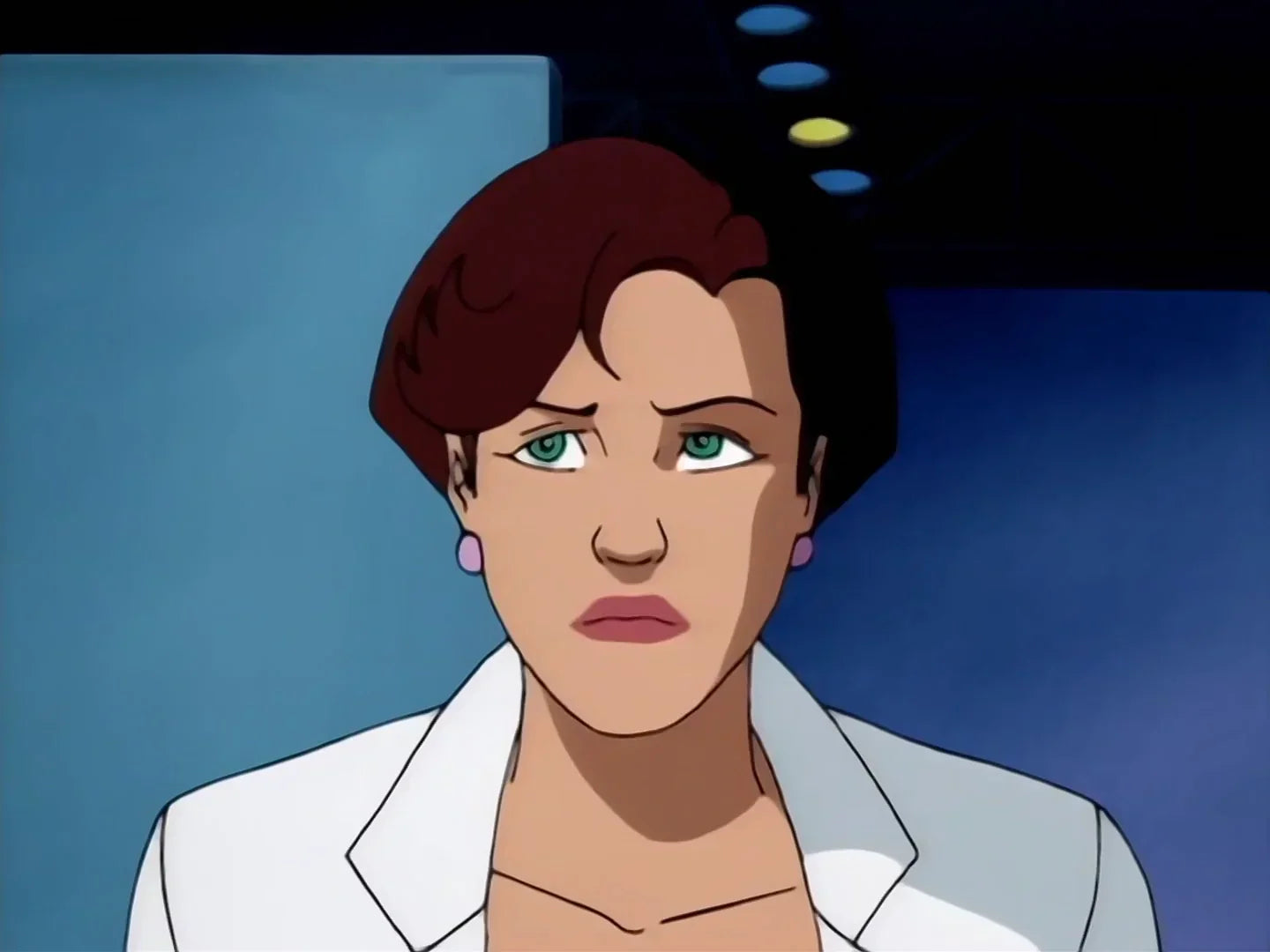
Ashley Kafka is the therapist in charge of Ravencroft's most unstable inmates, among them Cletus Kasady and Shriek. Her belief that every patient remains treatable keeps her in permanent danger and eventually breaks her. Her career and her heaviest cases are set out below.
Ashley Kafka: understanding the monsters rather than locking them away
In the shadow of the spectacular clashes between Spider-Man and his enemies stands a discreet but crucial figure: Ashley Kafka. A psychiatrist at the Ravencroft Institute, she doesn't fight the villains with fists or gadgets, but with a far rarer weapon in the Marvel universe: empathy.
Ravencroft is often presented as Arkham's darker counterpart: a place where New York's broken minds are locked up, studied... and sometimes forgotten. Yet Ashley Kafka embodies a radically different vision. Where many see irredeemable monsters, she sees patients. Where society demands isolation, she looks for understanding.

Her role is fundamental to grasping the psychology of Spider-Man's villains. Unlike purely cosmic or mystical antagonists, a large share of the web-slinger's enemies are broken, traumatised individuals devoured by their obsessions. To understand Kafka is to understand why Spider-Man faces just as much human suffering as crime.
Ravencroft: a distorting mirror of New York City
Set far from the noise of the streets, Ravencroft houses some of the most unstable figures in the Spider-Man universe: Carnage, Shriek, and other tortured minds who go well beyond simple criminality. Ashley Kafka is the one who tries to draw a line between mental illness and pure malice.

This approach resonates directly with Peter Parker's own philosophy, explored in depth in the story of Peter Parker. Spider-Man is no blind vigilante: he pulls his punches, he listens, he doubts. Kafka is one of the few adults to share that nuanced view of evil.
A therapist at the heart of Marvel's worst traumas
Ashley Kafka is neither a mad scientist nor a manipulator. She is deeply convinced that some patients can be helped, even when they have done the unforgivable. That stance puts her constantly in danger, but it also places her at the centre of some of the darkest Spider-Man stories.
Through her, the writers explore an uncomfortable question: where does individual responsibility end when madness begins? It is a question that also runs through arcs with heavy consequences, such as The Death of Jean DeWolff, where the line between justice and revenge becomes blurred.

This clinical yet human view of the enemies also explains why these characters fascinate readers so much. Their complexity fuels the demand for detailed Spider-Man figures, dark, psychological posters, and other merchandise putting these tormented antagonists centre stage.
In the next part, we will dive into the direct relationship between Ashley Kafka and some of Ravencroft's most unstable villains, and into how her choices sometimes worsened... or revealed their madness.
Carnage, Shriek and the limits of empathy
If Ashley Kafka has become such a striking figure in the Spider-Man universe, it is largely because of her interactions with Ravencroft's most dangerous patients. Chief among them, Cletus Kasady, alias Carnage, represents the absolute breaking point of any attempt at rehabilitation.
Carnage is not simply violent: he is chaos made flesh. Where some villains act out of obsession, revenge or frustration, Kasady acts for pleasure. And yet Ashley Kafka initially refuses to write him off as beyond saving. She tries to understand his childhood traumas, his relationship with violence and his total rejection of social norms, an angle already explored in the full analysis of Carnage. You can also find our complete guide to Spider-Man's enemies on this page.

When therapy becomes a danger
Ashley Kafka's tragedy lies in that deep belief that every mind can be understood, and therefore healed. Facing Shriek, she sees a woman broken by manipulation and marginalisation. She tries to rebuild a therapeutic setting in a place ruled by fear and violence.

But Ravencroft is no ordinary consulting room. Its patients are superhumanly powerful, manipulative and often acutely aware of the human flaws of those around them. In trying to save these lost souls, Kafka exposes herself psychologically, gradually absorbing their darkness. That slow mental contamination is one of the most chilling themes attached to her character.
Ravencroft as a catalyst for madness
Through Kafka, the writers show that Ravencroft is not merely a place of confinement, but an accelerator of psychological breakdown. The cells, the isolation, the constant proximity to violent minds transform the carers too. Ashley Kafka thus becomes a tragic character: a brilliant professional crushed by a system incapable of protecting those who try to understand.
That dynamic recalls other dysfunctional Marvel institutions, but Ravencroft remains unique in its intimate link with Spider-Man. Unlike Batman and Arkham, the web-slinger does not simply arrest criminals: he worries about what becomes of them afterwards. Kafka embodies that prolonged moral unease.
A figure who shapes how we see the villains
Thanks to Ashley Kafka, Spider-Man's enemies are no longer simple targets to neutralise. They become complex, sometimes tragic characters, which explains their lasting popularity. Fans today collect villain pyjamas or dark blankets precisely because these characters are written with rare psychological depth.
In the next part, we will see how Ashley Kafka herself tips over, becoming in turn a symbol of mental fragility in the face of daily horror, and what that fall reveals about the limits of compassion in the Spider-Man universe.

When the carer becomes the victim: the fall of Ashley Kafka
Ashley Kafka's trajectory is one of the most tragic and unsettling in the Spider-Man universe, precisely because it rests not on a spectacular transformation but on a gradual erosion of the mind. Exposed again and again to violence, to manipulation and to Ravencroft's darkest stories, the psychiatrist ends up crossing an invisible line: the one where empathy becomes a weakness.

The writers use Kafka to illustrate a brutal truth: understanding evil does not make you immune to it. On the contrary, that constant closeness to figures like Carnage and other deeply unstable patients acts as a slow psychic contamination. Ravencroft then stops being a place of care and becomes a space of mental collapse.
A silent but inevitable tipping point
Unlike the many villains who fall into madness after one precise event, Ashley Kafka's fall is diffuse. It begins with doubts, continues with an obsession with certain patients, then with a gradual loss of professional distance. That slow drift is particularly chilling, because it could happen to anyone placed in the same conditions.
This development echoes the central themes of the web-slinger's world: responsibility, psychological weight and moral fatigue. Themes already tackled in arcs such as Kraven's Last Hunt, where Spider-Man himself comes close to mental collapse in the face of the violence he confronts every day.

Spider-Man facing the failure of the system
The Kafka case confronts Spider-Man with a reality he dreads: even good intentions can produce catastrophes. Where Peter Parker still believes in redemption, Ashley Kafka becomes proof that some structures, and some people, are not protected from the darkness they fight.
That realisation deepens the hero's human dimension, explored in depth in the story of Peter Parker. Spider-Man does not merely save lives: he watches helplessly as those who tried to repair the world by means other than force fall apart.
A tragedy that redefines Ravencroft
After Ashley Kafka's fall, Ravencroft is never seen the same way again. The institution becomes the symbol of a collective failure: that of a system which locks madness away without ever really treating it. Kafka embodies that breaking point, the moment idealism shatters against a reality too brutal to bear.
This pessimistic vision feeds the dark imagination of fans and explains why Ravencroft fascinates so much. You find that aesthetic in many lamps, duvet covers and other items featuring the interned villains, frozen in their madness.
In the final part, we will see why Ashley Kafka is an essential key to understanding the psychology of Spider-Man's enemies, and how her tragic path reinforces the unique moral depth of the web-slinger's universe.
Why Ashley Kafka is essential to Spider-Man's mythology
Ashley Kafka is neither a masked heroine nor an iconic supervillain. And yet she holds an absolutely central place in any deep understanding of the Spider-Man universe. Her existence is a reminder of an essential truth: the web-slinger's enemies are not born in a laboratory, but in human suffering.
Through her, Marvel introduces a dimension rarely explored in superhero comics: mental health as an invisible battlefield. Ravencroft, seen through her eyes, becomes far more than a prison for disturbed minds. It becomes a mirror of the failings of a society unable to repair what it has broken.
A key to understanding Spider-Man's villains
Thanks to Ashley Kafka, characters such as Carnage, Shriek and the other residents of Ravencroft stop being simple antagonists. They become the products of a chain of traumas, neglect and institutional failures.
This psychological reading sets Spider-Man radically apart from other superhero universes. Where some stories favour spectacle or black-and-white morality, the web-slinger's world insists on human complexity. A complexity that explains why so many readers grow attached to these tragic figures.

Ashley Kafka and the web-slinger's moral code
Spider-Man is not a hero who hits to punish, but a hero who acts to stop others from falling. Ashley Kafka embodies that same philosophy, pushed to its extreme. Where Peter Parker pulls his punches, she tries to heal. Where he takes the blows physically, she takes them mentally.
Their shared failure with certain individuals underlines one of the strongest messages of the franchise: not everything can be repaired. And yet the effort to understand remains fundamental. That moral tension runs through the whole mythology, from The Death of Jean DeWolff to modern stories centred on responsibility and heroic fatigue. If other arcs interest you, you can visit our complete page.
A tragic figure who enriches the Spider-Man universe
Ashley Kafka is proof that the Spider-Man universe is not limited to rooftop fights across New York. It also plays out in silent offices, padded cells and minds that crack. Her path adds depth to every confrontation: when Spider-Man takes down a villain, the reader now knows what awaits him next... or what could have been tried.
Conclusion: the therapist who stared into the abyss too long
Ashley Kafka did not fall because she was weak. She fell because she looked into the abyss without turning away. Her story is a silent warning: even compassion has its limits, and some darkness consumes those who try to understand it.
And that is why she is one of the most important, and most tragic, characters in the Spider-Man universe. An invisible but essential figure, reminding us that behind every mask, heroic or monstrous, hides a fragile mind.

