
14-Day Money-Back Guarantee
0
The short answer
This reboot goes for the intimate: Andrew Garfield gives us a Peter scarred by the disappearance of his parents, while Curt Connors becomes a tragic antagonist born of Oscorp's excesses. His relationship with Gwen Stacy, a scientist in her own right, ranks among the most believable in Spider-Man cinema. We break down every point below.
Released in 2012 and directed by Marc Webb, The Amazing Spider-Man marks a radical break with Sam Raimi's trilogy. Darker, more introspective, more rooted in Peter Parker's psychology, this reboot offers a different reading of the myth.
But is this film underrated? Did it really understand the essence of Spider-Man?
In this full analysis, we break down:
- 🧬 Peter Parker's new origin story
- 🦎 The Lizard and the scientific angle
- ❤️ The relationship with Gwen Stacy
- 🎭 The suit and the visual identity
- 🕷️ The film's impact on the Spider-Verse
If you want to place this film in the web-slinger's full timeline, have a look at the pillar page too: Spider-Man films: order, versions, suits and universes.
A more realistic, more fragile Peter Parker
Andrew Garfield plays a Peter Parker quite unlike Tobey Maguire's. Less naive, more introverted, sometimes even angry.
The film leans much harder on the disappearance of his parents, giving the plot an almost 'science thriller' feel, notably through Oscorp.
This approach deepens the human side of the character, already explored in the pillar page: Peter Parker: the real face of Spider-Man.
The film hammers home one fundamental idea:
Power is not a privilege. It is a responsibility forced upon you.
You will find the same moral tension in other analyses, such as: The impossible choice in No Way Home.
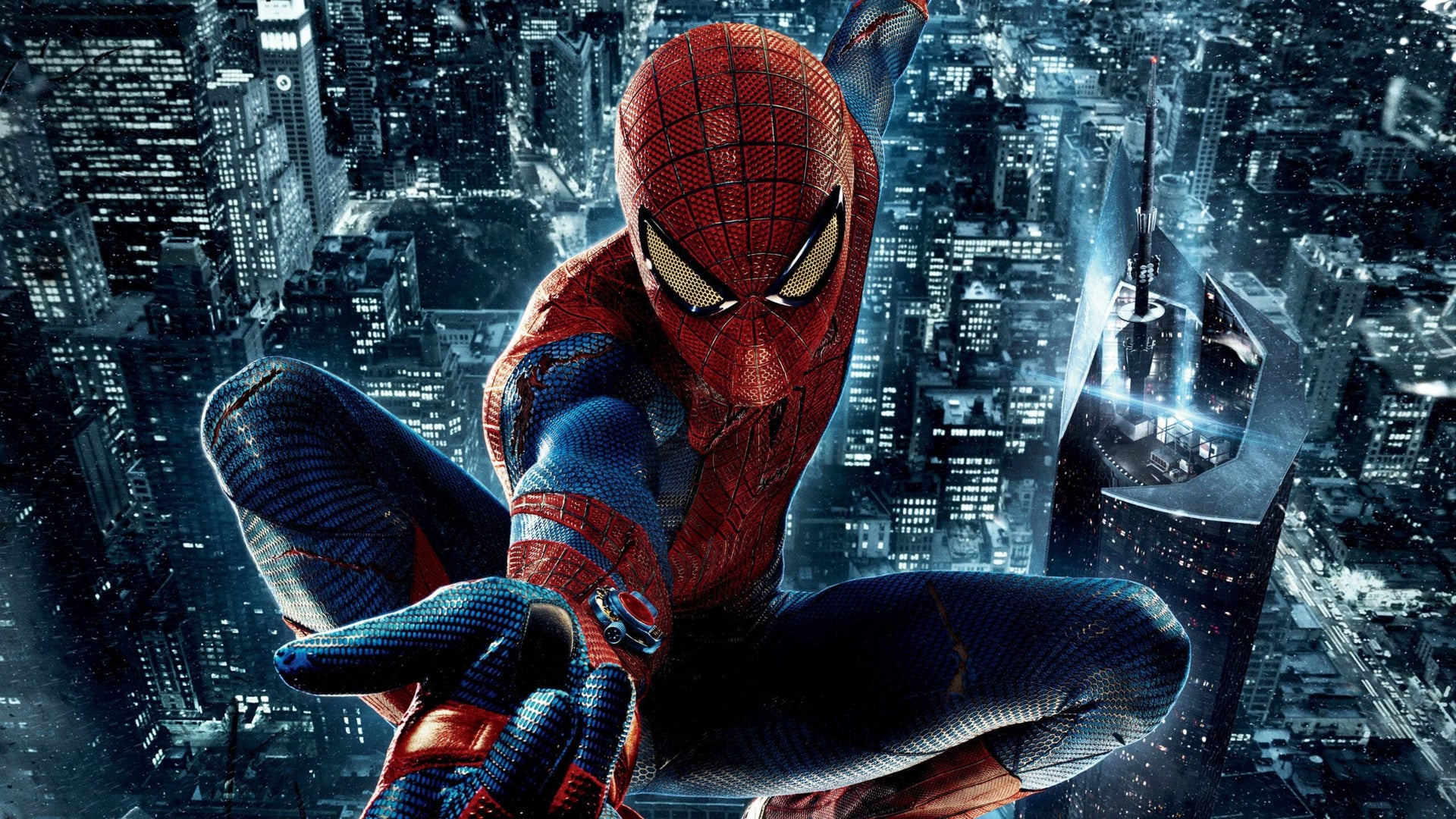
On the visual side, Andrew Garfield's suit remains one of the most distinctive. If you like this version, you can find products inspired by that era in the Spider-Man fancy dress collection or among our Spider-Man film figures.
The Lizard: a scientific threat, a mirror of Peter Parker
In The Amazing Spider-Man (2012), the main antagonist is none other than Dr Curt Connors, alias the Lizard. Unlike purely megalomaniac villains, Connors is first and foremost a scientist driven by a noble idea: to repair, to regenerate, to improve the human body.

It is precisely that ambition that echoes Peter. Both are tied to Oscorp. Both handle science. Both believe they can put right a biological injustice.
If you want to dig deeper into the character, have a look at our dedicated analysis of the Lizard in the Spider-Man universe, which explores his motives and his downfall in far more detail.
Oscorp: the laboratory of modern excess
Oscorp becomes a genuine nerve centre in this reboot. It is no longer simply a company, it is a symbol: that of science with no safeguards.


This theme is amplified later on in other adaptations, notably with the evolution of Norman Osborn, which you can read about in our full analysis of the Green Goblin.
In Amazing Spider-Man 2012, Oscorp acts as a catalyst:
- 🧬 Genetic manipulation
- 🦎 Uncontrolled transformation
- ⚖️ Scientific moral dilemma
This scientific angle grounds the film in a more realistic register than the previous trilogy. It is no longer merely a mythical radioactive accident, but credible biological research.
A tragic antagonist rather than a pure villain
The Lizard is not driven by revenge or greed. He wants to 'improve' humanity by making it more resilient.
This kind of scientist villain echoes other intelligent threats such as Doctor Octopus or Mysterio, who use technology rather than brute force.
Visually, the Lizard leaves his mark on the world of the film too. The merchandise inspired by that era, in particular some Spider-Man film figures or posters inspired by the film, captures that darker, more urban mood.
The film sets up a central dynamic: Spider-Man does not only fight monsters. He fights the consequences of science without responsibility.
Peter & Gwen Stacy: the most authentic relationship in Spider-Man cinema?
One of the great strengths of The Amazing Spider-Man (2012) is the relationship between Peter Parker and Gwen Stacy.
Unlike the more idealised dynamic of the earlier films, here the romance rests on:

- Natural chemistry
- Smart dialogue
- A Gwen with real scientific ability

Gwen is not just 'the hero's love interest'. She understands Oscorp, she takes part in the research, she acts.
If you want to dig into how important she is to the wider mythology, read the full analysis of Gwen Stacy's death in the comics, still one of the most traumatic turning points in the web-slinger's history.
A more intimate, almost indie tone
Marc Webb brings a more intimate approach than the Raimi trilogy.
The film focuses on:
- Grief
- Loneliness
- Moral responsibility
- Teenage self-doubt
This human dimension reinforces what we explore in the pillar page: The real face of Peter Parker.
You find that same emotional fragility in arcs such as Kraven's Last Hunt, where Spider-Man comes up against his own psychological limits.
The 2012 suit: controversial, then iconic
Andrew Garfield's suit divided people when it came out:
- Smaller eyes
- More realistic texture
- A tighter cut

But with hindsight it has become iconic, especially after its return in No Way Home.
If this version speaks to you in particular, you can find:
- Some fancy dress outfits inspired by the film
- Some Amazing Spider-Man figures
- Some Spider-Man film blankets
Visually, this suit reinforces the idea of a more 'urban', more realistic, almost fragile Spider-Man.
And it is precisely that fragility that makes this reboot so distinctive in the character's history.
The legacy of The Amazing Spider-Man (2012) in the multiverse
For several years, The Amazing Spider-Man was seen as a flawed reboot. Then No Way Home arrived… and everything changed.
Andrew Garfield's return allowed a complete re-evaluation of the 2012 film. His Spider-Man became:
- The most emotional
- The most marked by loss
- The most introspective
His redemption arc, especially where Gwen Stacy is concerned, deepens the character and gives new weight to this first film.
To place this version in the bigger picture, you can read the pillar page: Understanding the Spider-Verse.
Why the film is better understood today
With hindsight, Amazing Spider-Man (2012) looks like:

- A more realistic attempt
- A coherent scientific exploration
- A believable teenage portrait
- A mature love story
It also sets up elements that the sequel would develop, particularly around Oscorp and the extended universe.
If you want to go further on this, explore as well:
Amazing Spider-Man 2012: a flawed film… but an essential one
This reboot may not have had the commercial success of the MCU. But it delivered:
- A more human Peter
- A memorable Gwen
- A coherent scientific approach
- A suit that became iconic

Today, Andrew Garfield's version holds a unique place in the collective imagination.
If you are especially fond of this incarnation, you can carry the experience further with:
- Spider-Man film posters
- Amazing Spider-Man figures
- Fancy dress inspired by the film
- Spider-Man jumpers & sweatshirts
🕷️ The Amazing Spider-Man (2012) is not just a reboot. It is a version of the hero that found its true worth… in time.

