
14-Day Money-Back Guarantee
0
The short answer
Carrion is a degenerate clone born of the cloning research of Miles Warren, the Jackal, revealed in The Spectacular Spider-Man in the late 1970s. Beyond his power of putrefaction, he projects toxic spores capable of scrambling the Spider-Sense. His origins and his battles are detailed below.
In the long rogues' gallery of Spider-Man, some villains stand out through sheer brute power, others through their scheming intelligence. But few inspire a fear as visceral as Carrion. A spectral being, halfway between the fallen scientist and the supernatural creature, Carrion is the literal embodiment of death and decay. His touch alone is enough to reduce any organic matter to dust, making him one of the deadliest opponents Peter Parker has ever had to face.
Carrion is no passing villain: he is the direct heir to the forbidden experiments of Professor Miles Warren, alias the Jackal. His creation is rooted in Warren's unhealthy obsession with cloning, a recurring theme in the great sagas such as the Clone Saga. Carrion emerges as a nightmarish extension of those scientific excesses, a corrupted and uncontrollable version of the Jackal's ambitions.
His first appearance in The Spectacular Spider-Man lands hard: his aura of death, his ability to float, his sinister voice and his obsession with Spider-Man make him a unique threat, somewhere between the mad scientist and the avenging spectre. Unlike more physical enemies such as the Rhino, Carrion acts as an unstoppable force of decay, handing Peter a challenge that is as psychological as it is physical.
This first part lays the groundwork: to understand Carrion is to understand the shadow of cloning and the darkness of science gone astray in the Marvel universe. In the sections that follow, we will explore his origin in depth, his terrifying powers, his great confrontations with the web-slinger and what he represents as a mirror of Peter Parker.
Carrion's macabre origins
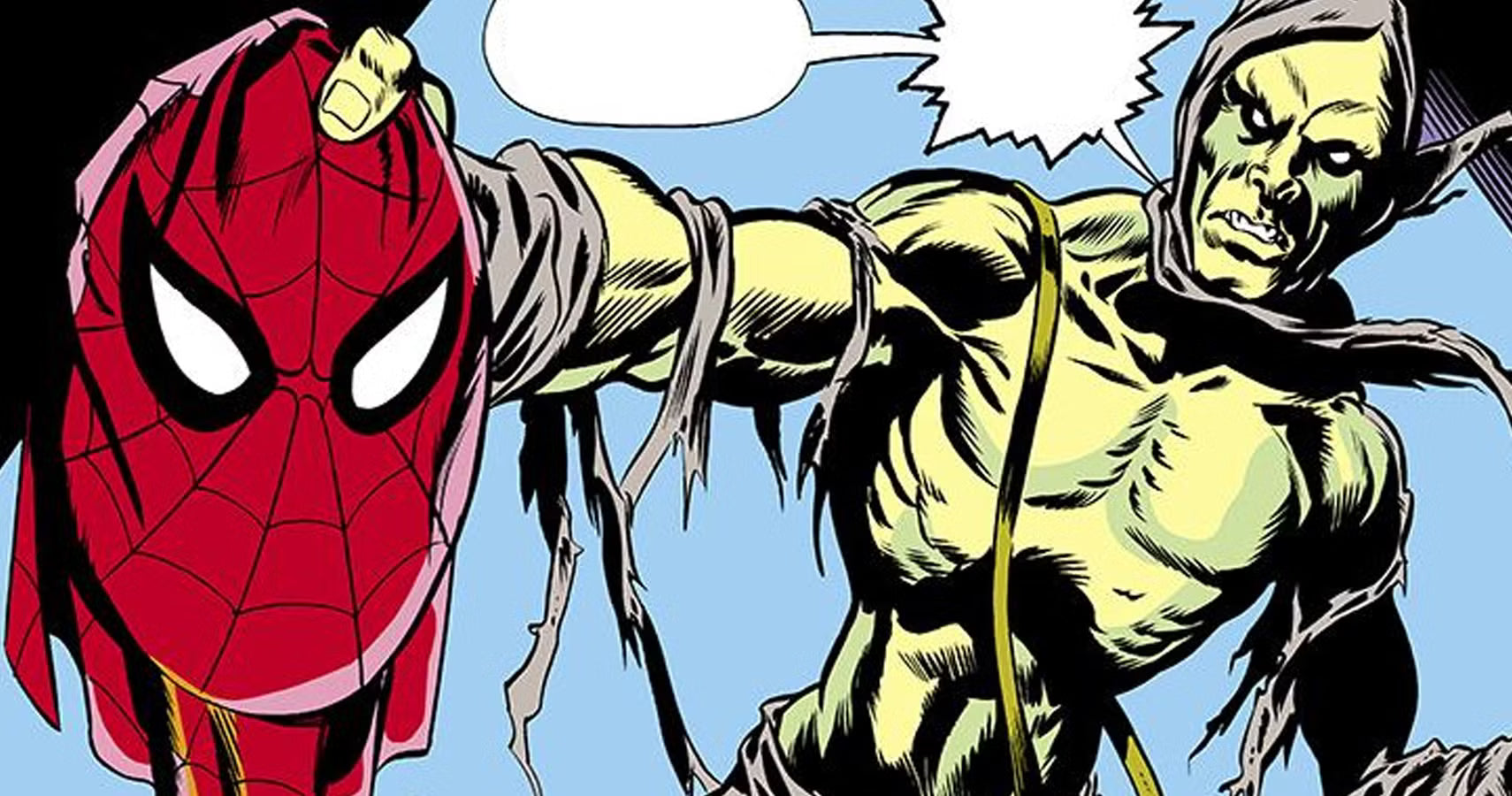
Carrion's story is intimately bound to the fate of Professor Miles Warren, better known as the Jackal. Fixated on Gwen Stacy and obsessed with perfecting the cloning process, Warren multiplied his forbidden experiments, giving rise to unstable clones and corrupted versions of himself. Carrion is the most appalling result of all: a degenerate clone, disfigured and eaten away by an unstable biology that grants him his terrible powers.
When Carrion first appears in The Spectacular Spider-Man #25 in 1979, he presents himself as the ghost of Miles Warren himself, back from the dead to haunt Spider-Man. In reality he is a clone that was only partly completed, doomed to decompose and to spread death around him. That tragic dimension makes the character all the more striking: he is not merely an enemy, but a victim of the Jackal's corrupted science.
Carrion harbours a visceral hatred for Peter Parker, convinced that he is responsible for all his misfortunes. His very existence is a curse: condemned to waste away, he projects that pain by sowing desolation. The theme recalls certain other tragic enemies in the Spider-Man universe, such as the Lizard, also born of a scientific experiment that escaped all control.

This connection to cloning ties Carrion to broader arcs, notably the Clone Saga, where the question of Peter Parker's identity and legitimacy sits at the centre. Carrion appears as a nightmarish version of that debate: an imperfect, fallen copy that shows where the quest for immortality and perfection goes wrong.

Beyond his link to Warren, Carrion embodies one of Spider-Man's major themes: the consequences of irresponsible scientific choices. Where Peter uses his genius to save lives with his inventions, Carrion is the dark side of that same potential, badly used. A lesson that resonates as much in the comics as in the real world.
Carrion's terrifying powers
Carrion is not just a failed clone: he is gifted with abilities that make him formidable, even for a hero of Spider-Man's calibre. His most appalling trait is his power of decay: at the slightest touch, he can rot flesh, organic matter and even certain inert structures. It is this 'living plague' that gives him his nightmarish aura, a reminder that his presence means slow and inevitable death.

To that are added heightened physical abilities: a surprising strength for a being eaten away by degeneration, an agility close to Spider-Man's own and a terrifying speed. He is also able to project toxic spores that weaken and disorient his enemies. Those spores are often used to paralyse Spider-Man and stop him using his Spider-Sense.
Memorable clashes with Spider-Man
The first fights between Carrion and Spider-Man are of a rare intensity. The web-slinger, used to overpowered opponents such as the Venom symbiote or the Green Goblin, finds himself facing a far more insidious threat: simply being touched could cost him his life. That forces Peter Parker to redouble his ingenuity, leaning harder on his reflexes, his intelligence and his surroundings to make up for Carrion's lethal advantage.
In some stories, Carrion does not limit himself to fighting Spider-Man. He also takes on other heroes, such as the mercenary Silver Sable or members of the New Warriors. These confrontations show how far his threat reaches beyond Peter Parker's personal sphere to become a much wider danger for New York.
Carrion in the great sagas
Carrion appears most prominently in story arcs such as the Maximum Carnage saga, where he stands alongside Shriek and Carnage to sow death in the streets of New York. His role there is that of a secondary but terribly dangerous ally, one who sharpens the atmosphere of horror this story is known for. His presence is a reminder that Spider-Man's threats are not always spectacular in raw power: some are terrifying because they are corrosive and unstoppable. If other arcs interest you, you can visit our full page on the subject.
These clashes reinforce the image of Carrion as an implacable opponent, unpredictable and deeply rooted in the theme of cloning and degeneration. He is at once the physical enemy and the metaphor for the price to be paid when science oversteps the limits of ethics.
Carrion: an underrated but cult enemy
Although Carrion does not enjoy the fame of major enemies such as Doctor Octopus or Norman Osborn, he holds a particular place in the Spider-Man universe. His existence is intimately bound up with genetic experiments, cloning and scientific excess, three recurring themes in the web-slinger's adventures. He is both an extension of Miles Warren's mistakes and a personification of the tragic consequences of science without morals.
An enemy who reflects modern fears
Carrion is more than an opponent: he is the mirror of contemporary anxieties about the manipulation of life. His power of decay, his unstable nature and his spectral appearance are a reminder that some creations always escape their creators' control. It is this symbolic dimension that makes Carrion fascinating, even if he is less exploited on screen than other villains.

Carrion and the future of the Spider-Verse
With the rise of the Spider-Verse and Marvel's willingness to explore more obscure characters, Carrion could well return to the foreground. His link with the clones, his role in sagas such as Maximum Carnage, and his horror potential make him an ideal candidate for dark, psychological story arcs.
Conclusion
Carrion may not be the most famous of Spider-Man's enemies, but he is one of the most intriguing. He combines physical threat, psychological danger and symbolic depth. Exploring his origins, his powers and his battles, you realise just how much he enriches the already crowded gallery of the web-slinger's opponents. For anyone who loves the darker stories, he remains a cult figure who deserves far more recognition.
To go further into these darker Spider-Man stories, explore our Spider-Man figurine collection. You can also visit our page dedicated to the merchandise to dive back into all the great sagas that shape the web-slinger's myth.

