
14-Day Money-Back Guarantee
0
The short answer
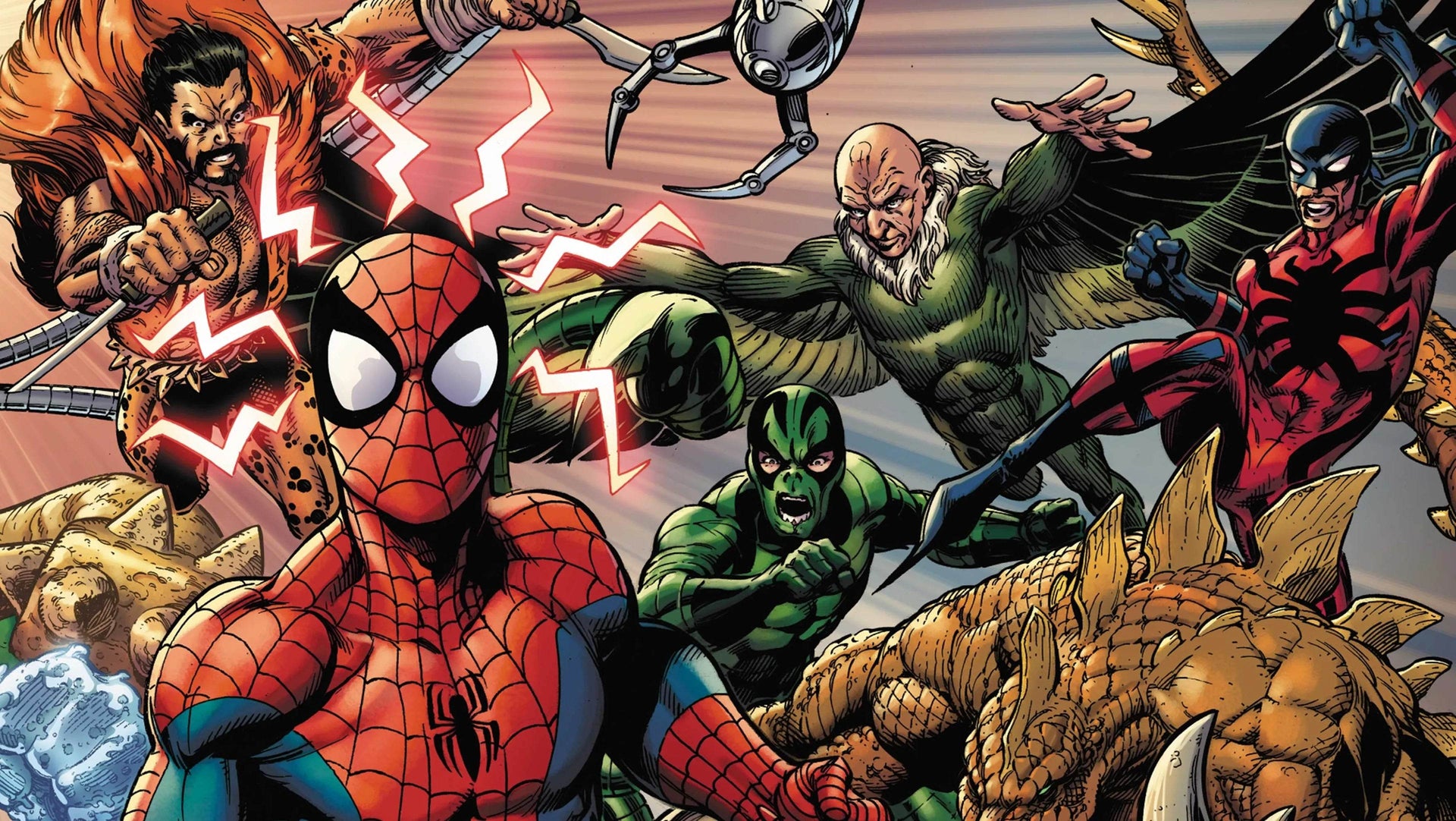
The ranking here brings together the Green Goblin, Venom, Doctor Octopus, Carnage, the Lizard, Mysterio and Kraven the Hunter. Each one threatens Peter Parker on a different front: psychology, brute strength, scientific genius or methodical pursuit. Electro, Scorpion, Rhino and the Kingpin round out the picture. We break down their origins below.
Spider-Man is arguably the superhero with the richest, most complex and most memorable rogues gallery in all of the Spider-Man character universe. Unlike other heroes whose enemies amount to little more than thugs or one-dimensional evil geniuses, the web-slinger's adversaries share deeply personal ties with him. Every confrontation holds up a mirror to Peter Parker, an ordeal that forces him to grow, to doubt, sometimes to hit rock bottom. It is this emotional dimension that makes these antagonists far more than mere obstacles on the hero's path. They drive his greatest stories, his greatest pain and his greatest victories. From Norman Osborn to Kraven the Hunter, by way of the Venom symbiote and the terrifying Carnage, these seven enemies each embody a different facet of the threat Spider-Man must face to stay true to the lesson of Uncle Ben: with great power comes great responsibility. In this in-depth analysis, we dive into the history, the motivations and the impact of each of these iconic villains, while exploring how they shaped the hero's very identity across the films, the comics and popular culture.
The Green Goblin (Norman Osborn) — the ultimate personal enemy
When people talk about Spider-Man's iconic enemies, Norman Osborn invariably comes first. The Green Goblin is not just a dangerous criminal armed with a glider and pumpkin bombs. He is the very embodiment of personal evil, the one who hits Peter Parker where it hurts most: in his private life, in his closest relationships, in his heart. Created by Stan Lee and Steve Ditko in 1964 in Amazing Spider-Man 14, the Green Goblin has established himself over the decades as the web-slinger's ultimate nemesis, and for one fundamental reason. Norman Osborn knows Peter Parker's secret identity.
The death of Gwen Stacy — the moment that changed everything
The most devastating storyline linked to the Green Goblin remains, without question, the death of Gwen Stacy in Amazing Spider-Man 121-122 in 1973. That moment redefined not only Spider-Man, but the whole superhero genre. For the first time, a hero failed to save the person he loved most. Norman Osborn killed Gwen Stacy to destroy Peter Parker, not Spider-Man. That distinction is essential to understanding the nature of their rivalry. The Green Goblin is the only villain who systematically attacks the man behind the mask, his loved ones, his emotional stability. On screen, Willem Dafoe brilliantly captured this duality in Sam Raimi's first film, then again in No Way Home, proving that the Green Goblin transcends the eras and the versions of the multiverse. His madness, his calculated cruelty and his obsession with Peter make him a villain fans love to hate, and it is largely thanks to him that Spider-Man has lived through his saddest moments and the most defining ones of his entire history.
Venom — Spider-Man's dark reflection
If the Green Goblin is Peter Parker's most personal enemy, Venom is the distorting mirror of Spider-Man himself. Born from the fusion between the alien symbiote and Eddie Brock, Venom has every one of Spider-Man's abilities, but amplified, twisted, freed from any moral restraint. The black symbiote, which first appeared in Secret Wars in 1984, was worn by Peter Parker himself before being rejected. That betrayal, as the alien entity saw it, is the foundation of the visceral hatred Venom holds for the web-slinger. Eddie Brock, a journalist whose career was ruined because of Spider-Man, brings the human component to that grudge. Together they form a terrifying creature that knows all of Peter's secrets, slips past his spider-sense and possesses brute strength far greater than his own.
From outright villain to popular antihero
Venom's evolution over the decades is fascinating. First conceived as a hardline villain in the 1990s, the character gradually shifted towards an antihero role, protecting the innocent in his own brutal way. The 2018 film with Tom Hardy cemented that transformation by presenting a Venom who is oddly likeable despite his monstrosity. This duality perfectly reflects the central theme of Spider-Man: power can be used for good or for ill, and it all comes down to the choice of whoever carries it. Fans interested in the cleverest villains in the Spider-Man universe will recognise that Venom does not shine through cunning, but through raw power and his emotional bond with the hero. He is a character who embodies Peter's fear of losing control, of giving in to anger, of becoming what he fights. The Back in Black storyline, in which Peter Parker puts on the black suit after the attack on Aunt May, shows just how thin the line between the hero and his dark reflection can be. Venom remains one of Marvel's most popular villains, and his presence across Spider-Man figures and merchandise is testament to his iconic status among fans of all ages.

Premium Resin Venom Figure
Every fang, every vein of the symbiote, every ripple of the black mass has been sculpted with formidable precision. This resin figure captures the raw terror of Venom as he bursts out of the comic-book pages, ready to devour anyone who crosses his path. Set on a shelf, it draws the eye and commands respect. A centrepiece made for collectors who want to feel the symbiote's menace every single day.
349,90 €
299,90 €
Adopt the resin symbiote
Doctor Octopus — intelligence without limits
Otto Octavius, alias Doctor Octopus, is perhaps the most underrated villain in Spider-Man's gallery, and yet he is the one who pulled off the unthinkable: taking Peter Parker's place. A brilliant scientist whose mechanical arms fused with his nervous system after a laboratory accident, Doc Ock is a reflection of what Peter could have become had his scientific genius not been tempered by his moral compass. Both men are geniuses, both were transformed by science, but where Peter chooses responsibility, Otto chooses domination. Alfred Molina delivered an unforgettable performance in Sam Raimi's Spider-Man 2, giving the character a tragic depth that moved millions of viewers around the world.
Superior Spider-Man — when the villain becomes the hero
The Superior Spider-Man arc, launched by Dan Slott in 2013, remains one of the boldest stories in comics history. Dying, Otto Octavius manages to transfer his consciousness into Peter Parker's body, becoming Spider-Man in his place. Far from simply playing hero, Otto decides to prove that he can be a superior Spider-Man, more efficient, more ruthless. This saga explores fascinating questions about identity, power and morality. Otto learns the hard way that Spider-Man's true strength lies not in his powers, but in his humanity, in his ability to sacrifice himself without calculating the cost. Fans who want to dig into the web-slinger's most complex plots will enjoy this analysis just as much as the study of Chasm, Spider-Man's broken clone, another figure who questions the line between hero and villain. Doctor Octopus is also a founding member of the Sinister Six, the supervillain alliance he leads. Whether he acts alone or as part of a team, Otto Octavius pushes Spider-Man to his intellectual limits, forcing the hero to use his brain as much as his fists.
Carnage — pure madness
If Venom is Spider-Man's dark reflection, Carnage is his absolute nightmare. Born from the fusion between the red symbiote, Venom's offspring, and the serial killer Cletus Kasady, Carnage represents chaos with no moral limit whatsoever. Where Eddie Brock still has a twisted code of honour, Kasady knows only one urge: destruction for its own sake, murder for pleasure, suffering as an art form. The Carnage symbiote is so powerful that it has repeatedly taken an alliance between Spider-Man and Venom to contain him, and even then, never permanently.
Carnage embodies the deepest fear of any hero: an adversary who cannot be reasoned with, who seeks neither power nor money, but simply destruction. In the comics, the Maximum Carnage and Absolute Carnage arcs rank among the most spectacular events in the Marvel universe. How can a hero who refuses to kill face a monster whose only reason for existing is to kill? That question haunts Peter Parker in every confrontation. Readers who love darker stories will find the same intensity in the analysis of Spider-Man's greatest defeats, where Carnage features prominently among the threats that pushed the hero to breaking point.
The Lizard — the tragedy of Curt Connors
Not every enemy of Spider-Man is a monster by choice. Doctor Curt Connors, alias the Lizard, is first and foremost a scientific tragedy, a good man whose best intentions led him to the worst. A former military surgeon who lost an arm in combat, Connors devotes his life to research into tissue regeneration, taking his inspiration from reptiles. When he tests his serum on himself, he does indeed get his arm back, but he turns into a monstrous reptilian creature whose primal instinct overrides human reason. What makes the Lizard so heartbreaking is that Peter Parker considers Curt Connors a friend and a mentor. Every fight against the Lizard tears Spider-Man apart, because he does not want to defeat an enemy but to save a friend.
The family dimension amplifies the tragedy. Connors has a wife and a son who live in terror of seeing their father lose control. In some of the darker arcs, the Lizard has even attacked his own family, a horror that Connors relives with devastating guilt once he is human again. On screen, Rhys Ifans embodied this duality in The Amazing Spider-Man in 2012, showing Connors's compassion before his fall. The Lizard is a reminder that Spider-Man's villains are not always incarnations of evil, but sometimes victims of science, despair or bad luck. That nuance is what sets the web-slinger's villains apart from the more black-and-white antagonists of other universes. Fans who wonder what makes Spider-Man so endearing will find part of the answer in the hero's ability to see the humanity even in his worst enemies.
Mysterio — the master of illusion and star of Far From Home
Quentin Beck, alias Mysterio, is a unique villain in Spider-Man's gallery. A former Hollywood special-effects specialist, Beck uses his talents as a magician and illusionist to create grandiose set pieces that defy the perception of reality. With his fishbowl helmet and his purple cape, Mysterio might look ridiculous at first glance, but his ability to manipulate the minds of his opponents makes him one of the most dangerous enemies Spider-Man has ever faced. Peter Parker's spider-sense, usually his greatest asset, becomes almost useless against an enemy who turns the whole world into a lie.
The cinematic peak in Far From Home
Jake Gyllenhaal gave the character a spectacular rebirth in Spider-Man: Far From Home in 2019. His portrayal of Quentin Beck, a former Stark Industries employee turned fake superhero thanks to holographic technology, modernised the character perfectly. The film brilliantly explores the theme of information manipulation and fake news, giving Mysterio a striking contemporary resonance. The illusion sequence in Berlin, where Peter Parker is trapped in an increasingly deranged visual nightmare, ranks among the most inventive scenes in the whole MCU. Mysterio is also a villain who had lasting consequences for Peter's life, since he is the one who revealed his secret identity to the entire world, triggering the events of No Way Home. Fans who want to explore these cinematic plots in depth can read our analysis of the hidden details in the Spider-Man films and discover how each film fits into the web-slinger's timeline. Mysterio is also a recurring member of the Sinister Six, and his mastery of illusion makes him a valuable ally for any coalition of villains looking to destabilise Spider-Man psychologically before striking him physically.
Kraven the Hunter — the ultimate hunt
Sergei Kravinoff, alias Kraven the Hunter, is a Russian aristocrat obsessed with hunting the most dangerous game on the planet. Endowed with superhuman strength thanks to potions made from exotic herbs, Kraven tracked and defeated the most fearsome creatures on Earth before setting himself one final goal: Spider-Man, the ultimate prey. What sets Kraven apart from the other villains is his code of honour. He does not simply want to kill Spider-Man. He wants to beat him fairly, to prove his superiority in an even fight, then to retire with the satisfaction of the hunter who has conquered the summit.
Kraven's Last Hunt — the absolute masterpiece
The Kraven's Last Hunt arc, published in 1987 by J.M. DeMatteis and Mike Zeck, is unanimously regarded as one of the greatest Spider-Man stories ever written. In this dark, introspective tale, Kraven manages to defeat Spider-Man, buries him alive, then dons his suit to prove that he can be a superior Spider-Man. The philosophical dimension of this story is remarkable. Kraven is not after domination or wealth. He is looking for meaning in his existence, an ultimate validation of his worth as a man. When he reaches his goal, he retires for good, having found peace in victory. This story left a deep mark on Peter Parker, who had to face the terror of being buried alive and the humiliation of seeing his identity usurped. Kraven is also closely linked to Calypso, the voodoo priestess, his companion, who often manipulated the hunter and amplified his madness. The recent solo film devoted to the character tried to capture that complexity, showing that some villains genuinely deserve their own film. Kraven's tragic dimension, that of a warrior who finds peace only in death, makes him an adversary whose encounters with Spider-Man always carry a unique gravity.
The other major threats — Electro, Scorpion, Rhino and Kingpin
Beyond the seven main enemies analysed in this article, Spider-Man faces a wider gallery of villains who, each in their own way, have left an indelible mark on his history. Electro, the electric supervillain, is one of the web-slinger's oldest adversaries. Max Dillon, an ordinary workman struck by lightning, becomes a living power station capable of bringing New York to its knees. Jamie Foxx gave him a new dimension in The Amazing Spider-Man 2, then in No Way Home, proving that even second-tier villains can become front-rank threats when the writing does them justice.
The Scorpion, Mac Gargan, was born of J. Jonah Jameson's determination to create an opponent capable of beating Spider-Man. That irony, the boss of the Daily Bugle funding the creation of a monster, is a scathing comment on obsession and fear. The Rhino, Aleksei Sytsevich, embodies brute force taken to the extreme, trapped in an exoskeleton he can no longer free himself from, and surprisingly moving despite his thuggish appearance. Finally, the Kingpin, Wilson Fisk, deserves a special mention. Although he is more closely associated with Daredevil, Kingpin is a major adversary of Spider-Man in the comics, a criminal whose empire stretches across the whole New York underworld. His prodigious physical strength, hidden beneath the appearance of a respectable businessman, makes him a threat in the shadows as much as in the light.
These secondary villains, to whom you could add the Vulture, the Chameleon, Tombstone or indeed Carrion, the macabre clone, together form an ecosystem of threats that stops Spider-Man from ever lowering his guard. Every one of them has been studied by Ashley Kafka, the Ravencroft psychologist, a fascinating character who tried to understand the broken psyche of these superhuman criminals. It is this depth, this diversity of motivations and powers, that makes Spider-Man's rogues gallery the richest in the whole Marvel universe. Fans who want to see which Spider-Man is the most popular will find that the quality of the villains is often the deciding factor between the hero's different incarnations. To bring all these iconic adversaries home, collectors can explore our full range of Spider-Man toys, our posters showing the most epic battles, and even our mugs featuring the most iconic villains.

Venom Plush Toy
The most terrifying symbiote in the Marvel universe suddenly turns surprisingly cuddly. This Venom plush captures the essence of the character with unexpected softness, perfect for fans who want to tame the dark side of Spider-Man without losing an arm.
29,90 €
Tame the symbiote
How the villains shaped Spider-Man
What fundamentally sets Spider-Man's enemies apart from those of other superheroes is their ability to make the hero evolve. Every major villain has left a scar that changed Peter Parker irreversibly. The Green Goblin taught him that you cannot save everyone. Venom showed him the dangers of anger. Doc Ock proved to him that intelligence without a moral compass leads to destruction. Carnage confronted him with absolute evil. The Lizard taught him compassion. Mysterio forced him to tell truth from illusion. And Kraven taught him that defeat can be a form of victory.
This dynamic of constant evolution has kept Spider-Man relevant for more than sixty years. The Big Time era showed a more mature Peter Parker, putting his science to work thanks to the lessons drawn from his battles against geniuses like Doc Ock. The Brand New Day arc offered a fresh start, but the scars were still visible. And the upcoming Avengers: Secret Wars event promises to place Spider-Man and his villains in an unprecedented multiversal setting. The mystery surrounding Peter Parker's parents adds a further layer of complexity, partly explaining why he feels such a visceral need to protect the innocent.
Bringing the Spider-Man universe into everyday life
The fascination with Spider-Man's villains carries over into fans' everyday lives. Wearing a Spider-Man T-shirt featuring Venom or the Green Goblin means showing that you belong to a community that understands the depth of these characters. Slipping into a Spider-Man fancy dress costume for a convention means becoming the hero who stood up to every one of these adversaries. Younger fans can relive the battles with a web shooter or step into the web-slinger's shoes with an official mask.
The Spider-Man figures collection lets you recreate the most memorable clashes and build genuine dioramas. The soft toys offer a gentler version, ideal for introducing little ones to the web-slinger's mythology. For anyone hunting for the perfect gift, our selection of 10 Spider-Man gift ideas for fans of all ages offers options for every budget, from everyday mugs to collector's pieces. The shop also has a selection of best-sellers bringing together the products the community loves most.
Villains who make the hero grow — why Spider-Man has the best enemies in Marvel
By the end of this analysis, one thing is obvious: Spider-Man's enemies are not simply good villains, they are the heart of what makes the web-slinger Marvel's greatest superhero. Without the Green Goblin, no founding loss. Without Venom, no confrontation with his dark reflection. Without Doc Ock, no lesson on the value of humanity. Without Carnage, no questioning of moral limits. Without the Lizard, no compassion towards the enemy. Without Mysterio, no distinction between truth and illusion. And without Kraven, no understanding that defeat is part of the hero's journey.
These seven enemies form a narrative whole of incomparable richness, the reason Spider-Man still captivates millions of fans more than sixty years after his creation. To dive deeper into this universe, our complete guide to Spider-Man's villains offers a detailed encyclopaedia of every antagonist, while the page devoted to the complete character universe puts these villains back into the web-slinger's mythology. And for anyone who wants to understand every ramification of the Spider-Verse and the multiverse, the possibilities for exploration are endless. Because in Spider-Man's universe, every villain is a story, every fight is a lesson, and every victory is the start of a new ordeal.

