

14-Day Money-Back Guarantee
0
The short answer
Yes: this tragedy drags superheroes into the era of irreversible loss. By breaking Gwen’s fall with a web-line, Spider-Man may well snap her neck himself, an ambiguity the writers have carefully kept alive ever since. It still runs through Spider-Gwen and the film adaptations; we unpack the possible readings below.
A narrative shock that changed Spider-Man’s history
Of all the landmark events in the adventures of Spider-Man, few have shaken readers quite like the death of Gwen Stacy. First appearing in The Amazing Spider-Man #31 in 1965, Gwen was far more than Peter Parker’s girlfriend: she was his emotional anchor, the fragile balance between his private life and his heroic responsibilities.
Her death, which came in The Amazing Spider-Man #121 in 1973, is considered one of the major turning points in the history of comics. It was the first time a character that important died so brutally, with no way back. Until then, superheroes always triumphed, loved ones were protected and order was restored. But with Gwen’s fall from the George Washington Bridge (or the Brooklyn Bridge, depending on the version), the Marvel universe tipped into a new era: one of unflinching tragedy.
That narrative choice marked a turning point not only in Peter Parker’s life, but also in the way superhero stories could be told. Darker, more adult, more profound. Gwen Stacy became an icon in spite of herself, the symbol of a lost innocence.
In our Spider-Man figures collection, that legendary scene is still recreated today, proof of its undimmed impact on pop culture.
A tragedy with several readings: the symbol of the hero’s dilemma
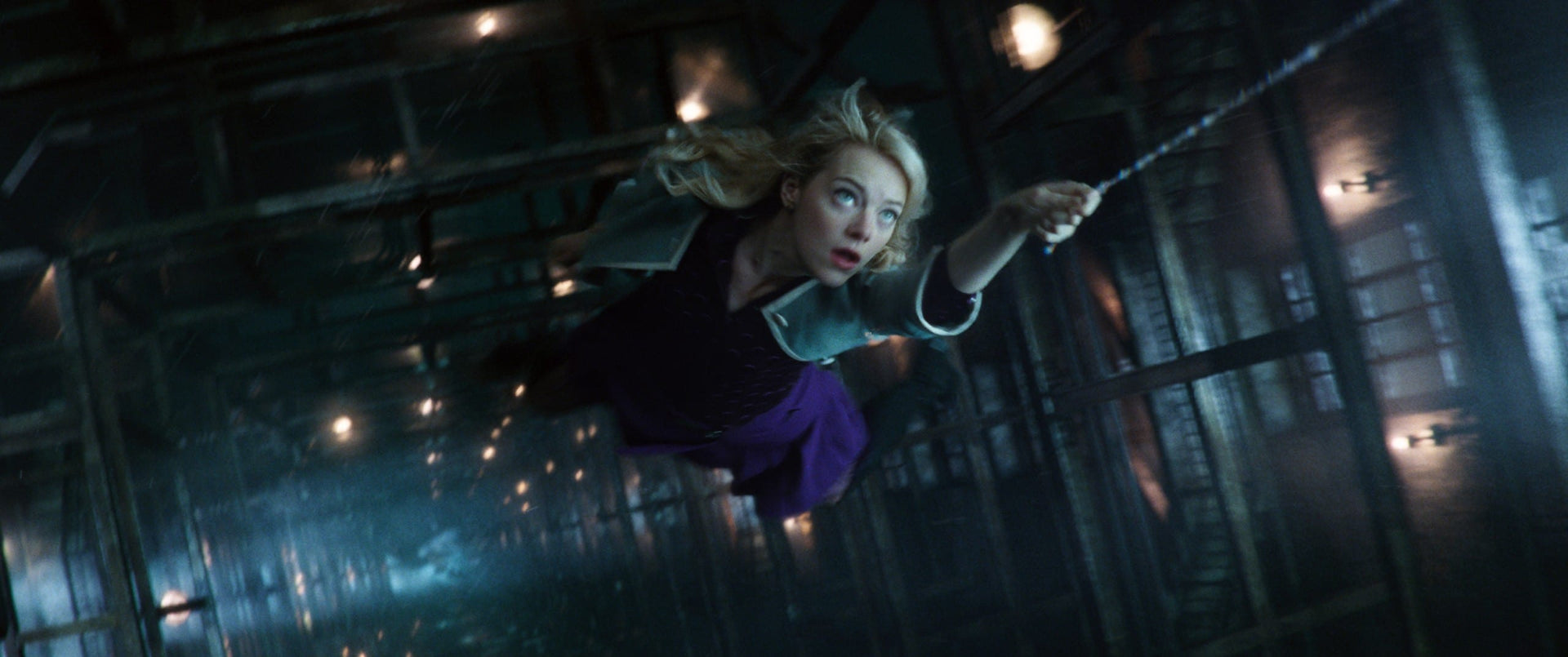
The death of Gwen Stacy is not simply a tragic accident. It raises a far deeper question, one that haunts Peter Parker: what if he was the one who caused her death? When he fires his web to save her, the jolt stops her fall dead… and snaps her neck. That ambiguous scene is still one of the most analysed in all of comics, because it calls into question the hero’s ability to always ‘save everyone’.
It is also a pivotal moment in the evolution of Spider-Man as a character. Guided until then by a sense of responsibility tinged with hope, he becomes a more mature, darker hero, haunted by the fear of failure. That trauma pushes him to keep future loved ones at arm’s length, from Mary Jane to Black Cat, so that he never has to live through such an unbearable loss again.

In modern versions, such as in ‘The Amazing Spider-Man 2’ with Andrew Garfield, this death is reworked with devastating dramatic intensity, amplifying its reach even further. It moves beyond the comics page to establish itself as a major narrative archetype of the superhero genre.
And perhaps that is exactly where its power lies: Gwen Stacy has become a constant reminder that every Spider-Man victory comes at a price. That moral and emotional weight echoes through more reflective pieces such as our Spider-Man pyjamas picturing Peter daydreaming about a quiet life, or our backpacks that capture his moments of doubt.

A turning point in the storytelling of Marvel comics
The death of Gwen Stacy in The Amazing Spider-Man #121 in 1973 is far more than a tragic event in Peter Parker’s life. It marks a genuine shift in the way superhero stories are told. Until then, mainstream comics avoided irreversible losses. Heroes always triumphed, and their loved ones were rarely in real danger. But this time Marvel breaks the rules: Spider-Man fails, and this time nobody comes back.

That bold piece of writing opened the way to a more mature, more realistic era in comics. Figures once idealised suddenly became human, fallible. Peter Parker could no longer simply put on his mask and save everyone: he had to live with his decisions, his mistakes and their irreversible consequences.
It is also from this moment on that the dramatic dimension of the Spider-Man universe intensifies. The line between light and darkness grows thinner. Antagonists such as the Green Goblin are no longer simple cartoonish villains, but figures of deep chaos. And the stories take a more introspective turn, questioning the hero’s moral limits, his sacrifices and the loneliness his duty imposes on him.
This shift in tone can still be felt in modern adaptations. In the films, the relationship between Gwen and Peter takes on an anticipated tragic dimension. Viewers know, even unconsciously, that this story is doomed to a brutal ending. That narrative weight makes every scene, every exchange more intense… and strengthens the myth.
Modern collections also reflect that duality between bright heroism and personal tragedy. Children still dream in front of the Spider-Man T-shirts, long-time fans collect phone cases featuring their favourite heroes, and lovers of storytelling see in them powerful symbols of resilience and loss.
An indelible legacy in the Spider-Man universe
More than fifty years after it was published, the death of Gwen Stacy still haunts the Marvel universe. It is regularly mentioned, revisited, and remains an unavoidable milestone in Spider-Man mythology. Whether in parallel universes, as with Spider-Gwen, or in the film adaptations, this event shapes the evolution of Peter Parker at the deepest level. It is no longer merely a tragic accident, but a narrative pivot set in stone in comics history.
This tragedy helped forge the image of a fallible superhero, torn between his human aspirations and his heroic responsibilities. Peter Parker has never stopped carrying the weight of that failure, and that is precisely what makes him so deeply endearing. His grief, his introspection and his determination to keep doing good regardless resonate with entire generations of readers.

— Also worth reading —
→
Stacy family
George Stacy: the captain who understood Spider-Man before anyone else
→
Film adaptation
The Amazing Spider-Man 2 (2014): a full analysis of a tragic film
→
The fan debate
Gwen Stacy vs Mary Jane: who is the true partner?
The merchandise itself bears witness to that legacy: from Spider-Man slippers for the little ones to duvet covers paying tribute to the earliest comic pages, every item helps keep that collective memory alive. Even in children’s fancy dress costumes or shoes, a piece of this story of courage and pain lies hidden.
So, is that scene the most defining moment in Spider-Man comics? For many, yes. Because it embodies an emotional rupture, a moment of realisation and a rare maturity in superhero storytelling. It reminds us that beneath the mask there is a beating heart. A broken heart, sometimes. But one that keeps on fighting… to honour a silent promise made to the girl he could not save.

