

14-Day Money-Back Guarantee
0
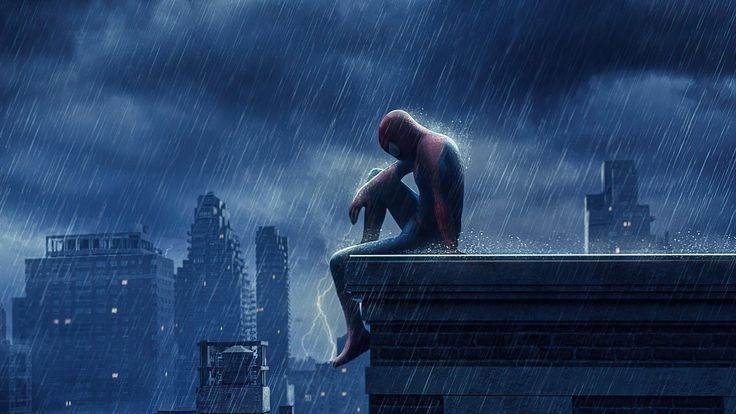
The short answer
Four bereavements shape the dark side of the web-slinger: the murder of Uncle Ben, Gwen Stacy's fatal fall in 1973, the deal struck with Mephisto in One More Day and the disappearance in Infinity War. Each one costs Peter far more than a lost fight. We unpack them one by one below.
Spider-Man is like no other superhero. Behind the red and blue mask, behind the spectacular acrobatics and the cutting one-liners, hides a young man carrying a weight on his shoulders that few fictional characters have ever had to bear. Peter Parker is a hero who cries, who doubts, who loses the people he loves and who still pulls on his suit every single morning. It is precisely that raw humanity, that constant vulnerability, that makes him the most endearing character in all of the Marvel universe. Since his creation by Stan Lee and Steve Ditko in 1962, Spider-Man has lived through story arcs of an emotional intensity rarely matched in comics or on screen. This article explores the most defining moments in the web-slinger's saga, the ones that brought tears to our eyes and carved Spider-Man into the collective memory as the most tragic and most human hero ever created.
The death of Uncle Ben — the original guilt that defines Spider-Man
It all begins with a loss. Before becoming a hero, Peter Parker is an ordinary teenager who has just been given extraordinary powers by the bite of a radioactive spider. Instead of helping others, he chooses to cash in on those powers in televised wrestling matches. It is a selfish choice, a deeply human one, and it is exactly that choice that triggers the founding tragedy of his entire life. When a thief runs past him and Peter refuses to stop him, he does not yet know that the very same criminal will murder his Uncle Ben a few hours later.
Uncle Ben's death is not simply a tragic event. It is the founding moment, the original wound that turns a carefree teenager into a hero tormented by guilt. The famous line "with great power comes great responsibility" becomes an invisible chain that Peter wears around his neck every day of his life. He knows his uncle would still be alive if he had acted differently. That guilt never fades, it is there in every decision he makes, in every sacrifice he accepts. The little-known story of Peter's parents adds another layer to that pain, because the young man had already lost his parents before losing the father figure who had replaced them.
What makes this scene so devastating is that it stages the consequences of a choice. Batman lost his parents to an anonymous criminal. Superman lost his planet. But Peter Parker lost his uncle through his own negligence. Spider-Man's sadness is not a twist of fate, it is the price of a human mistake, and that is why it resonates so deeply in every one of us.
Gwen Stacy's fall — the moment that changed comics forever
If Uncle Ben's death is the original wound, Gwen Stacy's death is the moment comics lost their innocence. In 1973, in issue 121 of The Amazing Spider-Man, the Green Goblin abducts Gwen Stacy and throws her from the top of the George Washington Bridge. Spider-Man fires his web to catch her, and the "snap" you hear when the web stops her fall is not the sound of a rescue. It is the sound of her neck breaking. The full analysis of that landmark moment reveals just how deeply that scene shook the entire comics industry.

Before Gwen Stacy, heroes always saved the girl. Gerry Conway and Gil Kane broke that unspoken contract with staggering brutality. Spider-Man did not merely fail to save Gwen, he may have killed her himself, because the force of the sudden stop caused by the web could well have been the real cause of her death. Peter Parker, trying to save the woman he loved, may have been the instrument of her destruction. That cruel irony sits at the heart of Spider-Man's tragedy and of his condition as a hero forever failing despite his best intentions. The Green Goblin becomes his most personal enemy, the one who struck not the hero but the man behind the mask. The timeline of the Spider-Man films shows how each director has reinterpreted that founding tragedy across the decades.
Aunt May's death and One More Day — the impossible sacrifice
One More Day is arguably the most controversial Spider-Man arc, but behind the outcry lies one of the most heartbreaking moral dilemmas ever handed to a superhero. After the events of Civil War, when Peter publicly reveals his secret identity, a sniper hired by the Kingpin fatally wounds Aunt May. Peter, desperate, consults scientists, sorcerers and cosmic entities. No one can do a thing. That is when Mephisto, Marvel's version of the devil, offers to save May in exchange for Peter and Mary Jane's marriage, not by divorcing them, but by retroactively erasing their union from reality. And Peter accepts. The Back in Black arc that leads up to this moment shows a Peter on the edge, ready to kill to avenge his aunt.
The sadness of One More Day does not come only from the sacrifice. It comes from the fact that Peter knows exactly what he is giving up. He looks MJ in the eyes, they share one last kiss, and together they choose to give up everything they have built. It is a slow, deliberate, chosen pain, without the sudden violence of Gwen's death or the brutal shock of losing Uncle Ben. Anna Watson, Mary Jane's aunt, is one of those characters whose presence is a reminder of everything Peter has lost. The Brand New Day arc that follows shows a Peter starting again from nothing, alone, without the memories that made him a happy man.
The sacrifice in Infinity War — "I don't feel so good, Mr. Stark"
Spider-Man's disappearance in Avengers: Infinity War in 2018 is one of the most memorable scenes in modern cinema. When Thanos snaps his fingers and half the universe begins to fade away, Peter Parker is the only one who senses what is coming, thanks to his spider-sense. And instead of vanishing with dignity like the other heroes, Peter clings to Tony Stark with the terror of a child who does not want to die. "I don't feel so good, Mr. Stark. I don't wanna go. I'm sorry." Those words, delivered by Tom Holland with devastating sincerity, made entire cinemas cry all over the world.

What makes this scene so painful is the contrast between the hero Peter is trying to be and the teenager he really is. Faced with death, he is no longer Spider-Man, he is a sixteen-year-old kid, terrified, apologising for dying in his mentor's arms. Tom Holland's version of the character struck a chord with a huge audience precisely because it captures the vulnerable youth at the heart of the character. The scene echoes all of Peter's lost father figures and foreshadows the ultimate sacrifice Tony will make in Endgame. Spider-Man's future in Secret Wars promises to explore those emotional dynamics across the multiverse even further.
No Way Home — the price of being forgotten and absolute loneliness
Spider-Man: No Way Home is perhaps the most emotionally devastating superhero film ever made. When Doctor Strange's spell threatens to tear the multiverse apart, Peter makes the most painful decision of his life: asking Strange to erase his existence from the memory of every human being. Not just his secret identity, his entire existence. MJ, Ned, Happy, everyone who ever loved him will forget he ever existed.
The final scene, when Peter walks into the café where MJ works and looks at her without her recognising him, is one of the most heartbreaking in modern cinema. We watch Peter rehearse his line, step up to the counter, and at the last moment choose to say nothing. He could introduce himself, try to rebuild their relationship, but he chooses to protect her by staying a stranger. It is the ultimate sacrifice, not dying for someone, but living without the people you love in order to protect them. What nobody tells you about Spider-Man, it is precisely that ability to endure loneliness that makes him so endearing. The final image of the film, Peter alone in a run-down flat, sewing his new suit himself, is a return to his origins that is both magnificent and profoundly sad. The richness of the Spider-Verse and the multiverse offers other versions of that loneliness through different incarnations of the character.
The weight of a double life — why Peter Parker cannot be happy
Beyond the great one-off tragedies, it is Peter Parker's daily life that is the most constant source of sadness in the whole history of Spider-Man. Peter is not a billionaire like Tony Stark or Bruce Wayne. He is a young man who is permanently broke, permanently late, permanently on the edge of exhaustion. He fails his exams because he patrols at night, loses his jobs because he disappears without warning, and his relationships fall apart because he cannot be honest about his secret life. Betty Brant, Carly Cooper, Anna Maria Marconi, every relationship in Peter's life carries the mark of that fundamental impossibility of reconciling the man and the hero.
Peter could stop being Spider-Man at any moment. Nobody is forcing him to put on that suit. But his conscience, forged by the guilt of Uncle Ben's death, leaves him no choice. He feels responsible for every crime he fails to prevent, and that crushing moral burden turns every moment of happiness into another source of guilt. The Big Time arc tried to give Peter some respite with a job at Horizon Labs, but even in those moments of grace the threat is always looming. His relationship with the Daily Bugle and J. Jonah Jameson adds a daily injustice, with Peter saving lives every day while the paper he works for calls him a public menace. Science explains why we watch Spider-Man when we are sad, and the answer is simple: we recognise ourselves in this man who refuses to give up.
The most painful defeats — Back in Black and Kraven's Last Hunt
Spider-Man does not lose often, but when he does, it is with a brutality that leaves deep scars. Spider-Man's greatest defeats are not just lost fights, they are moments when everything that defines Peter as a hero is called into question in the cruellest possible way.

Back in Black — when Peter Parker abandons his morals
After Aunt May is shot, Peter pulls on the black suit and goes to war against the Kingpin with a rage nobody had ever seen in him. He breaks into the prison where Wilson Fisk is being held and beats him with his bare hands in front of every inmate, humiliating him publicly, threatening to kill him. This is no longer Spider-Man, this is a man broken by anger and grief who has decided the rules no longer apply. The sadness of Back in Black does not come from the violence, it comes from the loss of innocence. Peter Parker, the hero who never kills, is a hair's breadth from crossing the line. Ben Reilly, the clone who became Chasm, embodies another version of that fall, an alternative Peter Parker who crossed over for good.
Kraven's Last Hunt — buried alive
Kraven's Last Hunt, published in 1987 by J.M. DeMatteis and Mike Zeck, is considered by many to be the greatest Spider-Man arc ever written. Kraven the Hunter manages to defeat Spider-Man, drugs him and buries him alive in a coffin, then puts on his suit and patrols New York in his place.

When Peter finally frees himself from his grave, he finds a man who has taken his own life, satisfied at having completed his final hunt. The sadness of this arc is layered: the claustrophobic horror of being buried alive, the humiliation of being replaced, the bewilderment of facing an opponent whose victory consists of dying, and the brutal realisation that even when Spider-Man wins, he loses something. Electro and so many other opponents have inflicted wounds on Peter whose scars never fade.

Venom Plush Toy
After so much darkness, even the most terrifying symbiote deserves a hug. This Venom plush turns the dark side of Spider-Man into a comforting companion.
29,90 €
Adopt the symbiote in plush form
Why we cry for Spider-Man — the psychology of the tragic hero
Why does Spider-Man make us cry when other heroes, every bit as tragic on paper, leave us more detached? The answer lies in projective identification. Spider-Man was designed, from his very creation, to be a mirror for his readers. Peter Parker is not a god, a king or a billionaire, he is a broke student, an orphan struggling to pay his rent. When he suffers, we suffer with him because we recognise ourselves in him. Science confirms this phenomenon by showing that viewers release more oxytocin during Spider-Man's emotional scenes than during those of other superheroes.
Aristotle defined tragedy as an emotional purification, a process through which the audience, by feeling pity and terror at the hero's fate, is freed from its own repressed emotions. Spider-Man fulfils that cathartic function perfectly. We cry for Peter Parker, but in reality we are also crying for ourselves, for our own losses and our own silent sacrifices. What nobody says about Spider-Man, is that he has become the therapeutic hero par excellence, the one we turn to when we need to cry without having to explain why. The Spider-Man figures that children collect stand for a friend who understands fear and loneliness. The Spider-Man plush toys become comfort companions carrying all the human warmth of the character. The hidden details in the films reveal countless references to those moments of pain that the directors have scattered through every shot, like so many tributes to that founding sadness. The Clone Saga, in which Peter discovers he may not be the real Peter Parker, touches on deep existential questions that Ben Reilly's tragic fate illustrates with rare cruelty.
The Spider-Man T-shirts worn by millions of people are not just clothes, they are declarations of belonging to a community that recognises itself in Peter Parker's vulnerability. The Spider-Man posters on teenagers' bedroom walls celebrate an ideal of courage in the face of adversity. The Spider-Man fancy dress and costumes are among the world's best-selling children's costumes, because when a child pulls on that mask, they do not turn into an invulnerable being, they turn into a hero who is afraid and acts anyway. The best-selling products in the shop are proof of that timeless enthusiasm, from the Spider-Man pyjamas that follow fans into their dreams to the Spider-Man mugs that remind you every morning that even the hard days are worth living. The Spider-Man gift ideas are so popular because giving something bearing the web-slinger's emblem means giving a symbol of resilience. The products from the Spider-Verse celebrate the diversity of that heroic sadness across the multiverse, and Spider-Man's enemies are themselves often tragic figures who act as a mirror image of Peter Parker's nobility.

Spider-Man Stealth Suit Figure
The black suit of pain and determination, for the moment when Peter has nothing left to lose. This exceptional figure captures all the emotional intensity of a hero on the edge of the abyss.
469,90 € 429,90 €
Discover this collector's piece
Conclusion — the eternal sadness that makes Spider-Man an immortal hero
Spider-Man cries. Spider-Man suffers. Spider-Man loses the people he loves, fails his exams, gets sacked from his jobs, gets torn apart by the press and beaten up by his enemies. And still, every morning, he puts his mask back on and goes out to save the world. It is that magnificent contradiction, that tension between pain and duty, between human fragility and superhuman courage, that makes Spider-Man the greatest hero of all time. The sad moments in his story are not weaknesses in the narrative. They are the narrative. Without Uncle Ben's death, there is no Spider-Man. Without Gwen Stacy's fall, there is no maturity. Without the sacrifice of No Way Home, there is no greatness.
Peter Parker teaches us something few fictional characters have managed to convey with such force. Sadness is part of life, it does not diminish our worth and it does not make us weak. It is in our ability to endure pain and carry on regardless that our true heroism lies. Peter Parker, behind the mask of a hero of the Spider-Man universe, is not a god come down to earth to save us. He is an ordinary human being who chose to do extraordinary things despite a life filled with loss and sacrifice. And that is why, sixty years after his creation, millions of people around the world still wear his emblem, collect his figures, read his adventures and cry at his films. Because Spider-Man is not just a hero. Spider-Man is us.

