
14-Day Money-Back Guarantee
0
The short answer
Norman Osborn wins out over the long run: the Green Goblin knows his prey's civilian identity and uses it to destroy him from the inside, decade after decade. Carnage dominates on raw destructive capability, Octavius on the battlefield of the intellect. Every profile is compared below.
The New York web-slinger has faced dozens of supervillains across his adventures, but one question keeps coming back among fans of the Marvel universe: who is the most powerful enemy of the wall-crawler? Between brute strength, strategic intelligence, psychological menace and personal ties to Peter Parker, several adversaries lay claim to that infamous title. This article surveys the most formidable enemies of the masked vigilante, weighing physical, mental and narrative criteria to answer a question that has divided fans since 1962. To go further, the complete guide to the wall-crawler's villains maps out the full pantheon of villains.
The Green Goblin: the eternal, founding rival
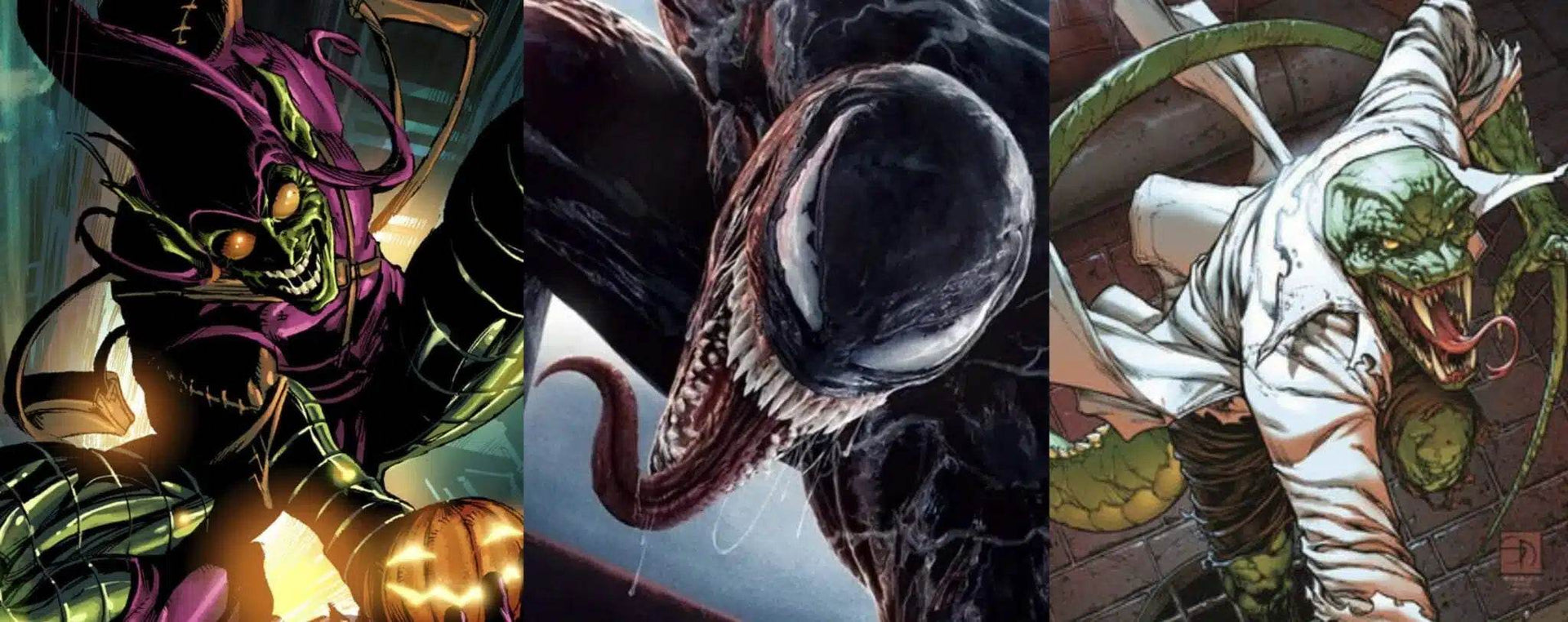
Norman Osborn, better known as the Green Goblin, is arguably the most iconic enemy in the whole mythology. Wealthy, brilliant, manipulative and utterly without moral limits, he is responsible for several of the greatest tragedies in Peter Parker's life, starting with the death of Gwen Stacy in 1973. He is an adversary just as dangerous physically — his strength, his durability, his arsenal of pumpkin bombs — as he is psychologically, because he knows the hero's civilian identity and uses it to break him emotionally.

The man behind the green mask has evolved in the comics over the decades. Far from being a simple costumed criminal, Osborn ran the whole of America during the Dark Reign arc (2008-2010), openly persecuting the masked vigilante with the full authority of the government. His recent return in the comics has revived his narrative relevance. And his bloodline — Harry Osborn and later Hobgoblin, the diabolical heir — carries the family curse across several generations.
Venom: the dark double who knows every weakness
Born from the alien symbiote once worn by Peter Parker, Venom is the fusion of that symbiote with Eddie Brock, a journalist eaten away by hatred of the hero. Venom knows the web-slinger's habits inside out, shares his memories and his flaws, and possesses abilities much like his own — agility, superhuman strength, organic webbing — only amplified. His immunity to the hero's spider-sense makes him especially dangerous: Peter cannot detect him coming.

Over the decades, Venom has evolved from pure antagonist into a nuanced anti-hero. His alternative versions across the multiverse have enriched the myth, and his foothold in pop culture has grown so strong that the black symbiote is now a figure entirely independent of the web-slinger. But whenever he comes back to face Peter Parker, he remains one of the most feared adversaries of all, because he knows his enemy from the inside.
Carnage: pure violence made flesh
If Venom is formidable, Carnage is more terrifying still. This red symbiote, bonded to psychopathic serial killer Cletus Kasady, is uncontrollable and driven by an absolute thirst for destruction. Where Venom follows a logic of personal revenge, Carnage kills without reason, without a plan, without morality. His physical power surpasses even Venom's — he is faster, more lethal, more unstable.
The Maximum Carnage arc, one of the most violent crossovers in the entire mythology, shows just how thoroughly this adversary can lay waste to New York in a matter of hours. His accomplice Shriek adds a psychological dimension to the raw physical violence. Carnage is often considered the most dangerous enemy in terms of sheer brutality, but he lacks the narrative complexity that would make him the outright number one.
Doctor Octopus: the scientific genius with a superhuman IQ
Otto Octavius is a scientific genius fitted with four telescopic mechanical arms of fearsome power. But his real danger does not lie in physical strength — it is his strategic intelligence that makes him one of the most feared enemies in the spider pantheon. In some arcs, Otto pulls off unimaginable feats: he takes command of the Sinister Six, he builds secret bases, he bends Marvel science with a virtuosity few other villains ever reach.

His absolute masterstroke remains Superior Spider-Man, where he manages to transfer his consciousness into Peter Parker's body — becoming the hero while remaining Otto Octavius in mind. That arc redrew the border between hero and villain, and proved that Octavius could be more terrifying than ever: not because he was fighting the web-slinger, but because he was the web-slinger. The Ends of the Earth arc had already shown his ability to threaten the entire planet. Otto is the enemy who thinks further ahead than the rest.
Carnage or Green Goblin: who takes the top spot?
If we are talking about brute power and sheer destructive capability, Carnage is arguably the most formidable of all. No other enemy can claim to match his chaotic violence. But in terms of psychological impact, narrative longevity and personal ties to Peter Parker, the Green Goblin remains the most memorable and the most dangerous over the long term. Norman Osborn killed Gwen Stacy, hounded Aunt May, manipulated Harry Osborn, ran America. No other villain has that kind of narrative depth.

The verdict therefore depends on the criterion you choose. On brute power: Carnage. On total impact on the hero's life: the Green Goblin. On strategic intelligence: Doctor Octopus. On personal threat (he knows the civilian identity): Venom. That plurality of criteria explains why the debate never closes among fans, and why every new film adaptation reopens the discussion. Peter Parker's civilian identity is precisely what these adversaries threaten — each in his own way.
COLLECTOR FIGURE — Green Goblin No Way Home

Collector Figure — Green Goblin No Way Home
299,90 €
The arch-enemy in his most iconic MCU form. A centrepiece for fans who celebrate the eternal duel between light and shadow.
Discover →The Sinister Six: the coalition that changes everything
Originally created by Doctor Octopus in Amazing Spider-Man Annual #1 back in 1964, the Sinister Six are a team bringing together several enemies who decided to join forces and defeat the web-slinger together. Among the recurring members you will find Electro, the Vulture, Sandman, Mysterio, Kraven the Hunter and of course Octopus himself.
Taken one by one, they are not always the most powerful — but as a coordinated group, they represent a titanic challenge for the masked vigilante. Sinister War, published in 2021, pushed that logic to its absolute peak. The return of the Sinister Six is an editorial event every time the group resurfaces. The collective threat is greater than the sum of the individual ones: it is the hero's ultimate trial, forcing him to defeat several adversaries at once with nothing but his own mental and physical resources.
Kraven the Hunter: the man who buried the hero alive
Kraven is often underrated in rankings of raw power — but his role in the Kraven's Last Hunt arc makes him one of the most memorable enemies in the entire spider mythology. In this 1987 story by J.M. DeMatteis, Kraven manages to capture, drug and bury the web-slinger alive, then takes his place in a black costume to prove he can do the job better as a vigilante.
That story shows just how much more destructive the mental battle can be than brute force. Kraven is not trying to kill Peter Parker — he is trying to supplant him, to prove that he is superior both morally and physically. His recent trajectory in the comics has turned him into a central major villain, and his film adaptation revived interest in a character long confined to the background. Kraven proves you can be a formidable enemy without any supernatural powers at all.
Enemies from the multiverse: Morlun and the Spider-Totems
With the narrative explosion of the Spider-Verse, a new category of adversary appeared: those who threaten not one single version of the hero, but every version at once. Morlun, the vampiric predator of the Spider-Totems, feeds on the totemic energy of spiders across dimensions. He is considered one of the hardest enemies to defeat — so much so that several Peter Parkers from parallel universes have to team up to fight him.
This multiversal threat changes the very nature of the conflict. When Morlun shows up, it is no longer a personal duel: it is a cosmic war in which all the major story arcs of the web-slinger converge. The Earths of the multiverse (616, 1610, 42 and more) each become a battlefield. This widened scale pushes back the limits of what "powerful" even means: can you still compare a local Green Goblin with a cosmic predator? The debate stays open.
Everyday enemies: Kingpin, Chameleon, Jackal
Alongside the great cosmic or symbiotic predators, the hero also has to face a gallery of more down-to-earth enemies who are every bit as formidable. Kingpin, New York's king of crime, has no superpowers at all but controls entire empires through his network, his intelligence and his considerable physical strength. The Chameleon, the masked vigilante's very first enemy back in 1963, stays relevant through his mastery of disguise. The Jackal, the man responsible for cloning Peter Parker in the Clone Saga, adds a scientific and tragic dimension to the fights.
These adversaries share one common trait: their power is measured less in brute force than in narrative complexity. Peter Parker's worst nightmare is not always the physically strongest — it is often the one who cuts the deepest. And it is precisely this plurality of threats that gives the spider mythology its depth.
The "minor" enemies who hit hard: Lizard, Shocker, Scorpion, Rhino
The spider pantheon also has a layer of more "technical" enemies, sometimes underrated but capable of memorable moments. The Lizard, better known as Doctor Curt Connors, turns scientific tragedy into a bestial threat — his wife Martha Connors embodies the human dimension of that tragedy. Shocker wields vibro-gauntlets that can tear a building apart.
The Scorpion, designed specifically to fight the web-slinger, has a lethal mechanical tail. Rhino, a monster of brute power, can smash straight through a reinforced concrete wall. Taken one by one, none of these villains is "the most powerful" — but when the hero faces them back to back, or when one of them is particularly well written in an arc, they become very real threats.
PREMIUM COSTUME — Absolute Carnage

Spider-Man Costume — Absolute Carnage
199,90 €
Step into the skin of the most unstable villain in the mythology. An exceptional piece for embodying the pure violence of Cletus Kasady.
Discover →Emotional power: when the enemy needs no superpowers
Some adversaries are formidable not through their physical abilities, but through their intimate bond with Peter Parker. Harry Osborn, son of the Green Goblin and the hero's best friend, embodies that ambivalence in all its narrative cruelty. When Harry becomes an enemy, it is a family betrayal; when he becomes a friend again, it is a bittersweet redemption. This grey area is a narrative playground writers have been mining for decades.
That intimate dimension makes these enemies especially dangerous. How do you fight someone you love? How do you strike with all your strength at a man who shares your past? Each time, the hero has to resolve that moral dilemma, and his choices define his humanity. The complete universe of Spider-Man characters is full of these familiar faces that turn into threats — and the other way round. It is one of the most powerful emotional engines in the whole franchise.
Final verdict: there is no single enemy, there is a pantheon
If you go looking for one single answer to the question "who is the most powerful enemy?", you miss the whole point of the spider mythology. Ever since Stan Lee and Steve Ditko in 1962, the villain pantheon has been designed as a gallery in which each adversary represents a different dimension of the conflict. Carnage embodies pure violence. The Green Goblin embodies personal malice. Doc Ock embodies strategic intelligence. Venom embodies the intimate shadow. Kraven embodies the mental challenge. Morlun embodies the cosmic threat.
The greatest enemy of the New York web-slinger is therefore not defined by physical strength alone. It is the combination of emotional impact, global threat and character complexity that makes an adversary worthy of the name. Whether it is Venom, Carnage or the Green Goblin, each embodies one slice of Peter Parker's chaotic life. To explore each of those facets, the complete guide to the iconic villains remains the reference — and every new film or video game adaptation reignites the debate with renewed intensity.

