
14-Day Money-Back Guarantee
0
The short answer
Before the mask, he runs Oscorp Industries, the biotech empire behind a good share of the web-slinger's tragedies. A poor childhood with a violent father feeds his hunger for control, which he later repeats on his own son Harry. We unpack that legacy below.
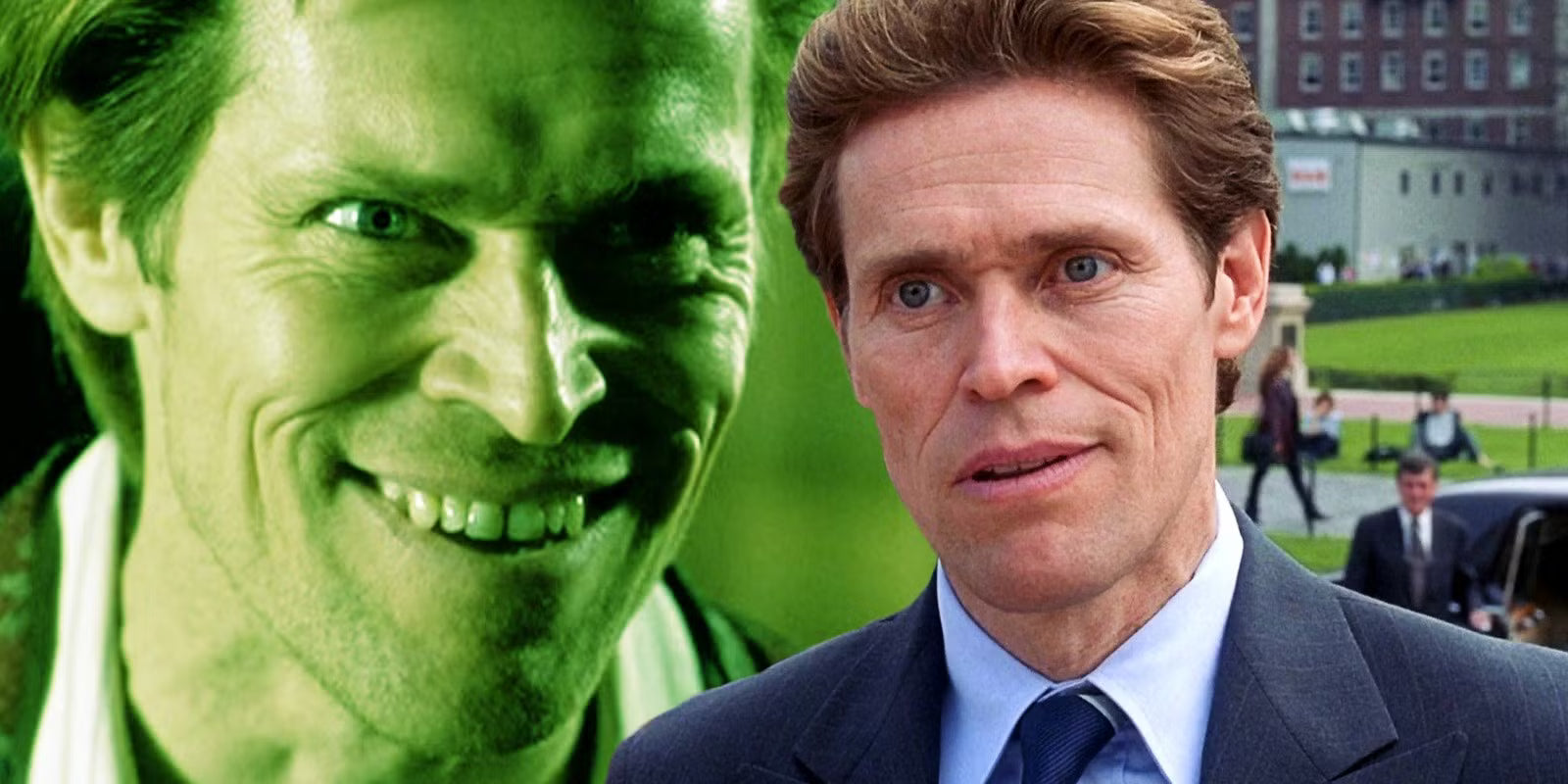
When you hear the name Norman Osborn, most fans immediately think of the Green Goblin, one of the greatest enemies of Peter Parker. Yet reducing Norman to his evil alter ego alone means missing a rare kind of complexity in the Marvel universe. Long before he puts on the costume and becomes a threat, Norman Osborn is first and foremost a father, a formidable businessman, and a political strategist able to manipulate his world on a far wider scale than a simple fight against Spider-Man.
Across his various incarnations, Norman embodies what wealth, an obsession with power and the fear of failure can produce. Shaped by a childhood marked by poverty and the harshness of a violent father, he built his industrial empire, Oscorp, on the sweat of his devouring ambition. It is no accident that Oscorp is today an unavoidable name in Marvel's stories, often at the crossroads of Spider-Man's arcs, but also of organised crime and even the Marvel heroes.
Where other antagonists live only in the shadows, Norman Osborn operates on two fronts: the public spotlight, as an industrialist and a figure of power, and the darkness, where his thirst for domination turns into obsession. This double face makes him one of the most fascinating characters in the whole Spider-Man universe.

In this first part, we are going to explore Norman Osborn from an angle that is often overlooked: not that of the Green Goblin, but that of the man who, through his choices, his past and his ambitions, shaped a large part of the world of Spider-Man on screen and in the comics. A dive behind the scenes of a character who, without ever needing his mask, is already formidable.
Oscorp: Norman Osborn's industrial empire
If Norman Osborn has managed to become one of the most powerful figures in New York, it is thanks to Oscorp Industries, his flagship company. This technology and biotechnology giant is not merely a recurring backdrop in Spider-Man's stories: it is often their starting point. Oscorp has given rise to revolutionary discoveries, but also to questionable experiments that have turned many characters' lives upside down.
Much like Mysterio or the Vulture, Oscorp embodies the blurred line between science and ethics. The experiments run in its laboratories, often under pressure from Norman, have led to large-scale disasters: unstable serums, military projects spiralling out of control, biological weapons. All of it behind an impeccable facade for the general public, that of an innovative, modern company.
If the whole Spider-Man universe appeals to you, have a look at our guide to Spider-Man merchandise, with t-shirts, figures, gifts, jumpers, or even duvet covers.

This double face of Oscorp is fascinating. On one side, a respectable multinational that could rival giants like Stark Industries; on the other, a nest of manipulation and corruption. It is this ambiguity that lets writers multiply story arcs around the company, tying Spider-Man to political, economic and even international intrigue.
In several arcs, Norman appears not only as a greedy company boss, but as a visionary of control. Oscorp is no simple company to him, it is a tool of domination that lets him play on every front: the economy, science, politics and, of course… war.

Exploring Oscorp makes it easier to understand why Norman Osborn does not need his mask to be a threat. His decisions in the plush offices of a skyscraper are often worth far more than a fight on the rooftops of Manhattan. And that power of influence, whether it means infiltrating institutions or manipulating the markets, brings him close to figures like Wilson Fisk: enemies who hit harder through their networks than through their fists.
Oscorp thus becomes a recurring symbol in the Spider-Man universe, a place where scientific ambition and moral drift cross paths. And in the shadow of its laboratories, Norman Osborn keeps reinforcing his image as an untouchable man, able to redraw New York to suit his own rules.

Norman Osborn, the father behind the tycoon
Behind the mask of the company boss and the peerless manipulator hides another essential role: that of father. Norman Osborn keeps a complex, at times destructive relationship with his son Harry Osborn. It is arguably one of the most tragic dynamics in the Spider-Man universe, one where the family legacy becomes a burden far more than a privilege.
Norman is often portrayed as a demanding, perfectionist man, incapable of showing genuine affection. His obsession with power and success shows in the way he raises his son: he expects Harry to become his worthy successor, yet gives him neither the tenderness nor the stability a child needs. That constant pressure feeds a permanent sense of failure in Harry, and a desperate quest for recognition.
In many stories, this father-and-son relationship turns into a tragic spiral. Harry, already prey to his own insecurities, sinks into addiction and ends up drawing closer to his father's darkest legacy. The rivalry between Peter Parker and Norman finds a direct echo in the broken friendship between Peter and Harry, creating a dramatic dynamic that goes well beyond a simple superhero clash.
Here we find one of the central themes of the Spider-Man universe: the impact of personal choices on those closest to you. Where Peter constantly tries to protect his family and his friends despite his role as a superhero, Norman sacrifices everything to his ambition, even if it breaks his own son. That contrast makes their confrontations all the more poignant.
Several story arcs, such as Son of the Goblin or the later sagas where Harry takes up his father's mantle, illustrate this vicious circle. Harry fights to free himself from Norman's heavy shadow, but often ends up repeating his mistakes. A modern Shakespearean tragedy, in which a father's thirst for power destroys the very foundations of his own line.
By exploring this intimate side, the writers show that Norman Osborn is not only an enemy of Spider-Man: he is also the enemy of his own family. A double destruction, public and private, that makes him a character as fascinating as he is terrifying.
The political rise and the global strategist
While Norman Osborn is above all associated with his clashes with Peter Parker, it should not be forgotten that he has also played a major role on a far wider scale. In several story arcs, Norman manages to climb to the top of the American political and military chessboard, proving that his power is not limited to Oscorp or to his alter ego's costume.
The most striking example remains, without doubt, the Dark Reign period, in which Osborn takes advantage of the chaos left by the superhero civil war and the Skrull invasion to become the head of American national security. As the country's new strongman, he takes control of S.H.I.E.L.D., which he renames H.A.M.M.E.R.. This reversal perfectly illustrates how dangerous Norman is: able to pass himself off as a saviour in the eyes of the public while pursuing his darkest ambitions.

During this period, he also founds the Dark Avengers, a team made up of supervillains dressed up as heroes. Here again we find Osborn's strategic finesse: manipulating image and perception the better to control society. Where Spider-Man acts in the shadows to save lives, Norman acts in full light, under the spotlights, proving that real power does not always lie in brute force but in political and media influence.
These arcs considerably widen Norman Osborn's reach, turning him into a global threat rather than merely a New York antagonist. He becomes a pivotal character whose choices affect the whole Marvel universe, from Spider-Man on screen through to the most ambitious Marvel crossovers.
In the end, Norman Osborn is not just one of Spider-Man's greatest enemies: he is the very embodiment of corrupted power. A man able to turn his weaknesses into levers of influence, to impose his will on entire nations, and to remind us that sometimes the most frightening monsters have no need of a mask.

