
14-Day Money-Back Guarantee
0
The short answer
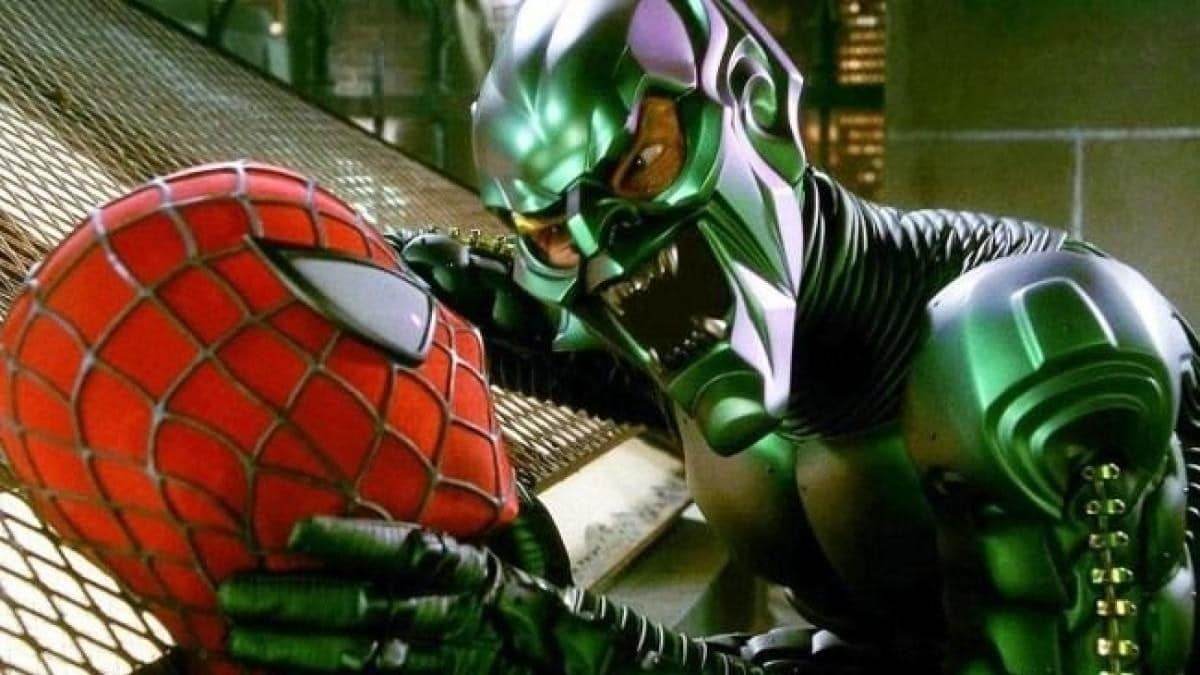
Behind the mask hides Norman Osborn, the boss of Osborn Industries, whom a botched experimental serum tipped into paranoia and megalomania. First seen in Amazing Spider-Man #14 in 1964, he goes after the hero’s loved ones and his identity rather than his strength. Full portrait below.
The origins of a legendary rivalry
In the whole Marvel universe, no enemy is as intimately tied to the personal tragedy of Peter Parker as the Green Goblin. Of course, Spider-Man faces monsters, symbiotes, mystical hunters and superhuman criminals… but none of them carries as much emotional, symbolic and narrative weight as Norman Osborn. Where Kraven tests his physical limits and Morlun threatens his soul, the Green Goblin attacks what Peter holds dearest: his family, his friends, his own identity. The subject is covered in more detail in Go Down Swinging: the Red Goblin, the arc where Norman Osborn merges with Carnage.

Norman Osborn is not just a supervillain: he is the very embodiment of the hero’s innermost wound. His madness is a mirror image of Spider-Man’s moral responsibility. Where Peter uses his gifts to save innocent people, Norman drives his intelligence and his power towards domination, manipulation and destruction. That deep opposition makes their clashes unforgettable, and it also shaped some of the saga’s most striking stories, starting with the legendary tragedy explored in the article The Death of Gwen Stacy.
The Green Goblin first appears in Amazing Spider-Man #14 (1964). But it is only later that Stan Lee and Steve Ditko give him a face: that of Harry Osborn’s father, a close friend of Peter’s. That reveal turns a classic villain into the hero’s personal enemy. The fight becomes intimate, tragic, almost a family affair. The line between civilian life and heroic life is shattered.

That emotional bond runs through the many adaptations, too. In Sam Raimi’s films, Willem Dafoe plays a Norman Osborn torn between genius, ambition and madness — a performance that redefined how the character is seen. The role was so powerful that the MCU saga brought him back in No Way Home, where he becomes a multiversal threat, connected to the big themes set out in our pillar page on the Spider-Verse.
Beyond the character himself, the Green Goblin shaped the very look of the Spider-Man myth: his iconic glider, his pumpkin bombs, his demonic laugh and his now cult costume have become emblematic symbols of the web-slinger. A popularity that shows even in the merchandise, from Spider-Man figures recreating their most iconic battles to the masks inspired by their most spectacular showdowns.
In this first part, we have laid the foundations of the most famous rivalry in Spider-Man’s history. In the next one, we will dive into Norman Osborn’s psychology, his transformation into the Green Goblin and the tragic mechanics that made this character the web-slinger’s absolute nemesis.
The birth of the Green Goblin: genius, madness and devouring ambition
Understanding the Green Goblin means understanding a slow, methodical, almost inevitable transformation. Where other supervillains fall into crime because of an accident, a symbiote or an uncontrollable mutation, Norman Osborn descends into madness because he wanted to become more than a man. He is an industrial genius, a formidable strategist, a determined scientist — but also a father eaten away by ambition and the fear of failure. The Goblin serum does not create the monster: it reveals what was already inside him.

Before he became the Green Goblin, Norman Osborn ran Osborn Industries. His obsessive pursuit of power and financial success pushed him to experiment with an unstable serum meant to amplify strength and intelligence. When the formula explodes in front of him, the compound seeps into his body, transforming his mind far more than his physique. The result? A spectacular boost to his physical and mental abilities… but also a multiplying of his darkest traits: paranoia, aggression, megalomania.
That duality sits at the heart of the character’s psychology. Norman is not simply a madman: he is a man torn between his public identity — charismatic tycoon, strict father — and his violent, anarchic, calculating alter ego. The Goblin is not a second personality: he is the monstrous exaggeration of everything Norman never dared to become. An idea that echoes strongly with the themes explored in our analysis of Superior Spider-Man, where identity and the corruption of power play a central role.
His signature gear comes straight from his genius:
- the Goblin Glider, designed as an ultra-manoeuvrable flying weapon;
- the pumpkin bombs, at once grotesque symbols and devastating weapons;
- his costume, built to instil fear and burn itself into your memory;
- his blades, rockets and gadgets, which show just how much Norman is more than a simple supervillain: he is a war engineer.
The Green Goblin sees himself as a modern king, able to rule New York through terror. His philosophy rests on a monstrous truth: in his mind, Spider-Man is a personal obstacle, not a hero. Peter becomes his rival, his obsession, the one he wants to break to prove to the world — and to himself — that he is superior.
That rivalry reaches its peak when he discovers the secret identity of Spider-Man. It is no longer a clash between a vigilante and a criminal: it is a psychological war between two men whose fates are now bound together forever. The tragic irony, analysed in our pillar page on the story of Peter Parker, is that Peter still sees Norman as the father of a friend… while Norman sees in Peter nothing but a toy to destroy.
In the next part, we will look back at the most striking confrontations between Spider-Man and the Green Goblin — including the one that changed comics history forever: the death of Gwen Stacy.
The conflict escalates: when the Green Goblin’s hatred redefines Peter Parker’s life
The Green Goblin was never content to be just one more masked criminal in the New York landscape. The moment he discovers that Spider-Man is none other than Peter Parker, his approach changes radically: it is no longer about beating a hero, but about breaking a young man. No other enemy of the web-slinger — not even Venom or Kraven — has had such a colossal emotional impact on his personal life.
The first major turning point comes in The Amazing Spider-Man #39-40, when Norman kidnaps Peter, straps him to his glider and unmasks himself. That confrontation, mixing raw violence and psychological manipulation, sets the dynamic for the decades that follow: one wants to prove his dominance, the other wants to save a sick man… without dying at his hands.
But nothing, absolutely nothing, will ever surpass the most tragic event in all of Spider-Man mythology: the death of Gwen Stacy. In The Amazing Spider-Man #121-122, the Green Goblin pushes his hatred to its very limit by kidnapping Gwen and taking her to the top of the George Washington Bridge. The scene is now carved into comics history: a green costume lit by the moon, an unconscious young woman, a desperate hero.

When the Green Goblin — in a monstrously calculated act — lets Gwen fall into the void, Spider-Man instinctively fires a web to catch her. But the impact of that brutal stop breaks her neck. For the first time, Peter has to live with the unbearable idea that his attempt to save someone caused her death.
The Green Goblin then becomes more than an enemy: he becomes the symbol of grief, of guilt, of the impossibility of controlling everything. At that precise moment, Spider-Man is no longer the hopeful young hero of the early days. He becomes an adult marked for life.
That scene still echoes today in modern analyses and stories, especially in arcs such as Back in Black or the alternative universes explored in our pillar page devoted to the Spider-Verse, where every variant of the web-slinger carries their own version of that wound.
After that abject act, Norman meets his death impaled on his own glider — an ironic, brutal ending that seemed to close the era of the Green Goblin. But Marvel would not let this character disappear so easily… and Norman’s shadow would keep hanging over Peter’s life for decades.
In the next part, we will see why — even dead — the Green Goblin keeps controlling the web-slinger’s life, and how his legacy shaped generations of enemies, broken allies and unforgettable stories.
— Go deeper on the Green Goblin
3 reads to understand Norman Osborn and his legacy
The Green Goblin’s legacy: an evil that outlives death
The apparent death of the Green Goblin in The Amazing Spider-Man #122 could have marked the end of a visceral antagonist. But Norman Osborn is a character far too central, too symbolic, too deeply written into Peter Parker’s psyche to truly disappear. And Marvel knows it: the Green Goblin is not only a man, he is a curse that runs through the generations.
From the very first years after his death, his shadow keeps hanging over Peter, above all through Harry Osborn. Peter’s closest friend, shattered by the revelation of his father’s double life, slowly slides towards madness. The costume, the pumpkin bombs, the glider: everything that symbolised Norman gradually becomes the weight that crushes Harry. His relapses, his attempts at redemption, his psychotic breakdowns — each of his appearances is a reminder that the Green Goblin is not dead, he has simply been passed on.

This idea is explored in depth in modern series and in the web-slinger’s founding arcs, such as the greatest Spider-Man story arcs, where the family legacy becomes a weapon as dangerous as any serum. The goblin symbol — the laughter, the madness, the cruelty — cannot die as long as there is someone left to remind Peter of what he has lost.
And then, of course, Norman comes back. In the 1990s, Marvel officially resurrected the character, revealing that he had survived his injury thanks to the Goblin serum. His return reintroduces a terrifying dynamic: the only enemy who knows Spider-Man’s identity, his inner circle, his emotional fragility. Norman is no longer only a physical threat, he is a political, social and psychological one. He manipulates public opinion, infiltrates institutions and sabotages Peter’s life from the shadows.
He notably becomes a major player in wider events across the Marvel universe, and every time Peter thinks he has finally turned the page, Norman reappears — like a wound that never closes. His constant presence is analysed in introspective pieces such as The saddest moments in Spider-Man’s history, where his influence is identified as one of the most destructive forces in the web-slinger’s life.
An essential figure in modern adaptations
On screen, the Green Goblin gained a legendary aura thanks to Willem Dafoe’s iconic performance in Sam Raimi’s trilogy. This Norman, swinging between genius and dementia, redefined the character’s image for a whole generation, and his return in No Way Home proved that he remains the ultimate Spider-Man villain, the one fans fear and respect the most.
In video games, animated series and merchandise, he is one of the most widely represented antagonists. From Spider-Man figures to retro posters, his image is recognisable among thousands. Even accessories aimed at children — such as the Spider-Man fancy dress costumes inspired by his most iconic fights — show his timeless impact.
Conclusion: why the Green Goblin remains the web-slinger’s arch-enemy
The Green Goblin is not just an antagonist. He is a lesson. A scar. A moral question made flesh: what becomes of a hero when his greatest enemy is the one who destroyed his innocence?
Where other villains challenge Spider-Man physically, Norman Osborn challenges him emotionally, psychologically, existentially. He is not a threat you can forget or neutralise. He is the constant reminder that even the most empathetic hero can lose what he loves most.
And it is precisely because he strikes at the very heart of Peter Parker that the Green Goblin will remain, forever, the web-slinger’s arch-enemy.

