

14-Day Money-Back Guarantee
0
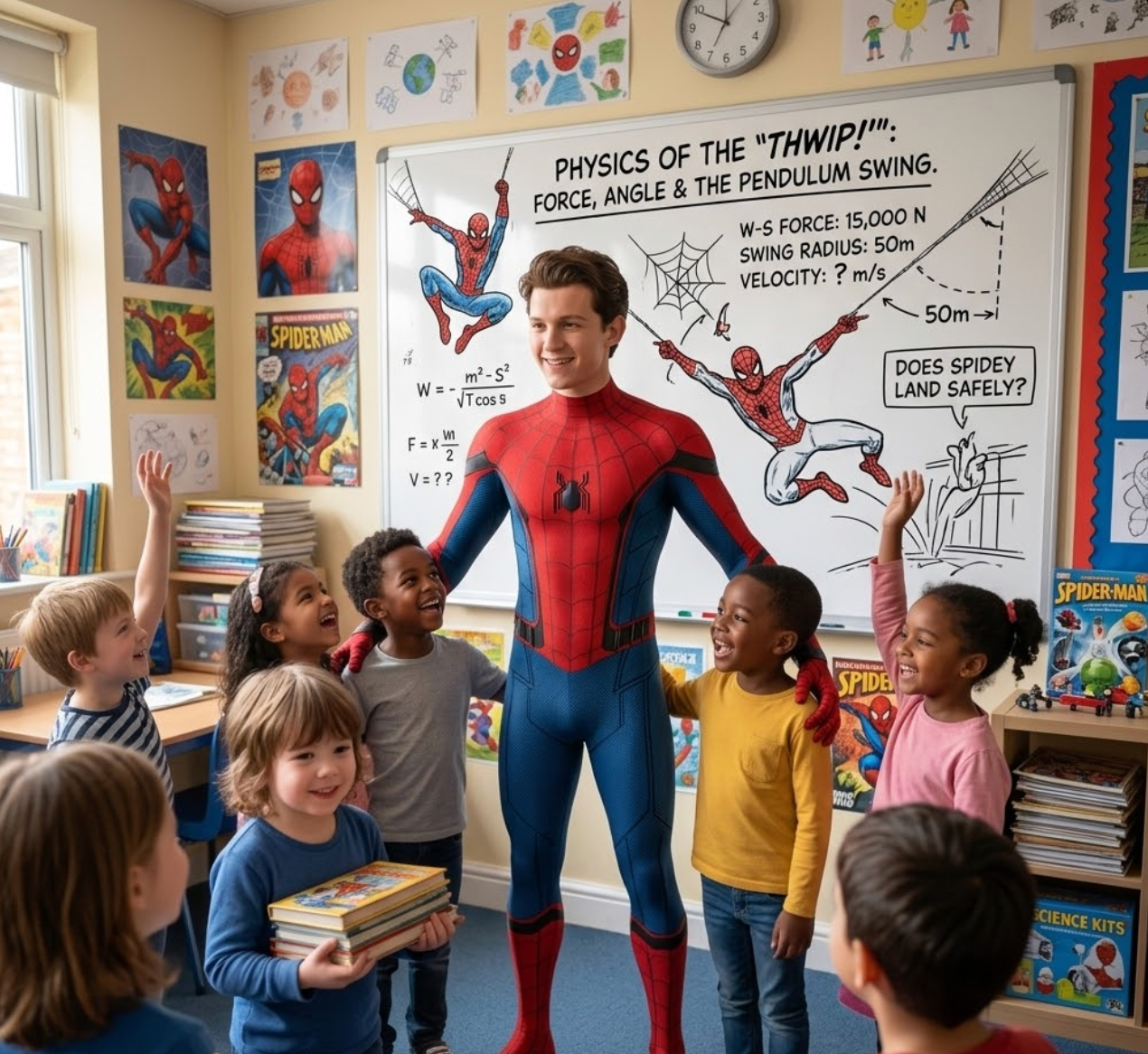
The short answer
Four lessons stand out: taking failure on the chin and starting again, caring about strangers as much as loved ones, connecting your abilities to a moral duty, and building an identity by leaning on a role model. The psychological mechanisms behind each of these effects are explained below, with concrete examples drawn from play.
What Spider-Man teaches your child without you realising it
Your child is wearing their Spider-Man t-shirt for the fourth time this week. They sleep with their Spider-Man plush toy, refuse to go to school without their Spider-Man backpack, and beg you to watch the same animated film for the hundredth time.
You may be telling yourself it's just a phase. A passing obsession with a character in red and blue tights. But something far deeper is going on.
Because while you worry about this 'addiction' to superheroes, your child is learning essential life lessons that some adults take decades to absorb. Lessons about courage, responsibility, empathy and resilience.
Child psychologists have studied the impact of superheroes on children's emotional and social development. Their conclusions are surprising: Spider-Man isn't just entertainment. He's a powerful teaching tool that passes on crucial skills in a natural, playful way.
Here's what your child is really learning when they play with Spider-Man — and why you might want to encourage this passion rather than limit it.
The lesson nobody else teaches: failure isn't the end
Unlike Superman or Wonder Woman, who are born with their powers, Peter Parker starts out as an awkward teenager, rejected and bullied. He fails. All the time. He loses fights, misses opportunities, lets down the people he loves.
And yet he gets back up. Every. Single. Time.
This dimension of failure and resilience is unique in the superhero world. When your seven-year-old watches Spider-Man: Into the Spider-Verse and sees Miles Morales fall again and again before nailing his 'leap of faith', they aren't just learning to admire a hero. They're learning that failing is part of the process.

This lesson matters enormously in a society that prizes instant perfection. Today's children grow up with Instagram and TikTok, where everyone looks flawless. Spider-Man shows them a deeper truth: greatness comes from persevering through failure, not from never failing.
That's why psychologists recommend Spider-Man over other heroes: he normalises failure and turns vulnerability into strength. When your child plays with their Spider-Man action figures, they often act out scenarios where the hero loses first and wins later. They're mentally rehearsing resilience.
Why Spider-Man makes children more empathetic (according to science)
A study from the University of Buffalo revealed something fascinating: children regularly exposed to Spider-Man develop above-average empathy and social sensitivity. Why?
Because Spider-Man saves everyone. Not just the main characters. Not just the rich or the powerful. He saves the hot dog vendor, the old lady crossing the road, the child whose cat is stuck up a tree.
In Sam Raimi's Spider-Man trilogy, you see Peter helping ordinary strangers in almost every film. This democratic vision of rescue teaches children that every life counts, whoever you are.

When your child puts on their Spider-Man costume and 'saves' their little brother from an imaginary monster, they aren't just playing. They're practising altruism. They're internalising the idea that protecting others is noble, even when nobody is watching.
Empathy developed this young has measurable long-term effects on social behaviour. Children who are Spider-Man fans show statistically more prosocial behaviour: sharing, helping, comforting. These aren't just correlations — this is social learning through modelling.
The line that changes everything (and that your child repeats without understanding it)
You've heard it a thousand times. Your child may even have quoted it while refusing to tidy their bedroom (ironically). 'With great power comes great responsibility.'

At five, that line sounds abstract. But unconsciously, it plants an essential seed: your abilities create moral obligations.
This idea — that power is not a privilege but a responsibility — is one of the most sophisticated ethical lessons you can teach a child. And Spider-Man makes it accessible, understandable, visceral.
Watch your child next time they help a younger classmate at school, or share their snack with someone who forgot theirs. They're applying that lesson without even noticing. The 'great power' here is simply being bigger, stronger, having more resources. The 'responsibility' is using that advantage to help.
Parents often underestimate how much fictional characters pass on values. But psychologists confirm it: children learn ethics far better from stories than from lectures. Spider-Man does the teaching for you, more effectively than any direct moral lesson.
What parents don't see: identity development
You may be irritated at having to buy a fifth pair of Spider-Man pyjamas because your child point-blank refuses to wear anything else. But something crucial is happening in that obsessive clothing choice.
Between the ages of 4 and 10, children go through a phase of identity building where they try on different 'personalities' to see which one fits. When your child insists on wearing their Spider-Man jumper every single day, they aren't just making a clothing choice. They're testing an identity: the brave, kind hero who helps others.
This is a healthy psychological process called 'hero identification', and it helps a child build their sense of self. They ask themselves: 'If I were Spider-Man, how would I react here?' That question becomes an internal moral compass.
Psychologists even recommend encouraging this identification rather than fighting it. Let your child create their complete Spider-Man bedroom if they want to. It isn't a waste — it's investing in their identity development and their sense of control over their own environment.


Spider-Man teaches emotional regulation better than any child psychologist
Here's something few parents realise: Spider-Man is constantly handling complex, contradictory emotions. He's angry, but he doesn't take revenge. He's afraid, but he moves forward anyway. He feels guilt and learns to live with it.
In Spider-Man: No Way Home, Peter has to handle grief, rage and the desire for revenge — and finally choose forgiveness and sacrifice. It's a masterclass in sophisticated emotional regulation.
When your child watches these films or plays with their Spider-Man toys, they're observing a model of healthy emotional management. They see that you can feel anger without becoming violent. That you can be afraid without being a coward. That you can be sad without falling apart.
These emotional nuances are exactly what children need to learn in order to become balanced adults. And Spider-Man teaches them in an accessible, narrative, memorable way.
The unexpected social bond Spider-Man creates
When your child arrives at school with their Spider-Man backpack, something magical happens: the other young fans recognise it instantly. A bond forms. A sense of belonging to a shared 'tribe'.
This social dimension of a Spider-Man passion is underrated but vital. In a world where children can feel isolated or different, sharing a common passion builds essential social bridges.
Psychologists call it 'shared parasocial identity' — when several people connect through their common attachment to a fictional figure. It smooths social interaction, reduces social anxiety and creates openings for conversation.
Watch how children interact at a Spider-Man birthday party: they play together instantly, with no social warm-up period. The shared hero provides neutral social ground where everyone feels at ease.

Why Spider-Man (and not the others) crosses generations
There's a reason why you, the parent, already knew who Spider-Man was before your child discovered him. A reason why parents keep buying Spider-Man generation after generation.
It's because Spider-Man embodies universal, timeless values that resonate in every era. Courage in the face of adversity. Personal responsibility. Selfless sacrifice. Humanity in spite of power.
These values never go out of fashion. Whether you grew up with the Raimi trilogy, the animated Spider-Verse or the MCU Spider-Man, you received the same fundamental lessons.
That's what makes Spider-Man so powerful as a teaching tool: you and your child literally share the same hero, just in different versions. You can have cross-generational conversations about courage, responsibility and sacrifice — simply by talking about Spider-Man.
What you should do now (instead of limiting it)
If you've read this far, you now understand that your child's passion for Spider-Man isn't a problem to solve. It's a teaching opportunity to make the most of.
Rather than limiting exposure, psychologists recommend channelling it intelligently:
Use Spider-Man as a way into important conversations. 'Do you remember when Spider-Man had to choose between saving one person or the other? What would you have done?' Conversations like these develop critical moral thinking.
Encourage creative play with Spider-Man items. When your child plays with their action figures, their costume or their toys, they develop creativity, problem-solving and storytelling skills. To go further on this, see also Interactive and high-tech Spider-Man toys: the 2026 guide to connected toys.
Create a consistent Spider-Man environment. A complete Spider-Man bedroom isn't consumerism — it's giving your child a space where they feel in control and safe, surrounded by symbols of courage and kindness.
Use Spider-Man to teach perseverance. When your child gives up on a hard task, remind them how Spider-Man never gives up. Make that link between fiction and real life explicit.

The truth nobody tells you
Your child won't be obsessed with Spider-Man for ever. In a few years, they'll move on to something else. But the lessons they learned will stay.
Courage in the face of fear. Responsibility despite the temptation to run. Empathy towards those who are weaker. Resilience in the face of failure. These are essential life skills that some adults have never mastered.
So next time your child begs you for yet another Spider-Man t-shirt, a new toy or a plush toy, remember: this isn't just merchandise. It's a tool that helps them build their moral identity, their emotional resilience and their sense of responsibility.
Generations of parents before you have reached the same conclusion: Spider-Man remains one of the most loved heroes in the world precisely because he teaches what really matters.
To find out how to weave Spider-Man intelligently into your child's development, explore our guides & advice section. To understand why this passion is so universal, read why children are obsessed with Spider-Man.
And to kit your child out with items that reinforce these positive values, discover our collections of clothing, toys and Spider-Man merchandise.
Because in the end, as Peter Parker learned from his Uncle Ben, with great power comes great responsibility. And the power to positively shape your child's development may well be the greatest of all.

