

14-Day Money-Back Guarantee
0
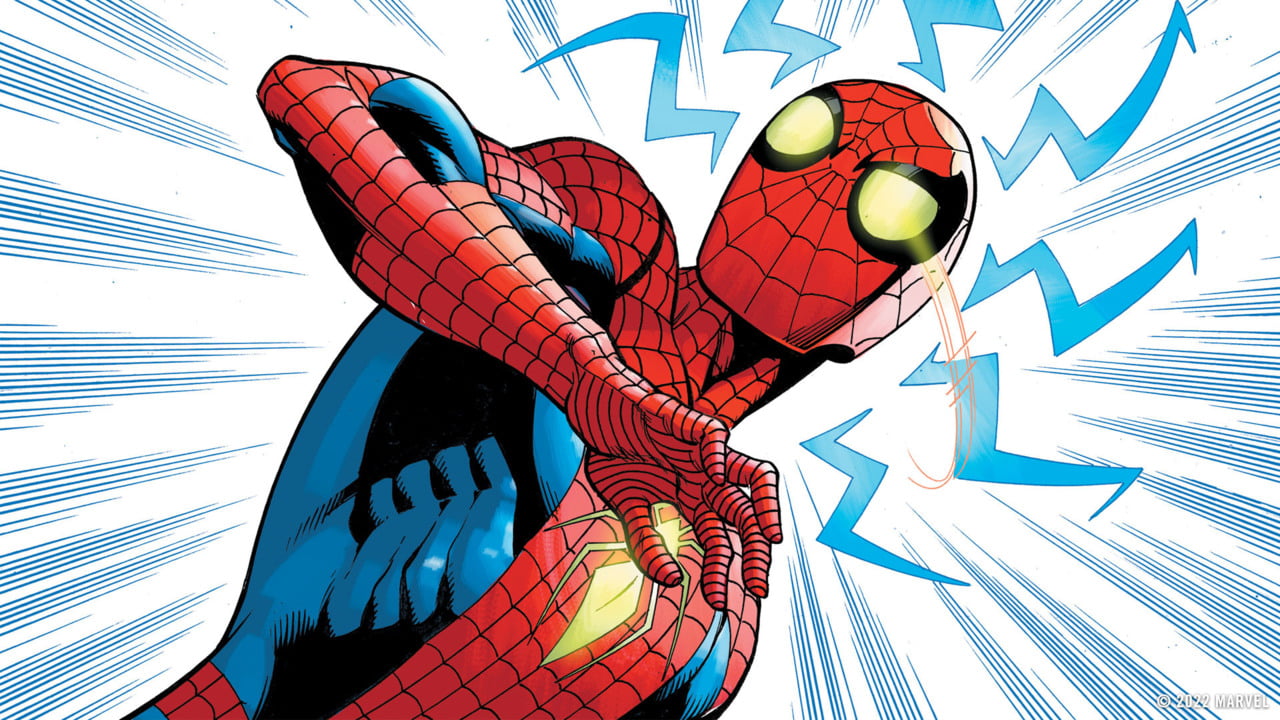
The short answer
The spider-sense works like an alarm, never like a radar: it signals that a threat is coming without saying which one. Created as early as Amazing Fantasy #15 in 1962, it is presented as a nervous hypersensitivity, and the Insomniac games turned it into a red halo. How it works, its limits and its adaptations: full breakdown below.
When you draw up the inventory of Spider-Man's powers, you naturally list the superhuman strength, the ability to stick to surfaces, the synthetic webbing, the prodigious reflexes. But there is one power those lists systematically underrate — a power that, on reflection, may well be the most important of them all. Without the Spider-Sense, Peter Parker would have died dozens of times over. Betrayed by his naivety, crushed by the Green Goblin, decapitated by a projectile coming from behind, struck down in his sleep. It is this spider-sense — that premonitory shiver running down the back of Peter's neck at the precise moment death draws near — that makes him one of the most elusive fighters in the Marvel universe. To understand the Spider-Sense is to understand the very essence of this character.
The birth of a sixth sense: Amazing Fantasy #15, 1962
The Spider-Sense is born at the very same moment as Spider-Man himself, in the pages of Amazing Fantasy #15, published in August 1962. Stan Lee and Steve Ditko put this power down to the bite of the radioactive spider without ever giving a rigorous scientific explanation for it — a typical approach for the comics of the era, which banked on dramatic effect rather than biological consistency. What is striking in those first panels is the way Ditko renders this sense visually: little star-shaped lines radiating around Peter's head, like an invisible wave of alarm. That iconography — what fans sometimes call 'spider-sense tingling' — has become one of the most recognisable graphic devices in all of American comics.
The narrative mechanic Stan Lee builds around this power is precise from the very start: the Spider-Sense does not tell Peter what is happening to him — it simply tells him that something is. It is an alarm, not a detector. Peter feels the threat as an electric discharge through the nervous system, a tingle climbing from the nape of his neck up into his skull, and it is up to him to decode that warning in a split second. This deliberate imprecision is what makes the power narratively inexhaustible: it always leaves room for doubt, for misreading, for being caught out despite the warning.
How the Spider-Sense works: the biology of a human radar
Scientific explanations for the Spider-Sense have evolved across the decades in the comics. The most coherent version, developed in the arcs of the 1990s and refined by writers such as J.M. DeMatteis and Roger Stern, presents the Spider-Sense as a hyperstimulation of the peripheral nervous system. The radioactive bite is said to have modified Peter Parker's sensory neurons so that they could detect disturbances in his immediate environment — air vibrations, pressure changes, electromagnetic signatures given off by hostile sources — and transmit them to the brain before the threat becomes physically perceptible to the ordinary senses.
What is remarkable about this explanation is that it never resorts to the supernatural: it is a plausible extrapolation of sensory mechanisms that already exist. Bats use echolocation. Sharks perceive electric fields through their ampullae of Lorenzini. Spiders feel the vibrations of their web before they even see their prey. Peter Parker is, in short, a mammal whose sensory receptors have been upgraded by mutation to insect level. In the modern arcs, notably those of Brand New Day, writers have even suggested that the Spider-Sense detects hostile intent — a form of emotional reading at very short range, in which an attacker's build-up of adrenaline and cortisol would trigger the alarm before the move has even begun.
In its most developed version, the Spider-Sense also has a range that varies with the threat: an immediate danger a few metres away generates a very intense alarm, while a more distant potential danger produces a vaguer shiver. This gradation lets writers modulate the dramatic intensity — a slight tingle in an ordinary scene can foreshadow a minor risk, while a Spider-Sense screaming at full power announces an existential threat.
 The Spider-Sense in the Spider-Man PS5 game — the red halo above the head has become one of the best-known mechanics in the game.
The Spider-Sense in video games: from the screen to the controller
The way the Spider-Sense has been carried over into video games is one of the most successful adaptations in interactive history. Insomniac Games' PS4 and PS5 titles made this power a central gameplay mechanic: a red ring appears around Spider-Man's head a fraction of a second before a blow lands, giving the player a perfect dodge window. That system — which gives the player the physical sensation of living what Peter Parker feels — is universally praised as one of the most elegant design innovations in the franchise.
In Spider-Man PS4 (2018), this mechanic sits at the heart of combat: learning to read the Spider-Sense, to synchronise it with counters and dodges, is what separates the beginner from the player who has mastered the game. In Spider-Man 2 (2023), the Spider-Sense is more nuanced still — Peter and Miles Morales have different visual signatures for their sixth sense, reflecting the differences between their respective mutations. That attention to detail in how the power is portrayed shows the place it has taken in the collective imagination, far beyond the comics.
The game Spider-Man: Edge of Time pushed the concept further still by exploring a Spider-Sense extended through time — a sci-fi version of the power that lets Spider-Man 2099 perceive temporal anomalies as threats. Even in the franchise's games for children, the Spider-Sense is always there as an identity marker, simplified but never absent.

The PS5 Spider-Sense suit
Spider-Man Advanced Suit Figure
The Advanced Suit from the PS4/PS5 game is the costume in which the Spider-Sense is at its most narratively sophisticated. This collector's figure, at 99,90 €, captures the look of Insomniac's Spider-Man in every detail.
99,90 € View the figure
The Spider-Sense on screen: from Sam Raimi to No Way Home
The way the Spider-Sense has been shown on film is one of the most interesting evolutions in the franchise's history. In Sam Raimi's films (2002-2007), Tobey Maguire's Spider-Sense is rendered through a kind of sensory slow motion — the world freezes around Peter, leaving him time to work out his dodge. That depiction, at once spectacular and readable for an audience unfamiliar with the comics, established the image of the Spider-Sense as a bubble of suspended time that the hero alone can inhabit.
In The Amazing Spider-Man films with Andrew Garfield, the Spider-Sense is portrayed differently: less visual, more physical. A convulsion in the shoulders, a brief shudder, then the reaction. Marc Webb chooses a more realistic approach that anchors the power in the character's biology rather than in the special effect. This version is often less spectacular on screen but more consistent with the scientific reading developed in the comics.
The MCU, under Jon Watts, marks an important break in Spider-Man: Homecoming (2017): Tom Holland's Spider-Sense is paradoxically barely used in the first film, in favour of the Stark suit that compensates with technology. It is in Avengers: Infinity War (2018) that the MCU's Spider-Sense is fully shown for the first time — the scene on the bus where Peter wakes with a start, the hairs on his arms standing up, his eyes already turned towards the threat before he has understood why. The effect is striking precisely because Peter does not yet understand what he is feeling: it is the first time his Spider-Sense has announced something this enormous.
In No Way Home (2021), the Spider-Sense becomes a means of recognition between the three versions of Spider-Man: when Peter #2 (Andrew Garfield) and Peter #3 (Tobey Maguire) arrive in the reality of the MCU, their Spider-Senses resonate together. They recognise in one another that they share the same mutation, the same power, the same neurological imprint. It is one of the most elegant ways the film handles the question of shared identity between the Spider-Men — not through words but through the body.
The limits of the Spider-Sense: the enemies who blind it
One of the smartest narrative decisions in Spider-Man's history was to establish very early on that the Spider-Sense is not infallible. Without those limits, the power would make fights predictable and opponents powerless. Two antagonists embody better than any others the ability to get around or neutralise the Spider-Sense.
The first is Venom. When Eddie Brock merges with the Venom symbiote, he acquires an intimate knowledge of Peter Parker — his thought patterns, his fighting habits, his reflexes. The symbiote having itself been bonded to Peter for a time, it 'knows' his mutation in an organic way. The result is terrifying: Venom can get close to Peter Parker without setting off his Spider-Sense. The most dangerous threat in Spider-Man's rogues' gallery is precisely the one he cannot feel coming. That narrative logic explains why Venom has always represented a level of danger above most other opponents, and why the confrontations between the two characters carry a particularly visceral tension.
The second is Mysterio. The illusions created by Quentin Beck are technologically sophisticated enough to fool not only the ordinary senses but the Spider-Sense as well. If the threat is not real — if the danger projected is a holographic construction — the Spider-Sense does not register it as such. That weakness is exploited in a particularly cruel way in Kevin Smith's 'Nightmare' arc and in Far From Home, where Peter finds himself in an environment of hallucinations impossible to tell apart from reality.
Other opponents have developed specific strategies against the Spider-Sense. Kraven the Hunter spent years studying the patterns of the Spider-Sense in order to learn how to move and attack in its temporal blind spots. The Chameleon uses biometric signatures to imitate the neurological imprint of non-hostile people, and so avoids triggering the alarm. These tactical adaptations show how strategically important the Spider-Sense is in the ecology of the Spider-Man universe: intelligent enemies factor it into their plans.

In combat, the Spider-Sense works in synergy with Spider-Man's speed and agility — a combination unique among Marvel super-heroes.

Spider-Man gaming setup
Spider-Man Web Logo Mouse Mat
For fans of the PS5 game where the Spider-Sense is a central mechanic. This large-format Spider-Man mouse mat dresses your gaming setup in the web-slinger's iconography.
34,90 € View the mouse mat
When Peter Parker loses his Spider-Sense
Some arcs of The Amazing Spider-Man have explored what happens when Peter loses his Spider-Sense — and those stories are among the most gruelling in the series. Dan Slott's 'No More Spider-Sense' arc sees Peter temporarily stripped of the power after an experiment, and the story that follows is almost a horror film: without that premonitory warning, Peter finds himself in a vulnerability he has not known since adolescence. Opponents he used to beat easily become mortal threats. His confidence — built on a decade of fighting guided by that infallible sense — collapses.
These stories serve a precise narrative purpose: they remind the reader (and the character) just how central the Spider-Sense is to his heroic identity. It is more than a tool — it is a part of him. Its disappearance produces in Peter an identity crisis as deep as the one caused by the loss of his other powers. In the Spider-Island arc, when the entire population of New York temporarily gains Spider-Man's powers, the massive Spider-Sense of thousands of people firing at once creates an extraordinary neurological cacophony — one of the most creative ideas for collective use of the power in the whole history of the series.
The One More Day arc and the narrative reset that came with it also altered the Spider-Sense during the Brand New Day period — a way for Marvel to signal symbolically that the 'reset' version of Peter Parker is less complete, less experienced, more vulnerable. Even the editors use the Spider-Sense as a marker of the character's level of mastery and accomplishment.
Spider-Verse: the Spider-Sense as a link between universes
The Spider-Verse concept opened up an entirely new dimension of the Spider-Sense: its multiversal dimension. In the Spider-Verse and Spider-Geddon arcs, the Spider-Totems — every being tied to the Spider across the realities — are connected by a metaphysical web of which the Spider-Sense is the individual manifestation. When the Inheritors threaten the whole of the multiverse, it is disturbances in that web that the various Spider-Men feel first.
Miles Morales illustrates how this power can evolve. His sixth sense — which fans have nicknamed the 'Venom Sense' or 'Danger Sense' — is an amplified, differentiated version of the classic Spider-Sense. Not only does it detect immediate physical threats, it also seems to react to broader emotional and energetic disturbances. Combined with his camouflage abilities and his Venom Strike, that extended sense makes Miles a fighter of a different sophistication from Peter — not superior, but complementary. In Across the Spider-Verse, the visual representation of that sense in Miles — coloured waves rippling through the space around him — is one of the most applauded graphic innovations in the film.
Spider-Gwen, Spider-Man 2099, Spider-Ham, Peni Parker — all these variants share a version of this sixth sense, shaped by their biology and their context. That universality suggests the Spider-Sense is not simply a side effect of the radioactive bite: it is the fundamental signature of everything tied to the Spider, the essence of what it means to belong to this family of characters.
The Spider-Sense as metaphor: intuition as a weapon
Beyond its functional dimension, the Spider-Sense is one of the richest metaphorical devices in Spider-Man's mythology. Stan Lee often returned to the idea that Peter Parker represented 'the ordinary man with extraordinary responsibilities' — and the Spider-Sense embodies that tension physically. It is a power that never lets him rest. That does not switch off when Peter takes the mask off. That keeps working in his civilian life, leaving him hypersensitive to stares that linger too long, to conversations that are too careful, to situations that do not 'ring true'.
In that sense, the Spider-Sense is a metaphor for the heroic conscience — that inability of Peter Parker's to ignore danger even when it would be comfortable to do so. Where Tony Stark can take off the armour and go home, where Batman can in theory be Bruce Wayne without his body reminding him of the crime around him, Peter Parker carries his alarm permanently. The Spider-Sense is not a piece of equipment — it is him. And that permanence of vigilance is what echoes most clearly what Uncle Ben passed on to him: power is not an option, it is an obligation.
There is also in the Spider-Sense a dimension of intuition that the most ambitious comics have explored. Dan Slott, in his Superior Spider-Man and Spider-Man arcs, suggested that the Spider-Sense reacts not only to physical threats but to emotional manipulation and morally ambiguous situations. When Peter feels a tingle in the presence of a character who is behaving perfectly normally, it is sometimes a sign that something is wrong with the situation — an integrity alert as much as a danger alert. That extension of the power into the moral domain is one of the most sophisticated readings of the Spider-Sense, the one that brings it closest to human intuition at its most fundamental.

Tobey Maguire's Spider-Sense
Classic Sam Raimi Spider-Man Figure
It was in Sam Raimi's films that the Spider-Sense was shown on screen for the first time. This collector's figure captures the iconic look of the Raimi suit — the original Spider-Sense on the big screen.
89,90 € View the figure
The Spider-Sense in the animated series and in popular culture
It is impossible to talk about the Spider-Sense without mentioning its role in the animated series that shaped the character for millions of fans. The 1990s animated series — often considered the definitive adaptation for an entire generation — represented the Spider-Sense through a distinctive sound effect and a shift in the saturation of the image, creating a visual language that was instantly recognisable. That series planted in the collective unconscious the equation 'red halo around the head = imminent danger', an equation the Insomniac games would later codify into their gameplay.
In Spectacular Spider-Man (2008-2009), considered by many the best animated series in the franchise, the Spider-Sense is used with remarkable precision: it fires in the moments where its power is at a maximum for the story, and its absence — in the rare moments when Peter is without his powers — is used to heighten the tension. It is in these series that the Spider-Sense earned its status as the absolute symbol of the character, to the point where the mere sight of the red halo is enough to identify Spider-Man on a piece of merchandise or in a silhouette.
The phrase 'my spider-sense is tingling' has entered popular culture far beyond comics fans — it is used as a metaphor for intuition in everyday conversation, on mainstream television programmes, in political speeches. That crossing over of the concept is the ultimate proof of its metaphorical power: the Spider-Sense is no longer just a fictional super-power, it is a way of describing what ordinary people feel when something is wrong before they can put it into words.
Conclusion: the Spider-Sense, the essence of what it means to be Spider-Man
The Spider-Sense is far more than an anti-danger radar. It is the power that turns Peter Parker from a teenager who accidentally has superhuman abilities into a hero who deeply understands his responsibility towards the world around him. It is the organ that does not allow him to ignore suffering, to close his eyes to danger, to choose the comfort of ignorance. And it is also, paradoxically, the power that makes him the most human: through its limits, through its flaws, through the moments when it fails him at the worst possible time.
Sixty years after Amazing Fantasy #15, the Spider-Sense continues to evolve along with the character — more nuanced in the modern comics, more spectacular in the films, more tactile in the video games. But its essence remains the same: that shiver at the back of the neck, that premonitory alert, that constant reminder that Peter Parker is always a few seconds away from the next danger. And that it is precisely this permanent proximity to danger that defines what it means to be Spider-Man.
To go further into Spider-Man's powers: explore his troubled relationship with the symbiote — the one entity that blinds his Spider-Sense — and discover how Superior Spider-Man uses those same powers with a logic radically different from Peter Parker's.

