

14-Day Money-Back Guarantee
0
The short answer
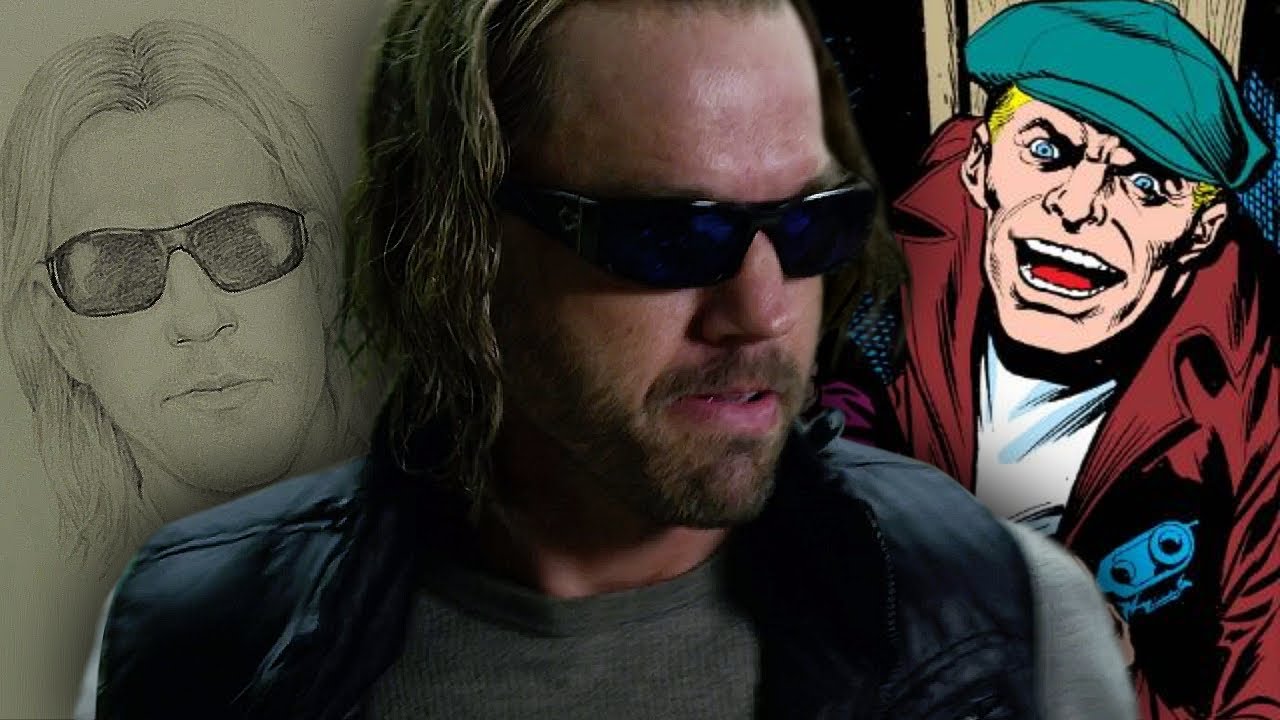
This neighbourhood burglar, glimpsed in Amazing Fantasy #15, shoots Ben Parker during a robbery in Forest Hills, a few days after Peter let him walk away from a television studio. No fiendish master plan, no superpower: panic and greed are enough. Below, we look back at that founding turning point.
The nameless man who changed Peter Parker's life
In the sprawling world of Spider-Man, a handful of enemies soak up all the attention: the Green Goblin, Kraven, Morlun, or Venom. All of them are powerful, theatrical, terrifying. And yet the man who had the most colossal impact on the life of Peter Parker has no costume, no powers and no outsized criminal ambition. He does not even have a settled name in his first appearances. He is simply 'The Burglar'.
This low-level criminal, anonymous and almost insignificant, sits at the centre of one of the most emblematic events in the whole history of comics: the murder of Uncle Ben. A tragic, founding act that turns Peter from a selfish teenager into one of Marvel's most deeply human heroes. The Burglar is not a supervillain: he is the raw embodiment of cruel chance, of the unexpected consequence of a selfish choice.
When Peter refuses to stop that burglar a few days before the tragedy, preferring to think about his media career, he has no idea he has just set off a chain of events that will follow him for the rest of his life. That moment is so foundational that it is reinterpreted in arcs such as Superior Spider-Man or Back in Black, where the weight of guilt becomes almost a character in its own right.
The Burglar is nothing like a multiversal enemy such as those of the Spider-Verse. He is nothing like a mystical threat either, unlike the Spider-Totems. But his act shaped the entire philosophy of Spider-Man: 'With great power comes great responsibility.'
Adaptations – films, animated series, video games – have all restaged that turning point, so essential is it to the hero's birth. It even shapes the merchandise culture: from Spider-Man figures inspired by the web-slinger's early years to the posters that reuse the legendary Amazing Fantasy #15 cover.
In this first part, we dive into this 'invisible' yet fundamental figure, to understand how a nobody built one of the greatest modern heroes. What follows explores the exact origins of The Burglar, his rare rewrites, and what his existence reveals about the deep mythology of Spider-Man.
An ordinary criminal… whose act redefined an entire universe
Unlike most of the antagonists in the pantheon of Spider-Man's enemies, The Burglar has no sophisticated backstory in the early issues. He is not a scientist, not a mobster, not a mystical warrior. He is a neighbourhood burglar, a man driven by greed and the easy option, whose loftiest ambition seems to be stealing a few dollars by breaking into the houses of Forest Hills.

But this lack of a grand origin is precisely what makes his act so powerful. Where the Green Goblin seeks domination, where Carnage embodies absolute chaos, and where Kraven pursues an almost ritual quest, The Burglar has just one minimal objective: steal, get rich, run. A chilling simplicity.
In Amazing Fantasy #15, he is drawn as an aggressive, jittery, slightly desperate man — yet nothing suggests he will become the trigger of a colossal narrative shift. His encounter with Ben Parker happens by chance. The killing is an accident born of fear and panic, not a calculated plan. That absence of murderous intent actually deepens the moral drama Peter lives through: the horror does not come from an evil genius, but from an ordinary gesture that could have been avoided.
Modern rewrites: giving chaos a face
Over the decades, Marvel has tried more than once to give this character extra context. In some versions, he is tied to an old business of debts and threats. In others, he is simply a long-standing offender whose path crosses that of modest families like the Parkers by pure chance.
Arcs such as Ultimate Spider-Man or the MCU's reinterpretations revisit his role without ever breaking the essential point: the Burglar represents the direct consequence of Peter's selfish choice. Where the multiverse teems with alternative versions of the web-slinger — detailed in the pillar page on the Spider-Verse — The Burglar always stays the same: an ordinary man capable of causing the irreparable.
Why Marvel never turned him into a 'big bad'
It would have been easy for Marvel to give this character powers or a mythology. But that would have destroyed what makes him strong: Spider-Man was not born from an epic battle, but from a moral failure.

That is why he almost never comes back. His narrative function is not to be a recurring threat, but to recall the origin of the greatest moral principle in comics: a selfish act can cost a life. A theme you find again in analytical pieces such as the analysis of great power or in The Death of Jean DeWolff, where real violence comes back to haunt Peter.

And even in merchandise culture, The Burglar remains a shadow: nobody sells products bearing his face, but people do sell Spider-Man masks showing what the hero became thanks to that event. The merchandise is the consequence; the Burglar is the cause.
The moment Spider-Man was truly born
The murder of Uncle Ben is not just a cult scene from Amazing Fantasy #15. It is one of the most important founding moments in the whole history of Marvel. When The Burglar pulls the trigger, he does not only kill a kind old man – he destroys the old Peter Parker, the one who dreamt of fame and glory.
That gesture, ordinary and unthinking, turns a still self-centred teenager into a hero defined by a timeless maxim: 'With great power comes great responsibility.' A line immortalised in countless adaptations, analysed in the big pillar pages such as The Story of Peter Parker, where grief and responsibility take centre stage.
Why Peter can never forgive himself
The weight of that guilt never eases. Unlike other heroes defined by their birth, their mutation or a lab accident, Peter is defined by a mistake. A deeply human mistake: he let a criminal get away because he thought it was not his problem.

It is this moral dimension that makes him one of the heroes closest to the reader. Every decision he takes, every mission, every risk is tinged with that original wound. This psychological side is explored at length in arcs such as Dying Wish or Kraven's Last Hunt, where Peter wrestles with his regrets and his emotional limits.
Adaptations: a trauma revisited in every timeline
In the films and series, The Burglar sometimes changes face or context – but never symbolic function.
In Sam Raimi's films, his role is expanded to heighten the emotional impact. In The Amazing Spider-Man, the killer's identity becomes blurrier, giving Peter an open, unresolved wound. And in the MCU, even though the event is never shown explicitly, its presence is felt in every exchange between Peter and May Parker, as well as in his instinctive relationship with danger.
All these variants show that the Burglar is not a character, but a concept: the consequence of a selfish choice. And that concept turns up even in the iconic merchandise, in particular the Spider-Man fancy dress costumes and the figures that recreate the web-slinger's first costumes, recalling that tragic birth.
What this scene says about the very heart of the character
Peter Parker is not driven by revenge – he is driven by responsibility. The difference is enormous. Where Batman hunts down his parents' killer, Peter is trying to make up for his own mistake.
That nuance explains why pieces such as The saddest moments in Spider-Man's history or Spider-Man merchandise always stress this human dimension: Marvel's most likeable hero was born from a deeply realistic tragedy.

In the next part, we will see how Marvel used The Burglar in the decades that followed, and why his presence, brief as it is, left an indelible mark on the whole mythology of the web-slinger.
A tiny presence… but an eternal mark
In the vastness of the Spider-Man universe, where cosmic entities such as Morlun or organisations like the Inheritors threaten the balance of the multiverse, it may seem odd that a mere burglar should matter so much. And yet no enemy marks the web-slinger's psyche as deeply as this one.
The Burglar stands for an idea Marvel keeps reaffirming: the greatest threat is not necessarily the most spectacular one. Sometimes it is human error, impulsive acts and selfish choices that change lives. This principle runs through the whole of Spider-Man – whether in his greatest defeats, detailed in The web-slinger's greatest defeats, or in intimate stories such as If This Be My Destiny.
Why Marvel never 'forgot' The Burglar
Even though the character vanishes quickly after his first appearance, his shadow hangs over every moment of Peter Parker's life. When Peter hesitates over a hard decision, he hears Ben Parker's voice in his head. When he saves a criminal, even an enemy like Rhino or Shocker, it is never out of naivety, but because the idea of making the same mistake again terrifies him.
Even the great variations on the myth – whether the Spider-Verse or alternative stories like Renew Your Vows – keep that founding scene. Why?
Because without it, Peter is not Spider-Man: he is just a brilliant teenager. The superhero is born when guilt, pain and clear-sightedness fuse into a moral sense unique in all of pop culture.

The Burglar as a permanent symbol of responsibility
The Burglar's strength is literary before it is narrative. He embodies the price of choice. His presence reminds the reader that even insignificant acts can have devastating consequences.
This humanist vision is what sets Spider-Man apart from other Marvel heroes: he was not born from a failed scientific experiment, but from a moral error. It is also what makes it so easy to buy items tied to his origins, such as the retro Amazing Fantasy posters or the Spider-Man pyjamas that recall his early years.
Conclusion: a 'minor' villain with a gigantic impact
The Burglar almost never appears, but his influence is everywhere. He is a constant reminder: responsibility comes before power.
Unlike most supervillains, it is not his strength or his ambitions that define his role, but his emotional impact. And that impact has been carved into the very heart of Peter Parker's identity for more than 60 years.
So even without costumes, without gadgets, without powers, The Burglar will forever remain an invisible pillar of Spider-Man mythology — the man who, with one ordinary gesture, gave birth to one of the greatest heroes of all time.

