

14-Day Money-Back Guarantee
0
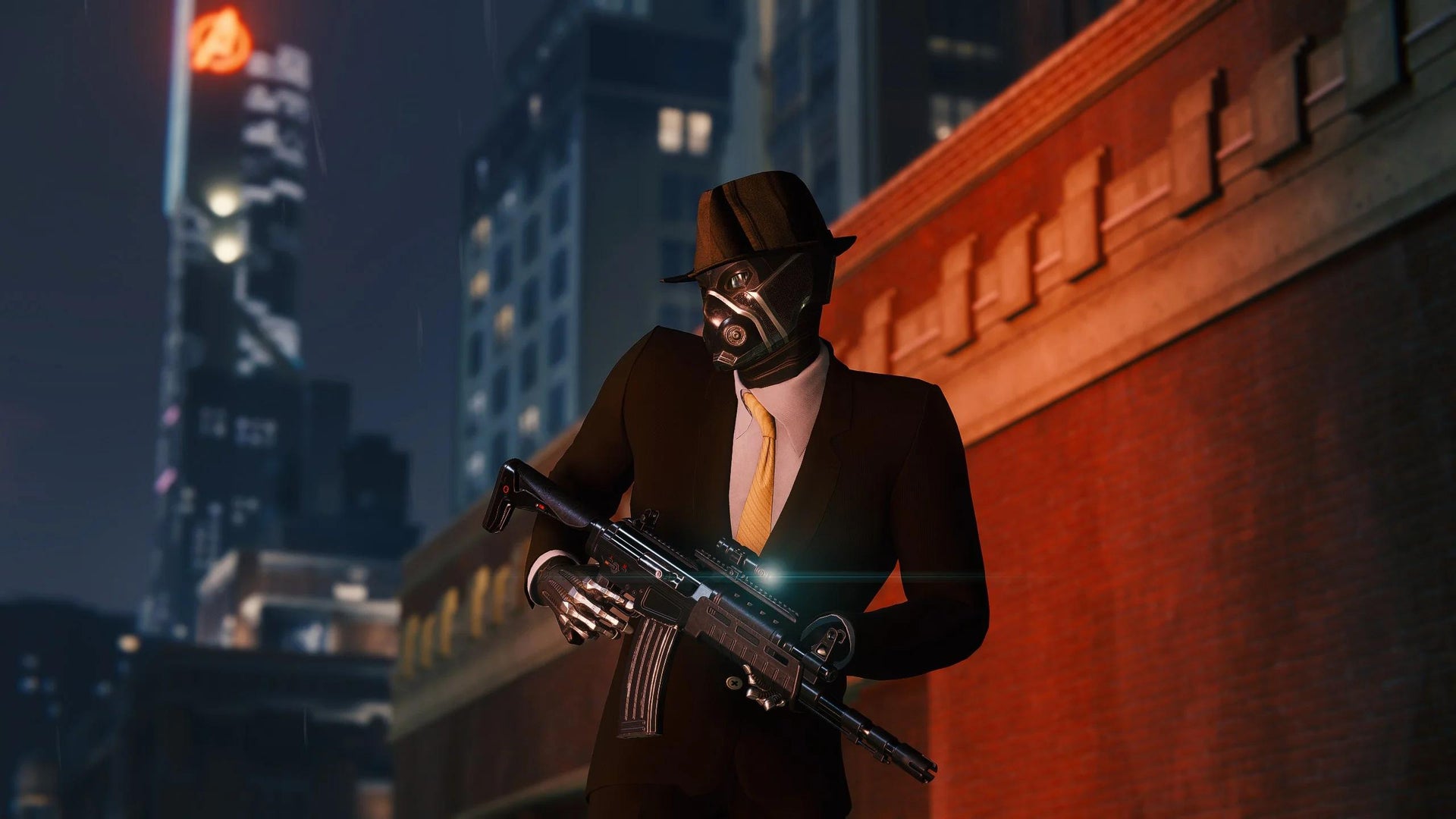
The short answer
Crime Master is a masked gangster created by Stan Lee and Steve Ditko in Amazing Spider-Man #26-27 (1965), the first villain who wanted to unify New York's gangs under a single authority. Three men have worn the mask: Nicholas Lewis, his son Nicholas Lewis Jr. (1975), then Bennett Brant, Betty's brother, unmasked in the Big Time era. Below we explain why Kingpin made him obsolete.
There are villains whose names still resonate sixty years after their first appearance — Norman Osborn, Otto Octavius, Wilson Fisk. And then there are others, quieter, almost erased from the grand narrative, who nonetheless prepared the ground those figures would go on to dominate. Crime Master belongs to that second category. This masked Silver Age gangster never managed to establish himself as an arch-enemy, but he was the first to say out loud the ambition that would redraw the New York underworld in Peter Parker's universe: unify the gangs under a single authority, replace the old bosses, and turn Manhattan into a centralised criminal empire.
His story fits into a few dozen pages, two successive identities, and a handful of modern appearances that few readers followed. And yet, rereading the arcs he inspired — from the gang war of the sixties to the ramifications of Dan Slott's run — you realise that Crime Master is not an editorial accident. He is a prototype. The rough draft of an archetype that Kingpin would later occupy in overwhelming fashion, to the point of absorbing all the light in the criminal silo where Crime Master should have thrived.
This article looks back at the two men who wore the mask, at the iconic arcs that put them on stage, at the editorial reasons behind their sidelining, and at the modern resurgences that prove Marvel never completely buried the character. A dive into a forgotten layer of the rogues' gallery, the one made of functional villains who never got their own film — but whose DNA still runs through contemporary stories.
Nicholas 'Lucky' Lewis: the first Crime Master of the Silver Age
It all begins in 1965, in the pages of Amazing Spider-Man #26 and #27, written by Stan Lee and drawn by Steve Ditko. The series' backdrop is a New York underworld in full transformation. Traditional gangs, inherited from the imagery of the thirties, coexist with costumed super-villains whose ambitions go well beyond simple racketeering. It is in that gap that Nicholas 'Lucky' Lewis appears, a classic gang boss who decides to take a step further: rather than running a territory, he wants to take control of all crime in Manhattan.
That plan, spelled out by the character himself, is revolutionary for its time. The underworld is still fragmented, with Silvermane and the Maggia controlling their share, with the Big Man — real name Frederick Foswell, at the time overlooked as a super-villain — running his own organisation, and with every family refusing to bend the knee. Nicholas Lewis turns up with a simple proposition: follow Crime Master, and you will rule New York together. Refuse, and you will die alone.
The mask he wears is not a gratuitous aesthetic choice. It is a strategic instrument. By hiding his face, Lewis invents a mythic aura for himself, cultivates doubt even among his own lieutenants, and stops rival gangsters from tracing his civilian identity. That logic — the mask as an industrial asset, not as a costume — foreshadows what Hobgoblin would adopt much later, where anonymity is worth more than physical performance. Crime Master is a quiet pioneer of operational crime in New York.
Amazing Spider-Man #26-27: the two-parter that launched the character
The two founding issues, published in July and August 1965, hold a tight plot. Crime Master calls a meeting of New York's gang bosses, demands their allegiance, and triggers an open war with Big Man and his organisation. Spider-Man, hot on their trail, finds himself caught in the crossfire — not because he is protecting one particular victim, but because the stability of his city is at stake. That is an unusual premise in the Ditko corpus: for once, the fight is not about an individual, but about a structure.
The closing sequence of issue #27 has stayed in the memory of readers of Peter Parker's classic era. After a rooftop chase, Crime Master falls under police gunfire. His mask is pulled off. The reader discovers the face of Nicholas 'Lucky' Lewis, a name that means nothing to anyone. That is where the power of the two-parter lies: the villain is not a mad doctor, not a transformed scientist, not a mutant. He is an ordinary gangster who played at becoming a myth and who dies with nobody to mourn him.
This anti-glorification comes at a narrative cost. Crime Master cannot come back easily: the death is clean, public, and the identity is revealed. Stan Lee deliberately closes the door to preserve the logic of the story. But in doing so, he also condemns the character never to become a recurring enemy, unlike Chameleon, who can return endlessly thanks to his masks, or Vulture, who enjoys the immortality of an old hand.
FIGURE — ICONIC VILLAIN

Articulated Spider-Man × Venom Let There Be Carnage Figure
20,72 €
Crime Master never got his own figure, but the spirit of the masked villain who embodies the dark side of the Marvel universe lives on in the most intense collectibles on your shelf.
Discover →Big Man versus Crime Master: the invisible war of the New York underworld
To grasp the character's historical importance, you have to restore the context of the New York underworld as it appears in the Marvel corpus of the sixties. Before Kingpin arrives, the city is fragmented. Each family runs its territory, its rackets, its smuggling operations. The Big Man — whose identity as Frederick Foswell the reader only discovers several issues later — runs the largest of these organisations, but never manages to absorb the others.
Crime Master, for his part, arrives with a different proposition: merger under a single banner. That idea, which seems banal today, is a rupture in 1965. It literally anticipates the project that The Rose, Kingpin's criminal heir, would try to finalise twenty years later, and that The Hood, godfather of the superhuman underworld, would take to the level of the super-villains in the 2000s.
The confrontation between Big Man and Crime Master is not just a duel of bosses. It is a clash of doctrines. Big Man embodies the old school: manage what you own, negotiate with rivals, do not provoke the authorities. Crime Master represents the expansionist doctrine: absorb, purge, dominate. That the former wins — technically, since he survives the two-parter — says nothing about the ideological victory. Crime Master is the one who is right on the substance. His doctrine will become that of Hammerhead, the mobster with the reinforced skull, then that of Tombstone, the ruthless godfather, before being taken to its peak by Wilson Fisk.
That continuity is what matters: Crime Master lost in 1965, but his idea won. Every crime boss who counted in Spider-Man's mythology, from Silvermane to Kingpin by way of the modern heirs, more or less carries out the plan formulated by a masked gangster nobody remembers any more.
The mystery of the mask: gangster DNA, noir method, calculated aura
What makes Crime Master fascinating, beyond his idea, is the way Stan Lee and Steve Ditko drew him. The mask is not a loosely pulled-on piece of cloth. It is a complete apparatus: fitted hood, fedora pulled low, long trench coat, gun in hand. The visual borrows less from the contemporary super-villains than from the serial killers of the thirties pulp magazines. You think of The Shadow, of The Phantom, of those figures haunting the covers of cheap magazines.
That aesthetic choice has an immediate effect. Crime Master looks like no other villain in the corpus. He does not have the grotesqueness of the Goblin, nor the machinery of Doctor Octopus, nor the theatricality of the mad scientists. He comes from another narrative universe, that of crime fiction. This heterogeneity is both his strength and his weakness: he stands out in a gallery of colourful costumed villains, but nor can he merge with the superhero folklore that made the series a success.
The Crime Master method reflects that positioning. No gadget, no serum, no mutation. Only firearms, henchmen, and a psychology of manipulation. Where Mendel Stromm depended on his robotic inventions, where Shocker depends on his vibro-gauntlets, Crime Master depends only on his authority. He is a boss, not an operative. That distinction runs through the whole line of New York godfathers, all the way to Wilson Fisk, who likewise refuses gadgets and serums.
Bennett Brant, the second Crime Master of the Bronze Age
After the death of Nicholas Lewis in 1965, the character disappears from the radar for more than a decade. It takes until the early eighties for a second Crime Master to surface, in a completely different narrative context. This time, the man behind the mask is Bennett Brant, the elder brother of Betty Brant — the Daily Bugle secretary and one of Peter Parker's first loves.
This family twist is not a simple nod. It is a reminder that at the time, Marvel was actively experimenting with the idea that the most interesting villains are those orbiting close to the hero. It is the same logic that produces the supporting characters tied to the Bugle, or that brings Liz Allan back to the foreground as a witness to the fate of the Osborns. By choosing Bennett Brant, the writers create a direct emotional link between the villain and Spider-Man's civilian life.
Bennett Brant, in classic continuity, is supposed to have been dead for a long time — shot as a young man during a criminal operation. His return in the Crime Master costume opens a narrative breach: either his death was staged, or his resurrection conceals a supernatural manipulation. That ambiguity is never fully resolved, which makes him an interesting villain for writers who like to play with the foundations of the Parker myth.
Unfortunately, the second Crime Master meets with no more commercial success than the first. His appearances remain isolated, his arcs are short, and his presence in the major sagas is minimal. He shows up in a few issues from the period, briefly crosses the world of the Sinister Six, but never manages to establish himself as a recurring enemy. The Crime Master name remains, once again, an editorial asset lying fallow.
POSTER — COMICS AESTHETIC

Spider-Man in Combat Comics Poster
19,90 €
The raw aesthetic of the Ditko years, the clean line, the saturated colours, the permanent tension. A visual reminder of the clashes that gave birth to Crime Master and to the whole early New York underworld.
Discover →Dan Slott's Big Time run and the character's modern resurgence
It takes until the early 2010s for Crime Master to make a visible return to the mainstream. That return happens in Dan Slott's Big Time run, an editorially dense period in which the writer revives several dormant figures from Spider-Man's mythology to rebuild a richer criminal landscape. It is the same logic that would drive him in his relaunch of the arachnid multiverse a few years later.
In Big Time, a new Crime Master emerges — no longer Nicholas Lewis, no longer Bennett Brant, but an even more opaque figure whose civilian identity is not immediately revealed. This third man operates in Hobgoblin's shadow, forming with him a syndicate-inspired tandem: Crime Master sells super-villain identities to candidates ready to wear the costume and do the dirty work, while Hobgoblin handles the media staging. It is a strong editorial idea: crime becomes a franchise.
This modern version, published while the series is also exploring the aftermath of Norman Osborn's Dark Reign, places Crime Master in an unprecedented spot in the landscape. He is no longer a rival to Kingpin — Fisk is too established, too dominant — but a parallel operator exploiting the niches the Kingpin has abandoned. It is a subtle narrative position, one that acknowledges Crime Master's place without giving him a status equal to his competitors. The character regains a functional usefulness without crushing the established hierarchy.
Why Marvel left Crime Master in Kingpin's shadow
The question deserves to be put head-on: why did Crime Master, despite a promising concept and two successive relaunches, never manage to become an arch-enemy? The answer comes down to three interwoven reasons.
First, timing. Crime Master appears in 1965. Wilson Fisk, the future Kingpin, turns up in 1967 in Amazing Spider-Man #50, drawn by John Romita Sr. Only two years apart. And Fisk brings everything Crime Master brought — the unified vision of the underworld, the mysterious aura, the strategic power — but with one crucial addition: an overwhelming physical presence, an ability to embody criminal power visually. Where Crime Master has to hide behind a mask, Fisk imposes himself bare-faced, in a three-piece suit. Readers instantly adopt the more powerful archetype. Crime Master becomes obsolete.
Next, the narrative death. By killing Nicholas Lewis at the end of the two-parter, Stan Lee closed the door on a natural return for the character. Every later relaunch — Bennett Brant, the Big Time Crime Master — has to handle the question of continuity. Readers, used to the cycle of death and return in the Marvel corpus, find it harder to accept a villain who never had a real spectacular death to hold on to. Compared with Norman Osborn, who comes back after being impaled, or with the whole Green Goblin cycle that structures decades of storytelling, Crime Master does not have the mythological material required.
Finally, the absence of a signature gadget. The villains who endure in popular culture are the ones with an identifiable visual object. Doctor Octopus's tentacles, the Goblin's glider, Shocker's gauntlets, Vulture's harness. Crime Master has only a mask and a revolver. That is too little to survive in an industry that monetises every villain through merchandising. You can see it clearly in the way the cosplays of iconic Spider-Man villains focus on recognisable silhouettes — Crime Master does not feature among them.
Crime Master in the crossovers and New York's underworld
Despite his lack of headline status, Crime Master shows up regularly in the crossovers where the editorial story needs a mid-level criminal operator. He crosses paths with the world of Daredevil and Hell's Kitchen on several occasions, since Matt Murdock and Spider-Man share the same urban geography and often the same adversaries.
You also find him on the fringes of the big underworld events — the gang wars triggered by The Rose, the crises of authority that follow Kingpin's spells in prison, the power vacuums Spider-Man has to fill in his own way. Every time, Crime Master plays the role of facilitator or second string, never that of prime mover. It is a thankless but necessary place: without these intermediate figures, the criminal landscape would shrink to Fisk and his direct lieutenants, and would lose its density.
That structural function explains why Marvel never completely buried the character. Each new generation of writers rediscovers the usefulness of a masked villain who can be anyone, who does not demand a heavy backstory, and who can embody the shadow of the underworld without engaging the dramatic stakes of a Kingpin. Crime Master is a narrative Swiss army knife. Not spectacular, but always available.
You see the same logic in the treatment of other secondary figures in the criminal silo. The Punisher has his own cycle, but less well-endowed characters like Crime Master fill the role of credible background presence. It is a discreet role, but an essential one for maintaining the density of the world.
The quiet legacy: what is left of Crime Master today?
When you try to assess a character's footprint on popular culture, you generally look at three indicators: appearances in screen adaptations, presence in merchandising, and citation by contemporary writers. On the first two counts, Crime Master is an almost complete failure. No film has used the character. No major animated series has featured him as a lead. Merchandising is non-existent — there is no dedicated figure, no iconic poster, no tribute t-shirt. Compared with the commercial vitality of a Green Goblin or even of a Demogoblin, the forgotten but visible demonic goblin, Crime Master is an editorial ghost.
On the third count, however — citation by writers — the picture is more nuanced. Dan Slott reactivated the character. Nick Spencer refers to him in his post-2018 Amazing Spider-Man run. Zeb Wells, in the most recent arcs, plays with the idea of the masked gangster as a structural figure more than as a character. Each time, Crime Master is summoned not for himself, but for what he represents: an intermediate criminal layer, a classic gangster archetype in a world saturated with super-villains, an available narrative reserve.
That reading confirms the nature of the character. Crime Master was never designed to be a star. He was designed to serve the world, a cog in the criminal ecosystem. From that angle, his low-key status is not a failure — it is the success of a narrative function. He is the villain writers bring back out when they need to remind us that Manhattan always had gangsters before it had super-villains, and that the traditional underworld never entirely vanished under the spotlights of the colourful costumes.
This continuity fits into Spider-Man's overall history, where each layer of villains — the old-school mobsters, the transformed mad scientists, the mercenaries, the clones — fulfils a precise function. Removing Crime Master would not collapse the world, but his absence would impoverish the grain of criminal truth the series has always sought to preserve.
PRINT — LEGENDARY DUEL

Spider-Man and the Green Goblin Print
22,90 €
Where Crime Master ended up in the shadows, other villains conquered the big screen and the walls of the fans. A piece to hang up as a reminder of the clashes that shaped Spider-Man's mythology.
Discover →What Crime Master tells us about the mythology of forgotten villains
For a reader discovering the Marvel corpus in the 2020s, Crime Master raises an interesting question: how many villains, however low-key, are nonetheless essential to the coherence of a universe? Spider-Man's narrative landscape does not come down to a dozen iconic figures. It counts dozens of small-time gangsters, failed super-villains, forgotten mercenaries, minor mad scientists. Each of these characters carries a fragment of the overall mythology.
That lesson goes well beyond the Crime Master case. It applies to the whole Sinister Six gallery and its extended variants, to the figures of the alternative franchises, to the villains of the forgotten mini-series. Every supporting character enriches the texture of the world. Take away a layer, and the world loses density. That is why Marvel, despite the character's commercial sidelining, never entirely removed him from canon.
In an industry that increasingly favours simplification — a few central villains, a few major arcs, concentrated merchandising — the Crime Master case is a reminder that a rich universe is also a universe populated by minor figures. The demanding reader, the one who works through all the characters orbiting Spider-Man, knows how to recognise the value of these secondary layers. They are what give the story its depth.
The role of functional villains in contemporary storytelling
One often-neglected aspect of writing contemporary villains is their rhythmic function. Every major Spider-Man arc alternates between cataclysmic villains — Norman Osborn in Dark Reign, Carnage in Absolute Carnage, Doctor Octopus in Superior — and functional villains, quieter ones, whose mission is to let the series breathe. Crime Master belongs to that second category. His presence is not event-driven. It is structural.
That distinction is crucial for understanding the editorial mechanics of the large corpora. Without the functional villains, the cataclysmic villains lose their contrast. They lose their exceptional quality. A universe where every adversary is a final boss quickly becomes exhausting — readers cannot sustain a constant level of attention. Crime Master gives the story an adversary for the transitional issues, for the urban investigations, for the plots that are not trying to bring the world down but to tell the story of the city.
This function dovetails with other villains in the same register — collateral figures such as Martha Connors, or, more indirectly, ambiguous allies such as Cloak & Dagger in their urban interventions. Together, they make up an intermediate layer that gives Spider-Man's world its grain and its depth.
Crime Master and the question of multiple identities
One last point deserves digging into: the logic of successive identities. Nicholas Lewis, Bennett Brant, an unnamed third wearer under Slott. Three different men for one and the same mask. This practice is not unique to Crime Master — it is a structural motif of superhero culture, where costumes outlive the bodies that inhabit them.
You find it with Hobgoblin, whose orange costume has been worn by several men over the decades. You find it with the Green Goblin mantle that Harry Osborn inherited from his father. You find it with the alternative identities Peter Parker himself has worn — Ricochet, Hornet, Prodigy, so many circumstantial masks. The mask, in Spider-Man's mythology, is a transferable asset.
What the Crime Master lineage adds to that motif is the question of structural anonymity. Unlike Hobgoblin, where each wearer has a strong identity stake, unlike the Green Goblin, where the transmission is familial and dramatic, Crime Master is a mask with no clear emotional stake. That void is intentional: it is a reminder that in the underworld, identity does not count, only function counts. The mask designates a post, not a person.
That structural reading also explains why the character resists cinema. A film needs an embodied villain, a face, a personal trajectory. Crime Master offers exactly the opposite — a void, an abstraction, a function. He is perfect for the comics, invisible for the blockbusters. That mismatch between the format and the character explains his low-key fate.
The ecosystem of minor villains in the New York underworld
To close this exploration, it is worth repositioning Crime Master within the full ecosystem of minor villains who populate Spider-Man's New York underworld. There you find the classic gangsters, of whom he is the purest archetype. There you find the super-villains turned criminal out of economic necessity — Shocker, Vulture. There you find the costumed mercenaries working for the highest bidder — Big Wheel, Boomerang, Rocket Racer. There you find the dynastic heirs — The Rose, Kingpin's children.
That criminal diversity is what makes the corpus rich. Where other franchises settle for one central villain and his henchmen, Spider-Man's mythology multiplies the layers, crosses the origins, and feeds a dense landscape where every adversary has a place. That density, however, has a downside: it makes each character more diluted, less memorable. Crime Master pays the price of the collective richness.
For the fan who wants to explore that diversity, reading the classic arcs from the sixties to the eighties remains essential. The runs by Stan Lee, Steve Ditko, Gerry Conway and Roger Stern lay the foundations. The modern arcs by Slott, Spencer and Wells periodically revive the dormant figures. Between the two, an editorial continuity preserves the memory of the minor villains — even when none of them becomes a star.
What Crime Master teaches anyone still reading the classic comics
There is a broader lesson to draw from Crime Master's low-key fate. It concerns the way we read the classic comics today, at a time when the blockbuster has redefined our attention. The modern reader, used to cataclysmic villains and cosmic stakes, risks skimming over the minor figures. That is a mistake. These characters are the cornerstones that stop the mythology from collapsing under its own weight.
Taking the time to read Amazing Spider-Man #26-27, to discover the Crime Master two-parter, to measure how new his concept was in 1965, means rediscovering a layer of Marvel culture that the recent adaptations have made invisible. It also means understanding how an archetype is born, unfolds, and gives way to more powerful successors. Nicholas Lewis invented an idea that Wilson Fisk took to its maximum. That genealogy deserves to be known.
To go deeper into that reading, it is useful to cross-reference several sources. The Omnibus collections from the Ditko years, the Marvel Masterworks reissues and the Panini collected editions give access to the original texts. Analyses by academics specialising in comics — Charles Hatfield, Douglas Wolk, Grant Morrison in Supergods — bring critical depth. Together, these resources make it possible to build an informed reading of Crime Master, beyond the quick summaries found on the online wikis.
Crime Master tomorrow: a potential that is still latent
Can we imagine Crime Master one day stepping out of the shadows? The question is a fair one. Marvel has shown more than once that it can resurrect minor characters and turn them into pillars of new sagas. Chameleon has enjoyed several recent relaunches, including in identity plots that exploit his impostor DNA. Stunner, the virtual super-villainess, has reappeared unexpectedly.
Crime Master could benefit from similar treatment. An ambitious writer could revisit the concept, modernise the logic of the masked gangster, and adapt it to contemporary issues — cybercrime, transnational networks, the underground economy of the dark web. The narrative potential is intact. What is missing is simply the editorial impetus and a commercial window.
That window could open with the next generation of writers, or with a change of editorial strategy at Marvel. In the meantime, Crime Master stays as he is: a functional figure, a narrative reserve, an editorial ghost who appears episodically whenever a writer needs a costumed gangster without a heavy backstory. It is a discreet but durable place, one that guarantees the character a form of survival other minor villains have not had.
For the fan who follows the series closely, it is worth keeping an eye on the coming arcs of the New York underworld. Every new gang war, every power vacuum left by a Kingpin in prison, every crisis of authority in the underworld can be the occasion for Crime Master to resurface. Never as a final boss. But as an intermediate operator, as a historical reminder, as a structural figure. That is where the character's lasting usefulness lies — and his quiet but real modesty.
Conclusion: Crime Master, prototype and ghost
Crime Master is not an arch-enemy. He is not a pillar of Spider-Man's mythology. He never got his film, his figure or his major saga. But he is a prototype. In 1965 Nicholas Lewis formulated an idea the New York underworld had never had before him — unify, centralise, dominate. That idea was confiscated two years later by Wilson Fisk, who took it to an industrial level. Crime Master was relegated, but not forgotten. He shows up regularly, under different faces, whenever a writer needs a masked gangster to hold a quiet role in the criminal landscape.
To fully understand the criminal ecosystem around Spider-Man, you have to measure the contribution of these intermediate figures. They do not make the headlines, they do not fill stadiums. But they give the world its depth, its density, its coherence. Without them, Spider-Man's mythology would shrink to a binary confrontation between the hero and a handful of star villains. With them, it becomes a universe that is inhabited, textured and credible.
Crime Master belongs to that essential but discreet layer. Alongside other figures the series has explored recently — from Debra Whitman, Spider-Man's forgotten confidante to the villains of the fringes — he forms part of a gallery of characters that deserves to be rediscovered. For the reader exploring Spider-Man's complete mythology, that gallery is a valuable gateway to a universe richer than what the blockbusters let us glimpse.
One last lead, finally, for anyone who wants to read further. The major Spider-Man story arcs regularly mention Crime Master on the margins of the big events. The guides to the iconic enemies introduce him briefly in the underworld section. And the figure collections devoted to the villains testify, by their lack of any Crime Master representation, to the low-key fate this character has suffered. Each source tells the same story from a different angle: Crime Master existed, still exists, and is simply waiting for a writer with the courage to do him justice.

