
14-Day Money-Back Guarantee
0
The short answer
Lonnie Lincoln clawed his way to the top of the New York mob on sheer intimidation alone, before a chemical exposure multiplied his power tenfold and left his body all but impervious to bullets. No gadgets, no costume: his real asset remains control of the territory. We trace his rise below.
Contents
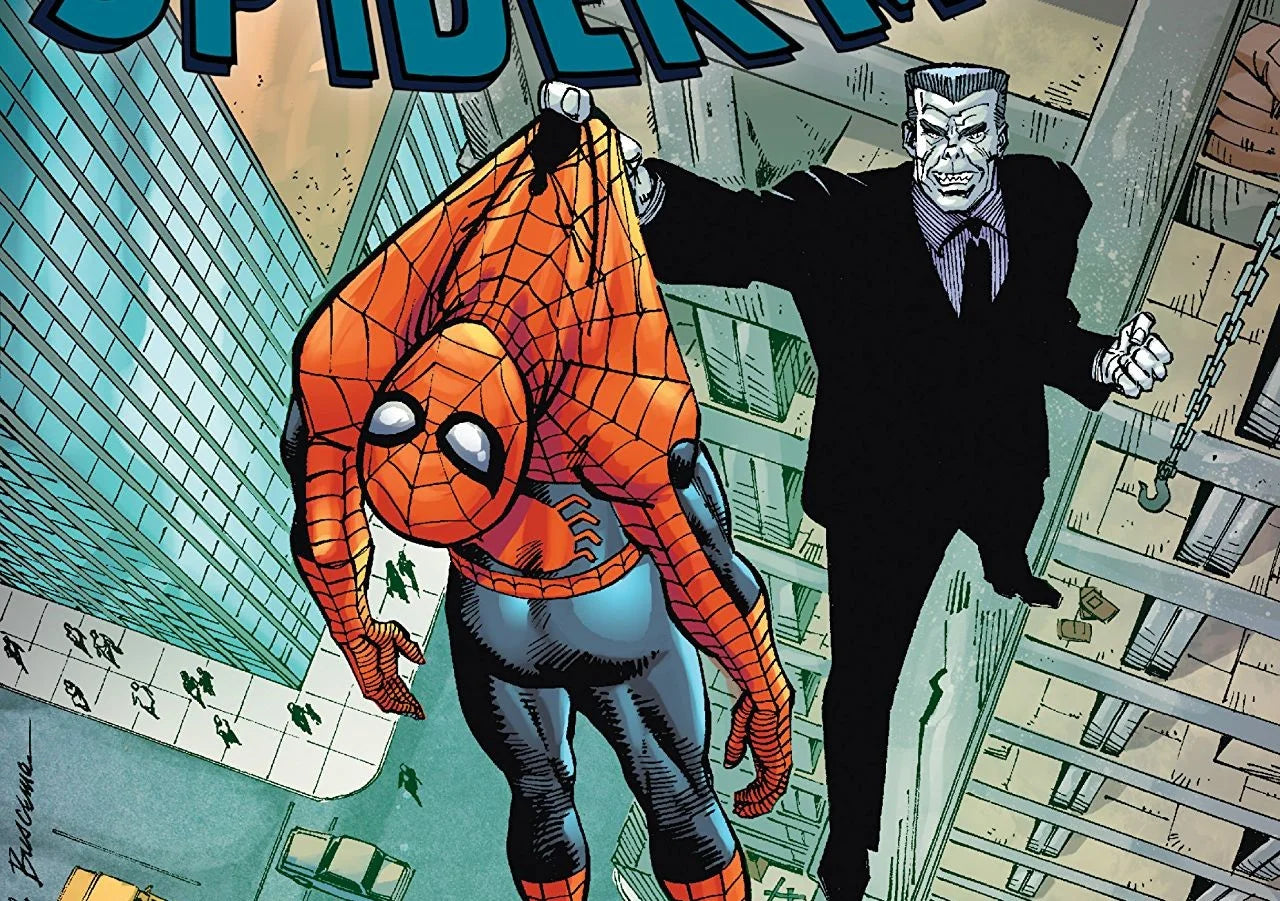
In the shadow of Spider-Man's iconic enemies such as the Green Goblin or the Kingpin, another criminal has left a lasting mark on the streets of New York: Tombstone. Behind that chilling nickname stands Lonnie Lincoln, an organised crime boss whose charisma is as icy as his albino complexion. Cold, methodical and merciless, Tombstone may not have the spectacular powers of a Venom or a Morlun, but he embodies a constant threat, deeply rooted in the New York underworld. To go further on this subject, see also The Hood (Parker Robbins): the boss of New York's superhuman underworld.
First appearing in the comics of the 1980s, Tombstone quickly established himself as a recurring antagonist not only for Spider-Man, but also for heroes such as Kingpin and Daredevil. His style is not that of a whimsical villain, but that of a realistic, brutal criminal who relies on fear and control of the streets rather than on futuristic gadgets.
What makes Tombstone such a fascinating character is his blend of humanity and horror: a childhood marked by violence, a body granted superhuman physical abilities by chemical experiments, and an unshakeable will to climb the ranks of the underworld. Through him, the comics explore another side of Spider-Man's world: the city's lower depths, where the hero in the suit runs into enemies with nothing supernatural about them… but everything terribly real.
Before diving into his criminal rise, his alliances and his clashes with the web-slinger, let's first look at the origins of Lonnie Lincoln and how a rejected teenager ended up becoming one of the most feared criminals in Manhattan.
The origins of Lonnie Lincoln: from rejected teenager to feared criminal
Born with albino skin and a frightening appearance, Lonnie Lincoln was the victim of rejection and mockery from his earliest years. That bullying, far from weakening him, forged a psychological shell and an inner violence that would push him to embrace a life of crime. As a teenager he was already known as an enforcer and racketeer in his neighbourhood, using his imposing frame to inspire fear.
While other villains in the Marvel universe are defined by an accident or a superhuman power, Tombstone built himself through hatred and resilience. In some respects his path recalls that of other criminal figures such as Rhino, but with a more mob-minded, calculating approach.
Over time, Lincoln climbed the ranks of the New York underworld. His reputation as a ruthless crime boss was cemented when he became one of the local mafia's main enforcers, then an independent network boss. That was the moment he took the nickname Tombstone, a macabre nod to his pale skin and to the terror he inspired in his enemies and his victims.
In the comics, his rise is marked by alliances and betrayals within organised crime. He stands out for a rare ability: staying in the shadow of better-known figures such as Wilson Fisk while consolidating his own criminal empire. That pragmatism makes him particularly dangerous: he does not act for the spectacle, but for raw power and money.
But it was not only his criminal intelligence that made Tombstone a lasting threat. An unexpected transformation, caused by a chemical experiment, would turn him into far more than a simple gangster: a genuine colossus.

1
A rejected child Born albino, he faced rejection and mockery from his earliest years.
2
A teenage racketeer He intimidates and extorts his neighbourhood thanks to his imposing frame.
3
An enforcer He becomes one of the local mafia's main enforcers.
4
An independent boss He runs his own network and takes the nickname Tombstone.
Unexpected powers: when Tombstone turns superhuman
Originally just a criminal with an impressive build, Tombstone one day went through an accidental chemical experiment that transformed his body. The process, similar to certain arcs experienced by Mister Negative, considerably strengthened his physical abilities. His strength, his speed and above all his durability were multiplied tenfold. From then on, no bullet could truly stop him, and his opponents found themselves powerless against his brutality.
These new abilities propelled him from feared mob boss to essential supervillain of the Spider-Man universe. Even so, Tombstone wraps himself in no extravagant costumes and carries no futuristic weapons. His real weapon remains his indestructible body and his calculating mind, which sets him apart from the web-slinger's more flamboyant enemies.
His clashes with Peter Parker often play out in the shadows of New York's back alleys, where Spider-Man has to fight not only his raw power but also the criminal ramifications Tombstone weaves through the city. Unlike opponents such as the Green Goblin, Tombstone is not after chaos for its own sake, but total control of the territory.
This pragmatic, terrifying approach makes him a lasting threat, one that fans often underestimate. But for Spider-Man, taking on Tombstone means combining his acrobatic talent and his sense of justice with an almost indestructible enemy, rooted in the very fabric of New York's organised crime.


And it is precisely that 'underground' dimension that makes Tombstone fascinating: he is not only a danger to Spider-Man, but a constant poison for the whole of New York.
Strength multiplied tenfold
An accidental chemical experiment considerably strengthens his physical abilities.
Extreme durability
No bullet can truly stop him.
A calculating mind
He is after total control of the territory, not chaos.
Tombstone in the major story arcs, and his legacy
Although he lacks the fame of Wilson Fisk, the Kingpin, Tombstone has left his mark on several major Spider-Man storylines. In some arcs he becomes the ally or the rival of iconic crime figures such as Hammerhead or the Kingpin, which shows his real weight in New York's criminal ecosystem. More than that, his rivalry with Robbie Robertson, editor at the Daily Bugle and a close friend of Peter Parker, gives him a more personal dimension, anchored in the everyday life of the web-slinger's world.
Over time, Tombstone has become a recurring character not only in the comics, but also in other media. He has turned up in the Spider-Man animated series, where his chilling look and mob aura left a mark on viewers. His presence in video games such as Marvel’s Spider-Man on PS4 and PS5 has also helped bring this villain, too often forgotten by the wider public, back into the light.
What makes Tombstone unique is that he represents a form of continuity: he is not a one-off enemy who turns up and vanishes. His stature, his role in organised crime and his superhuman powers make him a constant threat, lurking in the city's shadows. In that sense, he is one of the few characters who perfectly balances the universe between a realistic underworld and the fantastical flavour of the comics. To go further on this subject, see also Gang War: the event that tipped Spider-Man's New York underworld over the edge.
While fans today mostly talk about the big threats such as Venom or Carnage, Tombstone remains a pillar of the criminal backdrop. Without him, the Spider-Man universe would lose part of that dark, realistic depth that makes its stories so immersive.
Fun fact: in certain alternative versions of the multiverse, Tombstone has even gone so far as to replace the Kingpin as supreme boss of the New York underworld. Proof that, for all his discretion, his narrative potential is immense.
And for collectors and enthusiasts, there are Spider-Man figurines featuring Tombstone, letting you relive his iconic clashes. A fine reminder that an enemy does not need to be the most spectacular to be one of the most memorable.
Organised crime
Ally or rival of Hammerhead and the Kingpin.
A personal rivalry
He goes up against Robbie Robertson, editor at the Daily Bugle.
Other media
Spider-Man animated series and Marvel's Spider-Man on PS4 and PS5.
Tombstone's cultural impact and future prospects
While Tombstone has never had the media popularity of the Green Goblin or Doctor Octopus, his role is nonetheless crucial in the web-slinger's world. He embodies that part of New York where Spider-Man faces not only monsters and aliens, but also crime firmly rooted in reality: mafias, trafficking, corruption. That contrast makes his clashes with Tombstone unique, because they remind us that Peter Parker also has to protect his city from the most merciless human threats.
Culturally, Tombstone is often cited as a metaphor for the invisible fear of big cities: the fear of criminal networks thriving in the shadows. That dimension, more 'social' than fantastical, gives him a particular resonance, reinforced further by his personal relationship with the journalists at the Daily Bugle, who give him media visibility within the stories.

Today, plenty of fans hope to see Tombstone used more in Marvel films and series. His chilling appearance and mob charisma could make him a memorable antagonist, especially in darker productions, in the vein of Daredevil or the Kingpin. If the Spider-Verse keeps expanding on our screens, it would be no surprise if he finally found the place he deserves.
Fun fact: in the comics, Tombstone has already faced not only Spider-Man, but also Blade and Daredevil. That proves his ability to exist beyond the simple frame of Peter Parker's stories and to fit into a wider Marvel universe.
For enthusiasts who want to take the experience further, do explore our Spider-Man figurines and our film DVDs, perfect for digging even deeper into a universe where the line between heroes and criminals blurs.
The web-slinger's human threat
Tombstone embodies crime rooted in reality, mafias, trafficking and corruption, a reminder that Peter Parker also protects his city from human threats.

