
14-Day Money-Back Guarantee
0
The short answer
The film's Tarantula is Anton Rodriguez, a contract killer created in 1974, born in the fictional nation of Delvadia and feared for the toxic spikes housed in his boots. Not to be confused with Carlos LaMuerto, the Black Tarantula. We trace his path and his weapons below.
When the first trailer for Spider-Man: Brand New Day rolled, one name kept coming back on the forums: Tarantula. A villain with a lean silhouette and the movements of a deadly dancer, able to turn a single kick into a death sentence. But behind that name lies a trap for the hurried fan. There are in fact two Tarantulas in the Spider-Man universe, and the one arriving in cinemas on 29 July 2026 in France is not the one many people picture.
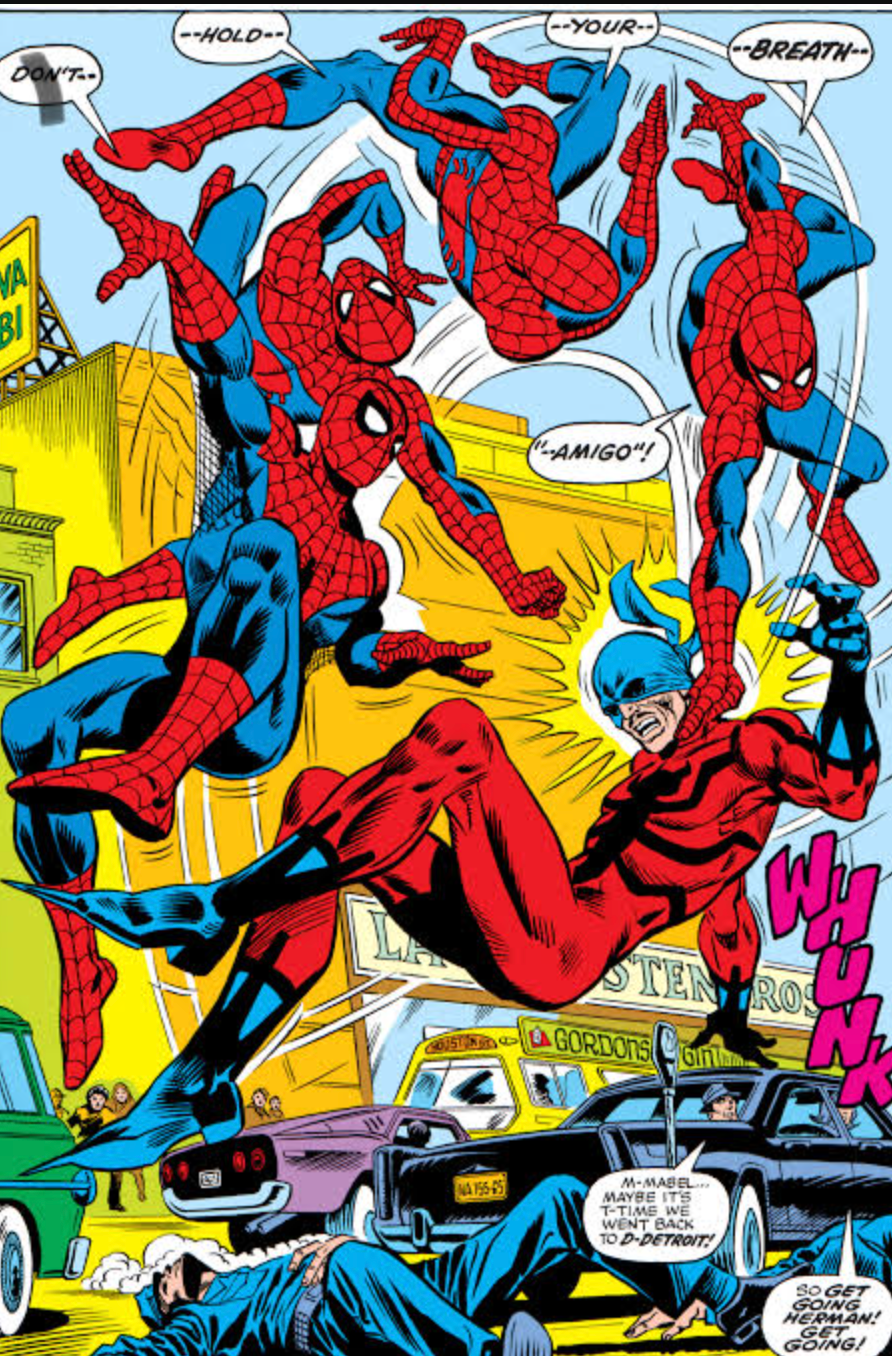
The film's Tarantula is Anton Miguel Rodriguez: a South American mercenary with poisoned spurs hidden in his boots, a methodical killer whose first major cover, that of Amazing Spider-Man #134, is now being restaged by Marvel Studios as a nod to long-time readers. Nothing to do with Black Tarantula, the mob heir Carlos LaMuerto, an entirely different creature in the web-slinger's rogues' gallery. In this guide we finally untangle the two, break down the origins, the weapons and the psychology of Anton Rodriguez, and explain what part he could play in Peter Parker's big return to the big screen.
Tarantula: a forgotten villain who finally arrives in live action
There are Spider-Man enemies everyone knows. Green Goblin, Doctor Octopus, Venom: those names carry far beyond fan circles. And then there is the second tier, the opponents who marked the comics pages of the 1970s and 1980s before slipping into semi-obscurity. Anton Rodriguez, alias Tarantula, belongs to that category. Created in 1974, he had never been given the honour of the big screen. Brand New Day puts that right and gives him, for the very first time, a flesh-and-blood existence.
That choice is anything but random. By digging into the so-called 'minor' villains, Marvel Studios is sending fans a clear signal: this film will not simply recycle the headline names already seen in Tom Holland's trilogy. It casts a wider, deeper net, into a catalogue of urban and criminal threats that fits perfectly with the more down-to-earth tone announced for this new era. Tarantula, with his blend of deadly elegance and brutality, embodies exactly that drive to refresh the bestiary. For a full overview of the gang of bad guys assembled in the film, our feature on the villains of Brand New Day details every profile.
Not to be confused: Anton Rodriguez is not Black Tarantula
This is the point that muddles the most people, so let us put it plainly, in black and white. The Spider-Man universe contains two characters called Tarantula, and mixing them up means confusing two completely separate criminal worlds.
On one side there is Anton Miguel Rodriguez, the original Tarantula, a mercenary and former revolutionary from the fictional nation of Delvadia, in South America. His weapon: the poisoned spurs hidden in his boots. He, and he alone, is the one who appears in Brand New Day. On the other side there is Carlos LaMuerto, known as Black Tarantula: a far more recent character, heir to a mystical criminal dynasty, gifted with superhuman strength and the aura of a crime boss. If you want to understand this second character and his mob inheritance in detail, we have devoted a full article to him here: Black Tarantula, an underrated mob heir. Just keep this simple rule in mind: poisoned boots and Delvadia = Anton Rodriguez (the film); criminal dynasty and brute strength = Carlos LaMuerto.
This confusion matters, both for search and for fan culture: on social media you regularly see Black Tarantula artwork illustrating articles about the film's villain, which is simply wrong. The costume, the powers, the history, the tone: everything differs. Remember the first name Anton and you will never get it wrong again.
Who is Anton Miguel Rodriguez? The origins of a Delvadian revolutionary
To grasp the depth of the character you have to go back to his roots. Anton Rodriguez was not born a criminal. He is first presented as a freedom fighter, a revolutionary standing up against the dictatorship of Delvadia, a South American nation invented by Marvel. Where many Spider-Man villains are born of a scientific accident or a thirst for personal revenge, Tarantula has his origins in the slippery ground of politics and armed violence.
From freedom fighter to a killer who enjoys killing too much
That is where the whole tragedy of the character lies. Rodriguez started out with a cause you might call noble: overthrowing an oppressive regime. But something broke along the way. He ended up developing a taste for murder, savouring the act of killing for its own sake, regardless of any ideal. His methods became so brutal that his own revolutionary allies disowned him. Rejected by his people and turned into an outcast, he then sold his killing skills to the highest bidder and became a mercenary.
That slide makes him a dark mirror of many themes dear to the web-slinger's world: responsibility, the tipping point, the way a goal meant to be just can rot from within. You find the same mechanics of corruption in other opponents of the hero; anyone who enjoys villain psychology will appreciate our analysis of the most powerful enemies of Spider-Man, where the weight of the past always bears down on the monsters of the present.
The Amazing Spider-Man #134 cover, restaged by Marvel
The nod that sent fans into a frenzy comes down to one visual detail. Tarantula makes his first significant appearance in Amazing Spider-Man #134, a 1974 issue that stayed famous for plenty of other reasons. Now Marvel Studios appears to have replayed, or restaged, that iconic cover in the promotion for Brand New Day. To the trained eye, that graphic quotation is a statement of intent: the film owns its roots in the comics material of the 1970s, the period when Spider-Man faced a New York criminal fauna far more grounded in the real than in the cosmic.
That kind of reference is precious, because it builds a bridge between long-standing readers and new viewers. Those who know the original page will see a tribute; the others will discover a brand-new character. That is exactly the logic of continuity Marvel has always cultivated, as in the great narrative shake-up we recount in Brand New Day, the great reset that changed Peter Parker's life in the comics.
The poisoned spurs: Tarantula's signature weapon
You cannot talk about Tarantula without dwelling at length on what makes his trademark, his particular brand of terror: his poisoned spurs. Unlike so many villains who rely on brute force or energy beams, Anton Rodriguez cultivates a more insidious, more intimate threat.
A top-level fighter, a specialist in kicks
Before we even talk about poison, you have to understand that Tarantula is an exceptional human fighter. Remarkable agility, blistering speed, mastery of the martial arts: Rodriguez has built his entire fighting style around leg techniques, around kicks. That is no accident. Every lunge, every strike from the lower body becomes a chance to deploy his real weapon. Where a boxer looks for the knockout punch, Tarantula looks for the gash of the boot.
That specialisation makes him a remarkably graphic opponent to stage on screen. Picture a choreography in which every combination of legs threatens to fatally claw the web-slinger, where dodging is no longer a comfort option but a matter of survival. Peter Parker's spider-sense will be called on more than ever to anticipate attacks in which the slightest graze can be fatal.

BRAND NEW DAY COSTUME
Cosplay Costume - Spider-Man Brand New Day
Slip into the film's official outfit and live the event from the inside: a fitted cut, careful finishing and comfort designed for your cosplay nights, conventions and cinema screenings.
View the product — €109.90The poison, an invisible, delayed threat
The retractable spurs housed in his boots do not merely cut. They are coated in chemical compounds and serve a double function: a cutting weapon first, a toxin delivery system second. It is that second layer that makes Tarantula so dangerous. A superficial scratch, a contact lasting a fraction of a second, and the poison begins its work. An opponent can seem to be holding on, then collapse a moment later, struck down by chemistry as much as by the blade.
That delayed dimension creates ideal dramatic tension. A hero can 'win' the physical exchange and lose anyway, poisoned without knowing it. For Spider-Man, whose stamina and healing factor are real but not infinite, such an opponent poses a fresh problem: how do you beat an enemy whose merest caress is deadly? This kind of chemical threat recalls other villains with twisted biology, such as Mister Fear and his chemical terror, another specialist in substances that strike the body before the mind.
Tarantula in Spider-Man: Brand New Day (2026)
Now to the question everyone is asking: what will Tarantula do in the film? Official information and the analyses drawn from the first trailers let us sketch a likely portrait, even if Marvel is obviously keeping its trump cards hidden until release, set for 29 July 2026 in France and 31 July in the United States.
A likely appearance in the opening montage
According to the most widespread analyses, Tarantula would very probably be part of the film's opening montage. In other words, he would not be the central villain of the whole plot, but one of those opponents Spider-Man faces during an introductory sequence meant to set the tone, to show a Peter Parker plunged once again into the daily life of the urban vigilante. That kind of appearance, without being a lead role, offers ideal space for a visually strong character whose fight choreography alone is enough to stick in the memory.
That status is nothing to sniff at. Plenty of cult villains built their legend on a handful of intense scenes. A well-staged Tarantula in the opening minutes can instantly establish the credibility of the film's criminal threat, and remind us that in this new chapter every New York night can turn into a deadly trap. To get ready for release and miss nothing, our guide how to be ready for the Spider-Man event of the year brings together all the essentials.
One villain among five broad types of threat
What makes the villain casting of Brand New Day particularly clever is the way it is built. The film officially brings together five broad types of villain, five complementary threat archetypes rather than a simple pile-up of silhouettes. Tarantula embodies the agile assassin and poisoner, the precision killer. Around him orbit other profiles: the exoskeleton brute, the mob godfather, the boomerang mercenary, the organised threat.
That variety guarantees that every confrontation plays out in a different register. Against Tarantula, Spider-Man does not fight the way he would fight Scorpion and his exoskeleton, played on screen by Michael Mando as Mac Gargan. Where Scorpion relies on mechanical power and a destructive tail, Tarantula plays on finesse, speed and poison. That clash of styles is precisely what makes a superhero film memorable: the variety of dangers forces the hero to reinvent himself from one fight to the next.
| Villain | Type of threat | Main weapon |
|---|---|---|
| Tarantula (Anton Rodriguez) | Agile assassin, poisoner | Poisoned spurs in his boots |
| Scorpion (Mac Gargan) | Mechanised brute | Exoskeleton and scorpion tail |
| Tombstone | Mob godfather | Superhuman strength, armoured skin |
| Boomerang (Fred Myers) | Long-range mercenary | Explosive boomerangs |
The godfather in the table, Tombstone, will be played by Marvin Jones III and embodies the New York underworld of which Tarantula could well be an instrument. To dig deeper into this chilling character, read our portrait of Tombstone, the ruthless godfather of the underworld.
Why Marvel chose to resurrect Tarantula
Choosing a villain as obscure as Anton Rodriguez raises a fair question: why him, rather than a more bankable threat? The answer comes in several layers which, once stacked up, reveal a coherent strategy.
First there is the question of tone. Brand New Day presents itself as a more grounded, more 'street' chapter, after the multiversal excesses of No Way Home. And Tarantula, a human mercenary with no cosmic power, fits perfectly with that wish to return to a neighbourhood Spider-Man, a hero who protects the pavement before saving the universe. A killer with poison is a tangible, visceral threat that needs neither a dimensional portal nor a magic stone.
Then there is the untapped visual potential. A character never adapted before is a blank page: no crushing comparison with a previous version, no fixed expectations. Marvel can reinvent him freely, give him fresh choreography, without the weight of past adaptations. Finally, there is the pleasure of clever fan service. By pulling a villain out of the archives and restaging his historic cover, the studio rewards the connoisseurs while presenting something new to the general public. It is a balance few franchises manage so well.

ARTICULATED FIGURE
Articulated Spider-Man Figure
Replay the web-slinger's fights against his worst villains thanks to its many joints: set up every acrobatic pose, display it proudly and keep the magic of the film alive at home.
View the product — €99.90Tarantula versus Spider-Man: a history of their clashes
In the comics, Tarantula has never been a permanent front-rank enemy, but his appearances have left their mark. His introduction in the 1970s placed him at the heart of New York stories where the line between vigilante and criminal blurs. Rodriguez crosses Spider-Man's path there several times, sometimes as a direct opponent, sometimes as a pawn manipulated by powers greater than himself.
What makes those confrontations interesting is the physical contrast. Spider-Man is an acrobat, a web-slinger who owns vertical space. Tarantula is a master of the ground, a combat dancer whose legs are weapons. Their duels become jousts of pure mobility, where whoever controls the tempo wins. The poison adds an invisible clock to every exchange: Peter cannot afford to let up for a second.
Over the decades the character has been through sometimes tragic developments in the Marvel pages, notably painful transformations that heightened his dimension as a monster more than a man. That downward path, from revolutionary to monster, belongs to a long tradition of Spider-Man villains broken by their own choices. You find it, in other forms, in many of the figures we have explored, starting with those gathered in the famous collective known as the Sinister Six, where every member carries his share of downfall.
What the film could change for the character
A screen adaptation is never a simple photocopy. It reinterprets, condenses, modernises. For Tarantula, several lines of development are plausible. The first concerns his geopolitical origin. Delvadia being a fictional nation, the film could keep it as it is, replace it with a vaguer context, or on the contrary anchor it in a recognisable geopolitics to reinforce the character's 'realistic mercenary' dimension.
The second line touches on his costume and design. The comics version sports a very pronounced, almost theatrical look. Marvel Studios is used to reworking outfits to make them credible on screen while keeping a recognisable signature, exactly as the studio did for the hero himself with his new Fresh Start suit revealed for Brand New Day. So we can expect a reinterpreted Tarantula, more restrained, more functional, but whose poisoned spurs will remain the instantly readable signature.
Finally, there is the place the poison will take in the story. A simple weapon in a brawl, or a broader dramatic stake? A poisoned Spider-Man, racing against time to find an antidote, would offer tension worthy of the web-slinger's finest pages. Nothing is confirmed, but the potential is there, and it is exactly that kind of uncertainty that feeds the anticipation around the film, as shown by the presale records already set.

BLACK SPIDER-MAN COSTUME
Adult Spider-Man Noir Costume
Take on the dark, mysterious look of the symbiote for your fancy-dress nights: stretch fabric, a full-cover mask and a bold style that catches every eye the moment you walk in.
View the product — €89.90Tarantula, a reminder of a rich criminal universe
In the end, Anton Rodriguez's arrival on screen says something bigger than the character himself. It reminds us that the Spider-Man universe is not limited to a handful of iconic supervillains, but rests on a teeming gallery of urban threats, each with its own mechanics, psychology and nuance. Tarantula, that elegant killer with poisoned spurs, embodies the underground richness that Brand New Day has chosen to bring back into the light.
Remember the essentials: the film's Tarantula is Anton Miguel Rodriguez, a mercenary from Delvadia whose boots hide spurs loaded with toxins, on no account to be confused with Black Tarantula, the mob heir Carlos LaMuerto. His original cover, that of Amazing Spider-Man #134, restaged by the studio, marks the return of a villain forgotten for far too long. It remains to be seen, from 29 July 2026, how the big screen will bring this deadly dance to life. While you wait for the verdict, dive into the rest of the gang of bad guys with our full feature on the villains of Brand New Day, and sharpen your spider-sense: the New York night has never been more dangerous.

