

14-Day Money-Back Guarantee
0
The short answer
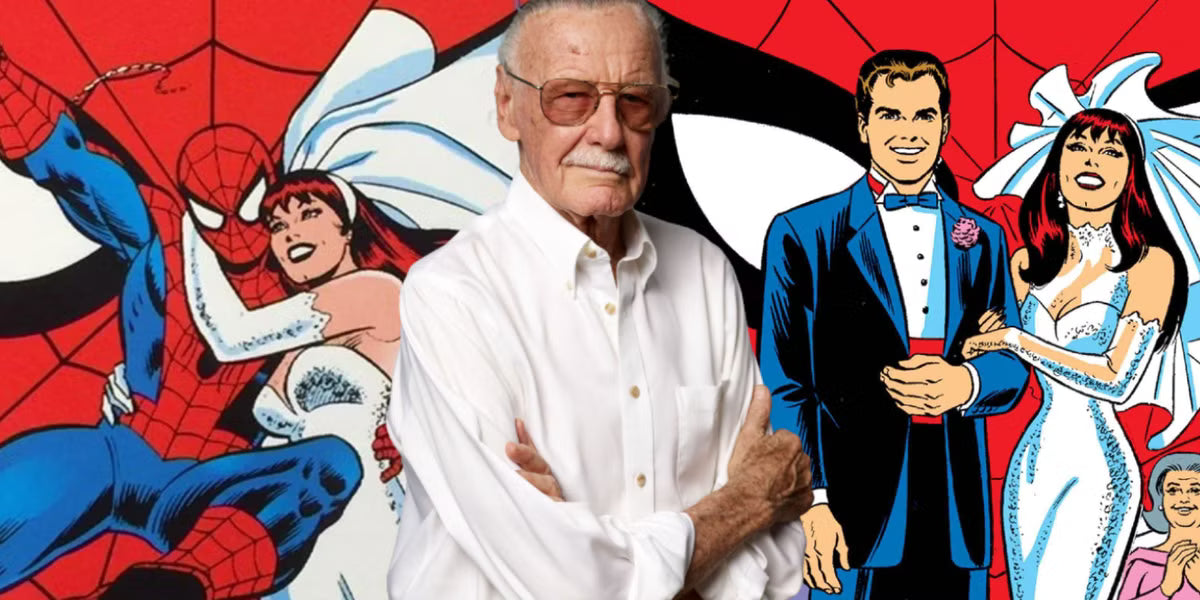
Peter Parker and Mary Jane Watson get married in Amazing Spider-Man Annual #21, published in June 1987. Marvel doubled the event with a real ceremony at Shea Stadium, in front of fifty-five thousand people, officiated by Stan Lee. Twenty years later, the One More Day arc erases that marriage retroactively: in continuity, it never happened.
There are few editorial decisions readers are still talking about twenty years on. This is one of them, and for a precise reason: Marvel did not divorce its characters, the publisher deleted the marriage itself. No annulment, no separation — a retroactive rewrite that means neither of them ever said 'I do'. Here is what actually happened, in 1987 and then in 2007, and why the anger has never died down.
June 1987: the wedding on the page
The wedding takes place in Amazing Spider-Man Annual #21, published in June 1987. It is an annual, a thicker format than a monthly issue, given over entirely to the event. The story piles up the classic uncertainties of the genre — last-minute doubts, obstacles, delays — before the vows and the rings are exchanged.
What matters is not the plot but the scale of the decision. Marrying the character meant closing off a tension kept alive for twenty-five years and setting up an entirely new status quo: a married hero no longer has the same problems as a broke bachelor. The romantic road that leads there is retraced in Spider-Man's love life, from Gwen Stacy to MJ.
Choosing Mary Jane rather than anyone else was not a given. The character had long been written as the carefree girl set against the serious partner, and the wedding places her permanently at the centre. The shadow of the death of Gwen Stacy hangs over this whole story: it was that death that planted the idea that commitment has a cost. The Spider-Man posters from that period still carry its look.
Shea Stadium: when the wedding really happened
This is the episode few readers in the UK know about, and it is extraordinary. Marvel staged a real ceremony at New York's Shea Stadium, in front of fifty-five thousand people, with costumed actors playing the bride and groom. Stan Lee officiated.
The operation goes well beyond a publicity stunt. It says something about the era: a comics publisher able to fill a baseball stadium for the wedding of a fictional character, in 1987, long before superhero culture went global. The page dedicated to Peter Parker puts that episode back into the whole of his trajectory.
That ceremony also explains why the 2007 erasure went down so badly. When a wedding has been publicly celebrated in front of tens of thousands of witnesses, deleting it retroactively does not read as a narrative choice but as a repudiation. Objects from the period have taken on a particular value since, from the issues themselves to vintage Spider-Man decorations.
WALL ART

Spider-Man and Mary Jane Pixel Art
The couple shown together remains a rare motif, precisely because continuity erased it. This pixel art piece brings them back together in a bold graphic treatment, made for an office wall or a living room.
99.90 €
Discover →What the wedding changed on the page
A married hero is not written like a bachelor, and the writers of the time understood that straight away. The first consequence is the shared secret: Mary Jane has known for a long time, and the wedding turns that knowledge into shared responsibility. Every night out becomes a negotiation rather than a solitary decision.
The second is the arrival of a permanent domestic stake. The rent, the bills and the schedules are no longer a student's problems but a household's, and they compete directly with the work in costume. That is exactly the conflict staged in Spider-Man No More, when Peter hangs up the suit.
The third is the quietest: the wedding makes threats against those around him immediately heavier. A villain who goes after a wife does not produce the same effect as a villain who goes after a girlfriend — whether that is the Green Goblin or Doctor Octopus. It is the mechanism set up from the very beginning by Uncle Ben's death: with this character, it is the people closest to him who pay. The imagery of that period still runs through the Spider-Man T-shirts and the comics-inspired mugs.
Twenty years of a published marriage
Between 1987 and 2007 the couple is married on the page, and that period is no parenthesis: it accounts for roughly a third of the character's published existence at that date. Hundreds of issues, several creative teams, and plots that could not have existed otherwise.
The marriage produced dramatic engines of its own, right down to the darkest stories — it is during this period that Back in Black, when Peter drops his moral code is set, tied directly to the events that would lead to the erasure. The full catalogue of these arcs sits on the story arcs page.
One work stands apart and deserves a mention here: Spider-Man: Life Story, which imagines a character who really does age across the decades. The marriage there follows a human trajectory rather than an editorial one, and the comparison with official continuity is illuminating.
2007: One More Day, and the bargain
The One More Day arc came out in 2007. The starting point is a fatal wound inflicted on Aunt May. Peter tries everything to save her, exhausts his options, and ends up facing an offer from Mephisto: his aunt's life in exchange for his marriage.
The detail that matters is the exact nature of the price. Mephisto does not ask for a separation: he asks for the story of the marriage itself. Peter and Mary Jane accept, on condition that knowledge of the secret identity is also wiped from the entire world. The result is not a divorce — in continuity, the wedding never happened.
It is this mechanism that makes the arc so contested. A divorce can be told, survived, turned into stories. A retroactive annulment deletes twenty years of material and leaves the characters with no memory of what the reader has actually read. The detail of the arc is developed in the article devoted to it, and its immediate sequel in One Moment in Time, which tries to pick up the pieces.
T-SHIRTS

Spider-Man Peter Parker T-Shirt
Wearing the civilian name rather than the mask means showing the human side of the character — the one who gets married, doubts himself and pays the rent. A simple cut on a knit that survives the wash without the print cracking.
29.90 €
Discover →Why Marvel did it
The reason given by the editorial leadership of the time is explicit: taking the character back to his roots. The argument fits in one sentence — a married, stable, settled Spider-Man no longer looks like the young man overwhelmed by his responsibilities who made the series a success.
Joe Quesada, editor-in-chief at that moment, believed this return to single life would serve the character's longevity. The reasoning is not absurd: heroes ageing is a real problem for a publisher, and marriage mechanically speeds up that perception.
What is contested, then, is not the aim but the means. Plenty of readers would have accepted a written separation, however painful. The supernatural bargain was read as an escape hatch: rather than tell the end of a couple, the publisher erased the couple. The status quo that follows is described on the films page and their versions of the character, where the adaptations take comparable liberties.
What the erasure changed, in practice
Three things, and none of them minor. First the relationship status: the two characters still know each other but were never married, which puts their relationship back into an earlier state without erasing the attachment. It is an uncomfortable situation to write, and it has stayed that way.
Then the secret identity, which becomes secret again for everyone and cancels years of accumulated consequences. That was the secondary aim of the operation, and it was achieved — at the cost of inconsistencies that later stories have had to handle case by case, right up to recent series such as the animated adaptations in the works.
Finally, the credibility of the reading contract. This is the most lasting effect: once a publisher has shown that it can delete twenty years of continuity, the reader knows nothing is safe. That mistrust is not repaired by a single arc, and it explains the strength of the reaction to every announcement touching the couple. The Spider-Man figures from the various eras have in fact become, for many, the only physical trace of that period.
Mary Jane's place in the myth
The character has a singular editorial trajectory. Introduced as a figure you never see, long treated as the frivolous one, she gradually establishes herself as the only person able to bear, over the long run, what the double life demands. The marriage is not a reversal, it is the culmination of that shift.
What sets her apart is that she has no powers and chooses anyway. She stands for the normal life the hero could have — a role the marriage makes official and the erasure removes. The alternative versions where she occupies an entirely different role, catalogued on the multiverse page, throw into relief, by contrast, what she brings here.
That contrast holds between universes too: in some continuities the balance of the couple is entirely different, as the pairing of Miles Morales and Spider-Gwen shows. The comparison highlights what was specific about the 1987 wedding — a hero marrying someone from outside his world.
SMALL ACCESSORIES

Spider-Man Peter Parker Pop Keyring
The most discreet way to carry the civilian side of the character: it slips onto a set of keys or a bag and makes the reference readable without taking up any space. The add-on gift par excellence.
25.90 €
Discover →Did the marriage really harm the character?
This is the heart of the debate, and it deserves better than picking a side. The editorial argument says a married hero loses the capacity to carry the doubt and the precariousness that make him singular. The readers' argument replies that twenty years of published stories prove the opposite, since the series never stopped working during that period.
Both are right about different things. The marriage did not harm the stories — they carried on, and some rank among the best. What it did complicate was renewing the readership: a new reader arriving discovers a settled adult rather than a young man struggling, which is not the promise that made the character a success.
It is a structural tension, not a writing problem, and it runs through every long-running hero. The solution chosen in 2007 is brutal, but the question it tries to answer is real. Anyone who wants to see what the opposite answer looks like — embracing the ageing — will find it in the alternative stories catalogued on the story arcs page, and the imagery of each era turns up on the posters as much as on the Spider-Man decorations, right through to the phone cases and the stickers in the recent ranges.
Will Marvel ever go back on it?
The question comes up with every change of editorial team, and the official answer stays cautious: not in the immediate future, without the door being closed for good. It is a comfortable position, one that keeps the expectation alive without committing anyone.
Two forces pull against each other. On one side a long-standing readership that has never accepted the erasure and says so regularly. On the other an unchanged editorial logic: the character sells better young and unstable than married and settled. As long as that reading dominates, going back stays unlikely.
A third factor now weighs in: the adaptations install versions of the couple that reach a far wider audience than the comics, and the publisher tends to align with what the general public recognises — from Homecoming to the most recent films. The Spider-Man jumpers and the gift ideas in the catalogue follow the same logic of versions.
Where to read the wedding today
The original issue can be found in collected editions and digitally, and it reads very well on its own: it is an annual designed to stand alone. No prior knowledge is needed beyond who the characters are.
To grasp the scale of what was erased, the most effective route is to read the wedding, then one or two arcs from the married period, then One More Day. The gap between the first and the last does more than any commentary. The merchandise guide page also lists the items tied to each era.
One note on editions: collected volumes cut this period up in several different ways, and some jump from the wedding to arcs far later. Check the issues covered rather than the title of the volume, as always with long periods. One last piece of context, often missing from summaries: the erasure did not remove the memory for everyone, and later writers have used those grey areas to keep an ambiguity alive.
Frequently asked questions
When did Peter Parker and Mary Jane get married?
In Amazing Spider-Man Annual #21, published in June 1987. Marvel doubled the event with a real ceremony at New York's Shea Stadium, in front of fifty-five thousand people, with costumed actors and Stan Lee officiating.
Are they divorced?
No, and the distinction is crucial. The marriage was erased retroactively in 2007 by the One More Day arc: in continuity, it never happened. It is neither a divorce nor an annulment, it is the deletion of the story itself.
What exactly did Mephisto ask for?
Not a separation, but the story of the marriage itself, in exchange for Aunt May's life. Peter and Mary Jane accepted on condition that knowledge of the secret identity was also erased from the entire world. It is that retroactive mechanism that made the arc so contested.
Why did Marvel erase the marriage?
To take the character back to his roots: the editorial leadership felt that a married, settled Spider-Man was drifting away from the young man overwhelmed by his responsibilities who had made the series a success. The aim was the character's longevity; it is the means used that was contested.
Can the marriage be restored?
Nothing forbids it and the official position stays open without commitment. Two forces pull against each other: a long-standing readership that has never accepted the erasure, and an editorial logic that judges the character more sellable young and unstable. The adaptations, which reach a far wider audience, now weigh in the balance.
Did they have a child?
Not in main continuity. A daughter exists in an alternative future, born during the married period and never touched by the erasure — one of the ironies of the whole affair: the character born of the marriage survives in a parallel universe while the marriage itself has vanished from main continuity.

