
14-Day Money-Back Guarantee
0
The short answer
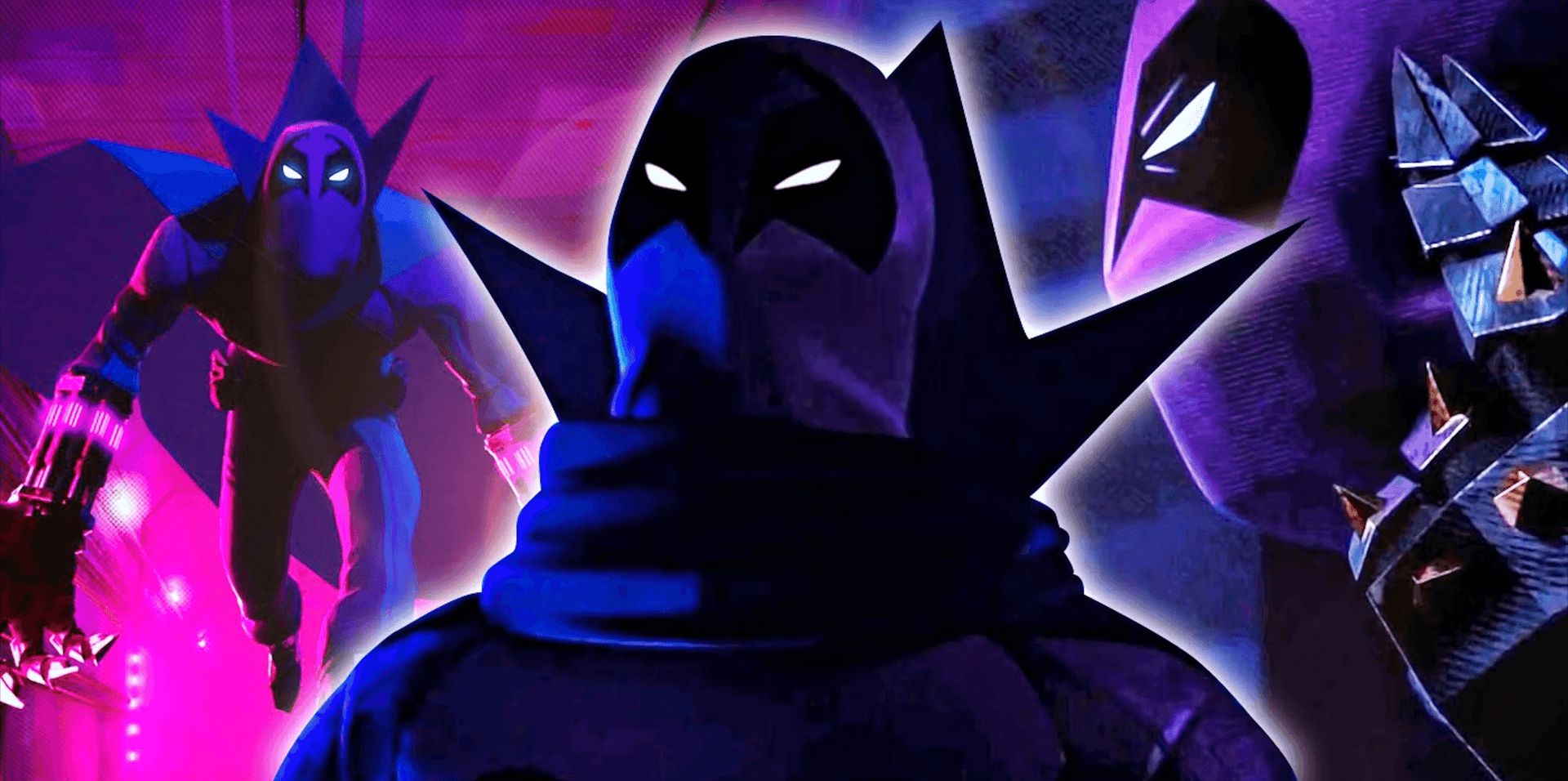
Behind the Prowler's mask is Aaron Davis, Miles Morales' own uncle: an elite burglar in a purple cloak, with retractable claws and red optics, introduced in 2011 in the Ultimate continuity. The suit had first been worn by Hobie Brown. Full breakdown below.
Among the most striking supporting figures in the Spider-Man multiverse, Prowler holds a place all of his own. Neither a true hero nor a true villain, he embodies a grey area that is rare in the Marvel gallery. For Miles Morales, whose uncle he is, Prowler is both a father figure and a moral trap. That ambivalence drives one of the most heartbreaking arcs in the Spider-Verse, and explains why the character has kept fascinating readers since his first appearance in 1969.
This article retraces the full story of Prowler — his origins, his role in the comics, his transformation on screen with Into the Spider-Verse, and his future potential in the live action franchise. To place the character within the wider mythology, a detour through the complete history of the web-slinger, from Peter Parker to the Spider-Verse and through the Spider-Verse explained simply gives you the essential framework.
Aaron Davis: the uncle who becomes an enemy
In the comics, several characters have worn the Prowler suit. The first, Hobie Brown, appeared in The Amazing Spider-Man #78 in 1969. He is a reformed burglar who ends up, in his turn, becoming a supporting figure on the web-slinger's side. But the Prowler who truly shaped the modern mythology is Aaron Davis, introduced in 2011 in the Ultimate universe.
Aaron Davis is Miles Morales' uncle on his mother's side. Rio Morales' younger brother, he chose the criminal path very early — not organised crime on a grand scale, but high-end theft, technical, almost surgical. His Prowler suit is not a super-villain costume: it is a working tool. Purple cloak, gauntlets with razor-sharp claws, built-in red optics — everything in his kit is designed for efficiency, not for show. That utilitarian logic sets Aaron Davis apart from the web-slinger's other antagonists, most of whom crave recognition as much as money.
The most tragic aspect of the character is his moral fragmentation. Aaron genuinely loves his nephew. He plays the cool uncle, the confidant, the one who listens to Miles when his parents do not understand. But that family affection sits alongside a criminal working life he carefully hides. To compare this duality with other complex relationships in the Marvel universe, a detour through the Peter Parker and Tony Stark relationship, between fatherhood and toxic collaboration is illuminating: Aaron is to Miles what Stark was to Peter, in a darker key.
Into the Spider-Verse: the twist that broke a generation
It was with the animated film Into the Spider-Verse (2018) that Prowler became a global pop culture figure. The script pulls off a formidable narrative reversal: Miles, still a beginner as a web-slinger, faces Prowler as the opponent assigned to him by the Kingpin. And just as the fight reaches its peak, Miles discovers that his own uncle is behind the mask.
The scene leaves a deep mark on viewers. Aaron Davis understands in an instant who his nephew is. The look he then gives Miles — a mix of shock, pride and pain — becomes one of the most powerful moments in the film. A few minutes later, when the Kingpin realises his lieutenant has betrayed him, he guns Aaron down in front of the young hero. That double blow — discovering that his uncle is a criminal, then losing him moments later — transforms Miles within minutes. To dig into how that trauma shapes the character, a detour through the moments of doubt of the web-slingers is illuminating — Miles, like Peter, has to learn to turn loss into fuel.
The other striking dimension of the Spider-Verse Prowler is his visual treatment. Sony's animators chose a unique approach for the character: a glitching silhouette, jerky movements, a distinctive sound signature (the low Doppler motif that announces his presence). Those choices make Prowler the most aesthetically memorable character in the film, ahead of even Miles or that dimension's Peter B. Parker. To compare this look with the other animated incarnations, the Spider-Man Freshman Year series offers a contemporary reference point.

The Prowler's cult visual identity
Spider-Man Mask - Prowler
Cloak, claws, red optics: the Prowler mask is probably the most iconic accessory in Into the Spider-Verse. This official replica captures the character's animated glitching silhouette — for cosplay conventions, for a statement piece, or for your collection.
79,90 €
View the Prowler mask →A suit designed to terrify
The design of Prowler in Into the Spider-Verse deserves an analysis of its own. Every element of the suit was thought through for maximum impact. The purple cloak, long enough to reach his calves, does not only serve the silhouette — it masks Aaron's movements, so that he appears and disappears without anyone being able to anticipate his path. That visual dimension translates the character's role literally: a predator you never see coming.
The mechanical claws are his signature weapon. Four retractable blades on each hand, able to cut through metal and to climb any surface. That urban bladed-weapon dimension recalls other antagonists of the web-slinger. To dig into this gallery of tactical villains, a detour through the Sinister Six and the cult team and through the explosive return of the Sinister Six gives you a comparative framework — Prowler is a solo operator who could easily slot into those teams.
The red optics, finally, complete the aesthetic. Where most super-villains show a human gaze through their mask, Prowler wears mechanical red eyes that remove any emotional reading of his intentions. That visual depersonalisation is one of the reasons the character is so terrifying. You cannot negotiate with someone whose eyes you cannot see. This aesthetic strategy is used by other dark figures of the multiverse — see also the alternative versions of Venom for the same kind of opaque mask.
Prowler in the multiverse: the variants beyond Aaron Davis
Across the Spider-Verse (2023) considerably widens the mythology by introducing an alternative Miles Morales who became Prowler in his own dimension. That reveal, one of the film's great twists, works as a narrative mirror: what if Miles had never been bitten by the radioactive spider? What if his fate had been his uncle's rather than the web-slinger's?
This idea of a Miles-Prowler opens up fertile narrative ground. In that parallel dimension, Aaron is the one who survives and Miles is the one who takes up the Prowler suit — the family fate is inverted exactly. That construction reinforces the weight of moral choice for Miles. To dig into this logic of the multiverse and parallel destinies, Spider-MJ, what if Mary Jane had been bitten instead of Peter offers a direct parallel.
Other Prowler variants exist in the comics of the Marvel multiverse. In some dimensions, it is Hobie Brown (the original Prowler) who becomes the main ally of that timeline's web-slinger. In others, Aaron Davis survived Spider-Verse and became an alternative web-slinger after the death of Miles. That narrative plasticity is typical of the Marvel multiverse — every character can be a hero or a villain depending on the circumstances.

Capturing the glitching silhouette
Spider-Man Figure - Prowler
This Prowler figure reproduces the animated glitch aesthetic of Into the Spider-Verse — cloak spread, claws out, threatening stance. For fans who want to make the moment when Miles discovers his uncle's identity tangible.
99,90 €
View this figure →A tragic figure: at the crossroads of good and evil
What makes Aaron Davis singular is his refusal of black-and-white morality. In the Marvel gallery, most enemies are defined by a loss (Peter for the Green Goblin), a revenge (Kraven for the hunt), an obsession (Mysterio for illusion). Aaron, on the other hand, is defined by a contradiction: he genuinely loves his nephew while leading a criminal life that will end up destroying him. That double psychological identity is closer to a social drama than to a classic superhero story.
The other tragic dimension is his clear-sightedness. Aaron knows full well that his way of life is unsustainable. He knows he could be unmasked at any moment. He knows that if he carries on, he will end up having to choose between his nephew and the Kingpin. That clear awareness of the dead end gives the character a depth that few Marvel antagonists possess. To compare him with other figures of the mythology who share that lucidity, a detour through Eddie Brock and Peter Parker, two sides of the same tragedy is illuminating — Eddie, like Aaron, knows that he is destroying himself.
This dimension also lets you measure the political reach of the character. Aaron Davis is not a deranged billionaire (like the Green Goblin) nor a mad scientist (like the creators of the symbiote). He is a Black man from a working-class neighbourhood of Brooklyn who chose crime as a means of social advancement. That realistic dimension brings the story of Miles Morales close to a modern social drama. Spider-Verse dared to write it into the very heart of the mythology, and that is precisely what makes the work memorable.
Miles Morales: the heir Prowler never got to watch grow up
The Aaron-Miles arc is one of the most moving in recent Marvel mythology. When Aaron dies at the end of the first act of Into the Spider-Verse, he leaves his nephew a double-edged legacy: the technical know-how (gauntlets, climbing, infiltration) and a moral dilemma that will structure the whole rest of Miles' trajectory.
To dig into how Miles absorbs that double legacy, two complementary paths exist. First, study the lineage of teenage heroes marked by loss. Spider-Girl, Peter Parker's daughter in an alternative future offers a useful parallel — like Miles, Mayday inherits a universe loaded with unresolved dramas. Then, compare it with Peter's own trajectory. Peter Parker's parents and their little-known story reveals that the web-slingers all share a dimension of family loss. Aaron Davis simply moves that logic into the very heart of the new generation. To go further on this subject, see also Jefferson Davis and Rio Morales: Miles Morales' parents, the emotional heart of the Spider-Verse.
The other crucial dimension is that Miles never completely disowns his uncle. In the comic arcs that follow Spider-Verse, Miles sometimes wears the Prowler suit in his memory. That symbolic continuity turns the prowler from an antagonist into an ancestral figure — a presence that still haunts the hero, but with a recovered tenderness. That nuance is probably what best sets Miles Morales apart from the other young web-slingers: he accepts the family ambivalence instead of running from it.

Wearing Brooklyn's heir
Spider-Man T-Shirt - Miles Morales
Miles Morales embodies the new Spider-Man generation — the one that inherited the mantle but also the weight of Prowler. This official t-shirt reproduces the distinctive red and black pattern of his suit. The perfect complement to any Spider-Verse collection.
34,90 €
View the Miles Morales t-shirt →Prowler in live action: the big project on the horizon
Sony has been preparing a live action film devoted to the Spider-Verse characters for several years. Several names have circulated to play Aaron Davis, with no official announcement to date. The difficulty is real: finding an actor able to carry both the charm of the cool uncle and the darkness of the professional criminal calls for a rare presence.
The other question concerns the format. Would a standalone Prowler film work? A supporting role in a Miles Morales film? A mini-series? Each format implies a different reading of the character. To grasp how the cinematic multiverse is currently being built, a detour through Tobey Maguire, Andrew Garfield and Tom Holland reunited in Avengers Doomsday gives you the framework — Sony and Marvel are multiplying parallel tracks, which paradoxically opens up space for more ambitious supporting arcs.
The other element that argues in favour of a live action Prowler is the proven profitability of Into the Spider-Verse and Across the Spider-Verse. The two animated films together took more than a billion dollars at the box office, and the third instalment, Beyond the Spider-Verse, should follow the same trajectory. Sony has every interest in widening this universe towards live action, and Aaron Davis is among the characters most likely to be adapted first.
Why Prowler still fascinates in 2026
Three structural reasons explain the character's longevity. First reason: his symbolic richness. Prowler is not a villain, he is a metaphor — that of the alternative path every hero could have taken. That polysemy lets the character resonate differently depending on the context. For an adult fan, he recalls the moral compromises we make day to day. For a young reader, he embodies the temptation of the easy way out.
Second reason: the quality of the design. The purple cloak, the red optics, the glitching silhouette — all these visual elements are among the most iconic in modern Spider-Man mythology. No other supporting antagonist has a signature that strong. To bring that aesthetic home, the Spider-Man figures collection and the masks collection now include dedicated models.
Third reason: the modernity of the story. Prowler carries a dimension of social realism that is rare in the Marvel gallery. He does not fight to conquer the world or to avenge a cosmic trauma — he is simply trying to survive in a neighbourhood that forgives him nothing. That grounding in the social reality of contemporary Brooklyn gives the character a relevance that few Marvel antagonists reach. To dig into the urban dimension of the Spider-Verse, Spider-Island, when all of New York becomes Spider-Man offers a wider framework.
Conclusion: Aaron Davis, the antagonist who loved his nephew
Prowler is neither a great cosmic villain nor a fallen superhero. He is, more simply, a man who made the wrong choices while loving the right people. That ambivalence is what makes the character so touching, and explains why his death at the end of the first act of Into the Spider-Verse remains one of the most heartbreaking in modern Marvel mythology.
To take the exploration further, two essential paths. First, watch Across the Spider-Verse with the fate of Aaron Davis in mind — every parallel dimension in the film echoes his destiny. Then, read the recent comics that develop the legacy of Miles Morales, where Aaron keeps appearing in flashback. To place the character in the overall chronology, Spider-Man Brand New Day and the great reset gives you a useful time marker.
One thing is certain: as long as Miles Morales exists in Marvel mythology, Aaron Davis will inhabit him. Not as a threatening ghost, but as an ancestral voice — the one that reminds the hero, at every difficult decision, that he could have been something else. And it is precisely that presence-absence that makes Prowler one of the most enduring antagonists Marvel has ever created. Not the most powerful. Not the most spectacular. But probably the most human.

