
14-Day Money-Back Guarantee
0
The short answer
If Peter Parker keeps his face hidden, it is above all to protect Aunt May, Mary Jane and those closest to him from his enemies' reprisals. That choice costs him dearly: loneliness, financial insecurity, broken promises. Civil War would show the most extreme consequences of it. We break that burden down below.
There is one precise moment in Peter Parker's life that says everything: the moment he takes off his mask. Behind that scrap of red and blue fabric there is no god, no billionaire, no over-trained soldier, but an ordinary young man — an underpaid photographer, a tenant behind on his rent, an anxious nephew, a friend who cancels his plans at the last minute. Peter Parker's double identity is not a simple plot device: it is the beating heart of sixty years of Spider-Man mythology, and the reason this character keeps moving whole generations of readers and viewers. Here is why living between two lives is both the greatest strength and the heaviest burden of the web-slinger.
Two lives, one person
Peter Benjamin Parker was born in Forest Hills, Queens — not on Krypton, not in a medieval castle, not in a secret laboratory. His civilian life looks like that of any young American adult: studies at Empire State University, debts, odd jobs, complicated relationships. It is precisely this ordinariness that makes his double identity so unique in the superhero landscape. Batman can be Bruce Wayne and disappear into his armoured cave between outings. Tony Stark can be Iron Man and live in a penthouse above Manhattan. Peter Parker cannot afford to choose: he is forced to be both at all times, with no financial safety net, no support team, no plan B.
The tension between these two identities shows up in the most concrete details. Peter has to make his own synthetic webbing from chemicals bought out of his savings. He heads home on the subway after saving the city, covered in injuries he cannot have treated in an ordinary hospital without giving away his secret. He lies to the people he loves, over and over, with the weight of every lie piling up. Peter Parker's double identity is not glamorous — it is exhausting, lonely and often unfair.
Uncle Ben's legacy: why the secret is a responsibility
Spider-Man's secret identity has its roots in the most painful lesson of Peter's life: Uncle Ben's death. Peter learnt the hard way that the vulnerability of the people you love is a weapon his enemies will not hesitate to use. Revealing his identity means exposing Aunt May, Mary Jane, his friends and his colleagues to potential reprisals. The mask is not only protection for him — it is a shield for every single person who matters in his life.
That logic is summed up in the line handed down by Uncle Ben, which went on to become one of the most famous axioms of superhero myth: with great power comes great responsibility. For Peter, that maxim does not only mean an obligation to fight criminals — it also means accepting the sacrifices the double life demands. Giving up public recognition. Taking unfair accusations in silence. Being Spider-Man even when Peter Parker would simply like to exist.

The man behind the mask
Spider-Man Peter B. Parker Figure
Peter B. Parker in Into the Spider-Verse embodies the double identity in all its complexity: the tired, divorced, worn-out man — still standing all the same. The figure that captures the human being behind the hero.
89,90 €
View the figure
The human cost: what the double life destroys
The double identity has a price, and Peter Parker pays it in full. His romantic relationships are the first casualties of this inability to be consistent. Gwen Stacy, who died because of Spider-Man's mistakes, never knew the full extent of what he was carrying. Mary Jane Watson agreed to share her life with both — Peter and Spider-Man — but at a considerable cost in anxiety, compromise and daily sacrifice. Simply planning dinner becomes a risky exercise when an alarm can go off at any moment.
His professional life does not escape either. As a photographer for the Daily Bugle, Peter is one of the few journalists able to bring back exclusive shots of Spider-Man — for the very good reason that he is Spider-Man. That narrative absurdity is also an economic one: he pays himself miserable rates, under a boss who publicly loathes what he secretly is. Peter Parker's entire working life rests on a fundamental lie, and that lie carries a permanent cost the other Marvel characters never pay.
The double life erodes friendships too. Every time Peter disappears without explanation, every time he turns up late or cancels, the people around him pay the price of his secret. That structural loneliness — being surrounded by people who cannot really know him — is one of the most melancholy dimensions of the character. Peter is alone precisely because he loves others too much to expose them.
When the mask comes off: the moments of revelation
Spider-Man's story is punctuated by moments when the boundary between the two identities collapses, deliberately or not. Every time Peter Parker has been unmasked amounts to an existential crisis, each one revealing something different about what the secret really stands for.
The most sweeping revelation comes during Civil War: in front of the world's cameras, Peter Parker takes off his mask beside Tony Stark to back the Superhuman Registration Act. That decision, taken under Stark's influence and pressure, sets off a cascade of disasters — an assassination attempt on Aunt May, the need for the pact with Mephisto in One More Day — that prove beyond argument why the secret mattered so much. Peter Parker cannot afford to be known.
No Way Home takes that logic to its most radical conclusion: to protect the people he loves from uncontrollable multiverse consequences, Peter asks Doctor Strange to make the whole world forget who Peter Parker is. He does not disappear — he becomes unknown. Spider-Man exists, but Peter Parker no longer means anything to anyone. It is the most absolute version of the sacrifice the double identity demands: no longer being recognised even by the people you have saved.

The masked identity
Detective Spider-Man Figure
The detective in a trench coat — Spider-Man investigating, hiding, watching. The visual embodiment of the man who lives in his own shadow, forever looking for the balance between what he is and what he has to be.
79,90 €
View the figure
Superior Spider-Man: when someone else takes the mask
Peter Parker's double identity is perhaps tested most radically of all in Superior Spider-Man. Doctor Octopus, dying, manages to swap minds with Peter. Octavius lives Peter Parker's life, wears his mask, spends time with his friends, runs his laboratory — while being psychologically a completely different person.
This arc pushes the idea of a double identity to its extreme: if someone else can inhabit Peter Parker's body and be "Spider-Man" in everyone's eyes, what really defines the hero's identity? The answer the series gives is clear — it is the ethics, the values, the moral code Peter has built since Uncle Ben's death. Octavius can wear the suit, but he cannot be Spider-Man. Peter Parker's identity cannot be reduced to a mask or a name: it is a way of being in the world.
The double life on screen: three actors, three visions
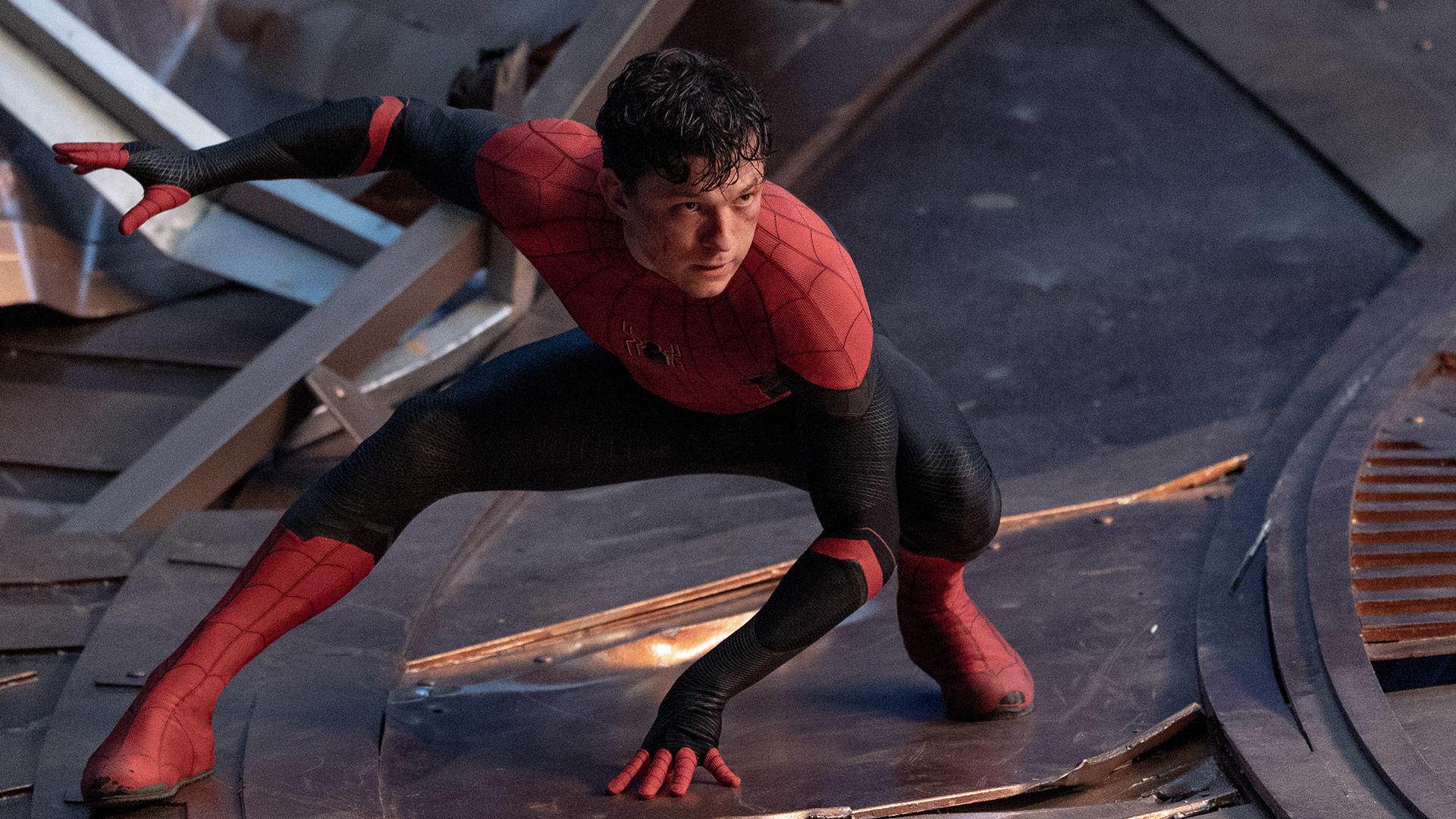
Every actor who has played Peter Parker on screen has brought his own reading of that duality. Tobey Maguire, in Sam Raimi's films, plays a melancholy Peter whose inner conflict is almost constant — the scene in Spider-Man 2 where he dumps his suit in a bin is one of the most direct portrayals of the fantasy of a normal life. Andrew Garfield in The Amazing Spider-Man plays a more rebellious Peter, who suffers less from his double life than he claims it as an extension of his teenage search for identity. Tom Holland, finally, plays a Peter who is still a teenager and gradually discovers that the double life is not a burden you manage — it is a burden that manages you.
These three visions complement one another. Together they map the full cycle of the double identity: resigned acceptance, longing rebellion, painful discovery. Between them, they show why the theme is still so fertile after sixty years: it has no single answer, it has as many answers as there are ways of living with a responsibility too big for your shoulders.
Back in Black: when the double life cracks
Peter Parker's double identity is not indestructible. Sometimes it cracks. In Back in Black, after Aunt May is seriously wounded by a bullet meant for Peter, something breaks inside him. He puts on the black suit and sets aside the jokes, the lightness, the usual moral code. Peter Parker falters, and Spider-Man replaces him with something darker.
These moments of fracture are among the most instructive in the character's whole mythology, because they prove that the double identity is not a stable balance — it is a dynamic, fragile balance that takes constant effort. Among Spider-Man's greatest defeats, some are physical losses against supervillains. Others are private defeats: the moments when Peter can no longer be both at once.

Putting on the suit
Spider-Man Cosplay Costume Hoodie
The act of putting on the suit sits at the very heart of the double identity — the moment Peter Parker gives way to Spider-Man. This cosplay hoodie lets anyone live that transformation symbolically, every single day.
39,90 €
View the hoodie
Why the double identity makes Spider-Man universal
The deeper reason Peter Parker's double identity still resonates so strongly is that it is not a superhero metaphor — it is a human one. Everyone knows the feeling of being several people at once: the son or daughter your parents picture, the professional your colleagues see, the friend your loved ones know, and the person you really are, alone, when nobody is watching. Spider-Man externalises and amplifies that universal experience until it becomes visible, tangible, dramatic.
Peter Parker does not choose between his two lives — he takes on both, at considerable cost, because he has understood that each one is equally real and equally necessary. Without Peter Parker, Spider-Man would be a fighting machine. Without Spider-Man, Peter Parker would be an ordinary man unable to prevent the next tragedy. The double identity is not a problem to be solved: it is the very condition of the hero.
That is why the image of the removed mask remains one of the most powerful in all of popular culture. What it reveals is not a secret — it is a truth. Behind Spider-Man hides someone who hurts, who doubts, who loves, who gives things up — and who, in spite of everything, chooses to put the mask back on every single day. That daily, quiet, heroic choice is perhaps what makes Peter Parker one of the best-loved characters ever created.
To dig deeper into the big questions around Spider-Man's identity: discover every time Peter Parker has been unmasked, and dive into One More Day, the arc where Peter sacrifices his marriage to protect the people he loves — the most heartbreaking decision of his entire double life.

