

14-Day Money-Back Guarantee
0
The short answer
Each numbered designation points to a specific reality: 616 is home to the canonical Peter Parker, 1610 is the Ultimate line that gave birth to Miles Morales, and 928 belongs to Miguel O'Hara, alias Spider-Man 2099. Here's a dimension-by-dimension tour.
The world of Peter Parker isn't limited to a single reality. Ever since the creation of Universe 616, which represents the main Marvel comics continuity, writers have never stopped exploring parallel dimensions. Each of these alternate Earths offers a new version of Spider-Man: brand-new suits, upended destinies, or even completely different characters behind the mask.
This multiplicity sits at the heart of the Spider-Verse. It lets fans discover a darker Peter Parker, a heroic Miles Morales or female versions such as Spider-Gwen. In this article, we'll dive into the most iconic realities: Earth-616, Earth-1610 (the Ultimate Universe), the mysterious Earth-42, and plenty more besides.
But understanding these worlds also means understanding why Spider-Man fascinates us so much. Because behind every parallel universe lies one simple idea: what if fate had turned out differently? That question fuels major story arcs such as Spider-Island or End of the Spider-Verse, and it still inspires films today, like Across the Spider-Verse.
Before we get into the detail of each Earth, remember that these parallel universes are more than a narrative gimmick. They have become a central pillar of Marvel mythology, shaping the comics, the films and even the Spider-Man figures or LEGO sets that fans collect.
Ready to travel between dimensions? Let's start with the most iconic of them all: Earth-616, where it all really began.
Earth-616: Spider-Man's main reality
When you talk about the Marvel multiverse, everything starts with Earth-616. This is the central dimension, home to the classic Peter Parker that fans have known since Amazing Fantasy #15 back in 1962. Here, Spider-Man is the orphaned New York teenager, bitten by a radioactive spider, who becomes a hero to a whole city as he learns that 'with great power comes great responsibility'.

Earth-616 is the heart of the myth. It's in this continuity that the major events unfold, such as the death of Uncle Ben, the arrival of iconic villains like the Green Goblin or Doctor Octopus, and also devastating arcs like the death of Gwen Stacy.
What makes Earth-616 so fascinating is that it ages alongside its readers. Peter Parker has gone from secondary school pupil to teacher, from Daily Bugle photographer to head of Parker Industries. He married Mary Jane, lived through tragic losses, and still embodies a hero who is human above all else. Even if other universes offer more spectacular variations, it's always to this continuity that Marvel returns to lay down the foundations of its identity.
Through Earth-616, Spider-Man is also tied to the whole Marvel Cinematic Universe and the Avengers. Even if the films occasionally take liberties, this is the thread that feeds the great multiversal sagas. Sagas that in turn shape the merchandise, whether that means Spider-Man masks or comic-inspired costumes.
And if Earth-616 is the foundation, it's also thanks to it that we can better appreciate the other parallel universes, by comparing them with this founding reality. Because it's in the contrast that the multiverse draws its full strength.

Earth-1610: the Ultimate universe and the birth of Miles Morales
In the early 2000s, Marvel set out to modernise its characters for a new generation. That's how the Ultimate universe came about, and with it the famous Earth-1610. Here, Peter Parker is reinvented: younger, more plugged into the realities of the modern world, and thrown into darker, more grounded plots. This universe brought a fresh breath that would go on to inspire the screen adaptations, notably the Sam Raimi trilogy and later the MCU Spider-Man.
But Earth-1610's biggest contribution is surely the creation of Miles Morales. Introduced after Peter Parker's tragic death in that universe, Miles becomes the new Spider-Man. Of Afro-Latino heritage, he embodies a new generation of hero, bringing a diversity and a freshness that won readers over straight away. His black-and-red suit and his unique powers, such as the venom blast and invisibility, make him a fully fledged character, not just a 'stand-in'.
Miles has made such an impact that he is now an essential figure, thanks in particular to hit animated films like Spider-Man: Into the Spider-Verse and Across the Spider-Verse. These films not only popularised his story, they also opened the door to a much wider exploration of the spider multiverse.
Earth-1610 also stands out for its reworked takes on iconic villains. The Venom symbiote, for instance, is no longer alien in origin but scientific, reinforcing the grounded feel of this universe. Even the Green Goblin is turned into a monstrous creature here, a long way from Earth-616's simple mad industrialist.
Today, Miles Morales has left Earth-1610 to join the main continuity, proof that his success reaches far beyond his universe of origin. That move marks the definitive integration of this modern hero into the wider Spider-Man mythology.
Other major Earths: 2099, the Spider-Verse and endless expansion
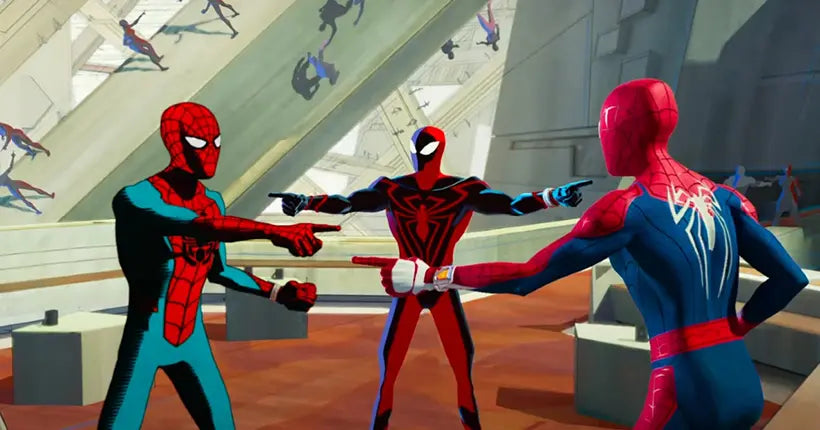
One of the main draws of the Spider-Man universe lies in the richness of its parallel worlds. Among the most famous is Earth-928, home to Spider-Man 2099. Here it's Miguel O'Hara who picks up the mantle, a geneticist from the future whose DNA has been fused with that of a spider. With his cyberpunk look and futuristic settings, he offers a radically different take on the web-slinger. This high-tech Spider-Man, as dark as he is charismatic, has recently grown in popularity thanks to his major role in Across the Spider-Verse.

The Spider-Verse, meanwhile, introduces a host of alternative spiders: Spider-Gwen, Spider-Man Noir, Peni Parker and her SP//dr robot, or Peter Porker, the cartoon Spider-Ham. That range is a perfect illustration of Marvel's ability to adapt Spider-Man to every genre: from drama to comedy, from film noir to children's animation. All these characters come together in the collective stories that have marked recent comics history, and in the merchandise that goes with them.
By exploring all these dimensions, Marvel manages to make Spider-Man far more than a simple character: he becomes a multiversal totem, an icon endlessly reinvented, whether in the comics, at the cinema, in video games or in everyday objects. Whether you're a fan of the classic Earth-616, the modern energy of Earth-1610, or the futuristic vision of 2099, there's always a version of Spider-Man that speaks to you.

