

14-Day Money-Back Guarantee
0
The short answer
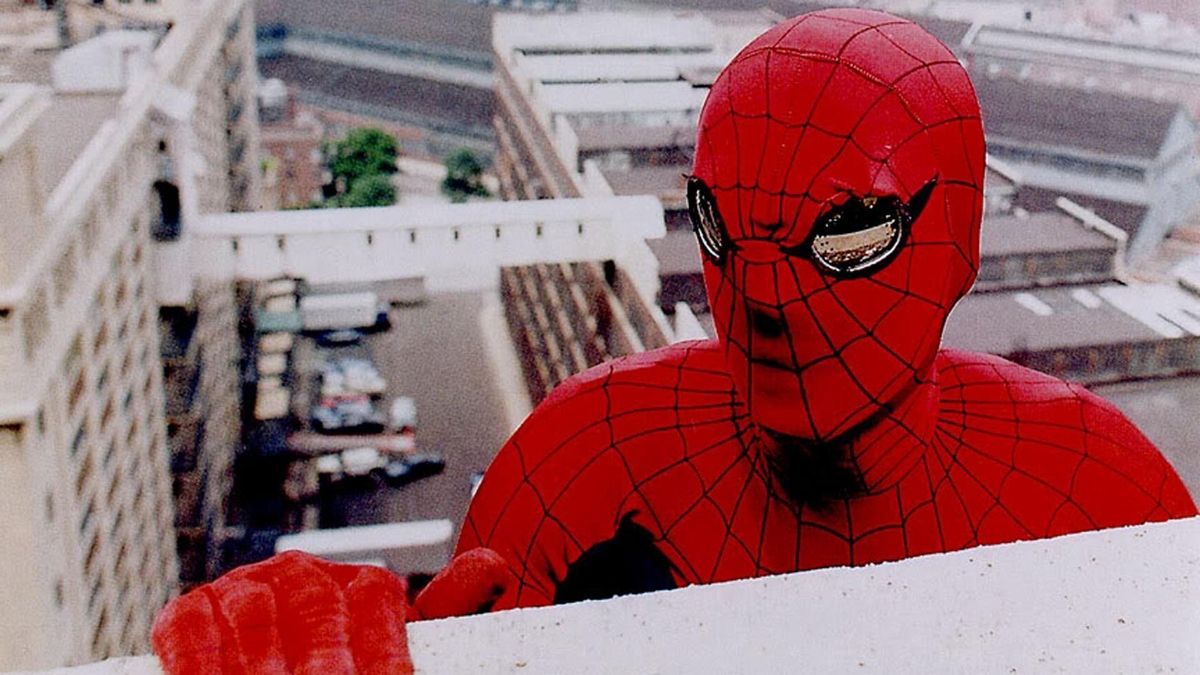
This 1977 TV film, directed by E.W. Swackhamer and starring Nicholas Hammond, is the first live-action feature devoted to the hero: it served as the pilot for the CBS series broadcast from 1977 to 1979. An original crime plot, a hypnotist villain created for the occasion, homemade effects: a curiosity that became a cult favourite. We look at how it was made, and where it strays, below.
Before the triumph of Sam Raimi's modern films, and then of the Marvel Cinematic Universe, Spider-Man took his first steps on screen in 1977 with the film Spider-Man. Broadcast on American television and released in some countries as a genuine feature film, this unusual project marked an important stage in the history of adapting the web-slinger. Directed by E.W. Swackhamer, it served as the pilot for the television series The Amazing Spider-Man that would follow between 1977 and 1979.
In this film, viewers discover Nicholas Hammond in the role of Peter Parker, a shy student who gains his powers after the famous radioactive spider bite. The script, although different from the original comics, keeps several key elements: Peter develops his abilities, builds his artificial webs and puts on his suit for the first time.
A dated film, but a founding one
With its rudimentary special effects and its homemade stunts, Spider-Man may look outdated today. Yet in 1977, seeing a superhero climb walls and fire webs was a technical feat. Above all, the film shows Marvel's determination to take its flagship hero beyond the comics and to test the public's appetite for a flesh-and-blood Spider-Man.

The feature was shown in several countries, notably across Europe, where it gained cult status. For many fans it is a curiosity, a precious relic from a time when superhero adaptations were still rare and experimental. Its release marks the very beginning of the road that would lead Spider-Man to his modern cinema triumphs.
You can even compare this first film with the spectacular evolution of the more recent versions by browsing our page dedicated to every Spider-Man film. It is fascinating to see how far the character has come on the big screen, from the modest beginnings of 1977 to today's blockbusters.
And if you want to relive the retro look of that era, have a look at our Spider-Man poster collection, perfect for decorating your space with a vintage touch.
A modest but memorable cast
The lead role of Peter Parker is played by Nicholas Hammond, already known for appearing in The Sound of Music. His portrayal of an awkward but brave student was a first attempt at capturing the essence of the hero, even if the lack of means sometimes limited the scale of the action scenes. Around him, several supporting characters add depth to the story, but you notice the absence of iconic figures such as Mary Jane Watson, Aunt May or even the Green Goblin.


Instead, the film introduces new, exclusive characters, such as a manipulative guru who uses hypnosis to push ordinary citizens into committing crimes. That choice strays a long way from the comics, but it shows the producers' determination to create an original plot suited to the constraints of television.
Notable differences from the comics
Unlike the classic stories by Stan Lee and Steve Ditko, the film makes several significant adjustments:
- The radioactive bite is still the origin of his powers, but Peter's scientific side gets far less attention.
- No great iconic villains such as the Green Goblin, Doctor Octopus or Kraven: the story focuses on a brand-new, realistic antagonist.
- A crime-drama tone, at times closer to a detective TV film than to a classic superhero adventure.
- Artificial webs built by Peter with a wrist device, an approach taken up again much later by the Spider-Man played by Andrew Garfield.
A mixed reception, but a genuine retro cult
At the time, Spider-Man did not receive particularly glowing reviews. Many pointed to its limited special effects, its sometimes clumsy fight scenes and its simplistic plot. But for a whole generation of viewers, seeing Spider-Man come to life on screen for the first time was an unforgettable moment. In Europe and Asia the film was even given a cinema release, reinforcing its status as a cult curiosity.
Today, fans watch it with a certain fondness, as a historic milestone in the long history of the Spider-Man films. Its simplicity and its dated feel contrast sharply with modern productions, but they are a reminder of just how impressive the journey since has been.
To take the experience further and bring that retro atmosphere into your everyday life, explore our Spider-Man costume collection, perfect for reliving the spirit of the earliest adaptations.

The starting point of a Spider-Man television series
The TV film Spider-Man from 1977 was not an isolated project. It was in fact the pilot for an American television series, broadcast on CBS between 1977 and 1979. Nicholas Hammond returned as Peter Parker, and the series built its episodes around human threats, often tied to organised crime or technological manipulation, rather than the colourful supervillains of the comics.
This choice of tone was meant to anchor Spider-Man in a realistic crime-drama world, close to the standards of the TV series of the day such as Kojak or Starsky & Hutch. It won over a more adult audience, but disappointed some comics fans who had hoped to see Spidey's great iconic enemies.
A bigger success abroad than in the United States
In the United States, the series was cancelled after only 13 episodes for want of an audience. Abroad, however, particularly in Europe and Asia, the project enjoyed a real second life. Some episodes were even re-edited and shown in cinemas as alternative Spider-Man films. That is the case with Spider-Man Strikes Back (1978) and Spider-Man: The Dragon's Challenge (1981).

That strategy allowed Spider-Man to gain worldwide fame long before the big Hollywood blockbusters. For many European fans, this first series remains a formative memory, sometimes even more powerful than the original comics.
A cult legacy despite its limits
Dated though it is, this television series left a lasting legacy. It was the first to lay the groundwork for adapting Marvel superheroes to television, opening the way for other productions such as The Incredible Hulk with Lou Ferrigno. Even today, enthusiasts cite it as an essential stage in the evolution of Spider-Man, and of his animated series.
For collectors and lovers of nostalgia, it is a piece of pop culture history in its own right, often sought after on DVD or on hard-to-find streaming services. In the same way, our Spider-Man figurines bring back that vintage spirit, paying tribute to the hero's earliest incarnations.
Why Spider-Man (1977) remains an essential milestone
Technically limited and often criticised for its lack of faithfulness to the comics, Spider-Man (1977) is still an essential landmark in the history of Spider-Man on screen. Without this TV film and the series that followed, later adaptations would probably not have found their way onto television and into cinemas as early as they did.
The project showed the studios that Spider-Man could work in live action, even on a tight budget and with technical constraints. That boldness opened the way to new attempts, right through to the modern blockbusters that now dominate the global box office.

A direct link with the evolution of the Spider-Man films
Today's audiences may be used to the spectacular effects of Tom Holland, Tobey Maguire or Andrew Garfield, but it is worth remembering that it all began with modest productions like this one. Spider-Man (1977) is, in a sense, the foundation stone of a building that has never stopped growing since.
A cult object for fans and collectors
For retro lovers, this series has become a genuine cult object. It shows how Spider-Man has travelled through eras and formats, and bears witness to the timeless fascination he holds for audiences. Some enthusiasts even recreate scenes using vintage Spider-Man masks or by dressing up in vintage t-shirts.
In the end, Spider-Man (1977) may not be the most faithful or the most accomplished version of the web-slinger, but it remains a precious record of the passion this hero inspires. And for anyone who wants to relive that era, our Spider-Man keyring collection and our retro lamps are all ways of keeping a trace of that first live-action adventure.

