
14-Day Money-Back Guarantee
0
The short answer
The identity kept secret for so long is first and foremost that of Roderick Kingsley, a ruthless businessman who helps himself to Osborn's research — weapons, glider, serum — to build his own criminal empire. Several impostors later took up the costume, muddying the trail. We trace that bloodline below.
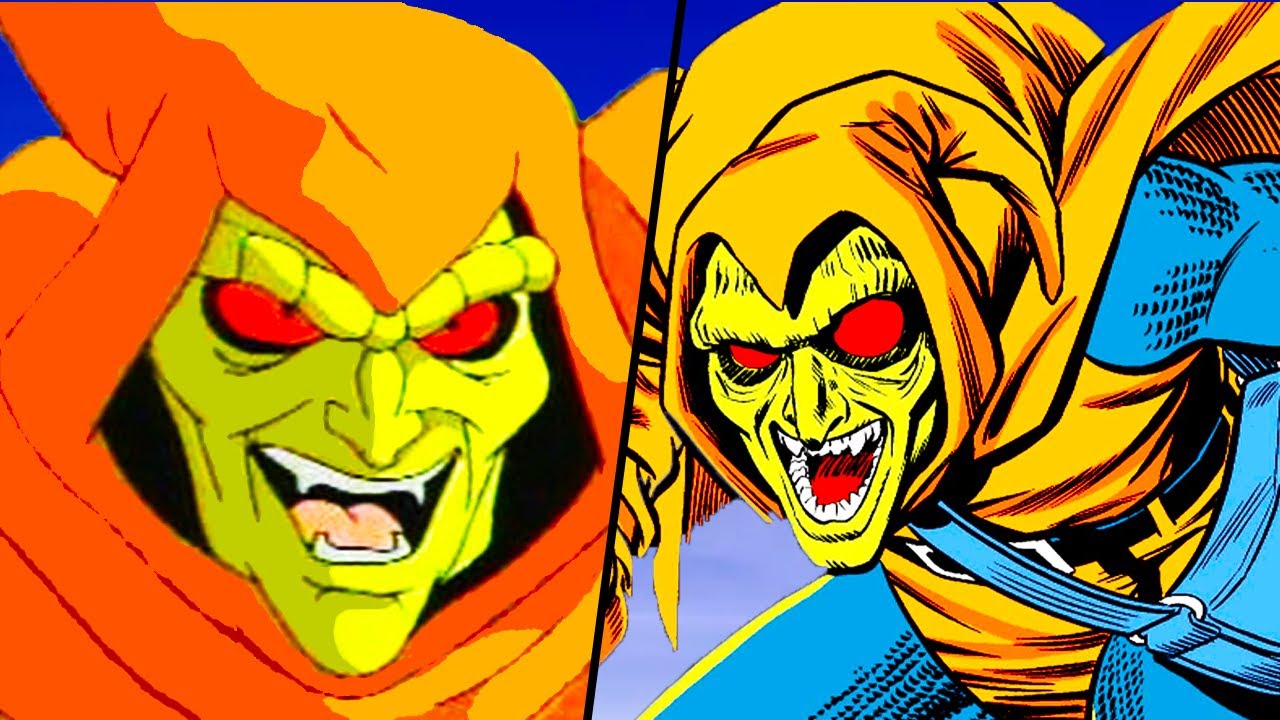
Behind the flaming pumpkin mask hides one of the most intriguing antagonists in the Spider-Man universe: Hobgoblin. Created in the 1980s, he takes up the codes of the legendary Green Goblin, but adds a colder, more calculating and far more Machiavellian touch. That mix quickly made him a cult villain, able to spread terror across New York while manipulating allies and enemies alike.
If Norman Osborn was a genius eaten away by madness, Hobgoblin stands apart through a far more strategic approach: he is not simply a mad scientist, but a man who exploits the Goblin's legacy to build his own criminal empire. His appearances have shaped intense story arcs, in which Spider-Man had to face a threat that, familiar as it was, felt even more elusive.
An enemy born of a dangerous legacy
Hobgoblin's origin is intimately tied to the discovery of Norman Osborn's equipment and research. By seizing that technology, he turned himself into an 'upgraded' version of the Green Goblin, without the same excesses of madness but with a criminal ambition just as formidable. That appropriation made him an antagonist who perfectly embodies the idea of the succession of evil in the Marvel universe.
The mystery of his identity – kept secret for years – also fed his unique aura, plunging readers into an atmosphere of suspicion and paranoia. Who was really hiding behind Hobgoblin's mask? That question fuelled countless debates among fans, making him an even more striking figure.
To discover other equally fascinating villains, explore our pillar page on Spider-Man's enemies, which also features cult adversaries such as Mysterio and Kraven the Hunter.
And for enthusiasts who want to embody that darkness, take a look at our Spider-Man costume collection, perfect for stepping into the skin of the heroes… or the villains.
An identity mystery that gripped readers
What sets Hobgoblin apart from Spider-Man's other villains is above all the riddle of his identity. Unlike the Green Goblin, whose mask directly conceals Norman Osborn, Hobgoblin's true face stayed unknown for years. Marvel deliberately kept that suspense alive, turning every appearance into a gripping investigation.

For years, fans speculated: was it an already familiar character, an ambitious unknown, an ally of Peter Parker? That plot made Hobgoblin a villain who was dangerous not only physically but narratively, because his mystery fuelled the discussions in every issue. To see figures of the Green Goblin or other enemies of the web-slinger, you can browse our collection of Spider-Man figures.
Roderick Kingsley: the man behind the mask
In the end, one of the first and foremost Hobgoblins revealed was Roderick Kingsley, a ruthless businessman. On discovering Norman Osborn's research, he helps himself not only to his weapons but also to his serum formula, which grants him heightened strength and resilience. Unlike Osborn, Kingsley does not tip straight into madness: he stays a cold, calculating strategist who uses his intelligence to manipulate his rivals and extend his criminal influence.


This twist gave Hobgoblin a unique depth: he was not just a copy of the Green Goblin, but a more clear-sighted and even more insidious version. By taking up another man's weapons, Kingsley also stands for an inherited corruption in which evil survives and reinvents itself.
The false Hobgoblins and the confusion
One of the things that fed the Hobgoblin legend is the proliferation of impostors. At various points, other characters have donned the costume, muddying the trail further and making every revelation unpredictable. It reinforced the idea that Hobgoblin was not one man but a symbol of menace that anyone with the will (or the madness) could take up.
That mechanic marked several famous story arcs, where Peter Parker himself doubted his own judgement and saw a suspect in every potential ally. A paranoia that echoed the darker, more psychological mood of 1980s comics.
To dig deeper into this notion of villainous legacy, you can also read our article on Demogoblin, a demonic variant born directly from that infernal bloodline.
An arsenal worthy of the Green Goblin's heir
Hobgoblin invented nothing: he took over and perfected the equipment of the Green Goblin. Pumpkin bombs, a glider armed with blades and missiles, reinforced gloves — it is all there. But Roderick Kingsley added his own touch: greater technological efficiency, and above all a colder, more methodical use of it. Where Norman Osborn often acted in the grip of madness, Hobgoblin is a strategist who plans every single move.

If you fancy switching to Spider-sleep mode, our collection of pyjamas and duvet covers will be perfect for your nights.
On top of that comes the enhanced serum, which grants him superhuman strength, heightened reflexes and resilience. Although he is not as mentally unstable as Osborn, Hobgoblin remains dangerous because he combines physical power with a calculating mind.
Iconic clashes with Spider-Man
The confrontations between Hobgoblin and Spider-Man are among the most spectacular of the 80s and 90s. Their duels soaring over Manhattan with gliders and explosives have become comics classics. Hobgoblin pushes Peter Parker to his limits physically and psychologically alike, because he embodies a threat that lurks in the shadows, with Spidey never truly knowing who he is fighting.
Their rivalry sharpens above all during the arc 'The Hobgoblin Lives', where Kingsley's identity is confirmed and where Spider-Man has to face not only the villain's brutality but also the fallout of his manipulations in the New York criminal underworld. To discover the web-slinger's main story arcs, you can visit our complete page on the subject.
An enemy as political as he is criminal
Hobgoblin is less chaotic than the Green Goblin, but more vicious: he is not only out to kill Spider-Man, he wants to profit from the chaos. His mercenary, mob-like approach brings him closer to figures such as Kingpin, making him a major player in organised crime.
That is what makes his appearances so dreaded: every Hobgoblin plan is not just an act of revenge but a strategic manoeuvre with repercussions across the whole criminal balance of New York.
This manipulative streak also sets him apart from blunter adversaries such as Rhino or Scorpion, placing Hobgoblin in the category of enemies who pull the strings from the shadows.
A cursed legacy and its successors
If Roderick Kingsley is the original Hobgoblin, several characters have taken up the costume over the decades. Among them: Ned Leeds, manipulated and used as a scapegoat, Jason Macendale, who wore the mask before becoming the demonic Demogoblin, and Phil Urich, nephew of Ben Urich, who claimed the identity to write his own legend.
This multiplicity of mask-wearers keeps an aura of mystery and fear around Hobgoblin. Unlike the Green Goblin, he is tied less to a single identity than to an idea of recurring menace, always ready to resurface.
Presence in animated series and video games
Hobgoblin left his mark on fans with his appearance in the 1990s animated series, where he is even introduced before the Green Goblin. That writing choice came as a surprise, but it also cemented his status as a cult villain for a whole generation of viewers.

He also turns up in several video games, often as a secondary but formidable boss. His arsenal, built on aerial mobility and explosive bombs, makes him a particularly dynamic opponent to face.
An underrated but cult villain
Although he never reached the popularity of Osborn, Hobgoblin remains a striking figure. He represents a pragmatic heir, a criminal who managed to turn the Green Goblin's destructive madness into a tool of power and manipulation. That colder, more rational approach makes him a unique adversary in Spider-Man's rogues' gallery.
His legacy lives on through the many versions that have worn the mask, proving that the idea of Hobgoblin is strong enough to outlive any single individual. In that, he comes close to other emblematic figures such as the Vulture or the Jackal, who have likewise been carried by different individuals.
Why Hobgoblin remains essential
Hobgoblin is not merely a 'clone' of the Green Goblin: he is its logical evolution. Less mad, but more calculating, he illustrates another form of threat for Peter Parker — that of an enemy who acts not out of madness but out of self-interest. It is this nuance that keeps him a place of his own in the universe of Peter Parker and in the history of Marvel comics.

