
14-Day Money-Back Guarantee
0
The short answer
It is in fact a two-part episode of the series The Amazing Spider-Man re-cut into a feature film, built around a deadly radioactive dust. No costumed villain here, but corrupt scientists and institutions, in a register closer to a thriller. We break down what makes it worth your time below.
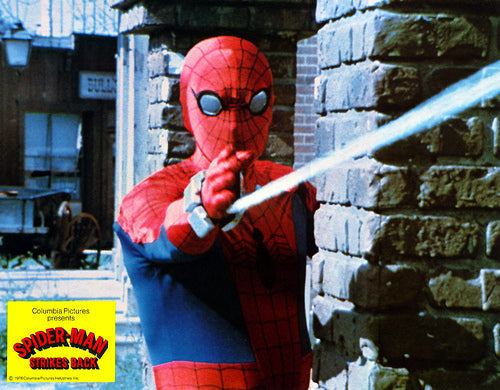
Before Tobey Maguire, Andrew Garfield or Tom Holland ever made their mark on cinema history, Spider-Man had already been given several television adaptations and TV films. Among them, 'Spider-Man Strikes Back' (original title: The Deadly Dust) holds a special place. Broadcast in 1978-1979, this TV film brings back actor Nicholas Hammond as Peter Parker and extends the world of the American TV series.
Though largely unknown to today's general public, this TV film shows how keen the studios were to test the web-slinger's popularity outside the comics. It made a real impression on the fans of the day, who were discovering for the first time a Spider-Man moving through 'realistic' plots, rooted in the social and political tensions of the 1970s.
A direct extension of the TV series
Spider-Man Strikes Back is in fact a special two-part episode of the TV series The Amazing Spider-Man, edited together and broadcast as a film. In this plot, Peter Parker takes on a conspiracy involving scientists who have developed a radioactive substance that threatens the public. The tone is far more serious than in the usual episodes, aiming to give more depth to an adaptation seen until then as lightweight.
That writing choice moves Spider-Man closer to a committed urban vigilante, much nearer the concerns of the time (pollution, nuclear power, corruption). A striking contrast with the colourful, heroic image found in modern films such as Spider-Man: No Way Home.
If you fancy diving back into that retro era, you can also browse our Spider-Man figurine collection, ideal for nostalgic collectors and for fans of the web-slinger's earliest adaptations.
A plot shaped by nuclear fear
In 'Spider-Man Strikes Back', Peter Parker faces a threat very different from costumed super-villains. The TV film centres on a plot built around the creation of a deadly radioactive dust, developed by scientists with murky intentions. This 'deadly dust' threatens the entire population, putting Spider-Man up against a crisis on an unprecedented scale.
The story captures the collective fears of the 1970s perfectly: the energy crisis, the dangers of nuclear power and the worries around pollution. In this story, the web-slinger becomes a social vigilante more than a classic superhero, a reminder that his earliest comic-book adventures already kept him very close to the concerns of the America of his time.


An adaptation with no super-villain, anchored in the real world
Unlike modern films where Spider-Man takes on iconic opponents such as the Green Goblin or Doctor Octopus, this TV film focuses on more 'human' enemies: opportunistic scientists, corrupt companies and failing institutions. That puts it closer to a political thriller than to a classic superhero film.
That writing choice divided viewers: some praised the desire to give the web-slinger an adult dimension, while others regretted the absence of spectacular fights against well-known super-villains. Today, this unusual plot is above all a historical curiosity for fans.
To compare it with the comic-book story arcs that left their mark on readers, you can explore our pillar page on Spider-Man's great story arcs, where you will find similar themes of science gone astray and of moral responsibility.

A mixed reception but a founding role
When it aired, 'Spider-Man Strikes Back' drew mixed reactions. Viewers were fascinated by the sheer fact of seeing Spider-Man brought to life on screen, but many regretted the TV film's technical limits: rudimentary special effects, slow pacing and repetitive stunts. Even so, it is worth remembering that at the time audiences had never had an ambitious live-action adaptation of the web-slinger.
This TV film, like Spider-Man (1977), paved the way for bigger projects. Without those bold attempts, the Sam Raimi trilogy with Tobey Maguire probably wouldn't have come about in the same form. These television productions laid the first stones of a saga that would go on to become a cult favourite.
How it compares with the modern Spider-Man films
Comparing this TV film with later productions shows just how far things have come. Today's viewers, used to the MCU's impressive visuals, may smile at the visible wires or the bare sets of 1979. And yet, the determination to root Spider-Man in social issues remains something it shares with modern films such as Spider-Man: Homecoming or Far From Home, where Peter Parker also faces threats tied to technology and power.
That contrast makes it all the more worthwhile to place the TV film back in the wider history of the web-slinger. It bears witness to the franchise's first steps and shows how, over time, Spider-Man went from a 'homemade' television hero to a global icon of cinema.
If you want to see the character's full evolution on screen, explore our pillar page devoted to every Spider-Man film.
A quiet but precious legacy
Today, 'Spider-Man Strikes Back' is rarely mentioned when people talk about Spider-Man's history on screen. And yet it is an essential piece of the puzzle. This TV film, for all its weaknesses, helped prove that the character could step beyond the comic-book panel and find his place on screen. It is a stage that is often forgotten but deserves to be rediscovered by enthusiasts.
For long-time fans, watching this TV film again is also a nostalgic journey back to a time when Spider-Man wasn't yet one of the biggest franchises in world cinema. It is a raw record of the early days, before the studios started pouring hundreds of millions of dollars into every new production.

Why it is still worth a look today
Rediscovering this TV film means understanding the progression of Spider-Man on screen. You can see the passion of creators who, despite limited means, wanted to bring the hero to life. It also makes you appreciate the modern works even more, from blockbusters like No Way Home to animated projects such as Across the Spider-Verse.
To take things further and bring a piece of the hero's world home, have a look at our Spider-Man mask collection or our iconic costumes, perfect for becoming the 1970s web-slinger or one of the modern versions.

