
14-Day Money-Back Guarantee
0
The short answer
From the 1967 Grantray-Lawrence production to the school-set reboot of 2017, the web-slinger’s television journey runs through the Saturday morning cartoons of the 1980s, the serialised benchmark Fox Kids delivered in 1994, MTV’s 3D experiment, The Spectacular Spider-Man and Ultimate. Every era is broken down below.
Long before he shone on the big screen in cult films and triumphed in hit Spider-Man video games, our favourite web-slinger had already won fans’ hearts through his many animated series. Since 1967, Peter Parker has been reimagined in every possible form: traditional animation, the stylised artwork of the 1980s, experimental 3D effects and modern high-definition animation.
Each adaptation reflects not only the evolution of animation techniques, but also that of pop culture and of how the character has been seen from one generation to the next. In this article we are taking you on a trip through time to relive every Spider-Man cartoon since his television debut.
1967: The Amazing Spider-Man, the founding series
First broadcast in 1967, this series produced by Grantray-Lawrence Animation gave us a cult theme tune, with its famous ‘Spider-Man, Spider-Man, does whatever a spider can’ still lodged in the collective memory. The animation, rudimentary by today’s standards, marked a turning point: it was the first time Peter Parker came to life on screen.

This version lays the foundations: a lone hero, a complicated double life and a constant battle against his enemies. Dated though the technique may be, it keeps a nostalgic charm that still appeals to collectors and vintage lovers.
1981: Spider-Man & Spider-Man and His Amazing Friends
The 1980s marked a new stage with two flagship series. The first, Spider-Man (1981), stayed fairly classic in its storytelling. The second, Spider-Man and His Amazing Friends, teamed the web-slinger up with Firestar and Iceman to form a colourful trio.
This was the era of the Saturday morning cartoons, broadcast at the weekend to millions of American households. The tone was lighter and the plots simpler, but the aim was clear: entertain a young audience while fuelling the boom in toys and Spider-Man merchandise.

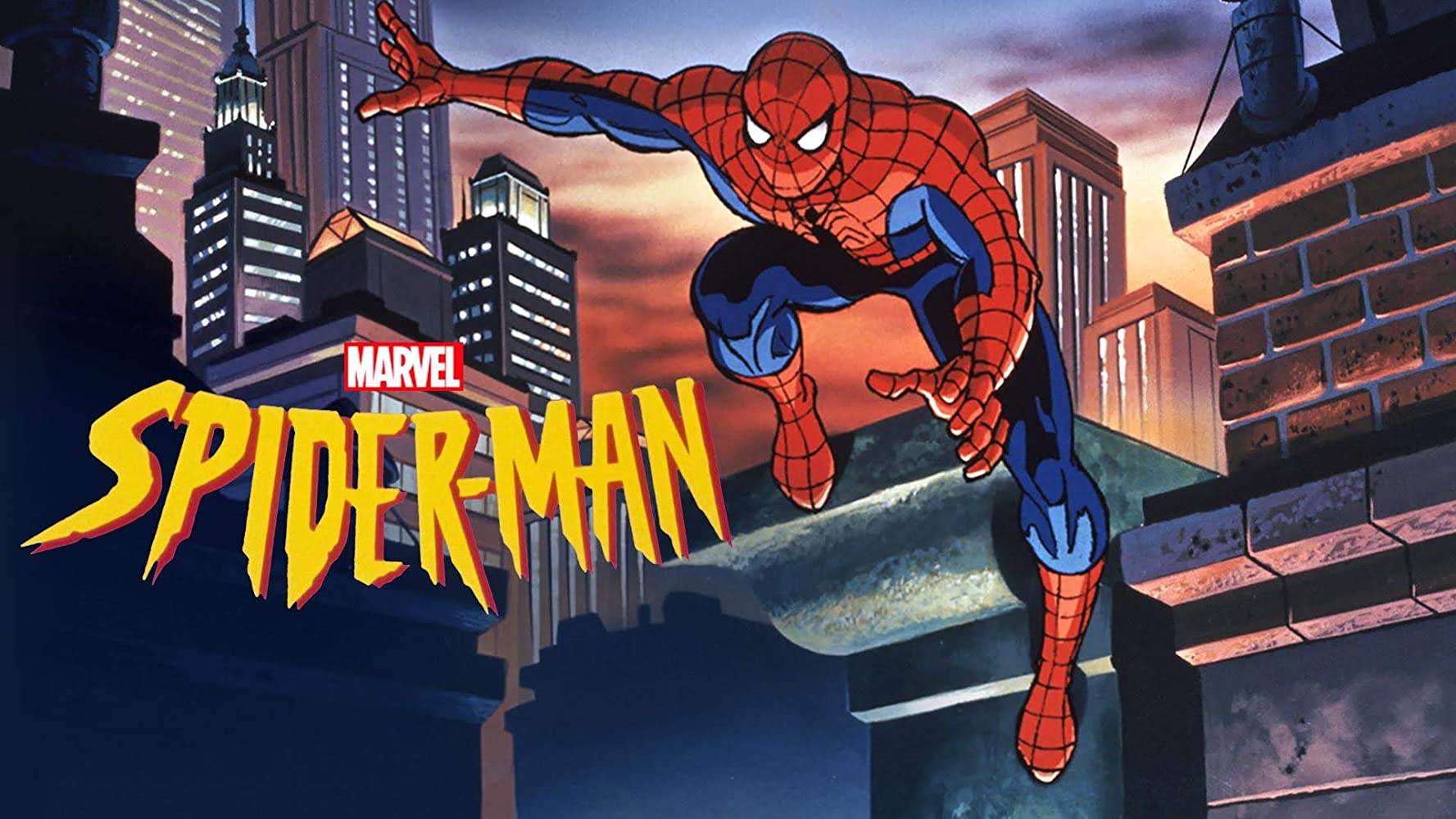
1994: Spider-Man: The Animated Series (Fox Kids)
Widely seen as one of the best animated adaptations of the web-slinger, the 1994 series established a more serialised format, with complex story arcs, crossovers and real character development. Broadcast on Fox Kids, for many it defined the voice and the rhythm of Spider-Man on television.

Among its cult moments: the symbiote saga (Alien Costume), the Neogenic Nightmare arc built around mutations, and the multiverse finale Spider-Wars. The rogues gallery is particularly rich here: Green Goblin, Doctor Octopus, Venom, Carnage, Mysterio, Kingpin… not forgetting appearances tied to the X-Men and the Avengers that thrilled a whole generation.
This series remains an ideal gateway for (re)discovering Peter Parker’s world, with a perfect balance between comics faithfulness and TV storytelling. To dig into the great sagas, take a look at our pillar page on the Spider-Man story arcs.
2003: Spider-Man – The New Animated Series (MTV)
In 2003, Spider-Man came back in an experimental 3D version broadcast on MTV. Darker and more mature, this series set itself up as an alternative continuation of the Sam Raimi films. Its visual style, inspired by cell-shading, and its more adult tone won some fans over while leaving others baffled. This version tackles more psychological plots and puts forward a Peter Parker who is at university, already marked by the choices he makes as a hero. A curiosity worth (re)discovering if you like offbeat formats.

2008: The Spectacular Spider-Man
Considered by many to be the best Spider-Man animated series, The Spectacular Spider-Man shines through its perfect balance of humour, action and comics faithfulness. Broadcast between 2008 and 2009, it revisits the web-slinger’s origins while developing long story arcs and strong supporting characters. Sadly, it stopped after two seasons, leaving fans wanting more. The story arcs around the Venom symbiote and the Sinister Six are particularly memorable.

2012: Ultimate Spider-Man
In 2012, Marvel Animation launched Ultimate Spider-Man, a more cartoonish and comedic series aimed mainly at a young audience. It features Deadpool-style fourth-wall breaks, fast-paced action and the introduction of many heroes such as Nova, Iron Fist and Luke Cage. While it divides long-time fans, it let a whole new generation discover Spider-Man in a colourful, accessible world. It is also a good gateway into the Spider-Verse for children.

2017: Marvel’s Spider-Man
The 2017 version, plainly titled Marvel’s Spider-Man, offers a more school-focused, contemporary rereading of Peter Parker. The hero is presented as a teenager still learning the ropes, juggling his studies and his life as a crime-fighter. Though less popular with long-standing fans, this series appeals to younger viewers with its modern visuals and fast pace. It also puts the emphasis on the character’s science and inventiveness, an aspect often appreciated by those who admire Peter’s brilliant side.

2018 & 2023: Into the Spider-Verse and Across the Spider-Verse
Even though they are not series, it is impossible to talk about Spider-Man in animation without mentioning these two masterpieces. With a revolutionary animation style blending 2D, 3D and comics-inspired textures, Into the Spider-Verse (2018) and Across the Spider-Verse (2023) redefined the way an animated story can be told. They introduce Miles Morales, Spider-Gwen, Spider-Man Noir and many other variants from the Spider-Verse. Their success proved that the wall-crawler remains a cultural icon more than ever.

Why so many animated versions?
Spider-Man is one of the most universal and adaptable heroes in the Marvel universe. His everyday life as a teenager or young adult, his moral dilemmas and his colourful rogues gallery make him an ideal character for short, evolving formats. Every generation has therefore had its own Spider-Man, mirroring the values and the visual style of its time.
📺 Which Spider-Man animated series for which audience?
- For young children (3-8 years): Ultimate Spider-Man (2012) or Marvel’s Spider-Man (2017), light in tone with simple plots.
- For tweens and teens (8-15 years): The Spectacular Spider-Man (2008), a gem of storytelling and visuals.
- For the nostalgic: Spider-Man: The Animated Series (1994), faithful to the comics and rich in complex arcs.
The Spider-Man cartoons in chronological order
- 1967 – The Amazing Spider-Man
- 1981 – Spider-Man / Spider-Man and His Amazing Friends
- 1994 – Spider-Man: The Animated Series
- 2003 – Spider-Man: The New Animated Series (MTV)
- 2008 – The Spectacular Spider-Man
- 2012 – Ultimate Spider-Man
- 2017 – Marvel’s Spider-Man
Carry on the Spider-Man adventure
Whether you love the earliest vintage cartoons or modern versions like the Spider-Verse, our shop is packed with products inspired by every era. You will find Spider-Man figures, exclusive T-shirts and even fancy dress costumes so you can become your favourite version.
Did you know?
The cult ‘Spider-Men pointing at each other’ meme comes from the episode Double Identity in the 1967 series. That gag has travelled across the decades, reused in Into the Spider-Verse and No Way Home, and has become a universal symbol of the Spider-Man universe.

The best Spider-Man animated series according to fans
- Spider-Man: The Animated Series (1994) – A cult adaptation, faithful to the comics, with complex story arcs and plenty of crossovers (X-Men, Avengers). For many, it remains the definitive version.
- The Spectacular Spider-Man (2008) – Critically acclaimed, it combines humour, action and solid writing. Its premature end after two seasons makes it a cult series unfairly cut short.
- Ultimate Spider-Man (2012) – The most mainstream of them all, aimed at children and tweens, with a light tone, gags and modern references. Perfect for discovering the web-slinger.
- Spider-Man: The New Animated Series (2003) – The darker MTV version, aimed at young adults, with experimental 3D design and more psychological plots.
- Marvel’s Spider-Man (2017) – Modern, dynamic and focused on the hero’s training. Aimed more at younger viewers.
What fans say on social media
Debate runs hot between those nostalgic for the 1994 version and the fans of Spectacular. On Reddit, YouTube and Twitter, thousands of polls and videos compare the merits of each adaptation. The general trend puts 1994 out in front for nostalgia and faithfulness, and 2008 in the lead for writing quality and modern feel.
Conclusion
From 1967 to today, every Spider-Man animated series has left its mark on its era. Whether it is the vintage charm of the early days, the epic plots of the 1990s, the 3D experimentation of the 2000s or the colourful freshness of the recent versions, each one has added its own layer to the myth. If you are feeling nostalgic, Spider-Man: The Animated Series is a must. If you want the best writing, go for The Spectacular Spider-Man. And to introduce the youngest viewers, Ultimate Spider-Man or Marvel’s Spider-Man remain ideal.

