
14-Day Money-Back Guarantee
0
The short answer
The most striking reveal remains the Civil War press conference of 2006, where Peter Parker shows his face to the whole world, before the pact struck with Mephisto wipes it all away. Other characters had known for far longer. We trace the full timeline below.
Contents
The Origin of the Secret: Why the Mask Matters So MuchThe Inner Circle: Those Who Have Known From the StartCivil War: The Worldwide Public Reveal (2006)One More Day: The Pact With Mephisto That Erases Everything (2007)Superior Spider-Man: When Doctor Octopus Steals the Identity (2013)Mysterio and the Spell: The MCU Reveal (2019-2021)The Film Adaptations: Tobey, Andrew, TomWhy the Mask Remains Essential: The Psychology of Anonymity
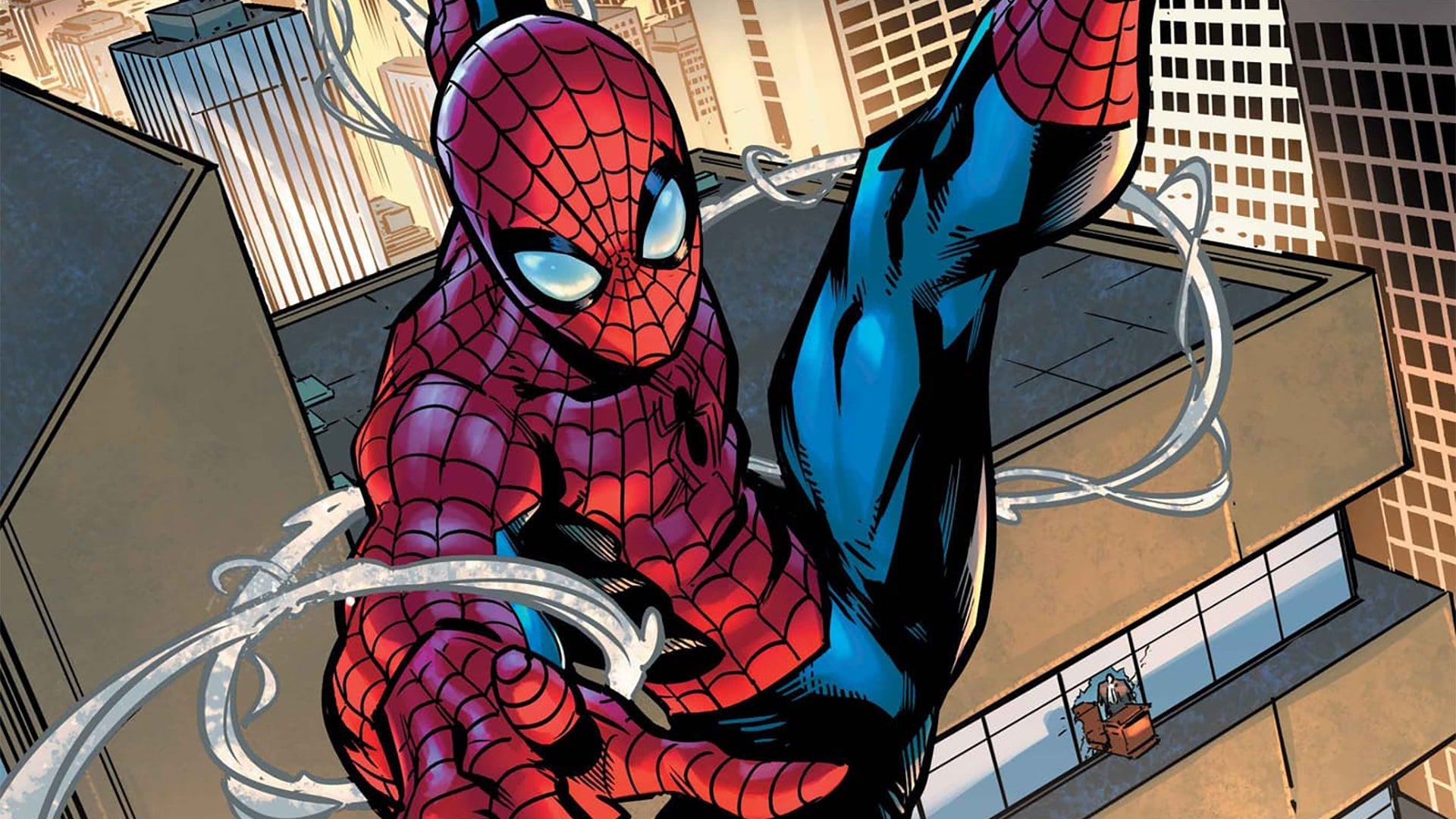
If you ask any Spider-Man fan what the most precious thing Peter Parker owns is, the answer is neither his web-shooters, nor his costume, nor even his powers. It is his dual identity. That fragile line between Peter Parker the shy student and Spider-Man the masked vigilante is what protects everyone he loves — Aunt May, Mary Jane, his friends, his colleagues. The day that line falls, Peter's life collapses. And yet, across six decades of comics, films and video games, the mask has come off a good ten times — each reveal triggering an existential crisis that rewrote the web-slinger's story from top to bottom.
This article is not a philosophical reflection on why Spider-Man hides his identity — other articles already cover that angle. Nor is it a psychological analysis of the Peter Parker/Spider-Man duality. Here we get down to the hard facts: what exactly are all the times the mask has come off? Who knows who? Who learned what, when, how, and with what consequences? Here is the complete timeline of Peter Parker's identity reveals, from the founding comics through to the contemporary MCU — the story of a secret that leaks constantly and yet defines the very soul of the character.
The Origin of the Secret: Why the Mask Matters So Much
To understand what is at stake in each reveal, you first have to understand why Peter Parker clings to his anonymity with an almost pathological obsession. It all goes back to the death of Uncle Ben in Amazing Fantasy #15 from 1962. That night, Peter learns the hard way that any enemy he makes can strike at those he loves — and Uncle Ben pays the price for his own past inaction. From that moment on, the mask becomes sacred: it is the shield that protects Aunt May, his substitute family, from suffering the same fate.
This protective philosophy of the mask is what radically sets Spider-Man apart from most Marvel superheroes. Where Tony Stark publicly reveals that he is Iron Man in his very first film, where Steve Rogers does not really wear a mask at all, Peter Parker has spent sixty years of comics obsessively hiding every detail of his private life. That obsession is not paranoia — it is a discipline that events have vindicated dozens of times. Every time someone discovers the truth, someone else Peter loves ends up hurt, traumatised, or dead.
A mask as a shield
Since Uncle Ben's death in Amazing Fantasy 15 from 1962, the mask has protected Aunt May and those close to Peter from his enemies.
The Inner Circle: Those Who Have Known From the Start
Before we even talk about 'reveals', we need to name the handful of characters who have known Spider-Man's identity for a long time and have always kept the secret. Mary Jane Watson is probably the first — she learns the truth in Amazing Spider-Man #257 (1984), long after they first met, and knowing that secret will become the cornerstone of their relationship. Mary Jane understands that Peter's double life is what makes it beautiful as much as what makes it miserable, and she accepts that burden in order to stay with him — a radical act of love that explains why so many fans consider MJ to be Peter's true soulmate.
Aunt May herself eventually discovers the secret in Amazing Spider-Man #38 (2002). It is one of the most moving moments in the character's entire history: May had suspected something for years, and when she sees Peter come home one evening with his Spider-Man suit showing under his torn shirt, she says nothing at the time but asks him the question the next day. Peter can no longer lie. The conversation that follows redefines their relationship forever — May is no longer the naive aunt to be protected, she becomes the confidante and the silent accomplice of the burden.
Felicia Hardy / Black Cat has of course known the web-slinger's identity since their first romantic encounter — it is at the very heart of the constant tension between Black Cat and Spider-Man. Daredevil has also known the secret for a long time — his superhuman hearing lets him pick out Peter's heartbeat under the mask, and their long-standing friendship rests on that silent complicity, as explored in the underrated alliance between the two heroes of New York.
| Character | Found out |
|---|---|
| Mary Jane Watson | Amazing Spider-Man 257 (1984) |
| Aunt May | Amazing Spider-Man 38 (2002) |
| Felicia Hardy / Black Cat | Has known the identity for a long time |
Civil War: The Worldwide Public Reveal (2006)
And then there is that reveal. The one that changed everything. In 2006, in the crossover Civil War, the American government passes the Superhuman Registration Act — a law that forces every superhero to reveal their real identity to the authorities. Peter Parker, under the influence of Tony Stark, who champions the law, makes the most catastrophic decision of his career: he calls a live televised press conference and pulls off his mask in front of the cameras. 'My name is Peter Parker, and I have been Spider-Man since I was fifteen years old.'
The moment is seismic. Overnight, Spider-Man's identity becomes public knowledge worldwide. J. Jonah Jameson learns that he employed Spider-Man as a photographer for years without knowing it — the humiliation is total for the Daily Bugle's editor-in-chief. Green Goblin, Doctor Octopus, Kingpin and all the villains Peter had fought for fifteen years finally find out where the Parker family lives. The target painted on Mary Jane's and Aunt May's backs is enormous.
The consequences are immediate and tragic. Kingpin, from his prison cell, orders a hitman to shoot the Parker family. The bullet, meant for Peter, hits Aunt May full in the abdomen. May falls into a coma, suspended between life and death. It is the trigger for the most controversial arc in Spider-Man's entire history — and the most devastating public reveal any superhero has ever suffered.
1
Registration Act The law forces heroes to reveal their identity.
2
Press conference Peter takes off his mask live on air.
3
Villains informed They find out where the Parker family lives.
4
Aunt May shot A bullet meant for Peter puts her in a coma.
One More Day: The Pact With Mephisto That Erases Everything (2007)
With Aunt May dying and unable to accept losing her, Peter desperately looks for a solution. He consults Doctor Strange, contacts every Marvel hero capable of magic, pleads with fate itself. That is when Mephisto, the Marvel devil, offers him an impossible bargain: he will save Aunt May and erase Spider-Man's public identity from the memory of all humanity — but in exchange, Peter and Mary Jane must give up their marriage. Their whole love story, wiped out. As if it had never existed.
Peter accepts. This is the One More Day arc from 2007, written by J. Michael Straczynski, and it is probably the most controversial editorial decision in the whole history of modern Marvel comics. Overnight, the Peter/MJ marriage is erased, Spider-Man's public identity never existed, and humanity's collective memory is rewritten. Everyone forgets who Peter Parker is — except Mary Jane herself, who keeps the memory as one more burden to carry alone.

Fans loathe this arc with rare intensity. Why? Because it erases an entire decade of narrative development and emotional investment. But Marvel had a strategic reason: Spider-Man cannot be married in the comics. The single Peter Parker, young, still searching for his balance, is the soul of the character. The married 35-year-old with a perfect wife is not the same hero. One More Day solves that editorial problem — at the cost of a narrative betrayal many fans have never forgiven.
The Symbol — Identity Under the Mask

Classic Spider-Man Mask
29,90 €
The iconic mask that protects the web-slinger's identity — the essential piece for playing Spider-Man at a cosplay event or on Halloween.
Discover the Mask →Superior Spider-Man: When Doctor Octopus Steals the Identity (2013)
But Peter Parker's identity can be stolen in ways other than the mask coming off. In 2012-2013, the Superior Spider-Man arc by Dan Slott pushes that idea to its extreme: Doctor Octopus, dying, manages to transfer his consciousness into Peter Parker's body. For two years of comics, it is Otto Octavius who lives inside Peter's skin — running his life, dating his girlfriends, earning his doctorate, running Parker Industries. The real Peter is trapped in Octavius's dying body and dies trying to win his own back.

This possession is probably the most chilling identity reveal in the character's entire history: not only does someone know Peter's identity, but that someone becomes Peter for two years. Otto does things Peter would never have done — he kills villains instead of arresting them, he manipulates MJ and those close to him, he turns the web-slinger's morality into something more brutal and more efficient. When Peter finally gets his body back, his life is in tatters: his friends hate him for the things Otto did, his career is compromised, and he has to rebuild his reputation piece by piece.
The Superior Spider-Man arc poses a fascinating philosophical question that few superhero comics have dared to ask: who really is Spider-Man? The mask? The body? The consciousness? If Otto, in Peter's body, is more efficient, more intelligent and technically more capable of protecting New York, is he a better or a worse Spider-Man? The answer is complex and still haunts the fan community more than ten years after publication.
A stolen identity
In Dan Slott's Superior Spider-Man, Doctor Octopus transfers his consciousness into Peter's body and lives his life for two years of comics.
Mysterio and the Spell: The MCU Reveal (2019-2021)
In recent Marvel cinema, the big identity reveal comes at the end of Spider-Man: Far From Home in 2019. Mysterio, killed in the final fight, has trapped Peter by sending J. Jonah Jameson a doctored video that not only accuses Spider-Man of Mysterio's murder, but also reveals that Peter Parker is Spider-Man. The closing sequence of the film — Jameson bellowing Peter Parker's name on a giant screen in Times Square — is one of the most brutal cliffhangers in the whole of MCU phase 3.
The direct consequence is Spider-Man: No Way Home in 2021, the film that explores what that public reveal does to Peter's daily life. His university career is ruined, his relationship with MJ becomes impossible, his extended family suffers constant media intrusion. Peter finally goes to Doctor Strange to have him cast a spell that erases knowledge of his identity from collective memory — exactly as Mephisto had done in One More Day, but this time with celestial magic rather than a demonic pact.
Strange's spell goes off the rails (because Peter keeps changing the parameters while it is being cast), which opens the doors of the multiverse and brings in Doctor Octopus, Green Goblin, Electro, Sandman, the Lizard and the rest. But at the end of the film, the spell finally works as intended: no one in the universe remembers any more that Peter Parker is Spider-Man. Not MJ, not Ned, not Aunt May (who dies before the erasure), not the Avengers. This devastating ending to No Way Home completely redefines the future of the MCU character. To go further on this subject, see also All of Spider-Man's Deaths in the Comics: When Did Peter Parker Truly Die?.
1
Far From Home (2019) Mysterio's video reveals that Peter is Spider-Man.
2
No Way Home (2021) His studies, his relationship with MJ and his family all suffer.
3
Strange's spell It goes wrong and opens the doors of the multiverse.
The Film Adaptations: Tobey, Andrew, Tom
The three great screen incarnations of Spider-Man have each handled the identity question differently. In the Sam Raimi trilogy, Tobey Maguire reveals his identity to Mary Jane at the end of Spider-Man 2 (2004) — a moment of pure tenderness where she sees his face for the first time while he lies unconscious in the train carriage he has just saved. That reveal is handled as a moment of intimacy rather than as a catastrophe, and it sets the stage for their relationship in Spider-Man 3.
In The Amazing Spider-Man from 2012, Andrew Garfield reveals his identity to Gwen Stacy fairly early in the film, turning their relationship into a partnership of total complicity. That transparency is what makes their love so poignant and what sets up the tragedy of The Amazing Spider-Man 2 from 2014 — Gwen's death is all the more heartbreaking because she knew everything, because she chose to love him in full knowledge of the risks.
Tom Holland, in the MCU, handles his identity far more chaotically: Tony Stark knows from the start, May finds out by accident at the end of Homecoming, MJ and Ned find out at their own pace, then the whole world learns it through Mysterio, then everyone forgets after Strange's spell. That rollercoaster handling reflects the generally lighter, more experimental tone of Holland's run compared with the previous versions — a millennial Peter Parker who never really controls who knows what about him.
Film Edition — Tobey's Spider-Man

Tobey Maguire Spider-Man Costume
99,90 €
The legendary suit from the Sam Raimi trilogy — the Spider-Man who told Mary Jane he was Peter Parker on the New York subway.
Get the Tobey Costume →
| Actor | Who learns the secret |
|---|---|
| Tobey Maguire | Mary Jane, end of Spider-Man 2 (2004) |
| Andrew Garfield | Gwen Stacy, early in The Amazing Spider-Man (2012) |
| Tom Holland | Tony Stark, May, MJ and Ned, then the whole world |
Why the Mask Remains Essential: The Psychology of Anonymity
Beyond the narrative questions, Spider-Man's mask has a deep psychological function that the other Marvel heroes do not have. The mask also hides the emotions of Peter Parker. When he fights an enemy he hates, when he mourns the death of someone close, when he smiles while saving a child, the mask protects not only his civilian identity but also his emotional vulnerability. That is what lets Peter be both the confident hero cracking jokes mid-fight and the traumatised teenager who doubts everything — the mask creates the necessary distance between the two.
This psychological dimension explains why Peter hangs up the suit several times in the comics. Without the mask, without anonymity, Peter Parker can no longer function as Spider-Man — he becomes just an ordinary man, vulnerable to everything. It is also why the web-slinger finds it so hard to trust anyone with his identity, even those close to him: every person who knows weakens the emotional protection system he has built around himself.
For fans who really want to understand the depth of the character, studying the complete timeline of the identity reveals is probably the best way in. It is in these moments — when the mask falls and Peter has to face the consequences — that who Spider-Man really is beyond the costume comes out. To embody that dimension in a cosplay, or to give a gift to a fan who appreciates that side of the story, the Spider-Man masks collection and the full costumes collection cover every version of the web-slinger, from Tobey Maguire to Tom Holland by way of Spider-Man Noir and the PS5 version by Insomniac Games.
Protecting the emotions too
The mask hides Peter's emotional vulnerability and creates the distance between the wisecracking hero and the teenager who doubts everything.
Verdict: The Web-Slinger's Most Precious Secret
Spider-Man's secret identity is not a simple narrative convention — it is the backbone of the character, what sets him apart from the other Marvel superheroes and what makes his tragedies so poignant. Every time the mask falls, in the comics or on screen, the web-slinger's whole psychology wobbles and has to rebuild itself. And every time he manages to recover his anonymity — through magic, through the law, through sacrifice — Peter Parker can go back to being the hero he chose to be instead of the hunted man he fears becoming.
This tension between exposure and protection, between public life and private life, is probably more relevant than ever in 2026 — in an age where each of us lives with our own version of a public identity on social media and a private identity at home. Spider-Man, created in 1962, anticipated that modern duality with astonishing intuition. That is precisely why the web-slinger remains, sixty years after his creation, the most relevant and most relatable superhero in the whole Marvel universe. To discover other sides of the character, explore the full page on Peter Parker or browse our Spider-Man gift ideas for fans who appreciate narrative depth as much as objects that keep the passion alive.
The backbone of the character
Every time the mask falls, the web-slinger's psychology wobbles; recovering his anonymity lets him go back to being the hero he chose to be.

