
14-Day Money-Back Guarantee
0
The short answer
All three at once, in that order: university flatmate, romantic rival once Mary Jane arrives, then costumed adversary after his father's death. Introduced in Amazing Spider-Man #31 in 1965, he first believes Spider-Man killed Norman, before discovering the face beneath the red and blue mask and taking up the Green Goblin costume himself. We unpack each stage below.
There are few characters in the Marvel universe whose arc condenses as much love, betrayal, tragedy and redemption as Harry Osborn's. A loyal friend to Peter Parker at secondary school and then at university, cursed heir of the Green Goblin, second bearer of his father's cursed mask, and finally a tormented soul who regains his humanity at the cost of his own life — Harry Osborn is probably the character who best sums up the tragic philosophy of Spider-Man: the worst enemies are the ones you loved first.
That permanent ambiguity — friend, rival or enemy? — is not a simple plot device. It is the very heart of the character and the source of all the dramatic power he has brought to Spider-Man stories since his first appearance in Amazing Spider-Man #31 in 1965. To understand Harry Osborn is to understand why the best Spider-Man arcs are never the ones where Peter fights an anonymous supervillain, but the ones where he has to face people he knows, people he has loved, people he would have wanted to save. Here is the full analysis of one of the most complex and most emotionally devastating characters in the entire Spider-Man universe.
The Origin of an Unlikely Friendship Between Two Worlds
It all begins at Midtown High School, where Peter Parker — an orphan raised by his Aunt May, modest, brilliant at science but socially invisible — crosses paths with Harry Osborn, son of the powerful industrialist Norman Osborn, heir to a technology empire and a symbol of everything Peter can never be by birth. On paper, nothing should bring them together. In the narrative reality of the comics, it is precisely that difference that creates the strongest friendship either character has ever known — each finds in the other exactly what he is so painfully missing. To go further on this subject, see also Empire State University: Peter Parker's university explained.
Harry, for all his fortune, lives in the crushing shadow of a father who is emotionally absent, distant, excessively demanding, incapable of showing the slightest tenderness. Peter, for all his poverty, lives in the unconditional love of Aunt May and Uncle Ben. When the two young men become flatmates at university, they find an unexpected balance: Harry offers material stability and a sense of privilege, Peter brings family warmth and a moral compass. That friendship becomes so deep that it survives even the first romantic cracks — when Mary Jane Watson enters their shared life and both friends fall in love with the same woman, they still find a way to preserve their bond despite the rivalry.
The Discovery That Changes Everything: Norman Osborn Is the Green Goblin
The tipping point comes with the discovery of the most toxic secret in the Spider-Man universe: Norman Osborn, Harry's father, is in reality the Green Goblin, Spider-Man's worst enemy. That revelation is not just a plot twist — it permanently poisons the relationship between Peter and Harry, because it places the two friends on either side of a moral line that cannot be crossed. Spider-Man fought Harry's father, wounded him, perhaps indirectly caused his death. How do you keep a friendship alive when the man you love like a brother has killed your father, even by accident, even in self-defence, even to protect New York?

The narrative complexity of this moment comes down to one thing: Harry does not yet know that Peter is Spider-Man. He only knows that Spider-Man is responsible for his father's death. His hatred therefore crystallises around the web-slinger — around that silhouette in the red and blue suit he identifies as the killer — without realising that the man behind the mask is his best friend, his confidant, the man he shared his daily life with for years. That ignorance creates a permanent dramatic tension running through every Harry Osborn arc, right up to the moment he finally discovers the truth, in a scene that remains one of the most heartbreaking in the whole history of Marvel comics.
Iconic Scene — Green Goblin Battle

LEGO Spider-Man — Battle on the Bridge
169,90 € 199,90 €
Rebuild in bricks the legendary showdown between Spider-Man and the Green Goblin on the bridge — the scene that changed everything between Peter and Harry.
Discover the Battle Set →The Second Green Goblin: When Harry Takes Up the Cursed Mask
Harry Osborn's path towards becoming the second Green Goblin is not a simple repeat of his father's journey — it is a far more tragic fall, because it is a conscious one. Norman Osborn became the Green Goblin through a scientific accident, following a failed experiment that destabilised his mental balance. Harry deliberately puts on the mask, out of revenge, out of grief, out of an inability to carry the Osborn legacy alone. He knows what he is becoming. He chooses to become a monster like his father, even knowing what that cost his family.
This gradual descent is perfectly captured in the Sam Raimi trilogy, and especially in Spider-Man 3 where James Franco's performance captures all the emotional complexity of the character. The moment Harry discovers that Peter is Spider-Man, the moment he chooses to attack him, the moment he realises he is turning into the spitting image of the father he hated — each of those stages is handled with a psychological subtlety that goes far beyond the traditional superhero register. Harry Osborn is never a simple villain. He is a wounded man who turns bad because the wound never healed.
In the comics, the transformation is even more complex. Several major arcs explore the different facets of the second-generation Green Goblin: sometimes a pure antagonist, sometimes a temporary ally, sometimes a tragic figure fighting his own madness. That narrative plasticity makes Harry one of the few characters who can appear in almost any context — an epic battle against the Sinister Six, an intimate family drama, a multiverse crossover — without ever losing his internal coherence.
Oscorp: The Toxic Empire That Haunts Both Generations
To understand Harry Osborn, you have to understand Oscorp Industries, the technology empire founded by Norman and inherited by Harry — a set of laboratories and offices that is not merely scenery, but a character in its own right in Spider-Man mythology. The Oscorp tower dominates New York as a permanent reminder of Osborn power, and every floor holds secrets, weapons and experiments capable of triggering the next catastrophe. When Harry inherits the empire, he also inherits everything that empire hides — and it is that accumulation of toxic secrets that finally overwhelms him.

The image of the tower is so central to the fans' imagination that it has become one of the most striking visual symbols of the Spider-Man universe, second only to the web-slinger's own suit. In the Insomniac video games, in the films, in the comics, the Oscorp silhouette turns up again and again as a landmark — always there, always threatening, always tied to the coming fall of a character we loved. It is the Sauron of the Spider-Man universe, the eye watching everything from the top of Manhattan.
Architectural Piece — Oscorp Symbol

Premium Building Block Set — Oscorp Tower
399,90 € 449,90 €
The Osborn tower rebuilt brick by brick — the building that embodies the whole tragedy of Harry and his father.
Discover the Oscorp Tower →The Tragic Redemption: The Sacrifice That Restores the Friendship
The most powerful arc in Harry Osborn's entire journey is his final redemption. In several versions of the story — comics, films, video games — the character ends up sacrificing himself to save Peter Parker, recovering his humanity at the very last moment. That narrative mechanism is not a cliché: it is the logical conclusion for a character who has spent his whole life choosing between love and hatred, between friendship and revenge. The moment he definitively chooses Peter over the poisoned memory of his father, Harry sets himself free — and that choice costs him his life.
Harry Osborn's sacrifice in Spider-Man 3 remains one of the most emotionally charged scenes in the entire film franchise. James Franco plays that final sequence with a restraint that makes the fall even more heartbreaking — he does not die as a triumphant superhero, he dies as a brother who finds his brother again at the very last moment. That is exactly what the best Spider-Man arcs do: they turn superhero fights into universal family dramas. And Harry, more than any other character, embodies that narrative philosophy.
Harry Osborn in Modern Adaptations: Video Games and Recent Films
Beyond the comics and the Raimi trilogy, Harry Osborn holds a central place in modern adaptations of the Spider-Man universe. In Marvel's Spider-Man 2 on PS5, his role takes on a new dimension that surprises even the fans who thought they knew every facet of the character. Without spoiling anything for players who have not finished the game, it is fair to say that Insomniac Games pulled off the feat of reinventing Harry for a new generation while preserving what makes the character so emotionally powerful: his ability to be both Peter's best friend and the source of his greatest torment.
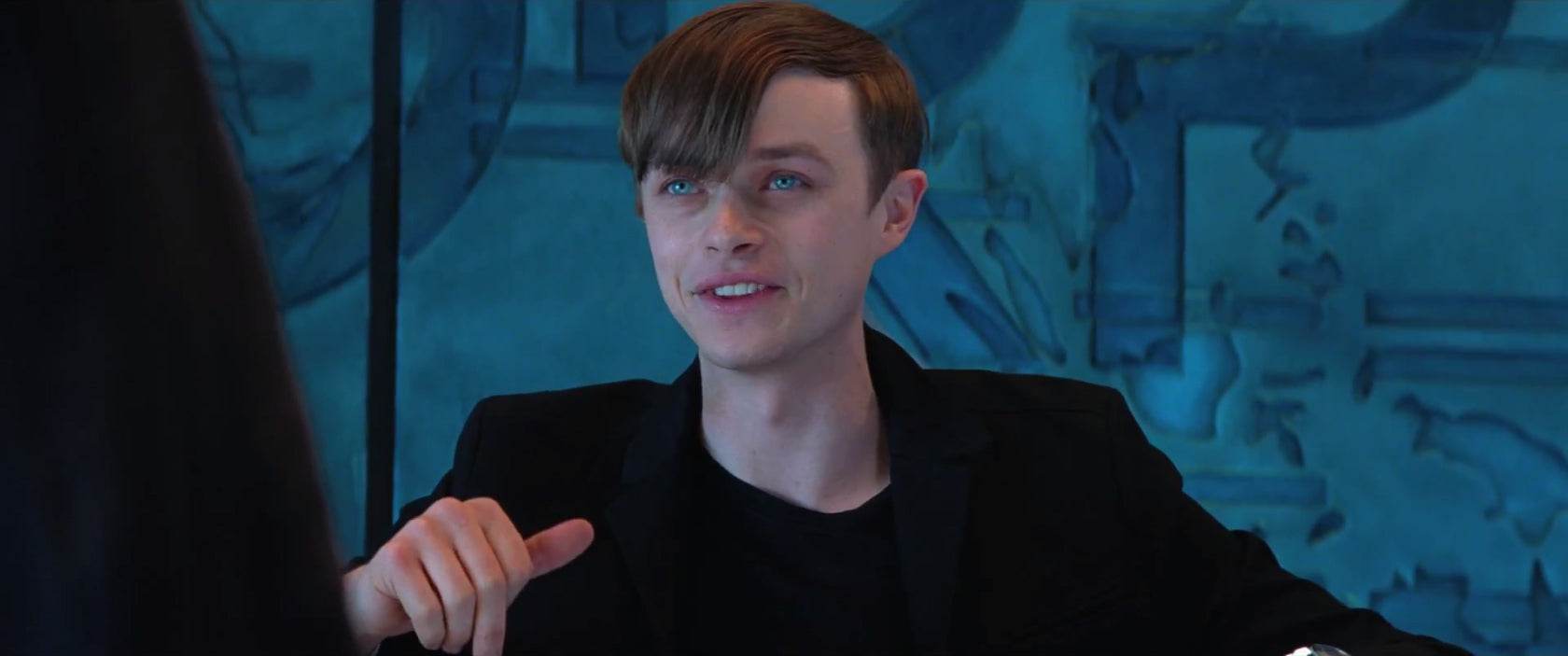
In the film version of The Amazing Spider-Man 2 with Andrew Garfield, Dane DeHaan brings a younger, more unstable, more openly ill interpretation — a Harry who does not wait for tragedy to tip him over, but who already seems lost from the very first scene. That version divides fans, yet it has the merit of highlighting an often forgotten aspect of the character: the hereditary illness that weakens him physically and accelerates his transformation. Harry Osborn is not only a man wounded psychologically, he is also a man dying slowly in body — and that double tragedy makes every one of his decisions even more poignant.
Why Harry Remains One of the Characters Fans Love Most
If Harry Osborn still fascinates fans more than sixty years after his first appearance, it is because he embodies a form of classical tragedy transposed into the world of superheroes. Like a Shakespearean hero, he carries the seeds of his own destruction within him — the toxic paternal legacy, the inability to forgive, the need to prove a worth he never had to earn. And like a tragic hero, he ends up performing the one act that can save him morally: sacrificing himself for the man he hated most deeply.
That literary dimension lifts Harry above most Marvel supervillains. He is not simply a threat to Peter — he is a mirror, an inverted double, the man Peter might have become had he grown up with a father like Norman Osborn instead of an uncle like Ben. That thematic kinship makes Harry one of the most essential narrative counterparts to Spider-Man, and explains why the Osborn dynasty remains Peter Parker's worst nightmare far more than any other antagonist.
Everyday Accessory — Iconic Design

Classic Spider-Man MagSafe Case
39,90 €
The red and blue suit that has faced every version of the Green Goblin — the accessory that reminds you daily of your passion for Spider-Man mythology.
Get the Classic Case →The Narrative Legacy: Why Harry Will Keep Haunting Spider-Man Stories
Whatever the future holds for the character in the comics or in adaptations to come, Harry Osborn will remain one of the emotional pillars of the Spider-Man universe. His narrative formula — the friend turned enemy, the brother turned rival, love turned to hatred and then to forgiveness — is so powerful that Marvel writers return to it endlessly, generation after generation. Every new adaptation finds a fresh angle, a new way of telling the same founding tragedy: you never really get rid of your best friends, they always come back into your life, sometimes to save you, sometimes to destroy you, sometimes both.
For fans who want to deepen their knowledge of the Spider-Man rogues' gallery, the Harry Osborn arc is probably the ideal entry point — more accessible than the cosmic arcs, more emotionally rich than the epic battles, more human than confrontations with anonymous villains. Explore our full analyses of the seven most powerful enemies of Spider-Man, dive into the LEGO Spider-Man collection which recreates in bricks the legendary Green Goblin showdowns, or treat yourself to the Spider-Man figures that immortalise these tragic characters on your shelf. Harry Osborn deserves his place in any serious collection — he is probably the character who has done the most to make Spider-Man far more than a simple superhero.

