
14-Day Money-Back Guarantee
0
The short answer
Spider-Man animation begins on 9 September 1967 on ABC, with 52 episodes produced by Grantray-Lawrence and then Krantz Films. Next come 1981 (Toei, then Amazing Friends), 1994 (The Animated Series), 1999 (Unlimited), 2003 (MTV), 2008 (Spectacular), 2012 (Ultimate), 2017 (Marvel's Spider-Man), then the Spider-Verse era and Disney+: more than fifteen productions up to 2025. We run through every series, its studio and its episode count below.
Every Spider-Man animated series in chronological order: from 1967 to today
For more than fifty years, Spider-Man has been spinning his web across television and cinema screens with a consistency few superheroes can claim. Long before the Spider-Man multiverse became a global cultural phenomenon, the New York web-slinger had already won over several generations of viewers through his animated incarnations. Each decade has brought its own vision of the character created by Stan Lee and Steve Ditko, reflecting the technical, narrative and aesthetic shifts of animation worldwide. From the charming simplicity of the first cartoons of the 1960s to the visual feats of the Spider-Verse, the story of Spider-Man in animation is every bit as rich and fascinating as his adventures in comics.
This encyclopaedic guide retraces, in strict chronological order, every animated series devoted to the arachnid hero. We will explore how each production helped shape the complete universe of Spider-Man characters, from Peter Parker to the dozens of variants that populate the multiverse today. Whether you have been a fan since day one or you are a curious newcomer, this complete overview will show you why animation remains the boldest testing ground in the whole Spider-Man franchise.
The pioneers of arachnid animation (1967-1981)
It all begins on 9 September 1967, when the American network ABC broadcasts the first episode of Spider-Man, a series produced by Grantray-Lawrence Animation and then taken over by Krantz Films for its final two seasons. This founding cartoon, made up of 52 episodes across three seasons, is the very first television adaptation of Marvel's hero. Its opening credits, with the unforgettable "Spider-Man, Spider-Man, does whatever a spider can", became one of the most recognisable pieces of music in world popular culture, reaching far beyond the series itself to become a genuine generational anthem. If you would like to know more about that founding era, our article devoted to the Spider-Man adventures of the 1970s looks at this pivotal period in detail.

The first season of this original series stays relatively faithful to the comics of the day. Peter Parker appears as a young freelance photographer working for the Daily Bugle under the thunderous J. Jonah Jameson. The iconic Spider-Man villains are already there: the Green Goblin, Doctor Octopus, Vulture, Electro and the mysterious Mysterio all make their animated debuts. The second and third seasons take a very different turn, though, drifting away from the comics towards more psychedelic, surreal adventures, with recycled backgrounds and plots involving parallel dimensions and cosmic threats. That shift in tone, often mocked by modern fans, nonetheless helped plant in the collective imagination the idea that Spider-Man could operate well beyond street-level fights, an instinct that would prove prophetic decades later with the arrival of the multiverse concept.
After a long absence from screens, the web-slinger returns in 1981 with Spider-Man, a new series produced this time by Marvel Productions in partnership with the Japanese studio Toei Animation. This Japanese-American collaboration, made up of 26 episodes, offers smoother animation and more modern designs than its predecessor. But it is the series that followed which really left its mark. Broadcast from 1981 to 1983, Spider-Man and His Amazing Friends brings together Peter Parker, Bobby Drake alias Iceman and Angelica Jones alias Firestar in a trio of superheroes sharing the same flat. This 24-episode series is the first to genuinely explore the idea of a team around Spider-Man, laying the groundwork for a dynamic that would be picked up decades later in Spidey and His Amazing Friends. The series also makes room for crossovers with other Marvel heroes such as the X-Men, Doctor Strange and even Tony Stark, anticipating the shared-universe logic that would become the norm decades later.
These early series, despite their obvious technical limitations, achieved something essential: they proved that Spider-Man had considerable narrative and commercial potential outside comics. The Spider-Man logo was starting to establish itself as one of the most recognisable symbols in pop culture, and animation was its main vehicle for young audiences.
The golden age of Spider-Man animation: the 1990s and 2000s
If the series of the 1960s to the 1980s laid the foundations, it is really in the 1990s that Spider-Man animation reaches its creative and popular peak. On 19 November 1994, Fox Kids launches Spider-Man: The Animated Series, a production that would redefine, for millions of fans, what it means to be Spider-Man. Produced by Avi Arad and animated by Tokyo Movie Shinsha, this 65-episode series spread over five seasons remains, for many people in their thirties and forties today, the definitive version of the character outside the comics.

What sets The Animated Series apart from everything before it is its unprecedented narrative ambition. The series does not simply adapt isolated episodes: it builds genuine story arcs running across several episodes, and even several seasons. The Clone Saga arc, the Venom symbiote arc, the Green Goblin saga and, above all, the masterly "Secret Wars" and "Spider Wars" finale that introduces the Spider-Man multiverse to animation for the very first time are all narrative landmarks that deeply influenced the character's mythology. The series tackles mature themes such as illness, betrayal, loss and sacrifice, while staying accessible to a young audience thanks to Fox Kids censorship, which notably banned the use of the word "death" and any depiction of blood. The great Spider-Man story arcs find here their first genuinely ambitious animated treatment.
The cast of characters is particularly rich. Beyond Peter Parker and Mary Jane Watson, the series introduces or develops dozens of supporting characters that considerably enrich the world of Spider-Man characters. Felicia Hardy alias Black Cat, Eddie Brock alias Venom, Doctor Octopus, Kingpin, the Punisher, Blade and even the X-Men all make memorable appearances. The series is also a pioneer in exploring the mystical forces tied to the Spider-Totems, concepts that would be developed much later in the comics, notably through the character of Morlun.
In 1999, Marvel tries to capitalise on the success of The Animated Series by launching Spider-Man Unlimited, a 13-episode series broadcast on Fox Kids. This bold production takes Peter Parker to Counter-Earth, a planet ruled by the High Evolutionary and his Beastials, half-human, half-animal creatures. There, Spider-Man wears a new nano-technological suit with expanded abilities, inspired by the Spider-Man 2099 costume, that hero of the future created by Peter David and Rick Leonardi who had won over comics fans at the start of the decade. Although the series was cancelled early because of insufficient ratings against competition from Pokémon and Digimon, it remains a fascinating curiosity that shows Marvel's willingness to explore new narrative directions for its flagship character. The Spider-Man 2099 concept, with its futuristic vision of New York and its hero Miguel O'Hara, still fascinates fans and has found new life thanks to the Spider-Verse films.
In 2003, MTV surprises everyone by broadcasting Spider-Man: The New Animated Series, a 13-episode CGI series aimed explicitly at an adult audience. Set chronologically after the events of Sam Raimi's first film, this series follows a university-age Peter Parker facing more realistic and psychologically complex threats. Its CGI animation, revolutionary for the time, gives it a unique look that still divides fans today. While the series never found the commercial success it hoped for, it proved that Spider-Man could work in a darker, more adult register, a lesson the creators of the Spider-Verse would remember later. This transitional period between the classic series and the new generation also matches the explosion of the franchise on the big screen, as recounted in our complete guide to the Spider-Man films. To go further on this subject, see also Spider-Noir: should you watch the Nicolas Cage series in black and white or in colour?.

The Spectacular and Ultimate generation: Spider-Man reinvents himself (2008-2017)
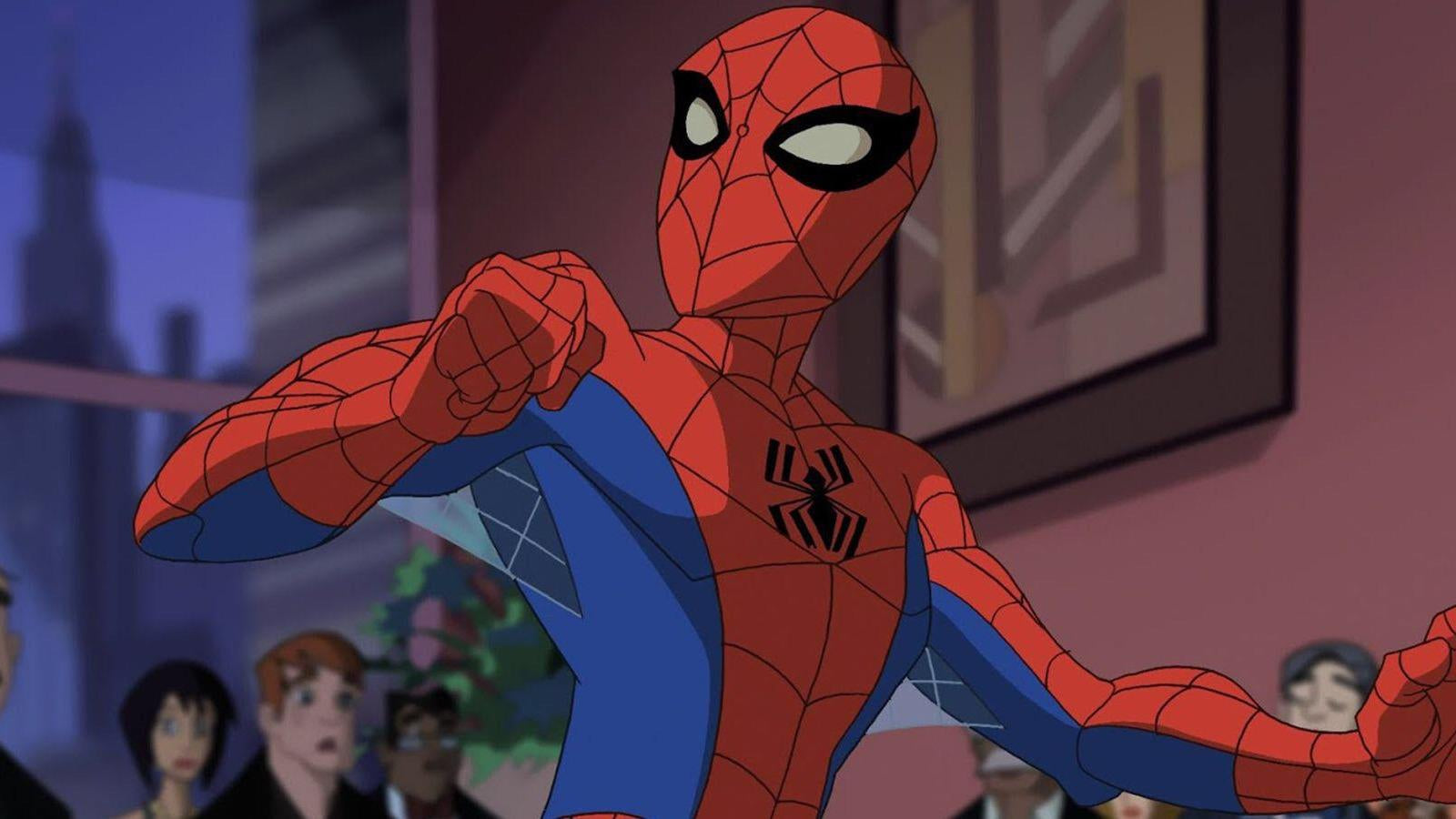
After five years away from television screens, Spider-Man makes a triumphant return in 2008 with The Spectacular Spider-Man, a series now unanimously regarded as one of the finest animated superhero adaptations ever made. Created by Greg Weisman and Victor Cook, this 26-episode production spread over two seasons offers a masterful retelling of Peter Parker's origins, anchoring the character firmly in his high-school world while developing a complex, nuanced mythology. The question that has haunted fans since its abrupt cancellation is still very much alive: can we hope for a return of Spectacular Spider-Man?

What makes The Spectacular Spider-Man so remarkable is its ability to combine spectacular action, psychological character development and fidelity to the spirit of the original Stan Lee and Steve Ditko comics. Greg Weisman, already famous for his work on Gargoyles, gives the series an impeccable narrative rhythm in which every episode moves several plots forward at once. Eddie Brock's transformation into Venom, Norman Osborn's descent into hell, the evolution of the relationship between Peter and Gwen Stacy: everything is orchestrated with watchmaker's precision. The character design, clean and dynamic, draws directly on Ditko's line while adding a modernity that makes the series timeless. For fans of Spider-Man figures, the designs from this series remain among the most sought-after by collectors.
Sadly, The Spectacular Spider-Man fell victim to Marvel's industrial politics. After Disney bought Marvel Entertainment in 2009, the Spider-Man animation rights moved to Disney XD, which led to the series being cancelled despite glowing reviews and a passionate fan base. In 2012, Disney launched its own version with Ultimate Spider-Man, a radically different series that would run for four seasons and 104 episodes until 2017. Inspired by the comics series Ultimate Spider-Man by Brian Michael Bendis, this adaptation nonetheless takes considerable liberties with its source material, adopting a resolutely comic tone and constantly breaking the fourth wall.
Ultimate Spider-Man places Peter Parker inside S.H.I.E.L.D. under the guidance of Nick Fury, forming a team with Nova, White Tiger, Power Man and Iron Fist. While this approach divided the most purist fans, the series deserves credit for introducing the multiverse to a young audience on a massive scale, notably across its seasons 3 ("Web Warriors") and 4 ("Ultimate Spider-Man vs. The Sinister Six"), which multiply the incursions into alternative realities. It is in this series that millions of young viewers discover Spider-Man 2099, Spider-Man Noir, Spider-Ham, Peni Parker and of course Miles Morales for the very first time, unconsciously preparing the ground for the cultural tsunami of the Spider-Verse. The series also explores the Inheritors, those mystical hunters who track the Spider-Totems across the multiverse, freely adapting the Spider-Verse and Spider-Geddon comic arcs.
In 2017, Disney launches Marvel's Spider-Man, a new animated series that would try to strike a balance between the seriousness of Spectacular and the accessibility of Ultimate. Spread over three seasons and 67 episodes (the last two seasons were rebranded "Maximum Venom"), the series follows a scientifically minded Peter Parker joining the prestigious Horizon High, a school for gifted students. While this iteration never reached the cult status of its predecessors, it helped enrich the character's animated mythology by exploring ideas such as the Venom symbiote from a more science-fiction angle, and by introducing animated versions of characters from the Spider-Man video games of the same era. The series also deserves credit for its ambitious crossovers with other Marvel heroes, fitting into the logic of an ever more interconnected Spider-Man universe.
This 2008-2017 decade perfectly illustrates the creative tension that has driven Spider-Man animation since the very beginning: between faithfulness to the comics and narrative innovation, between respect for the historic audience and the conquest of new ones, between authorial vision and commercial imperatives. Fans who grew up with these series often express their passion through Spider-Man T-shirts bearing the iconic designs of their favourite versions, or by decorating their space with Spider-Man posters showing the most memorable moments of these series.
The Spider-Verse era and the Disney+ revival (2018-2025)
The late 2010s mark an unprecedented turning point in the history of Spider-Man animation. In December 2018, Sony Pictures Animation upends the rules of the industry with Spider-Man: Into the Spider-Verse, an animated feature that literally reinvents the visual language of the genre. Winner of the Academy Award for Best Animated Feature, this masterpiece directed by Bob Persichetti, Peter Ramsey and Rodney Rothman propels Miles Morales and Spider-Gwen to the rank of genuine cultural icons, while giving the multiverse a mainstream visibility that neither the comics nor the television series had managed to achieve.

The phenomenal success of Into the Spider-Verse triggers an unprecedented wave of creative ambition. Its sequel, Spider-Man: Across the Spider-Verse, arrived in June 2023 and pushes the boundaries of animation even further, exploring hundreds of alternative universes with staggering visual invention. The film introduces a deeper emotional dimension by confronting Miles Morales with the question of destiny and free will, while developing the character of Spider-Man 2099 voiced by Oscar Isaac. As for the conclusion of the trilogy, Spider-Man: Beyond the Spider-Verse is one of the most eagerly awaited films among fans, who speculate intensely about what this conclusion could bring to the multiverse. These films have profoundly transformed the way Spider-Man animation is seen, proving that it can rival live-action for narrative depth and cultural impact.
Alongside the Spider-Verse films, television keeps exploring new facets of the character. In 2021, Disney Junior launched Spidey and His Amazing Friends, a preschool series that borrows its name from the 1981 show Spider-Man and His Amazing Friends. Aimed at the very youngest viewers, it has been a considerable commercial success. Rather than simply remaking the original Amazing Friends formula, this production follows the adventures of a trio made up of Spidey, Spin (Miles Morales) and Ghost-Spider (Gwen Stacy). Our detailed look at Spidey and His Amazing Friends explains how the series manages to introduce the youngest viewers to the values of solidarity, friendship and responsibility that sit at the heart of the Spider-Man philosophy. Its success has generated an impressive range of merchandise, from Spider-Man toys to Spider-Man pyjamas, by way of the Spider-Man backpacks that have taken over school playgrounds.
But it is over at Marvel Studios Animation that the most exciting news is emerging. Initially announced under the title Spider-Man: Freshman Year, the series was renamed Your Friendly Neighborhood Spider-Man during development, retiring the Freshman Year title. This Disney+ series, whose genesis our article on Spider-Man Freshman Year retraces, offers an alternative vision of Peter Parker's early days in a visual style drawn directly from Steve Ditko's classic comics. Set in an alternative MCU reality — not to be confused with the main chronology of the MCU films — the series explores Spider-Man's first steps with a narrative freedom that live-action could never allow itself.
Spider-Man animation also reaches well beyond the character of Peter Parker. The live-action series Spider-Man Noir with Nicolas Cage, although not animated itself, shows the considerable influence that animated series and films have had on the expansion of the Spider-Man franchise towards new incarnations of the character. Other figures from the Spider-Verse have gained visibility too, such as Cindy Moon, alias Silk, whose fans are hoping for an animated adaptation before long. The invisible rules of the Spider-Verse that govern the multiverse are now known to a far wider audience thanks to these animated productions, and the Marvel multiverse has become a familiar concept for millions of viewers around the world.
This 2018-2025 period also saw the comics event End of the Spider-Verse attempt to close a chapter of the arachnid multiverse, while animation paradoxically kept opening new ones. The Spider-Verse multiverse collection reflects that fan passion for all these parallel universes, just like the collection devoted to Miles Morales and the one dedicated to Spider-Gwen, two characters whose popularity exploded thanks to the animated films.

Why Spider-Man animation never stops reinventing itself
Tracing this complete chronology of the Spider-Man animated series, one thing becomes clear: no other fictional character has enjoyed such continuity and such diversity in his animated incarnations. From 1967 to 2025, more than fifteen distinct productions have put the web-slinger's mask on screen, each bringing its own vision, its own style and its own sensibility. That exceptional longevity comes down to the very nature of the character: what nobody tells you about Spider-Man is that behind the mask there is always an ordinary individual facing extraordinary responsibilities, and that universality lets every generation of creators make the character their own without ever betraying his essence.
Throughout these decades, animation has been the most fertile testing ground in the whole Spider-Man franchise. It is in animation that the team dynamic around Spider-Man was tried out for the first time, that the multiverse took its first steps, that Miles Morales went from supporting comics character to global cultural icon. Animation has made it possible to explore visual styles impossible in live-action, from the flat pop-art colour of Into the Spider-Verse to the retro-Ditko designs of Your Friendly Neighborhood Spider-Man. It has given the character a narrative freedom that the budgetary and logistical constraints of live-action cinema do not always allow, making possible ambitious crossovers, journeys through time and explorations of alternative realities that would have cost a fortune in special effects.
The reasons why Spider-Man became the best-selling pop culture licence in the world are many, but animation plays a decisive part. Every new animated series introduces the character to a fresh cohort of young viewers who then become fans for life. The journey that runs from the death of Uncle Ben and the birth of the hero all the way to the boldest multiversal adventures is a trip every generation makes in its own way, and it is precisely that capacity for perpetual renewal that makes Spider-Man a truly timeless character.
Animation, guardian of the arachnid legacy
Today, with Disney+ series in development, a third Spider-Verse instalment in the works and Spidey and His Amazing Friends still captivating the very youngest, Spider-Man animation has never been so alive or so varied. Fans express that passion in a thousand ways: by collecting Spider-Man decorations that turn their home into a proper web-slinger's den, by lighting it with Spider-Man lamps that throw the arachnid emblem across their bedroom walls, by wearing Spider-Man fancy dress and costumes inspired by their favourite series, or by personalising their space with Spider-Man stickers and sipping their morning coffee from a Spider-Man mug bearing their favourite incarnation of the hero. The most nostalgic, meanwhile, build up precious collections of Spider-Man DVDs and films to relive the highlights of each series whenever they like, while the youngest cuddle their Spider-Man soft toys while watching the latest episodes of Spidey and His Amazing Friends.
From the touching simplicity of the 1967 Spider-Man to the dizzying ambition of the Spider-Verse, from the narrative maturity of Spectacular Spider-Man to the joyful accessibility of Spidey and His Amazing Friends, arachnid animation has always known how to reinvent itself without ever losing sight of the essentials: what makes Spider-Man a hero is not his powers but his humanity. And as long as that truth keeps guiding creators, the web-slinger will keep spinning his web on screens around the world, captivating generations of viewers still to come.

