

14-Day Money-Back Guarantee
0
The short answer
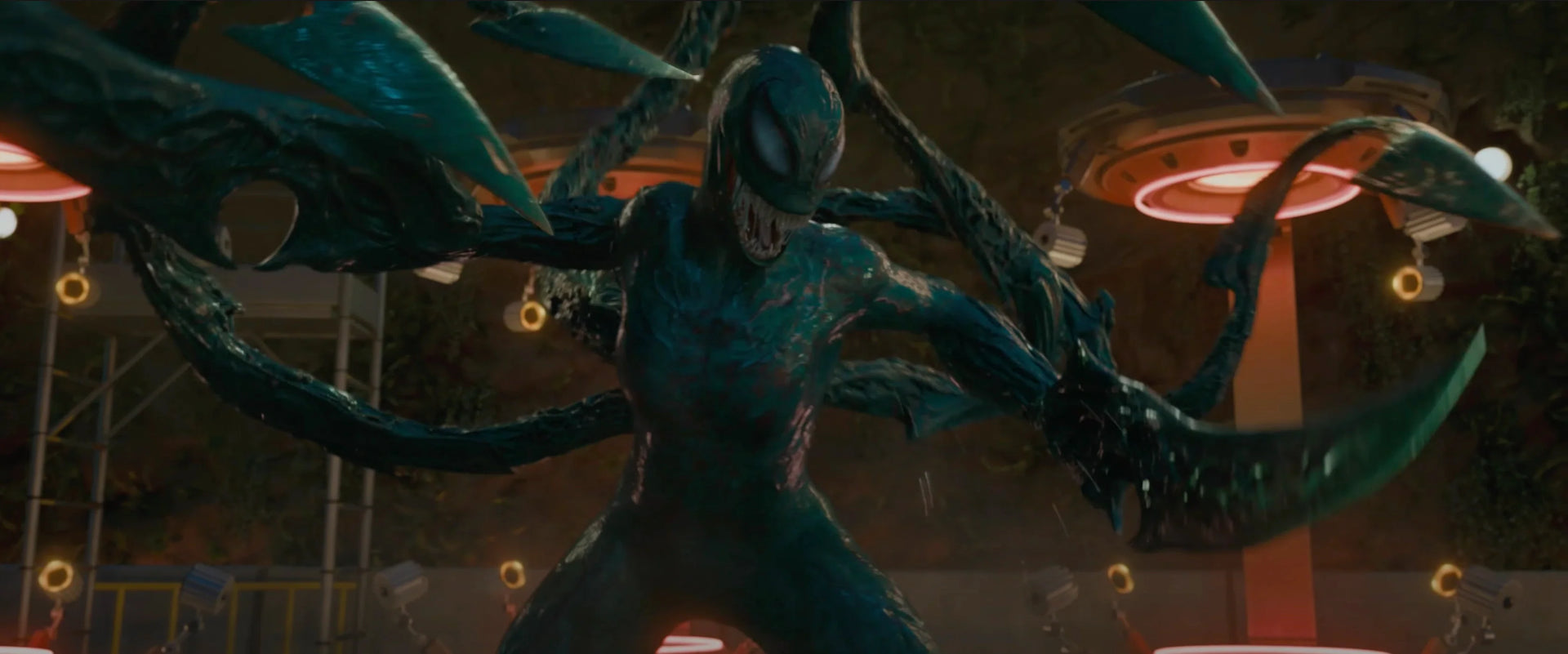
Lasher is one of the five symbiotes artificially spawned from Venom by the Life Foundation, in the Venom: Lethal Protector arc published in 1993. His speciality: lashing out living tendrils to strike and ensnare from a distance. His first host is Ramon Hernandez, a security officer with the organisation. Details and weaknesses below.
Contents
Who is Lasher, the Life Foundation's whip-wielding symbiote?The origins: the Life Foundation and Venom's five offspringLasher's powers: the master of tendrilsLasher, a component of the Hybrid fusionLasher in the symbiote family: his exact placeLasher against Spider-Man and Venom: the threat of the packLasher's legacy in symbiote cultureWhy Lasher fascinates: the elegance of the predator
Among the Life Foundation's symbiote siblings, each one has a weapon of choice. Riot relies on brute force, Agony on corrosion, Scream on sound… and Lasher rules by the whip. A symbiote with deadly tendrils, able to turn his own body into a forest of stinging lashes, Lasher is one of the five offspring the Life Foundation tore by force from Venom. Less in the spotlight than his brothers but just as formidable, he plays a key role in symbiote mythology, to the point of becoming one of the components of a legendary creature. Here is the full story of Lasher: his origins, his host, his whip-wielding powers and the exact place he holds in the great lineage of the web-slinger. To go further on this subject, see also Scream: the symbiote with living hair and her four hosts.
Who is Lasher, the Life Foundation's whip-wielding symbiote?
Lasher is an alien symbiote, born of the living matter of Klyntar like all his kind. But there is nothing natural about his birth: he was extracted artificially from a parent, in a laboratory, by human hands. His name alone says everything about his speciality: 'lasher' means the one who strikes with a whip. Where other symbiotes form blades or maces, Lasher sends tendrils and lashes bursting from his body, able to whip, ensnare and crush his opponents from a distance.
Unlike Venom, the original black symbiote, who weaves an intimate relationship with his hosts, or Carnage, Cletus Kasady's bloodthirsty offspring, who exists only for chaos, Lasher is a weapon of war built to order. He belongs to a group designed to serve a cause, and it is in that collective dimension that he truly makes sense. To understand this creature, you have to go back to the organisation that spawned him.
| Symbiote | Nature |
|---|---|
| Venom | An intimate relationship with his hosts |
| Carnage | Exists only for chaos |
| Lasher | A weapon of war built to order |
The origins: the Life Foundation and Venom's five offspring
Lasher's story cannot be separated from that of the Life Foundation, the group of ultra-wealthy figures convinced that a nuclear apocalypse was imminent. To build an army able to protect their bunker and impose their order on the world that followed, they captured Venom in order to tear offspring from him.
The Lethal Protector experiment
It is in the founding arc Venom: Lethal Protector, published in 1993, that the Life Foundation forces the black symbiote to reproduce. From that unnatural experiment five creatures are born: Riot, Scream, Phage, Agony and Lasher. For the first time in Spider-Man's history, the symbiote stops being a one-off case and becomes a true species, able to multiply and form a pack. That revolutionary idea runs through the whole of modern mythology, from the invasions of Planet of the Symbiotes up to the cosmic threat of Knull, the creator god of the symbiotes.
Within this family, each symbiote has a colour and a speciality. Riot, the grey one, establishes himself as the pack leader; Scream, the yellow one, develops a tormented personality; Phage and Agony have their own talents; and Lasher brings his whip-tendrils to this living arsenal. Together they form an unprecedented strike force, used as a tool by their backers.

A second skin
Black Symbiote Compression T-Shirt
Like a symbiote moulding itself to its host's body, this compression t-shirt with its black symbiote design clings to the skin. Ideal for sport, or for showing your love of the dark side.
39,90 €View the t-shirt
Ramon Hernandez, the original host
Like his brothers, Lasher was first bonded to a Life Foundation agent. His original host is Ramon Hernandez, a member of the organisation's security staff turned into a living weapon by the symbiote. That bond captures the whole tragedy of the concept: ordinary human beings, used as tools and turned into monsters in the service of an apocalyptic ideology. Where some hosts end up embracing their symbiote, those of the Life Foundation five are above all exploited. It is this status of guinea pig, press-ganged into service, that sets these creatures apart from the more independent figures of the mythology, as shown by the path of Eddie Brock, Venom's great host.
Five forced offspring
In Venom: Lethal Protector, published in 1993, the Life Foundation forces Venom to reproduce: Riot, Scream, Phage, Agony and Lasher are born.
Lasher's powers: the master of tendrils
All symbiotes share a common base of abilities, but each develops a speciality that makes it unique. With Lasher, everything revolves around the whip and the tendril.
Whips, tendrils and reach
Lasher's great signature is his ability to generate multiple tendrils and lashes that extend his body far beyond its natural reach. These living whips let him strike from a distance, pin an opponent down, disarm him or throttle him, all while keeping his distance. Where Riot favours close combat and massive weapons, Lasher plays on reach and control of the ground, turning every fight into a trap of lashes. That approach makes him a formidable opponent for anyone without the means to get close.
The common symbiote toolkit
Beyond his whips, Lasher has the classic arsenal of any symbiote: superhuman strength, regeneration, agility, blade generation, shape-shifting and the ability to imitate any piece of clothing. He can therefore fight in a thousand ways, which makes him a versatile warrior. This combination of standard abilities and one well-defined speciality puts him logically close to other offspring with singular talents, such as Toxin, the third symbiote, or Scorn, the technological symbiote, each with his own favoured domain.
Inherited weaknesses: sound and fire
Formidable as he is, Lasher remains a symbiote, and he shares the lineage's two universal Achilles heels: sound and fire. High sonic frequencies and intense vibrations disorientate him and can separate him from his host; heat and flames can seriously weaken him, or even destroy him. These vulnerabilities, shared by the whole lineage and exploited in every major clash of the saga — from Maximum Carnage to modern confrontations — are a reminder that no symbiote, however agile, is invincible.

The symbiote on your console
Venom Face PS5 Cover
The snarling face of the original symbiote, from whom Lasher and the whole family descend, on your console. A PS5 cover for fans of the arachnid dark side.
34,90 €View the cover
Whips and tendrils
Lashes that strike, pin down, disarm or throttle from a distance.
Symbiote toolkit
Superhuman strength, regeneration, agility, blades, shape-shifting and clothing imitation.
Inherited weaknesses
Sound and fire disorientate him, weaken him or can destroy him.
Lasher, a component of the Hybrid fusion
This may be where Lasher's greatest importance lies. After the Life Foundation symbiotes scattered, four of them — Lasher, Phage, Riot and Agony — are recovered, then combined into a single entity. From that fusion is born Hybrid, the symbiote born of the fusion of four creatures. Only Scream escapes that fate.
Lasher therefore brings his tendrils and his whips to this living patchwork. Within Hybrid, his lashes mingle with Riot's strength, Phage's blades and Agony's corrosion to form a creature of combined abilities, formidably complete. That lineage makes Lasher far more than a secondary symbiote: he is one of the pillars of one of the most singular entities in the whole Marvel universe. To understand Lasher is therefore to understand part of Hybrid's DNA, and to measure how much each member of the family counts in the final equation.
Lasher
His tendrils and his whips.
Riot
His strength.
Phage
His blades.
Agony
His corrosion.
Lasher in the symbiote family: his exact place
To place Lasher in the symbiote family tree, you have to start with Knull, the creator deity from whom Venom descends. From Venom come the offspring, including the Life Foundation five. Lasher therefore sits at the same level as Riot, Scream, Phage and Agony: a 'grandchild' of the lineage, direct brother of the four other creatures.
This position sets him apart from other branches of the family. He is not a direct descendant the way Carnage is of Venom, nor a one-of-a-kind entity like Anti-Venom, the white symbiote of redemption. Lasher is above all a member of a collective, one piece of a wider whole. That belonging to a family, and then to the Hybrid fusion, defines his identity. To put every creature back in the picture and explore the whole dynasty, the best route is still the dedicated hub: Venom & the symbiotes, the complete guide to the symbiote universe.
1
Knull The creator deity from whom Venom descends.
2
Venom The symbiote from whom the offspring are born.
3
The five offspring Lasher, direct brother of Riot, Scream, Phage and Agony.
Lasher against Spider-Man and Venom: the threat of the pack
While Lasher has never been Spider-Man's great personal enemy, he has crossed paths with the web-slinger and with Venom several times, almost always as part of the Life Foundation pack. It is precisely as a group that these symbiotes become truly dangerous: a single one of these creatures can be handled by a seasoned fighter, but the coordination of all five turns every encounter into a tactical nightmare. Lasher's tendrils then play an essential strategic role: able to pin an opponent down from a distance, they nail him in place while his brothers concentrate their assaults.
Eddie Brock and his symbiote, forced to face their own offspring, took the full measure of this unprecedented threat. Having to fight a forest of living whips bursting out from every side adds a formidable difficulty to battles that were already perilous. It is in a pack, and not alone, that Lasher reaches his full potential, which places him, alongside his brothers, among the most destabilising opponents listed in the analyses of Spider-Man's most powerful enemies. Alone, he remains a secondary symbiote; folded into the Life Foundation's war machine, he becomes a formidable cog.
Formidable in a pack
His tendrils pin an opponent down from a distance while his brothers concentrate their assaults: alone, Lasher remains a secondary symbiote.
Lasher's legacy in symbiote culture
The arrival of Lasher and his brothers transformed the web-slinger's mythology for good. By introducing the idea of a pack, and then of an army of symbiotes, the Life Foundation opened the way to every great collective threat that would follow. Without that first family, the universe would never have imagined the massive invasions of Planet of the Symbiotes or the legions of the black god of more recent eras.
Lasher, on his own scale, embodies that conceptual revolution. He is a reminder that the symbiote is not just an isolated individual but a species able to multiply, to specialise and to form formidable collectives. That richness is found today in every variation on the creature, right up to the countless alternative versions of Venom across the multiverse. For lovers of the lineage, Lasher is an essential piece of the puzzle, a symbiote whose speciality, discreet but elegant, deserves to be rediscovered.
A conceptual revolution
With his brothers, Lasher established the idea of a pack of symbiotes, opening the way to the massive invasions of Planet of the Symbiotes.
Why Lasher fascinates: the elegance of the predator
Lasher is neither the most powerful nor the most famous of the symbiotes, and that is exactly what makes him a treasure for connoisseurs. He embodies the richness of a universe where every secondary character has a strong identity: a colour, a signature power, a story. His whip-tendrils, his exploited host and his role in the Hybrid fusion make him a discreet but essential link in the great symbiote saga.
More broadly, Lasher illustrates the founding idea introduced by the Life Foundation: that of a symbiote species that can be varied endlessly. Each offspring is a variation on the same theme, one more shade in the palette of the black suit, whose genesis is told in the dark and legendary relationship between Spider-Man and the symbiote. That depth is also found in the countless alternative versions of Venom across the multiverse. Lasher fits fully into that logic: he proves that the symbiote species has not finished reinventing itself, and that the salt of the mythology often hides in its least exposed characters. For enthusiasts, every piece dedicated to this lineage is gathered in the complete Venom & symbiotes collection.

The winter accessory
Spider-Man Venom Beanie
To show your love of the symbiote even in cold weather, this Venom beanie keeps you warm in style. An affordable accessory, perfect for fans of the dark side.
24,90 €View the beanie
Signature power
His whip-tendrils.
An exploited host
An agent turned into a living weapon.
Role in Hybrid
A discreet but essential link in the symbiote saga.
Frequently asked questions about Lasher
What is Lasher's power?
Lasher's speciality is generating tendrils and whips that extend his body, letting him strike, pin down and control his opponents from a distance. To that are added the abilities common to all symbiotes: superhuman strength, regeneration, blade generation and shape-shifting. It is his handling of the whip that sets him apart from his Life Foundation brothers.
Who is Lasher's host?
Lasher's original host is Ramon Hernandez, a Life Foundation security officer turned into a living weapon by the symbiote. Like the other offspring, Lasher was bonded to a member of the organisation as part of their symbiote army project.
Is Lasher part of Hybrid?
Yes. Lasher is one of the four symbiotes — along with Phage, Riot and Agony — that were combined to form Hybrid. Only Scream, the fifth of the Life Foundation, did not take part in that fusion. Lasher brings his tendrils and his whips to the combined abilities of this composite creature.
What is the difference between Lasher and the other Life Foundation symbiotes?
The five offspring share a common origin, but each has a speciality. Riot relies on strength, Agony on acid corrosion, Scream on sonic attacks, Phage on blades. Lasher is the master of tendrils and whips, playing on reach and control of the ground. It is that signature that makes him unique within the family.
Has Lasher appeared in the Venom films?
The 2018 film Venom features several Life Foundation symbiotes, with Riot as the main antagonist, alongside creatures evoking Scream, Phage, Agony and Lasher inside Carlton Drake's facilities. Lasher does not get a developed role there, though: he remains above all a comics character, where his story and his whip-wielding speciality are far more detailed. It is in the pages of Lethal Protector and the following arcs that you should look for the character's true depth, as well as his decisive contribution to the Hybrid fusion.
| Symbiote | Speciality |
|---|---|
| Riot | Strength |
| Agony | Acid corrosion |
| Scream | Sonic attacks |
| Phage | Blades |
| Lasher | Tendrils and whips |
Conclusion: Lasher, the overlooked whip-wielder of the lineage
Lasher may not be the first creature that comes to mind when Spider-Man's symbiotes are mentioned, but his story proves that this species is full of fascinating characters. A symbiote with deadly tendrils, brother of Riot and of the other Life Foundation offspring, an essential component of the Hybrid fusion, he holds a discreet but very real place in the web-slinger's great dynasty. His exploited host, his signature power and his lineage make him a precious link for anyone who wants to measure the full richness of symbiote mythology.
From the Life Foundation five to the modern cosmic entities, the symbiote lineage never stops reinventing itself around one simple, brilliant concept. To carry on exploring this extraordinary family, dive into the Venom & the symbiotes hub, or discover the full gallery of the web-slinger's adversaries in our guide to Spider-Man's enemies.
The key takeaway
A symbiote with deadly tendrils, brother of Riot and a component of the Hybrid fusion, Lasher holds a discreet but real place in the symbiote dynasty.

