
14-Day Money-Back Guarantee
0
The short answer
Introduced as early as Amazing Fantasy #15 in August 1962, Eugene Thompson starts out as the dominant classmate at Midtown High while openly worshipping Spider-Man, whose first fan club he chairs, with no idea that the wall-crawler is Peter Parker. The army, Iraq and then the symbiote would turn him into a respected fighter. We trace every stage below.
For decades, Flash Thompson was one of the most disliked characters in the Spider-Man universe — reduced to the high-school ‘bully’ cliché, the arrogant jock who torments Peter Parker between gym classes. And yet, behind that initial caricature, Flash went through one of the deepest and most unexpected arcs in the whole Marvel multiverse. From school bully to a war veteran who lost both legs, then to host of the Venom symbiote under the name Agent Venom, and finally to an ally of the Guardians of the Galaxy in major cosmic storylines — Eugene ‘Flash’ Thompson is probably the finest redemption story ever written in Spider-Man comics.
Understanding Flash's journey means understanding something fundamental about the way Marvel writes its supporting characters: no role is fixed, no label is final, and even the most stereotyped antagonists can become, given time and the right writer, fully fledged heroes. Here is the complete analysis of the most surprising transformation in the web-slinger's universe, from the first panels of Amazing Fantasy #15 in 1962 through to the Agent Venom arcs of the 2010s.
The Early Days: The High-School Bully Who Idolises Spider-Man
Flash Thompson appears at exactly the same moment as Peter Parker, in the pages of Amazing Fantasy #15, published in August 1962. That simultaneity is no accident — it places Flash at the very heart of Spider-Man's genesis, as one of the founding pieces of the myth. From that first appearance, the character embodies the absolute stereotype of the popular American high-school athlete: muscular, self-assured to the point of arrogance, popular with the girls, and deeply contemptuous of the ‘nerds’ he considers beneath him. His favourite target? Peter Parker, the skinny kid in glasses who spends his time with science books instead of chasing a ball.
But the central irony of Flash's character is set from the very start: the same Flash who bullies Peter at school idolises Spider-Man the moment he shows up in New York. He becomes the first president of the Spider-Man fan club, defends the web-slinger against J. Jonah Jameson's media attacks, and has no idea that the man he admires is exactly the same boy he shoves in the corridors. That irony is not just a running gag: it already hints that Flash is not fundamentally bad. He is young, immature, a victim of the social pressure that pushes him into the role of pack leader — but he has a sense of right and wrong that is only waiting to mature.
Stan Lee often explained in interviews that Flash was never conceived as a pure villain. He stood instead for that figure familiar to every teenager: the dominant classmate you fear a little but respect in spite of yourself, the one who could be a friend in another life if the social circumstances were different. That initial ambiguity is exactly what allows the character to evolve so radically later on — Flash was never locked into a fixed moral box, unlike genuine antagonists such as the Green Goblin.
University: The First Great Transformation
When Peter and Flash leave Midtown High for Empire State University, their dynamic starts to shift. Out of the school context where everyone played a fixed social role, the two characters come face to face with themselves — and Flash discovers that he is no longer the automatic centre of attention he was at school. At university, athletes no longer dominate the social hierarchy, the nerds get their revenge, and maturity starts to count for more than raw popularity. Flash struggles with that transition: his romantic failures, his money worries and his inability to find a clear career direction confront him with his own limits for the first time.

It is during this period of self-questioning that Flash genuinely begins to respect Peter Parker. Not through a brutal plot twist, but through a slow erosion of his arrogance — Flash gradually realises that the qualities he scorned in Peter (intelligence, perseverance, humility) are in fact the ones that produce real success in adult life. Several comic arcs from this era show the two characters developing a hesitant, sometimes clumsy, but genuine friendship. Flash remains the slightly overbearing big brother who teases Peter about his girlfriends, but the aggression of the school years has gone — replaced by a form of gruff, distinctly male affection.
The War Veteran: When Marvel Tackles PTSD and Amputation
The arc that transforms Flash Thompson for good, and takes him from supporting player to major figure in the Spider-Man universe, is his enlistment in the American army. In the early 2000s, Marvel chose to send Flash to fight in Iraq — a bold narrative decision that anchors the character in contemporary geopolitical reality. That choice does more than add gravity to the character: it opens the door to a whole exploration of adult themes that Spider-Man comics had never handled with such depth — duty, the trauma of combat, brotherhood between soldiers, the difficult return to civilian life.
The central event of the arc is the amputation. Saving one of his comrades under enemy fire, Flash loses both legs. That physical tragedy could have destroyed a less solid character — but precisely the opposite happens. Flash comes out of the ordeal transformed: humbler, more grateful, more profoundly human. Marvel uses the moment to tackle post-traumatic stress, resilience and the rebuilding of identity after a major physical trauma head-on. The pages where Flash learns to move around in a wheelchair, refuses the pity of those around him and slowly rebuilds himself are among the most moving ever published in the Spider-Man franchise.
Collector's Piece — Symbiote Symbol

LEGO Spider-Man — Venom Mask
69,90 €
The symbiote's organic mask in bricks — the one that ended up bonding with Flash Thompson to give birth to Agent Venom.
Discover the Venom Mask →Agent Venom: The Symbiote in the Service of Good
The decisive turning point comes when the American government offers Flash the chance to become the host of the Venom symbiote as part of an ultra-secret military programme. The idea is radical: use the symbiote's power for special operations, but strictly control how long it is worn to avoid toxic effects on the host. Unlike Eddie Brock, who let the symbiote devour him to the point of losing his own personality, Flash brings the symbiote what it had always lacked: military discipline, a sense of duty, and the ability to keep emotion and action in separate compartments.
The result is one of the most fascinating characters in the whole Marvel universe: Agent Venom, an anti-hero who combines the raw power of the symbiote with the strict ethics of a former soldier. When Flash puts the symbiote on, he gets the use of his legs back — symbolically, he becomes whole again. But that physical wholeness is conditional: if the symbiote takes over, Flash slowly loses his humanity. The entire arc then becomes a powerful metaphor for addiction, self-control and the permanent temptation of easy power. With Flash, Marvel pulled off what no other symbiote host had managed: a Venom story about discipline rather than chaos.
The way Agent Venom is folded into the wider Marvel universe is just as remarkable. Flash gradually joins the Guardians of the Galaxy, takes part in cosmic missions and fights threats that go far beyond the traditional Spider-Man framework. That step up in narrative scale confirms that the character has definitively left supporting status behind — he has become a major player in the Marvel multiverse in his own right.
His Relationship With Peter Parker: From Tormentor to Ally
The most emotionally rich part of Flash's journey is his relationship with Peter Parker across the decades. From school bully to slightly overbearing university mate, from civilian friend to super-powered colleague, their friendship passes through every possible phase of a male relationship — mistrust, rivalry, respect, closeness, brotherhood. When Flash becomes Agent Venom, the historical irony flips completely: the boy who tormented Peter at school now finds himself wearing a symbiote that was originally bonded to Spider-Man, in a cosmic parody of fate that reminds everyone the social roles of school never determine who you become in the long run.
Several comic arcs explore this dynamic with remarkable subtlety. Peter gradually works out that Flash has become Agent Venom and wavers between instinctive mistrust (because it is still Flash, after all) and the recognition that this amputee coming back transformed from the war has nothing left in common with the bully of their youth. That recognition is one of the finest moments ever written in Spider-Man: Peter Parker, who spent his childhood fearing Flash Thompson, ends up seeing this man as a true ally, a brother in arms, almost a friend. Forgiveness becomes possible, not because Peter forgets the past, but because Flash did the work of becoming another person.
Symbiote Edition — Dark Side Tech

Spider-Man MagSafe Venom Phone Case
39,90 €
The black symbiote design with MagSafe — for fans who own the ambiguous power of the Venom worn by Eddie, Flash and every other host.
Get the Venom Case →The Film Adaptations: Three Very Different Visions
On screen, Flash Thompson has had three main incarnations, each reflecting a different era of the character. Joe Manganiello in the Sam Raimi trilogy plays the classic version: tall, muscular, a school bully incapable of the slightest emotional nuance. This is Flash in his original comics DNA, without the depth of the later arcs — simple, effective, but limited. That version lets Tobey Maguire play Peter Parker in all his fragility against a brutal social antagonist, and works perfectly within the framework Raimi chose.
Chris Zylka in The Amazing Spider-Man alongside Andrew Garfield adds a further nuance: his Flash is calmer, more human, capable of moments of respect towards Peter. He is probably the version closest to the Flash of the final school years, the one already starting to mature. The moment when he wears the t-shirt in memory of Uncle Ben in class is one of the most touching details in the whole franchise — a single scene that says more about the character's humanity than ten pages of dialogue.
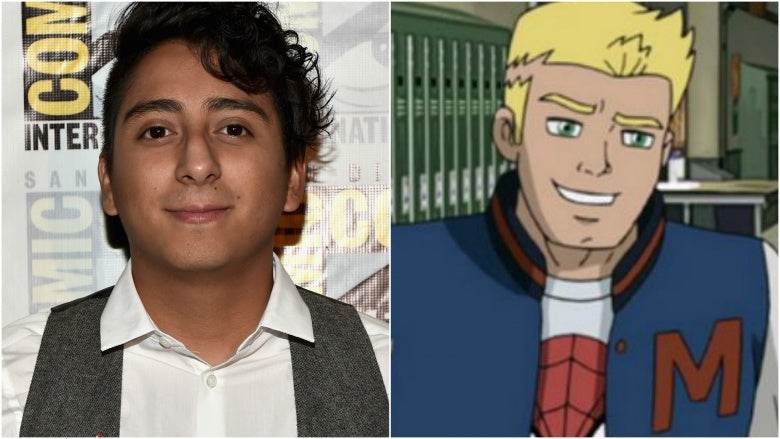
Tony Revolori in the MCU offers the most radical version: a modern teenage Flash, more nerd than athlete, more bitter than physically intimidating. That reinvention surprises comics fans but fits contemporary sensibilities perfectly — modern school bullying rarely comes through punches, but through verbal jabs, social humiliation and subtle exclusion. Revolori captures that soft violence with a subtlety that makes his character both unlikeable and strangely understandable.
Why Flash Thompson Is the Mirror Image of Peter Parker
The deepest reading of Flash's character is to see him as Peter Parker's inverted mirror. Where Peter is introverted, Flash is extroverted. Where Peter hides his powers, Flash shows off his muscles. Where Peter shoulders his moral responsibilities without glory, Flash chases social recognition at the expense of ethics. That systematic opposition is no narrative accident — it is the very heart of the concept Stan Lee and Steve Ditko set down in 1962. Flash exists to show what Peter is not, and to keep questioning the definition of true heroism.
The character's evolution deepens that dialectic. When Flash becomes Agent Venom, he gains a form of physical power strangely close to Spider-Man's — but through the opposite mechanism: Peter got his powers from a transformative scientific accident, Flash gets his from a contractual military programme. Peter is a hero by accepted accident, Flash becomes a hero by accepted mission. Those two parallel roads to heroism actually tell the same fundamental story: power is nothing without the sense of duty that comes with it, and that sense of duty can emerge in anyone, even the one everybody took for a thug.
Conclusion: Marvel's Finest Redemption Story
Flash Thompson remains to this day one of the most successful examples of a supporting character growing into a major figure of the Marvel universe. His trajectory — from school bully to symbiote anti-hero by way of the amputee veteran — perfectly embodies the storytelling philosophy that makes Spider-Man comics great: nobody is permanently locked into their initial role, and the real heroes are often the ones nobody expected. That lesson goes far beyond fiction. It reminds us that school bullies do not necessarily become the villains of real life, and that true Spider-Man fans know that moral complexity is an integral part of what makes the web-slinger so rich.
Everyday Symbiote — Hero-Villain Duality

Spider-Man and Venom Mug
24,90 €
The hero-symbiote duality on your mug — the very tension that defines Flash Thompson in his Agent Venom arc.
Discover the Mug →To dig deeper into the world of Flash Thompson and all the characters orbiting Spider-Man, dive into our analyses of the alternative versions of Venom across the multiverse, explore the Spider-Man figures collection that immortalises the franchise's best supporting characters, or treat yourself to the Spider-Man Venom phone cases that pay tribute to the symbiote in all its forms. Flash Thompson definitely deserves his place in any serious collection — he is one of the finest examples of the narrative depth the Marvel universe can reach when it takes the time to let its characters grow.

