
14-Day Money-Back Guarantee
0
The short answer
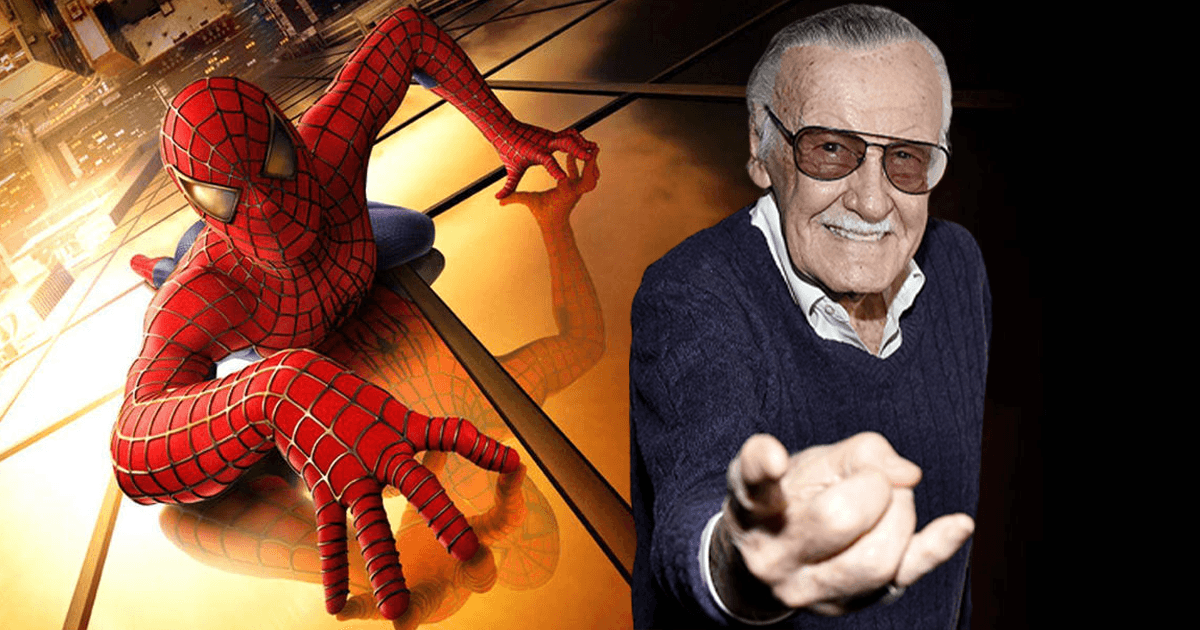
Stan Lee appears in all three Sam Raimi films, in both Amazing films with Andrew Garfield, then in Homecoming and Infinity War on the MCU side, before one final animated appearance in Into the Spider-Verse. Far From Home and No Way Home go without him, both released after his death in November 2018. The scene-by-scene detail follows just below.
An essential figure of the Marvel universe, Stan Lee left an indelible mark on the hearts of fans. As the emblematic co-creator of the web-slinger, he made a string of cameos in the films devoted to the hero, appearing fleetingly on screen in scenes that have become iconic. Here is a full look back at every one of his cinema appearances, from the Sam Raimi trilogy through to the latest Spider-Verse productions, along with what each one reveals about the unique bond between the author and his characters.
Before getting into the detail, it is worth remembering that Stan Lee's cameos are not limited to the web-slinger's own films. They run through the whole Marvel filmography, as you can see in the complete list of MCU films in chronological order. But it is in the films devoted to Peter Parker that these appearances take on a particular flavour, as if the creator were dropping in to salute every generation that takes hold of his favourite creation. Peter Parker remains, after all, the most personal character of Stan Lee's entire career, and every cameo feels like a private wink between a parent and their child.
The Sam Raimi trilogy (2002-2007)
The trilogy Sam Raimi directed between 2002 and 2007 laid the cinematic foundations of the web-slinger. Stan Lee turns up in every film, in short scenes carefully woven into the narrative fabric. In the first instalment, in 2002, during the showdown between the hero and the Green Goblin on Times Square, Stan Lee emerges from the chaos to save a little girl from falling debris, pulling her clear just in time in the background. The cameo lasts a few seconds, but it works like a signature: the co-creator watches over the civilians his hero protects.
Spider-Man 2 (2004) takes the same formula and amplifies it. During the confrontation between the hero and Doctor Octopus, Stan Lee appears in the crowd once again, this time shielding a passer-by from falling masonry. Always discreet, always human, always where the violence threatens ordinary people rather than heroes. That way of turning up as close as possible to civilian danger matches exactly the philosophy he defended in the comics: a superhero is, above all, someone who saves someone else and asks for nothing in return.
Spider-Man 3 (2007) offers an even more tender cameo. In a brief scene, Stan Lee crosses paths with Peter Parker in front of a news screen and slips him the line that has since become famous: "I guess one person can make a difference. 'Nuff said." The moment carries no weight in the plot, but it carries a great deal symbolically: it is as if the author were murmuring encouragement to his character, like a father who sees his child doubting and chooses, without labouring the point, to remind him what he is worth. By this stage, the cameo is no longer just a wink: it has become a ritual, a quiet blessing that closes this first cycle.
The Amazing Spider-Man with Andrew Garfield
When Sony rebooted the franchise in 2012, the casting and the aesthetic changed radically. Andrew Garfield now played Peter Parker, and the angle taken was darker, more introspective, far more focused on the hero's family origins. Stan Lee, never one to miss the appointment, delivered one of his most memorable cameos. In The Amazing Spider-Man (2012), he plays a librarian lost in his headphones, calmly shelving books while, behind him, the hero takes on the Lizard in an explosion of punches and flying debris. Stan Lee hears nothing. He carries on working. The comic contrast is perfect, but it also says something true: for the co-creator, adventure is never an end in itself, it is what happens at the edges of ordinary life.
The cameo in The Amazing Spider-Man 2 (2014) is shorter, and more moving too. During a school ceremony where Peter cannot keep still, Stan Lee spots the young man in the crowd and calls out, as though he recognised him: "I know that kid!" The moment takes on a particular resonance, since Peter is wearing the hero's suit under his shirt. The wink plays on the complicity with fans, but it also reminds us that the web-slinger's secret is a shared secret, something that has been passing between the author, his characters and his readers for decades. The way the casting has evolved from film to film makes those winks even more precious: with every actor who took over, Stan Lee turned up to certify that the handover had gone through properly.
The MCU web-slinger with Tom Holland
Tom Holland's arrival in the Marvel Cinematic Universe opened a new era. The hero is no longer a loner in his corner of New York: he becomes a fully fledged member of the Avengers, closely tied to Tony Stark in a father-son relationship the comics had never explored at this level. And Stan Lee, as with every fresh start, is there for it. In Homecoming (2017), he plays a grumpy neighbour who shouts at the costumed hero for the racket he is making down in the street at night: "Don't make me come down there, you punk!" That grousing-resident stance, entirely believable on a New York street, puts the hero back in his everyday setting and reminds us that the light-hearted tone of Homecoming owes a great deal to these moments of gentle mockery.
Avengers: Infinity War (2018) offers a more discreet cameo, all the more moving for sitting inside a cosmic story. Stan Lee drives the school bus in which Peter feels his spider-sense stir at the moment an alien ship appears above New York. He is the one who carries the young hero, quite literally, towards the most tragic turning point of the MCU. The symbolism is powerful: Stan Lee escorts Peter on the road into the great Avengers adventure, just before the erasure brought about by Thanos.
Then comes Far From Home in 2019, the first film in the franchise released after Stan Lee's death. His silhouette no longer appears, but his presence hangs over the whole story. The hero lives through his first collective bereavement after Endgame, haunted by the absence of Tony Stark and confronted by the illusions of Mysterio, the master of staged illusion. Stan Lee's absence is part of that atmosphere: for the first time, the kindly uncle is no longer there to wave at his child.
The shift is confirmed in No Way Home, which contains no physical cameo but unfolds an indirect tribute to the creator's entire body of work. The multiverse, the reunion of the three actors who have worn the suit, the return of the old villains: all of it makes up a posthumous gift to the man who imagined a hero so malleable that he could exist in several versions at once. To grasp the scale of that phenomenon, read the simple explanation of the Spider-Verse and all its web-slingers, which shows how Stan Lee's founding idea ended up becoming an entire universe.
FILM — Complete 8-Film Box Set

DVD — The Complete 8-Film Spider-Man Collection
79,90 €
The ideal box set for hunting down every Stan Lee cameo at your own pace, watching the eight big films back to back. A complete dive into the hero's entire run on screen, from Tobey Maguire to Tom Holland.
Discover →The posthumous cameo in Into the Spider-Verse
One cameo stands out from the whole gallery: the one in Into the Spider-Verse, the animated stroke of genius released in 2018. Stan Lee plays a costume shop owner who says to Miles Morales, the new web-slinger fans adore, this line of devastating simplicity: "It always fits — eventually." On screen, the moment lasts a few seconds. Off screen, it takes on enormous weight: Stan Lee died in November 2018, and this animated film, released shortly afterwards, became a genuine farewell for many viewers.
The cameo also works as a manifesto. Miles Morales stands for transmission: he is young, mixed-race, from Brooklyn, the son of a police officer and a nurse, heir to a long line of heroes who share the same suit. When Stan Lee tells him the suit will fit eventually, he is not talking about fabric, he is talking about heroic identity. That line crowns his whole body of work: a superhero is not a being apart, it is someone who chooses, at a given moment, to put on the suit and act. The idea runs through Across the Spider-Verse, which carries Miles's adventure on through the multiverse, and will carry on in Beyond the Spider-Verse, the long-awaited multiverse finale.
The film's animation heightens the emotion further. Stan Lee is drawn with an affectionate roundness, square glasses, a warm smile, as though he had stepped straight out of a comic book. The studio was determined to honour the creator by letting him exist in his original medium, and that care gives the cameo an added dignity. Unsurprisingly, the scene became one of the most widely shared online after Lee's death, like a mantra fans made their own: whoever you are, the suit always fits eventually.
Why these cameos mean so much to fans
Every Stan Lee appearance is more than an amusing wink. It is a bridge between the audience and Marvel's own history. Lee embodied the living memory of the comics, and his mere presence in a scene strengthened the emotional bond with viewers. Those moments were a reminder that behind every superhero there is a human creator, passionate and approachable, who never stopped coming out to greet his readers on their own ground. For many, the ritual of the cameo turned cinema screenings into collective experiences: you waited for the moment, you nudged the friend next to you, you cheered when you spotted him in the corner of a scene.
That sense of community counts as much as the individual emotion. Going to see a new web-slinger film meant going cameo hunting, and sharing that little game online tightened the bonds between fans. The perfect film night devoted to the hero always includes, among its rituals, that moment when everyone pauses on Stan Lee's appearance to talk it over together. The cameo is not a technical detail: it is a social gesture, a sign of belonging.
The contrast with the villains makes the figure gentler still. Where Venom embodies the dark side of the symbiote and where Kraven embodies the hunting instinct, Stan Lee always plays someone kind: the passer-by who saves a life, the librarian who smiles, the grumpy neighbour defending his night's sleep. His presence points to the moral centre of the Marvel universe: ordinary life is worth defending. The complete character encyclopaedia gives him no official entry of his own, and that feels right: Stan Lee is everywhere, never in one single place, like a guardian spirit.
WALL ART — Multiverse Canvas Print

Canvas Print — No Way Home
22,90 €
The iconic multiverse moment brought together on a premium canvas. A visual tribute to the whole run of films Stan Lee accompanied for two decades.
Discover →A legacy handed on to every generation
With the new films and the rise of characters like Miles Morales and Spider-Gwen, the Spider-Woman fans adore, Stan Lee's cameos still carry strong sentimental value. They let new generations discover a man who shaped an entire universe, and whose humour and humanity still resonate. The gesture of saluting his own creations on screen remains unmatched: no other comics author ever earned, in his lifetime, such a place in the cinematic imagination. That recognition also plays out on the terrain of fan debate, starting with the eternal question of the best Spider-Man film of all time.
Beyond the cinema, Stan Lee's legacy extends to characters he had not originally imagined but who slipped into the same philosophy. Uncle Ben's death and the often underestimated importance of Aunt May are both extensions of that founding idea: with great power comes great responsibility. Lee did not appear in every key scene of the films, but his philosophy is everywhere. He even laid the groundwork for a mythology of costumes, which underpins analyses such as the symbolic evolution of the suits on screen or the web-shooter comparison from Tobey to Tom Holland.
Fans who want to extend that lineage often turn to the objects that make the universe tangible. The LEGO collections devoted to the web-slinger let you rebuild the most iconic scenes brick by brick, while the official cosplay costumes pay tribute to every era of the hero, from Tobey Maguire to Miles Morales. For figure collectors, the action figure collection brings together the most emblematic variants, and the web-shooter collection lets younger fans replay every action scene Stan Lee saw come to life.
The other side of that legacy is the handover between actors. His mere presence across several adaptations, decades apart, created a common thread between films that could easily have contradicted one another. When a new Peter takes over, as we have seen with the announcements around Tom Holland in the fourth film, the memory of Stan Lee's cameos works like an invisible baptism: he is the one who certifies, posthumously, the legitimacy of each new era.
Conclusion: the warm face of Marvel
Stan Lee was more than a creator. He was the warm face of a universe he had imagined with his artists and then watched take on cosmic proportions. Through his cameos, he went on surprising, amusing and moving fans all over the world. Each of his moments on screen now stands as a symbol of passion, of legacy and of love for his heroes, for his readers, for this popular art form he helped carry into the cultural pantheon. As the complete overview of the films, suits and versions of the web-slinger points out, he is the only author whose voice keeps speaking to new generations with every cinema release.
One last line, quoted at the end of Into the Spider-Verse, sums up his whole philosophy: "That person who helps others simply because it should or must be done… is indeed a real superhero." That line, even more than the cameos, is probably the most precious legacy he left behind. It says in a single sentence what his films, his comic pages and his interviews had been saying for sixty years: a superhero is, above all, someone who decides to help without asking for the spotlight. And as long as there is cinema to tell the web-slinger's story, Stan Lee will still have something to say to every generation that discovers his work.

