

14-Day Money-Back Guarantee
0
The short answer
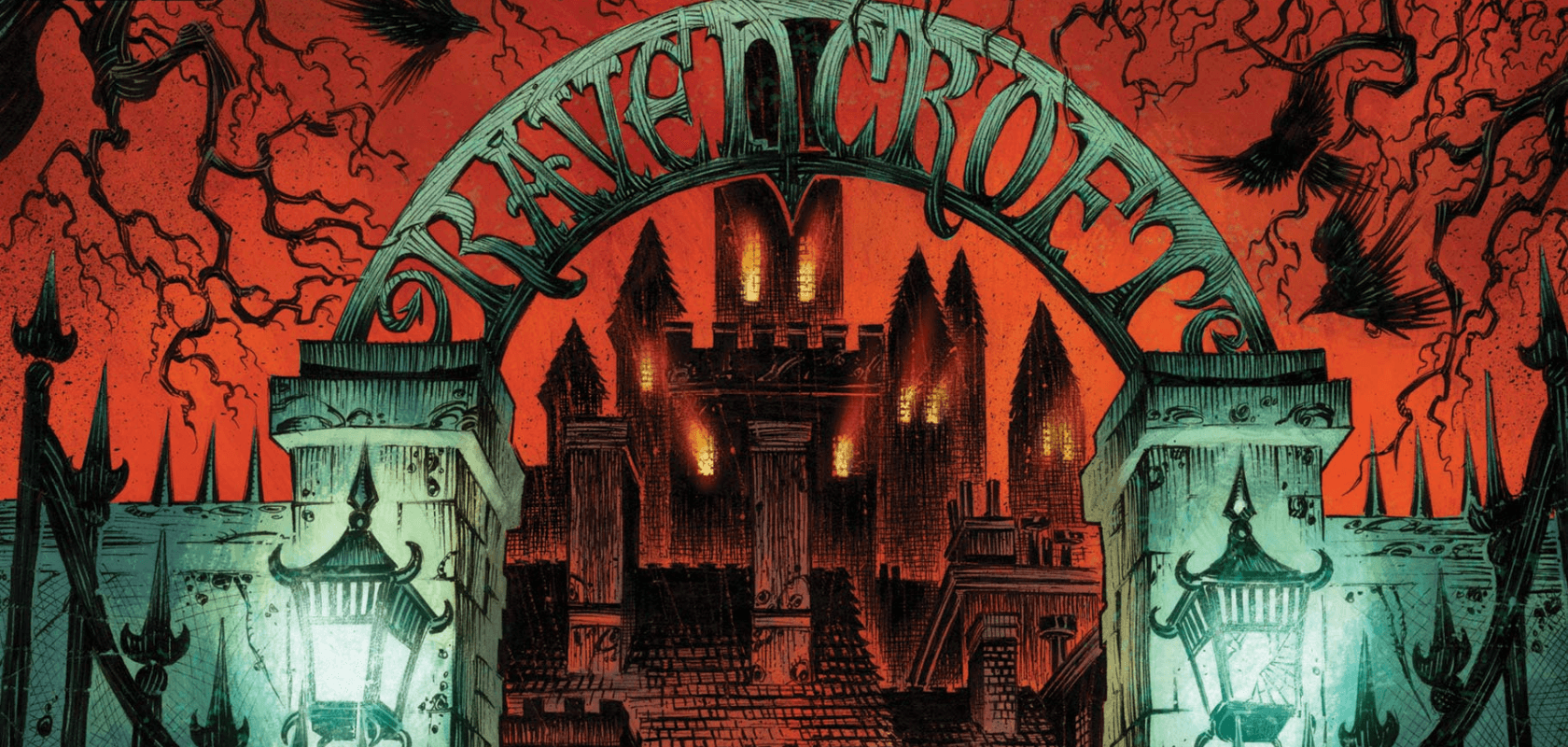
Ravencroft is the Marvel universe's New York hospital-prison: Cletus Kasady alias Carnage, Shriek, Vermin and Mr. Negative have all been committed there. Founded by Jonas Ravencroft and run by psychiatrist Ashley Kafka, it tips over the day Norman Osborn takes control. Full breakdown below.
An iconic place caught between science and madness
At the heart of the Marvel universe and the mythology of Spider-Man, the Ravencroft Institute for the Criminally Insane is far more than a simple psychiatric asylum. It is a genuine fortress of madness, where the most dangerous minds — often drawn from the darkest corners of New York — are locked away. But at Ravencroft, the line between science and insanity is blurred, and those who claim to heal sometimes end up prisoners of their own obsessions.
Founded to house criminals suffering from mental illness, Ravencroft is often presented as the New York equivalent of Batman's Arkham Asylum. However, where Arkham stands for fear and chaos, Ravencroft embodies something closer to **scientific tragedy** — a desperate attempt to understand the irrational through medical logic. That contrast is exactly what makes it such a central element in Spider-Man stories.
A place deeply tied to Spider-Man's greatest enemies
Many of the web-slinger's most iconic adversaries have been committed to Ravencroft. Among them: Cletus Kasady (Carnage), Shriek, Mr. Negative and the terrifying Vermin. Every cell, every corridor of this institute seems soaked in the screams and traumas of its former residents, creating a heavy, almost mystical atmosphere.

Ravencroft is not just a recurring backdrop: it often sits at the centre of genuine psychological dramas. In several arcs, notably Maximum Carnage and Ravencroft Reborn, the institution becomes a battlefield where reason and madness collide — a perfect metaphor for the inner torments of Peter Parker himself.

What the place symbolises in the web-slinger's mythology
If Spider-Man protects the streets, Ravencroft watches over the shadows. This is where the fundamental duality of his universe shows itself: science as a source of progress and of monstrosity. Dr Ashley Kafka, the chief psychiatrist, long tried to bring a humanist vision to the place, before darker figures such as Alistair Smythe and Norman Osborn corrupted the institute for their own experiments.
Ravencroft is also a metaphor for New York itself: a city that locks its monsters away instead of trying to understand them. Through that idea, Marvel once again questions the nature of evil — is it born of chance, of pain, or of a desperate need to control what escapes us?
To find the iconic characters tied to the asylum, explore our figurines of Spider-Man and his enemies or our mask collection inspired by the most fearsome residents of Ravencroft.
The scientists of Ravencroft: between vocation and downfall
Dr Ashley Kafka: the humanist psychiatrist facing horror
The figure of Dr Ashley Kafka is without doubt the most emblematic of Ravencroft. Introduced in the comics The Spectacular Spider-Man in the 1990s, she represents a glimmer of humanity in this place of suffering. Driven by the belief that redemption is possible, she devoted her life to treating New York's greatest criminals, including Carnage and Venom. But Ravencroft has often turned compassion into a curse.
Her complex relationship with her patients and her unshakeable faith in rehabilitation stand in stark contrast to the violence of the place. In several arcs, notably Ravencroft (2019), her kindness even becomes a psychological weapon against the corruption eating away at the institute's walls.
Jonas Ravencroft: the founder and his cursed legacy
The name 'Ravencroft' comes from its founder, Jonas Ravencroft, a nineteenth-century psychiatrist obsessed with curing the criminal mind. His experiments, inspired by the early theories of neurology and by occultism, gave birth to a long line of controversial research. His methods, a blend of science and mysticism, still haunt the laboratories on the site — and several modern researchers have tried to reproduce his work, often with terrifying consequences.

That inherited legacy explains why the institute is so often described as a 'cursed' place. Where other asylums heal, Ravencroft seems to absorb the madness of those it shelters.
John Jameson: between werewolf and asylum guard
Another striking face of the place is John Jameson, the son of the famous J. Jonah Jameson. A former astronaut and soldier, John has often played the role of guard at Ravencroft — before losing his own mind under the identity of the Man-Wolf. His presence underlines just how much Ravencroft acts like a spiral: even those who protect the institute often end up losing their reason inside it.

The comics have also shown how corruption seeped all the way up to the centre's leadership, particularly when Norman Osborn took administrative control of Ravencroft to run his own experiments on the inmates, turning the asylum into a **nightmare laboratory**.
Science as a mirror of human obsessions
Ravencroft's experiments are not merely medical tests: they embody the fear of losing control. Through its researchers, Marvel highlights the danger of trying to rationalise evil. Peter Parker, a scientist himself, understands that limit: science can save — or destroy — depending on the intentions of whoever wields it.
You will also find, in our Spider-Man fancy dress collection, several characters marked by Ravencroft, or explore our LEGO Spider-Man to recreate the dark atmosphere of this legendary asylum in your own Marvel universe.

The residents of Ravencroft: the shadows of New York
Carnage: pure chaos
It is impossible to talk about Ravencroft without mentioning Cletus Kasady, alias Carnage. A psychopathic serial killer even before merging with a symbiote, Kasady is madness incarnate. His confinement at Ravencroft was never an act of care, but a simple attempt at containment. It is within those walls that the carnage of the same name is born: the symbiotic creature binds itself to its host and gives rise to one of Spider-Man's worst nightmares.
His escape triggers the legendary arc Maximum Carnage, in which Spider-Man, Venom and several New York heroes have to join forces to save the city from a wave of murders. That episode sums up Ravencroft perfectly: a place where attempts at healing inevitably turn to disaster.
Shriek: madness amplified by love
Alongside Carnage, Shriek is one of the most memorable characters tied to Ravencroft. Committed after years of trauma, she develops uncontrollable sonic powers that erupt with the violence of her emotions. It is at Ravencroft that she meets Kasady, giving birth to a relationship as destructive as it is passionate — a duo comparable to the Joker and Harley Quinn in the DC universe.

Their 'family' of criminals, made up of Doppelgänger, Carrion and Demogoblin, turns Ravencroft into a genuine theatre of murderous madness. This is where love, fear and insanity mix together, in a deeply tragic blend.
Vermin, Doppelgänger and the other monsters in the shadows
Some Ravencroft inmates are not merely insane: they are no longer truly human. The most iconic remains Vermin, a former scientist turned into a rat creature by inhuman experiments. His time at Ravencroft illustrates the thin line between victim and tormentor — a recurring theme in Spider-Man stories.
The case of Doppelgänger, the monstrous version of Spider-Man from the Spider-Verse, shows that even creations from other realities can end up locked inside this institution. Ravencroft then becomes a symbol of **multiversal madness**, where science, magic and psychology collide.
When Ravencroft becomes a mirror of Peter Parker
Through these residents, Ravencroft reflects Peter Parker's own fears: losing control, becoming a monster despite wanting to do good. Every inmate of the institute embodies a fragment of what he could become if he crossed the line — a theme also found in Superior Spider-Man.
To find the striking faces of these antagonists, explore our Spider-Man pyjamas or our Spider-Man posters featuring these icons of madness and chaos.
Ravencroft in modern stories: between horror and redemption
The post-Osborn era and the rebuilding of the institute
After the successive destructions caused by Norman Osborn, Ravencroft was entirely rebuilt in modern comics. In the series Ruins of Ravencroft (2020), Marvel redefined the place, turning it into a **symbol of the fight against madness**, while keeping its share of mystery. The architecture, inspired by old Victorian buildings, still hides secret laboratories, underground passages, and areas where the past seems literally alive.
Dr Kafka, back from the dead (as so often in the Marvel universe), is now trying to establish a genuine medical ethic at Ravencroft. But the corruption of her predecessors keeps haunting every corridor, a reminder that in this place, science and madness remain inseparable.

Appearances in video games and films
Ravencroft has also found its place in **video game and film adaptations**. In Spider-Man: The Animated Series in the 1990s, the asylum serves as the backdrop for several major arcs involving Carnage and Morbius. In the game Marvel's Spider-Man on PlayStation, you discover documents referring to Osborn's experiments and the birth of new symbiotes, laying the groundwork for future storylines around Venom.
Fans are now hoping to see Ravencroft appear in Sony's Spider-Man Universe, particularly in films tied to Morbius or Venom 3. Its presence would bring a darker, more psychological mood, perfect for exploring the most twisted facets of the characters in this extended universe.
Ravencroft: a mirror of human madness
What makes Ravencroft so fascinating is its moral ambiguity. It is at once a place of punishment and of compassion, a symbol of the eternal struggle between **reason and madness**. Marvel uses it to question the very nature of evil: is it a consequence of trauma, or an integral part of humanity? Spider-Man, in confronting these criminals, also has to confront that question — and Ravencroft becomes a mirror of his own flaws.
In a universe where heroes and monsters are so often born of failed scientific experiments, Ravencroft remains the silent witness to the thin line between saviour and destroyer. And it is precisely that complexity which makes it one of the most powerful places in the Spider-Verse.
Ravencroft's mark on Spider-Man pop culture
In the end, Ravencroft is far more than a simple asylum: it is a **sanctuary of madness**, a narrative pillar of the Spider-Man myth, and a place where fear, science and humanity meet. And as long as darkness prowls New York, the Ravencroft Institute will remain a name that even superheroes prefer to whisper.

