
14-Day Money-Back Guarantee
0
The short answer
Control is shared: Sony keeps the cinema rights it bought back in the 1990s, including the animated Spider-Verse features, while Marvel holds on to the character for the comics, the animated TV series and the merchandise. Since 2015, a collaboration deal has allowed Peter Parker to appear in the MCU. Here is the full timeline, step by step.
Who owns Spider-Man? Inside a licensing war
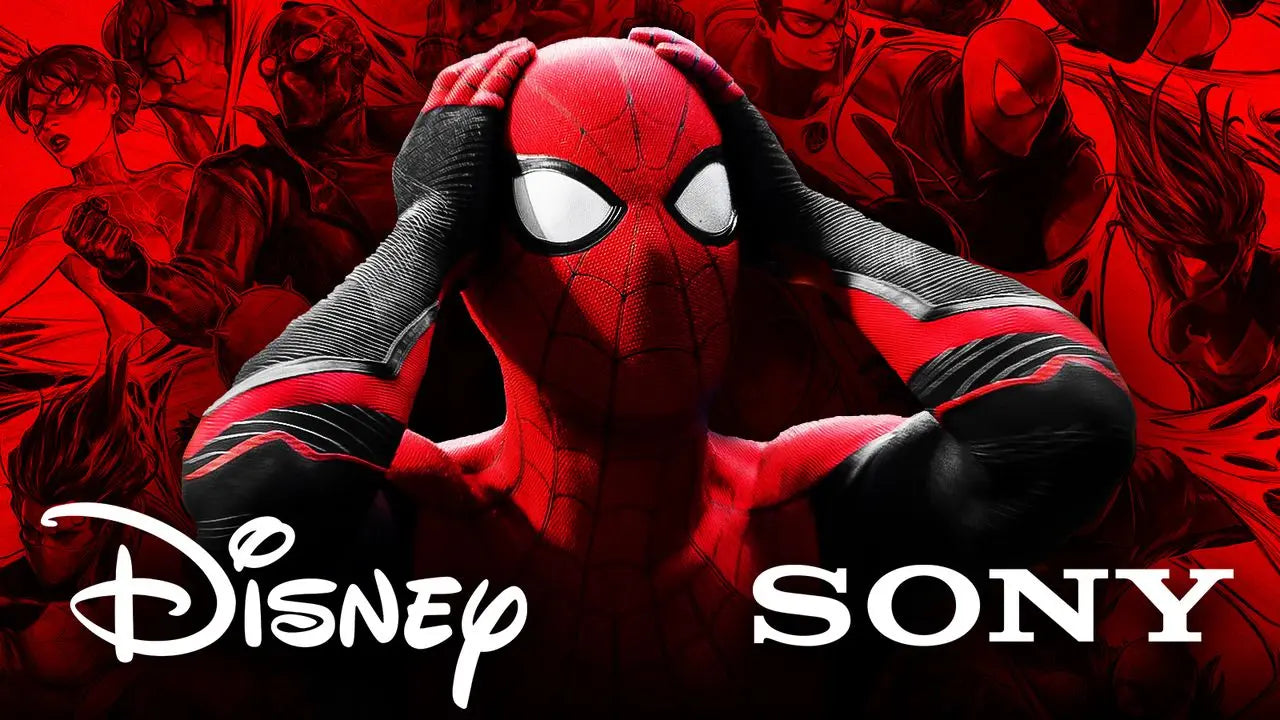
Spider-Man is one of the most popular heroes in the Marvel universe… but also one of the most complicated legally. Contrary to what many fans think, Spider-Man is not wholly owned by Marvel or Disney. He sits at the heart of a delicate partnership between several industry giants: Marvel Studios, The Walt Disney Company and Sony Pictures.
It all starts in the 1990s. Marvel, in financial trouble, sells the film rights to several of its characters to different studios. Among them, Sony buys the rights to Spider-Man and his associated characters (Venom, Aunt May, Mary Jane and so on). That is what makes Sam Raimi’s trilogy possible in the 2000s, a worldwide success.
But when Disney buys Marvel in 2009, things get more complicated: Spider-Man stays under Sony Pictures’ control for cinema, while Disney/Marvel owns every right to the comics, the animated series, the toys, the merchandising and part of the spin-off products.
To understand how the web-slinger has evolved on screen, explore our page dedicated to the Spider-Man films, with a full look back at every saga, from Tobey to Tom Holland.
🎥 You can also read our article “Spider-Man: No Way Home – the multiverse arrives in the MCU” to see how this Disney/Sony partnership made a historic crossover between the different versions of the hero possible.
And if you want to collect the merchandise tied to each universe, take a look at our Spider-Man figures: models inspired by the Sony films, Marvel Studios and the Spider-Verse.
Spider-Man’s return to Marvel: a landmark partnership with Disney

After Sam Raimi’s trilogy and the two films with Andrew Garfield, Sony hits a dead end: the Spider-Man film universe is starting to run out of steam. Meanwhile, the Marvel Cinematic Universe (MCU) is exploding with Iron Man, Avengers and Captain America under Disney’s stewardship. Audiences want Spider-Man alongside the other Marvel heroes… but legally, it is not possible.
In 2015, an unprecedented deal is signed between Sony and Disney/Marvel Studios. It allows Spider-Man to join the MCU while remaining Sony’s property on the big screen. A win-win deal:
- 🕷️ Marvel Studios (Disney) can use Spider-Man in its own films (Civil War, Infinity War and Endgame, for example).
- 🎬 Sony Pictures still produces the solo Spider-Man films, with Marvel as creative partner (Homecoming, Far From Home, No Way Home).
That is how Tom Holland becomes the MCU’s official new Peter Parker. His young, modern take, wired straight into Tony Stark, wins over a new generation. The partnership breathed fresh life into the Spider-Man film franchise while tightening up the wider Marvel universe.
🔍 To find out more, read our full article on Spider-Man: Homecoming, the film that marks Spidey’s big return to Marvel.
🎭 On the merchandise side, this version has inspired plenty of Spider-Man costumes for children and adults, very close to the suit worn by Tom Holland in the MCU. You can also finish off your look with our Spider-Man masks, faithful to the Disney-Marvel version.
📚 And if you want to explore how the character has evolved across every film universe, visit our pillar page on the story of Peter Parker through the ages.
Sony’s counter-attack: Venom, Morbius and the Spider-Verse
While Spider-Man is now part of the MCU thanks to Disney, Sony has never let go of its ambition to build its own Marvel universe. Alongside the partnership with Disney, Sony Pictures launches its own “Sony’s Spider-Man Universe” (SSU), built around the web-slinger’s supporting characters and villains… but without Spider-Man himself at the start.
It all starts with Venom (2018), a risky bet without Peter Parker, but one that turns into a huge commercial success. Audiences take to Eddie Brock and his symbiote. Sony follows up with:
- 🎥 Venom: Let There Be Carnage (2021)
- 🧛♂️ Morbius (2022), which despite the reviews becomes a cult meme (“It’s Morbin’ Time”)
- 🕷️ Projects in development around Kraven the Hunter, Madame Web and El Muerto
But it is with Spider-Man: Into the Spider-Verse (2018) that Sony really cracked open the spider multiverse.
📚 Want to get your head around every version of the web-slinger? Do not miss our article Spider-Verse: every version of Spider-Man and see how well Sony played the diversity card.
What future for Spider-Man between Sony, Disney and Marvel?

With several sagas running in parallel, Spider-Man now sits in a situation unlike any other: he is at once an MCU hero (Disney/Marvel) and a central figure in the Sony universe. That co-existence is sometimes wobbly, yet it is full of opportunities for fans and studios alike.
The success of the multiverse in No Way Home and in the animated Spider-Verse films proved it was possible for several versions of the character to co-exist without confusion. The result: audiences are happy to see several Spider-Men at the same time, each with their own look, their own mythology and their own stakes.
The next challenge? Keeping the Sony / Marvel Studios partnership going, still a fragile thing. A new film with Tom Holland is in the works, but Spidey’s future has yet to be settled. Are we heading for a full merger of the universes? A handover to Miles Morales in live action? Or a permanent split?
Whatever happens, Spider-Man will stay in the spotlight, because more than ever he embodies the key to the balance between the Marvel universes.
If you want to be your own Spider-Man, classic or multiverse, discover our Spider-Man slippers collection, perfect for living the universe to the full, even at home.

