
14-Day Money-Back Guarantee
0
The short answer
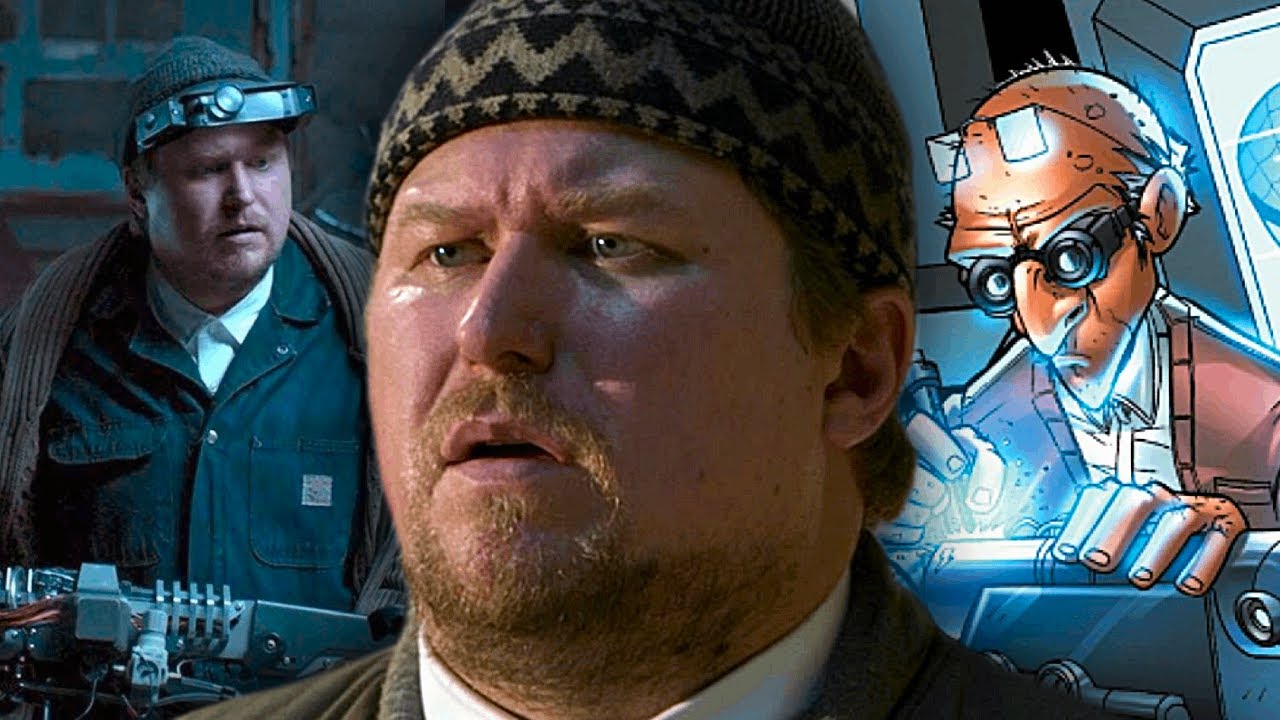
Phineas Mason is the armourer working in the shadows: a craftsman who designs and repairs other people's equipment, for a fee, with no ambition of his own. First appearing in Amazing Spider-Man #2 in 1963, written by Stan Lee and drawn by Steve Ditko, he supplies the Vulture, Mysterio and the Scorpion. His publishing history is traced below.
In the galaxy of Spider-Man's enemies, there is one figure almost nobody would recognise in the street, who wears no colourful costume, and who nevertheless plays a more structural role than most of the super-villains Peter Parker has faced for sixty years. Phineas Mason, better known by the nickname Tinkerer, is that bespectacled old scientist who never got his own saga, his own film, or even a genuine front-rank criminal career. He puts on no mask, he delivers no vengeful monologues, he never steps out onto the rooftops of New York to challenge the web-slinger to a duel. And yet, remove this character from the equation and the whole criminal ecosystem collapses. The Vulture's wings never leave the ground. Mysterio's fishbowl helmet stops projecting its illusions. The Scorpion's tail becomes an inert length of metal. The Green Goblin himself, in certain continuities, owes his explosive gadgets to this old man you would take for a retired handyman pottering about in his back room.
This discretion is precisely what makes Phineas Mason so fascinating. He represents a type of villain that American comics rarely explore with such consistency: the craftsman in the shadows. Not the evil genius chasing glory like Doctor Octopus, not the theatrically obsessive type like Kraven, not the vengeful fanatic like the Green Goblin. Tinkerer is the supplier, the mechanic, the repairman. He lives off the chaos without ever taking part in it directly. This article traces his publishing history, his key appearances, his narrative logic and his screen version in the MCU, so you can understand why this seemingly secondary character is in fact one of the sturdiest pillars of the neighbourhood Spider-Man has been patrolling since 1962.
Amazing Spider-Man #2 (1963): the first appearance of a bespectacled old scientist
Tinkerer was born in Amazing Spider-Man #2, published in May 1963, barely a few months after the web-slinger's debut in Amazing Fantasy #15. Writer Stan Lee and artist Steve Ditko built this issue as a two-part story: the first half introduces the Vulture, who would remain one of Peter's most iconic enemies, and the second half features a mysterious scientist nobody, at the time, expected to see again. This elderly man, tucked away in a workshop full of scientific instruments, offers his services to a network of alien spies in a plot typical of the Silver Age: we are still in the paranoid science fiction of the Cold War, and Tinkerer plays the part of the opportunistic inventor who sells his gadgets to the enemies of humanity.
The stroke of genius, in hindsight, is not the plot of that second issue, which reads a little naively today. It is the character's silhouette. Where most villains of the era were tailored for combat - skin-tight suits, ostentatious gadgets, defiant poses - Phineas Mason is drawn as a small stooping man with big round glasses, in a workshop coat. He looks like no other villain in Spider-Man's emerging gallery. For years Marvel let the character lie dormant, but his graphic presence stayed lodged in readers' memories. When writers decided, in the following decades, that they needed a coherent character to explain where the technological equipment of second-tier villains came from, Tinkerer was there, ready to go back to work.
What is interesting about this first appearance is that it fits into a very precise editorial logic. Stan Lee, at the time, was multiplying antagonists in Amazing Spider-Man in order to build a lasting gallery of characters. While stars such as the Vulture or the Scorpion captured the public's imagination, characters like Mason stayed in the background, available for more complex arcs. It is this long-term planning that sets the Spider-Man ecosystem apart from that of other superheroes: almost everything that appears in the early years ends up serving a narrative purpose decades later.
COSPLAY - Mysterio

Spider-Man Mysterio Costume
129,90 €
The fishbowl helmet and green cape of Quentin Beck owe everything to Tinkerer's quiet genius. Step into the skin of the master of illusions, kitted out for the convention or the fancy-dress party.
Discover →The Tinkerer's unique profile: neither costumed villain nor conventional outlaw
To understand what makes Phineas Mason singular, you have to compare him with the other scientists of the Spider-Man universe. Otto Octavius, alias Doctor Octopus, is also a brilliant physicist, but he has an outsized ego and a personal obsession with Peter Parker that drives him to constant grand gestures. Curtis Connors, the Lizard, is a tragic researcher doomed by his own invention, as the article on the clash between Spider-Man and the Lizard points out. Norman Osborn, the original Green Goblin, is a pharmaceutical magnate whose chemical instability is compounded by political rage. All of them have a psychological arc, a personal motivation, an inner drama.
Tinkerer has none of that. He is a tradesman. A service provider. His motivation is strictly economic: he builds gadgets for those who pay for them. This moral neutrality, which sometimes unsettles readers used to romantic villains, is exactly what makes him so effective in narrative terms. In a city where every costumed criminal seems to have a personal score to settle with Spider-Man, Phineas Mason embodies the banality of organised crime. He represents the link in the chain nobody talks about: the one who makes spectacular criminality materially possible. Without his workshop, the Vulture stays a bitter old engineer in his Staten Island flat. With his workshop, the Vulture flies over Manhattan.
This logic of the organised craftsman produces stories unlike those of the other villains. When the web-slinger confronts Tinkerer directly, it is never a theatrical brawl in a museum or on a bridge. It is an investigation. Peter Parker has to follow clues, identify components, work out who supplied which technology to which criminal. It is almost noir fiction grafted onto superheroics. The presence of Phineas Mason gives certain arcs of Amazing Spider-Man and Spectacular Spider-Man a Daredevil-like investigative tint, which is no accident when you know that Ben Urich and the New York press are regularly involved in these investigations.
The rogues' gallery equipped by Tinkerer: an overview
The list of criminals who owe their equipment to Phineas Mason, directly or indirectly, reads like a directory of the web-slinger's rogues' gallery. The Vulture, obviously, whose winged harness has been redesigned several times by Mason across the continuities. The Shocker, with his shockwave gauntlets, is almost always associated with components from the Tinkerer workshop. The Scorpion and his articulated tail. Mysterio and his sophisticated optical arsenal. The Beetle, in several versions of his armour. Big Wheel, one of the most eccentric villains ever devised, whose giant wheel-shaped vehicle was literally assembled by Mason.
Beyond the famous villains, Tinkerer also supplies gear to the minor criminals who swarm through the pages of Amazing Spider-Man. Robbers kitted out with jet packs, burglars with stealth gadgets, mercenaries with special weapons. This ubiquity in the second rank makes Phineas Mason a character writers can summon whenever they need to explain why a third-rate thug suddenly finds himself equipped like a super-villain. It is convenient, and it is coherent. That internal coherence is one of the reasons the New York criminal network of the Spider-Man universe feels so dense: everything ends up converging on the same workshops, the same suppliers, the same middlemen.
The Sinister Six, the most formidable alliance of Spider-Man's enemies, also owes a great deal to Phineas Mason. Even when the group is led by Doctor Octopus, who could in theory design his own equipment, the logistical ecosystem rests in large part on Tinkerer. Mason has sometimes been presented as a kind of unofficial quartermaster for the Sinister Six, supplying spare parts and technical upgrades between heists. That central position makes his workshop almost sacred in Spider-Man mythology: it is the place where Manhattan's criminals restock.
You also have to mention the more recent villains who pass through Mason's hands, such as Overdrive, whose customised cars could not exist without serious automotive engineering expertise, or even more modern villains such as Screwball, whose audiovisual kit for streaming her crimes live looks very much like hardware from a modernised Tinkerer workshop. Mason adapts to the times, and that is precisely what has allowed him to stay relevant from 1963 right up to today.
COLLECTOR - Green Goblin

Green Goblin No Way Home Figure
299,90 €
Glider, exploding pumpkins, nightmarish mask: the whole arsenal shaped in the shadows by Tinkerer comes to life in this major collector's piece from the multiverse.
Discover →Tinkerer's structural role in New York's criminal ecosystem
When you look at all the major Spider-Man arcs since the sixties, a recurring pattern stands out: every time a new technological threat appears in Manhattan, the investigation sooner or later leads back to Phineas Mason's workshop. This narrative mechanism gives the web-slinger's world a remarkable cohesion. Where other superheroes have to face threats disconnected from one another, Spider-Man moves through a metropolis where crime forms a genuine economic network. Tinkerer is one of its nodes. The Daily Bugle is another, as the portrait of Robbie Robertson illustrates, the moral conscience of a newsroom that regularly brushes up against these cases without always being able to name them.
This network logic is especially visible in the Brand New Day arcs and beyond, where the web-slinger ends up patrolling a New York in which every criminal seems tied to another by contracts, debts and supplies. Tinkerer turns up there from time to time as an unavoidable figure, sometimes neutral, sometimes manipulative. On occasion, Mason has even tried to gain the upper hand over his own clients, designing rigged devices that would let him control the villains he had equipped. These attempts, generally doomed to fail, give the character extra depth: he is not only a passive craftsman, he has ambitions of his own, which he usually keeps buried beneath an air of senile good humour.
New York's criminal ecosystem, seen through the prism of Tinkerer, looks like an underground industry with its suppliers, its distribution channels, its innovation cycles. This portrayal has influenced other Marvel supporting characters, but also the way writers have built the city itself. The New York police, the NYPD, regularly has to deal with sophisticated equipment it does not always understand, and which forces its specialist units to innovate constantly to keep up.
During the periods when Norman Osborn was running America, as told in the Dark Reign arc, Phineas Mason carried on working in the shadows, sometimes under pressure from institutions that had themselves become corrupt. That continuity of the workshop, despite the political upheavals of the Marvel universe, makes him a paradoxical point of stability: whoever is in power, whoever has become a hero or a villain this month, the workshop stays open, ready to supply the next client. Press coverage of these networks by reporters such as Norah Winters and Glory Grant has repeatedly skirted the subject without ever managing to trace it back to Mason himself.
Tinkerer in the MCU: Michael Chernus, Homecoming and the return in No Way Home
In 2017, when Marvel Studios and Sony launched Spider-Man: Homecoming, they chose to introduce Tinkerer on screen with an approach faithful to the comics. Michael Chernus plays Phineas Mason as the silent right-hand man of the Vulture, played by Michael Keaton. The film's opening sequence, showing Adrian Toomes and his crew salvaging alien debris after the Battle of New York in The Avengers, immediately places Tinkerer at the centre: he is the one who turns that salvaged material into marketable weapons. The film makes Mason a background character, yet gives him enough presence for comics readers to recognise the original dynamic instantly.
This adaptation is interesting because it modernises the character's profile while respecting his DNA. Chernus's Tinkerer is younger than the comics version, less senile, but he keeps the same posture of the discreet craftsman who makes his boss's exploits possible. The film also shows the economics very well: Toomes and Mason are not fanatics, they are criminal entrepreneurs frustrated by a system in which big corporations like Stark Industries siphon off every opportunity. This almost sociological reading of Tinkerer reinforces the political dimension of the character that recent comics have developed as well.
In Spider-Man: No Way Home (2021), Tinkerer makes a discreet but meaningful return. When Keaton's Vulture appears briefly in a post-credits scene, certain visual elements recall the Homecoming workshop and confirm that Mason is still part of the ecosystem. That dotted-line presence lays the ground for future appearances, notably in the Sinister War series or in the possible Sony spin-offs tied to the Sinister Six universe in development.
Casting Chernus as Mason is also a strategic choice. The actor, known for his roles in Orange Is the New Black and Manhattan, brings a working craftsman's credibility that more glamorous actors would not have had. The MCU's Tinkerer is not a mad scientist, he is a mechanic who could have been your neighbour had his life taken another turn. This characterisation aligns perfectly with the grounded approach that the Peter Parker-Tony Stark relationship had introduced into the tone of the cinematic web-slinger.
Rick Mason and the family legacy: the Tinkerer's son
Over the decades, the Marvel comics universe has added a family dimension to the character of Phineas Mason. His son, Rick Mason, known as the Agent, is a character who crosses several series and tends to position himself as his father's mirror image. Where Phineas sells his genius to organised crime, Rick puts his talents at the service of government agencies and ends up moving in a world close to that of Captain America and SHIELD. This father-and-son contrast is a narrative device Marvel uses regularly with its supporting characters: John Jameson, son of J. Jonah, becomes Man-Wolf, and the gallery is full of these generational dynamics.
This intergenerational tension between Phineas and Rick offers writers some interesting arcs. When Spider-Man investigates his father, Rick sometimes finds himself in a morally ambiguous position: helping the law bring down his own father's network, or covering for a man he loves in spite of everything. This dilemma echoes other tragic family dynamics in the Marvel universe, such as those between Martha Connors and her husband the Lizard, or between Ana Kravinoff and her father Kraven in the clan of hunters.
In the MCU, this family dimension has stayed discreet but has been hinted at. The film Homecoming touches on Toomes's family and the economic fragility that pushes the Vulture towards crime, and Tinkerer fits into that same sociological reading. In the years to come the studios could develop a screen version of Rick Mason, which would give Phineas extra depth and offer a narrative bridge to wider plots, perhaps connected to the MCU's future developments around the Avengers and the announced war against Doctor Doom.
COLLECTOR - Iron Spider

Iron-Spider Resin Bust
229,90 €
The underground technology of the Tinkerer workshops is answered by the legitimate technology of Stark Industries. A sculptural piece that embodies the permanent duel between criminal craft and heroic innovation.
Discover →Tinkerer in the major Spider-Man arcs: Dying Wish, Superior, Sinister War
The Dying Wish arc, which ends with the mind swap between Peter Parker and Otto Octavius, features Tinkerer as a peripheral yet essential character: it is partly thanks to technical components from his workshop that Doctor Octopus carries out his diabolical plan. The same logic appears in Superior Spider-Man, where Otto, occupying Peter's body, tries to modernise the web-slinger's entire arsenal by indirectly calling on suppliers like Mason. This technical continuity between arcs gives the Marvel universe a material credibility rare in the superhero genre.
In Sinister War, Phineas Mason is central even though he stays out of the fighting. When the whole galaxy of Spider-Man villains comes into simultaneous confrontation, his entire catalogue of gadgets and weapons is deployed at once, creating one of the most visually loaded arcs of recent years. The writers enjoy having Mason talk with criminals he equipped thirty years earlier, creating effects of memory for long-standing readers. This sense of continuity is one of Marvel's great strengths, and Tinkerer is one of its finest examples.
The Ends of the Earth arc, also centred on Doctor Octopus, indirectly highlights Tinkerer's work in so far as the climate weapons used by Doctor Octopus also required top-end craftsmanship. Every time Peter Parker faces a disproportionate technological threat, the invisible background of the thing leads back, one way or another, to workshops like Mason's.
More recently, the Shadow of the Green Goblin arc and the new Brand New Day era have carried on using Mason as a backyard figure. Contemporary writers understand that this character works best when he stays in the shadows: exposing him too much would break his narrative magic. He is not a front-rank villain, and it is precisely because he is not that he becomes indispensable.
Why the Tinkerer embodies a rare type of villain
If you had to define what makes Phineas Mason so unique, it would probably be the idea that crime is not only spectacular, that it also has a backstage, supply chains, discreet entrepreneurs. In the dominant imagination of comics, the villain is almost always the visible face of crime: the costumed silhouette who robs, attacks, monologues. Tinkerer reverses that logic. He is the entrepreneur of chaos, the industrialist who prospers thanks to the fights he watches on television. He could almost be a character from noir fiction transposed into the superhero genre, and it is that lineage that gives him his singularity.
In some respects the character recalls the narrative function occupied by Hobgoblin in another dimension of the Spider-Man myth: that of transmission, of inherited kit, of equipment picked up and adapted. But where Hobgoblin physically takes over the Green Goblin's arsenal, Tinkerer remains a supplier himself. That nuance is crucial. Mason never becomes anyone's successor; he is simply, and eternally, the repairman.
This dimension is probably what has led some writers to see in Phineas Mason a metaphor for the real arms industry, which gives the character a quiet political scope. American comics, particularly from the 2000s onwards, have not shied away from projecting onto Tinkerer questions about the commodification of violence. Mason sells his gadgets, but he also sells, indirectly, disorder. This critical reading adds a further layer to a character many might judge secondary, and explains why he keeps appearing in the web-slinger's worst defeats as well as in the most optimistic arcs.
It is also worth noting that Tinkerer belongs to a wider lineage of supporting characters in which the web-slinger's universe is particularly rich. Ashley Kafka, the Ravencroft psychologist, plays a comparable role on the side of analysing villains' minds, and figures such as Chasm or Demogoblin complete this panorama of atypical villains. Each of these characters illustrates a different dimension of the organised evil that prospers in New York, and Tinkerer represents its most prosaic, most economic, most durable facet.
Phineas Mason today: a quietly central character
As the Marvel universe reorganises itself around new major arcs, Tinkerer remains a character writers can reactivate without difficulty. His simple narrative structure makes him universal: a workshop, a scientist, a clientele. That functional elegance explains why he has crossed six decades without ever becoming obsolete. Editorial fashions change, front-rank villains wear out and reinvent themselves, but the craftsman stays at his bench.
For readers who want to explore the richness of the Spider-Man universe beyond the headline names, the reference pillars on the web-slinger's iconic enemies and the complete universe of Spider-Man characters offer useful maps. The overview of the major story arcs and the guide to reading the Spider-Verse help you place Mason within the wider tangle of Marvel continuities.
Any fan who wants to take their discovery of the secondary criminals further will do well to read the profiles of figures who share a comparable discretion with Phineas, or to explore the shop's themed collections, from the Spider-Man cosplays through to the Brand New Day era merchandise. Each of these collections, in its own way, extends into the real world the dense ecosystem that Tinkerer helps keep alive in the pages of the comics.
In the end, Phineas Mason is not a character you love at first sight, because he does not play on the traditional levers of the super-villain. He inspires neither terror nor admiration. On a careful reading, he inspires a form of clear-eyed recognition: crime, in real life as in fiction, always rests on patient craftsmen, discreet suppliers, anonymous workshops. The Tinkerer is that truth, transposed into bright colours and drawn panels, and that is why he will no doubt go on appearing, for a long time yet, somewhere on the margins of the web-slinger's great adventures.

