
14-Day Money-Back Guarantee
0
The short answer
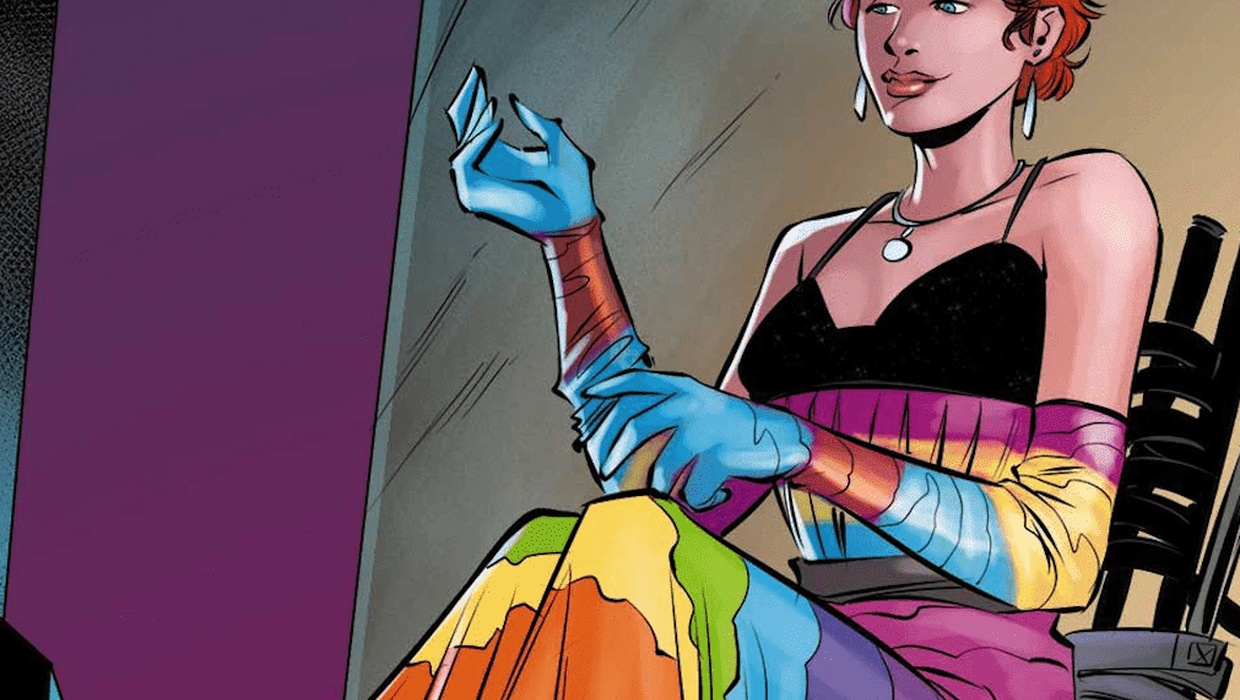
Sun-Spider is the costumed identity of Charlotte Webber, a teenager from Earth-20023 who lives with Ehlers-Danlos syndrome. Bitten by a modified spider, she keeps her condition and fits her wheelchair with web-shooters and wall-clinging wheels for combat. Her place in the Spider-Society is detailed below.
When you think of the heroes of the arachnid multiverse, the cult figures come to mind first: Peter Parker, Miles Morales, Gwen Stacy. But in the shadow of those giant names, a young woman burst onto the scene in 2022 in the web-slinger's universe. Charlotte Webber, alias Sun-Spider, is not a heroine like any other. She uses a wheelchair, lives with a real genetic condition called Ehlers-Danlos syndrome, and has turned what many would see as an insurmountable obstacle into a unique strength within the Spider-Society. Her existence upends the way Marvel thinks about disability representation in its comics, and quietly redraws the outlines of what a Spider-Hero can be in the twenty-first century.
This article dives into her origin, her powers, her place in the Spider-Verse explained simply, her film appearances, and the cultural reach of a character who proves that a Spider-Hero does not need to walk in order to climb walls. Charlotte Webber is not a marketing concession: she is a heroine built with care, rooted in a precise medical reality, and she now holds a strategic place in the eternal war the Spider-Society wages against the Inheritors and other predators of the multiverse.
Charlotte Webber: an origin rooted in medical reality
Before becoming Sun-Spider, Charlotte Webber is a teenager living on Earth-20023, a parallel dimension that looks a great deal like our own. She lives with Ehlers-Danlos syndrome, a group of genetic conditions that affect connective tissue. In practical terms, that means her joints are hypermobile, her skin particularly fragile, and she experiences chronic pain that makes walking for any length of time impossible. Charlotte therefore uses a wheelchair to get around day to day, along with walking sticks when she wants to stand for short distances.
Ehlers-Danlos syndrome is a reality lived by hundreds of thousands of people around the world, among them the artist and activist Dayn Broder, who co-created the character with Steve Foxe for Marvel. This origin is anything but fictional: Charlotte is one of the few Marvel heroines whose medical condition is named, documented and treated seriously. The condition is never presented as a curse to defeat or an obstacle to erase. It is part of her identity, just as much as her powers, her humour and her courage. That is a very different approach from the one historically taken with other disabled characters at Marvel or DC, where a miraculous cure often remains the story's implicit horizon.
The moment that turns Charlotte into Sun-Spider comes when a genetically modified spider, similar to the one that bit Peter Parker in the many Earths of the Spider-Man multiverse, crosses over to her Earth. The bite does not cure her syndrome — a crucial detail — but it grants her the classic abilities of a Spider-Totem: superhuman strength, agility, spider-sense, the ability to generate organic webbing and to cling to surfaces. Charlotte keeps her condition. She simply learns to fold her new powers into a body that works differently from the standard heroic model.
A wheelchair turned into an arachnid weapon
Sun-Spider's narrative and visual power owes a great deal to her equipment. Rather than giving up her wheelchair once she has her powers, Charlotte folds it completely into her combat costume. That wheelchair is not an accessory — it is an extension of her body and her strategy. Marvel's designers fitted it with miniaturised web-shooters, wheels able to cling to vertical surfaces thanks to a mechanism inspired by spider legs, and ergonomic handles that allow rapid manoeuvres in the middle of a fight.
This approach radically changes the visual grammar of arachnid combat. When Charlotte swings between two skyscrapers, she does it with her chair, which becomes a moving mass, a projectile, an anchor point. In some scenes she uses it as a shield; in others she uses it as a launch ramp, throwing her body from the seat to reach positions that would otherwise be out of reach. That inventiveness is no designer's whim: it faithfully reproduces the way people who live with a wheelchair learn every day to turn a mobility tool into an extension of their independence. The parallel with Spider-Man UK and his tactical sense in the Spider-Verse is obvious: Charlotte fights with her head as much as with her body.
Her costume takes up the visual codes of the Spider-Verse — deep red, contrasting black, a web motif across the chest — while adding solar touches on the arms and on the chair's main wheel. The nickname Sun-Spider comes precisely from that imagery: Charlotte sees her story as a victory of light over the received idea that an ill body cannot be a heroic body. She chose the sun as her personal symbol, in opposition to the dark, tragic figures who populate the great event arcs of the web-slinger.
POSTER — ACROSS THE SPIDER-VERSE

Spider-Man Across The Spider Verse Poster
€22.90
Relive the multiverse epic where Sun-Spider appears alongside the greatest Spider-Heroes. The official poster to display your Spider-Society allegiance proudly on your walls.
Discover →Joining the Spider-Society: a strategic recruitment
Charlotte Webber might never have left her home Earth if Miguel O'Hara, the Spider-Man 2099 who leads the Spider-Society, had not sent emissaries to recruit her. In Across the Spider-Verse, the new leap into the multiverse, you can glimpse Sun-Spider among the Spider-Society agents patrolling the technological base of Nueva York. That recruitment is not incidental. The Spider-Society runs on one central principle: protect every Spider-Totem in the multiverse, and prevent the canon breaks that could collapse all dimensions at once.
Recruiting Charlotte meant accepting that a Spider-Totem can take radically different forms. Before her, the Spider-Society already counted members as unusual as Spider-Ham, the wildest spider-pig in the multiverse, or Peni Parker and her SP//dr robot. Charlotte's arrival extends that diversity to disability representation, bringing into Marvel canon a heroine whose body does not match the standard athletic archetype.
Within the Spider-Society, Charlotte is given reconnaissance missions and assignments protecting minor Spider-Totems. She excels in dense urban settings, where her chair lets her slip into spaces other agents cannot reach. Her intimate knowledge of accessibility — stairs, ramps, lifts, openings — becomes a tactical advantage. Where a classic Peter Parker would see only a street, Charlotte instantly sees the obstacles and the ways through. That skill makes her particularly effective against villains who exploit architectural blind spots, such as Spot, the most unexpected and most dangerous enemy in the Spider-Verse.
Sun-Spider against the predators of the multiverse
The most existential threat hanging over every Spider-Totem remains the Inheritors. This family of mystical hunters tracks the bearers of the spider totem across every dimension in order to absorb their life essence. Charlotte, as a confirmed Spider-Totem, is a legitimate target for them. Her first confrontation with Morlun, the totemic predator of the multiverse, comes during a routine mission on her home Earth. Morlun does not expect to face a fighter in a wheelchair and badly underestimates her reaction time.
That misjudgement is exactly what Charlotte counts on. The Inheritors, and more particularly Jennix, the family's scientific strategist, build their strategies on standardised profiles of Spider-Totems. When they meet a heroine who matches none of their models, their predictive algorithms go off the rails. Charlotte exploits that element of surprise with a biting humour that sometimes recalls that of Spider-Ham facing the most absurd situations. She proves that diversity is not only a question of representation: it is also a tactical weapon against enemies who think they know every type of hero.
Other Inheritors such as Bora, the silent predator, Daemos, the brute who embodies absolute violence, or Verna, the sadistic huntress of the Inheritors, have also crossed Sun-Spider's path during the great multiverse events. Charlotte has never fought these titans alone — the Spider-Society's golden rule is mutual support — but she has contributed decisively to several rescue operations, notably during Spider-Geddon, the explosive sequel to Spider-Verse.
The only Inheritor who has shown her any real respect remains Karn, the Inheritor who defied his destiny. Karn, now an ally of the Spider-Totems, has built a particular bond with Charlotte, whom he sees as living proof that the prophecy of the Web of Life and Destiny is never fixed. That relationship carries on into certain parallel arcs that cross the Spider-Society with the Weaver, the entity that weaves the destiny of the Spider-Totems.
MULTIVERSE — SPIDER-GWEN HOODIE

Spider-Gwen Zip-Up Hoodie
€59.90
Sun-Spider and Gwen Stacy share the Edge of Spider-Verse universe. Wear the colours of the multiverse and show your attachment to the heroines who are redefining what it means to be a Spider-Totem.
Discover →Appearances in film and in the comics
Charlotte Webber's first official appearance in Marvel canon dates back to Edge of Spider-Verse issue 5, published in September 2022. That release is part of an anthology series that regularly introduces new Spider-Heroes from parallel dimensions. Edge of Spider-Verse works as a creative laboratory where Marvel tests ambitious concepts, sometimes strange, sometimes revolutionary. Sun-Spider falls into the latter category. Her introductory arc, written by Steve Foxe and illustrated by Dayn Broder, tells the story of her bite, her first patrols, and the moment Miguel O'Hara spots her from his base in Nueva York.
On screen, Sun-Spider makes a brief but memorable appearance in Spider-Man Across the Spider-Verse in 2023. We see her during the iconic sequence in which Miles Morales discovers the scale of the Spider-Society. She crosses the frame in a motorised wheelchair, fires webs between two floating platforms, and exchanges a knowing look with other unconventional Spider-Heroes. That short appearance stirred enormous enthusiasm among viewers who live with a disability, and pushed the character up through every Google search that followed the film's release, just behind figures such as Spider-Boy, the newcomer shaking up the Spider-Verse.
Fans are now hoping to see her take on a bigger role in Spider-Man Beyond the Spider-Verse, the long-awaited multiverse finale. Several unofficial sources suggest she will have fuller fight sequences alongside Miles and Gwen, and that she will interact directly with the main villain of Beyond the Spider-Verse. The question is still open, but what fans really want from the finale clearly includes Sun-Spider being confirmed as a full member of the team.
Animation has also helped make the character popular. The visual style of Spider-Man Into the Spider-Verse, the animated stroke of genius of the Marvel universe, which blends comic book art and 3D, offers a visual grammar perfectly suited to a character who moves on wheels and fires webs in every direction. Charlotte finds there a stage with no equivalent in live action.
Disability representation that changes the game
Sun-Spider's cultural reach goes far beyond the borders of the fictional multiverse. For decades, Marvel's disabled heroes were rare, often stereotyped, and systematically defined by an implicit drive to overcome or hide their condition. Daredevil is blind but his powers more than compensate; Professor Xavier is paraplegic but his telepathic mind makes him formidable despite his chair. In both cases, disability is presented as an obstacle to work around, and not as a constitutive dimension of the hero.
Charlotte Webber breaks with that logic. Her Ehlers-Danlos syndrome is neither an initial sacrifice that gave birth to her powers, nor a weight she wishes would disappear. It is simply part of who she is, just as much as her hunger for life, her sense of humour and her tactical intelligence. That approach belongs to a wider movement at Marvel, which for some years now has been trying to reflect the real diversity of its readers. The same dynamic led to the creation of Cindy Moon, alias Silk, the future heroine of the Spider-Verse, and to the consolidation of figures such as Martha Franklin, the Spider-Woman who inherited the web-slinger's legacy.
Dayn Broder's active presence in creating the character plays a decisive part. Broder lives with Ehlers-Danlos syndrome herself, and her experience feeds every detail of Charlotte: the way she sits, the way she manages her pain between missions, the adjustments she makes to her chair. That level of detail avoids the classic pitfalls of representation parachuted in from outside. Charlotte does not look like an able-bodied character with a wheelchair added on; she looks like a disabled person whose reality has been taken seriously and translated into heroism.
This approach resonates with the mythological richness of the Web of Life and Destiny and the Spider-Totems, where every hero carries a unique mark. The spider totem has never required a standard body; it has always chosen people able to connect the visible and the invisible, to weave improbable links. Charlotte embodies that fundamental truth more directly than many of her predecessors. To understand how this totemic system works, you can explore the Spider-Totems and their mystical explanation, which sets out how each Spider-Hero is assigned a role by forces that go beyond chance.
Sun-Spider among the Web Warriors and the multiversal arcs
Charlotte does not operate only within the Spider-Society. She has also joined the Web Warriors, the team of Spider-Heroes that protects the multiverse, a more tactical and more mobile outfit than the Spider-Society proper. The Web Warriors step in on one-off missions, often short-handed, in dimensions where the Spider-Society cannot deploy its heavy forces. That is exactly Charlotte's favourite playing field, as she excels at rapid adaptation and at reading complex environments.
During End of the Spider-Verse, the event that upends the whole arachnid universe, Charlotte plays a secondary but decisive part. She takes part in evacuating several minor Spider-Totems when the Inheritors launch a coordinated offensive. Her knowledge of emergency protocols and her composure under pressure make her invaluable in these operations. The final battle will see her alongside Miles, Gwen and Prowler, the key villain of the multiverse and Miles Morales' uncle, in an improbable but formidable tactical line-up.
Parallel arcs also bring her face to face with figures such as Shathra, the predatory spider goddess who hunts Spider-Man across the multiverse, or Ezekiel Sims, the man who knew the secrets of the spider totem. These encounters deepen her understanding of the mythology underpinning her powers. Charlotte did not grow up with the comics: she discovers arachnid folklore at the same time as she embodies it, which gives her arc a freshness rarely found in the more established heroes of the Spider-Verse and its invisible rules.
To place Charlotte on the full map of the multiverse, it is worth reading the complete guide to the Spider-Man multiverse and every version of the web-slinger. Her Earth, 20023, sits in a relatively isolated position but becomes strategically important because of the interdimensional routes that pass through it. The Spider-Society has set up a small observation outpost there, and Charlotte acts as the local agent for every operation transiting that zone of the multiverse. You can also read every version of Spider-Man finally explained to gauge the growing diversity of the arachnid line-up.
HOME DECOR — INTO THE SPIDER-VERSE

Spider-Man Into the Spider-Verse Duvet Cover
€59.90
Bring the vibrant look of the multiverse right into your bedroom. A bedding set inspired directly by the animated universe that gave birth to heroines like Sun-Spider, to turn every night into a multiverse dive.
Discover →Why Sun-Spider really matters in Marvel canon
Charlotte Webber's run is young. For now she has only a handful of official appearances, and her personal arc is still largely to be written. Yet her cultural impact already outstrips that of far older characters. Google mention statistics show that Sun-Spider appears regularly in searches linked to the terms 'Spider-Verse disability', 'Marvel wheelchair heroine' and 'disability representation comics'. She occupies a precise editorial niche that Marvel can no longer ignore.
That importance can also be measured in the way the other heroines of the multiverse connect to her. Silk, Peni Parker, and even certain alternative versions of Gwen Stacy have formed tactical friendships with Charlotte in recent arcs. This dynamic of arachnid sisterhood contrasts with the male rivalries that long dominated the classic Spider-Verse. Charlotte acts as a catalyst there: she draws in heroines who share the idea that being a Spider-Hero does not mean obeying a single model.
She also stands out in her relationship with her enemies. Where Peter Parker faces his villains with a mix of remorse and quests for redemption, Charlotte treats the Inheritors as problems to be solved. That tactical rationality, which can seem cold, is explained by her personal history: she spent her childhood learning that obstacles do not disappear when you ignore them, that you have to analyse them and find ways around. This philosophy runs through her whole heroic practice and offers a fresh reading of the great battles of the multiverse, described in detail in the great narrative arcs of the web-slinger's complete saga.
For fans who want to go deeper into arachnid mythology, exploring the complete universe of Spider-Man characters remains the best way in. Charlotte now appears there alongside the big names, in a section devoted to the new Spider-Heroes redrawing the contemporary multiverse. The Marvel multiverse explained simply through Spider-Man also offers a useful map for placing Earth-20023 within the cosmic whole imagined by Marvel. Links with the alternative versions of Venom in the Spider-Man multiverse remain rare but do exist, notably in certain arcs where Charlotte comes across symbiotes adapted to her body.
A bright future for Charlotte Webber
Sun-Spider's future looks promising. Marvel has confirmed several upcoming appearances in anthology series and in Spider-Verse arcs still under wraps. The character's growing popularity is pushing the publisher towards a mini-series that would explore her origins in more detail, along with the way she juggles her life as a teenager between two intergalactic missions. Reader feedback points the same way: many are waiting to see how Charlotte balances school, friendships, medical treatment and multiverse patrols.
On screen, Phil Lord and Christopher Miller, the architects of the Into / Across / Beyond the Spider-Verse trilogy, have hinted in several interviews that Sun-Spider would be among the heroines pushed forward in spin-off projects. Sony is looking to build out its catalogue with characters who speak to young and diverse audiences, and Charlotte ticks every box: teenager, heroine, disabled, funny, brilliant. The commercial trajectory is obvious, but the creative one is even more so.
In the comics, her introduction into more traditional teams such as the Champions or the Young Avengers has already been raised by several writers. Charlotte would bridge Spider-Verse mythology and mainstream Marvel, bringing a rare perspective on the daily life of teenage heroes. That transition would echo those of other characters who left their initial niche to join the wider Marvel canon, as Spider-Boy did on his thunderous arrival.
Sun-Spider, alias Charlotte Webber, is not a minor heroine. She is the face of a deep shift in the way Marvel thinks about its characters, its audiences and its stories. Her wheelchair is not a detail: it is a manifesto. Her condition is not a weakness: it is a lesson. And her place in the Spider-Society is not a favour: it is recognition. The arachnid multiverse has found in her a heroine who finally looks like the people who never had a role model in the panels of a comic. The Web of Life and Destiny, it seems, has not finished surprising us. To go further, fans can discover all the characters connected to Charlotte in this exploration of the complete universe of Spider-Man characters, and dive into the narrative stakes awaiting the heroines of the multiverse.

