

14-Day Money-Back Guarantee
0
The short answer
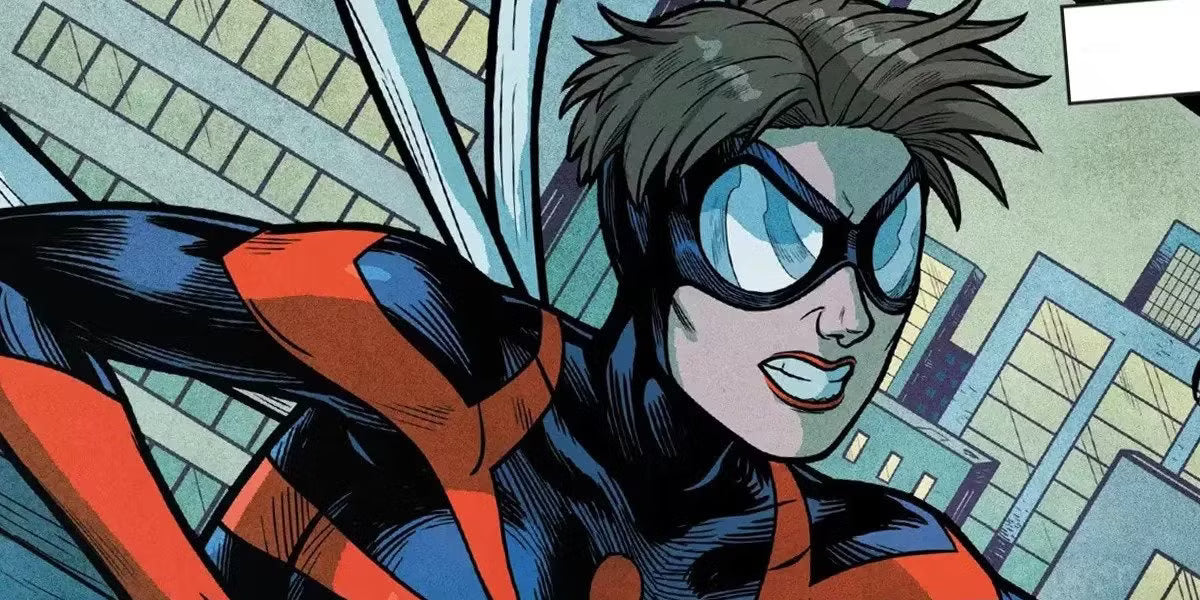
Her spider powers come from a mystical ritual staged by followers of Norman Osborn, meant to redistribute those of the Spider-Totems: the operation goes wrong and she absorbs a share of them. Trained first by Peter, then by Jessica Drew, she drifts towards a far darker path. The full story follows below.
Martha 'Mattie' Franklin is not the best-known Spider-Woman among the wider public, and yet her journey is one of the most fascinating in the whole Marvel universe. Brave, tormented and deeply bound to Peter Parker, she embodies the very idea of inheritance — of the spider, of duty, and of the weight of responsibility.
Introduced in the late 1990s in Spider-Man #441, Martha Franklin starts out as a young woman from New York high society with a passion for superheroes. But behind her idealistic teenage manner she hides a deep obsession: becoming a heroine herself, whatever the risk. And that dream soon leads her straight into the darkness.

Her fate turns the day she slips into a mystical ritual organised by followers of Norman Osborn. That ritual, meant to redistribute the powers of the various Spider-Totems, goes wrong — and Mattie ends up absorbing part of Spider-Man's own powers. From then on she becomes a female version of the web-slinger, with his strength, his agility, his spider-sense and even the ability to swing from building to building on synthetic webs.
But unlike Peter, Mattie does not immediately receive the same moral compass. Her early days are chaotic, impulsive, almost adolescent. She tries to imitate Spider-Man without really understanding what that means. That is exactly what makes her character so moving: she was not born a heroine, she becomes one the hard way.
Over time her costume evolves — at first heavily inspired by that of Jessica Drew, the first Spider-Woman, before turning darker, more tactical, closer to the urban world of Spider-Man. That modernised look is now a source of inspiration for plenty of fans, who find it again in the Spider-Man costumes and Spider-Verse figures.
This first phase of her heroic life lays the groundwork for a poignant coming-of-age arc, mixing ambition, guilt and a need for recognition — central themes in the world of Spider-Man.
From admiration to inheritance: the complex relationship with Spider-Man
For Mattie Franklin, Spider-Man was never just a role model. He was a landmark, an almost mythological figure. When she gains her powers, she tries to copy his fighting style, his sense of justice and even his humour, without grasping how heavy the burden he carries really is. That contrast between naivety and responsibility becomes the heart of her development.
Peter Parker, wary at first, ends up taking Mattie under his wing. He recognises in her a younger, more impulsive version of himself. This mentoring relationship is one of the most touching aspects of the character: Spider-Man, who has lost so many loved ones, finds in Mattie a form of continuity, proof that his fight still inspires. But he also sees through her the dangers of his own way of life.


So their relationship swings between tenderness and worry. Peter tries to shield her from the world he knows far too well — that of Spider-Man's enemies — but Mattie refuses to be treated like a child. She wants to prove she deserves her name and her powers. That determination leads her to face fearsome opponents alone, such as Mysterio or Shocker, often at the risk of her life.
But it is when she crosses paths with Jessica Drew, the original Spider-Woman, that Mattie finally finds her balance. Jessica, more experienced and more clear-eyed, helps her understand that a heroic identity is not a costume or a set of powers, but the way you use them. The Spider-Woman / Spider-Man duo becomes a symbolic family, united by duty and courage.
That female alliance also strengthens Mattie's aura in the Marvel universe. Where Peter embodies the weight of responsibility, she embodies the search for identity and the passing on of a legacy. It is a theme you find again in the modern adaptations of the Spider-Verse, where several heroes and heroines now share the legend of the spider.
This duality between mentor and pupil, between role model and heir, makes Mattie Franklin an essential figure for understanding how the Spider-Man myth spread beyond Peter Parker. She is not merely a successor: she is its emotional and symbolic continuation.

Fans of this cult era can find pieces inspired by this iconic duo in the Spider-Man mask collection or among our Spider-Woman and Spider-Man pyjamas.
Between lost bearings and inner struggle: the fall of Mattie Franklin
While the early days of Martha Franklin looked promising, her life as a superheroine soon tips into a darker spiral. Behind the energy of youth lay a deep loneliness, made worse by the responsibility of taking on a role that was never hers. Becoming a Spider-Woman is not only about fighting criminals — it also means carrying the weight of the symbol embodied by Peter Parker.
Mattie ends up drifting away from her mentors and sinks into a period of moral wandering. She tries to reconcile a 'normal' life with her heroic identity, but that double existence consumes her. It is around this time that she is captured by drug traffickers who exploit her powers to produce a new mutagenic substance. Addicted and broken, she becomes, despite herself, a victim of the very world she wanted to protect.
This dramatic stretch is one of the most poignant in the Spider-Man universe, because it shows the hidden face of the myth: the psychological price of heroism. Unlike Peter, who finds solid emotional pillars in the people around him (such as Mary Jane Watson or Aunt May), Mattie faces her inner demons alone.
Despite the darkness, she slowly rebuilds herself, supported by Jessica Drew and by the alliance of the heroines of the Spider-Verse. That female solidarity becomes an essential thread in her story, setting the light of the collective against the destructive loneliness of the lone hero.
This period also marks an aesthetic transformation: her costume becomes more minimalist, almost symbolic, a sign that she is no longer trying to be 'the other Spider-Man' but to become herself. It is a shift you can see in the modern designs found on some of the Spider-Woman figures and Spider-Man jackets available in the shop.
Fans read it as a metaphor: even in the Marvel universe, being a symbol can break a person. And Mattie Franklin, through her fall and her recovery, proves that even a heroine can falter — and rise back stronger than ever.
A tragic but immortal legacy in the Spider-Verse
The journey of Martha Franklin ends tragically, but her mark on the Spider-Man universe remains indelible. In the comics, Mattie is killed by Alyosha Kravinoff, the son of Kraven the Hunter, during a macabre ritual meant to resurrect the Kravinoff family. Her death, brutal and unjust, deeply shocks Peter Parker and Jessica Drew, but it is not in vain: she becomes a symbol of the price heroic responsibility exacts.
In the Spider-Verse, Martha Franklin comes back several times as tributes or as variants from parallel universes. Some versions present her as an experienced Spider-Woman who survived her injuries, while others portray her as a spiritual guardian of the 'spider lineage'. These posthumous incarnations are a reminder that in the Marvel universe, no one is ever completely forgotten.

Her presence also hangs over the stories where the idea of legacy is central, notably in arcs such as Spider-Man: Life Story or The Clone Saga, where the themes of transmission, sacrifice and memory are everywhere. In these ever-shifting universes, Mattie embodies the link between the generations of spider heroes — past, present and future.
Beyond the page, she still inspires pop culture. Artists and collectors keep paying tribute to her through t-shirts, Spider-Woman posters and costumes inspired by her appearances, proof that her memory is still alive in the hearts of the web-slinger's fans.
In the end, Martha Franklin is not a secondary heroine. She is a shooting star of the spider multiverse — brief, intense and unforgettable.

