

14-Day Money-Back Guarantee
0
The short answer
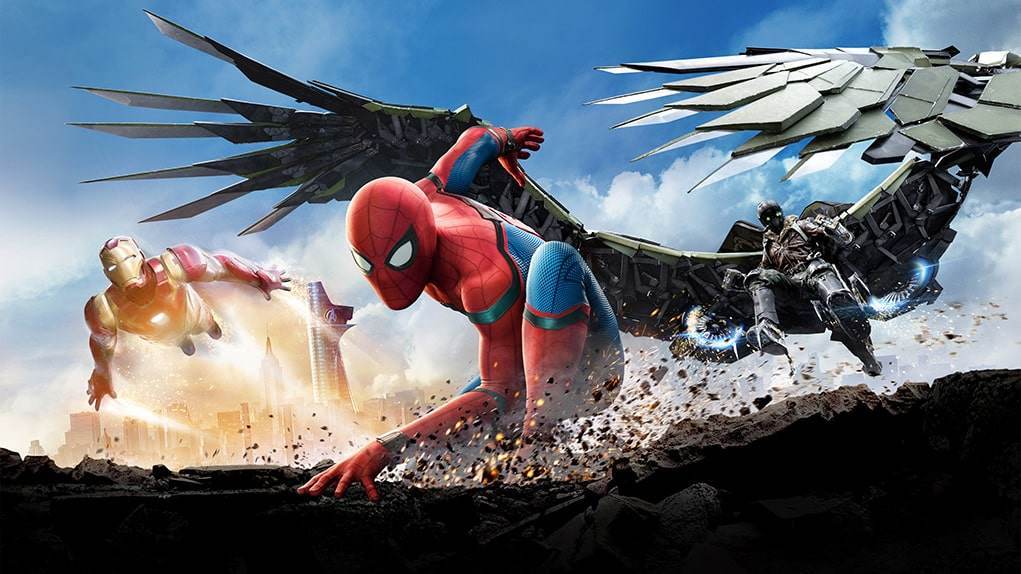
Homecoming reshuffles the deck by dropping the web-slinger into an American high-school story rather than yet another origin tale: Peter Parker learns humility under Tony Stark's wing, up against a blue-collar Vulture played by Michael Keaton. Below, we unpack how that shift works.
Released in 2017, Spider-Man: Homecoming was judged at the time on one simple question: did the character's third reboot in fifteen years have any reason to exist? Watched again from 2026, now that the MCU has wiped Peter Parker from the world's memory, the film reads completely differently. It wasn't just one more restart. It was laying the foundations for everything that followed.
That re-reading is the subject of this article, updated after the release of the latest film. We go back over what made Homecoming so strong when it came out, and show what it planted that the MCU is harvesting today.
The 2017 gamble: a Spider-Man with no origin story
The film's most radical decision is a subtraction. No radioactive spider, no Uncle Ben, no burglar scene. Audiences had already seen that sequence twice on the big screen, in 2002 and again in 2012, and Marvel gambled that a third time would be a mistake.
So the film opens on a Peter Parker already in the suit, already active, and already through one major event — his appearance in Captain America: Civil War, which had served as his introduction a year earlier. That shortcut frees up nearly forty minutes of storytelling, and Homecoming spends them on something the previous versions never had time for: showing everyday life.
The result still throws some viewers. Homecoming isn't built like a superhero film but like a teenage chronicle in which somebody happens to wear a suit. That choice of genre explains half of its strengths and every one of the criticisms aimed at it.
A high-school kid first, a hero second
Tom Holland was twenty during filming and looked sixteen, which had never been true of any of his predecessors. The film leans entirely on that gap. His Peter is clumsy, chatty, impatient and, above all, a bad judge of his own limits — a teenager, not an adult in a costume.
Midtown High isn't a transitional backdrop but a setting in its own right. The academic decathlon club, the end-of-year dance, the corridors: everything that served as breathing space between two fights in the other films becomes the main material here. The film even commits to building its climax around a school prom.
That tone is why Homecoming comes up so often in debates about the best Spider-Man film of all time: it isn't trying to be the biggest, it's trying to be the truest to its character.

Spider-Man Homecoming Zip-Up Hoodie
The Midtown High locker room rather than the suit: exactly the spirit of the film, where Peter is a schoolkid before he is a hero.
View the product — 49,90 €Tony Stark, an awkward mentor
Tony Stark's presence was the criticism most often levelled at the film: Spider-Man apparently needs a billionaire godfather in order to exist. The complaint is understandable, but it misses what the script actually does with him.
Stark is not a kindly mentor. He is absent, condescending, he palms Peter off on Happy Hogan, and he takes the suit away at the precise moment Peter needs it most. The film's central line — if you're nothing without the suit, then you shouldn't have it — is a rebuke, not a pep talk.
Put another way, the film uses Stark to set up a dependency and then dismantle it. The third act plays out in a homemade suit, with no Stark technology and no back-up. That debt went on weighing on the character, as you can see in Far From Home and its post-Endgame Spider-Man, built entirely around the burdensome legacy of the mentor he lost.
Vulture: the best MCU villain of that period
Michael Keaton builds an Adrian Toomes with no ambitions of conquest, no cosmic plan and no spectacular origin trauma. He is a building contractor ruined by an administrative decision, who slides into arms dealing to keep from going under.
His anger is legible and, in many respects, legitimate. The film actually opens from his point of view: his crew is clearing the rubble of the Battle of New York when Damage Control pulls the contract overnight. The viewer understands the character before ever seeing him act.
That construction makes him one of the rare MCU antagonists whose reasoning holds up without being contradicted by a last-minute about-turn. To place Toomes among the others, the complete guide to the iconic villains puts every figure back in his own era.

Spider-Man Figure – Vulture in Homecoming
Adrian Toomes as a collector's piece, with the wingspan that makes the whole silhouette. For anyone who rates Vulture as the best villain of this stretch of the MCU.
View the product — 329,90 €Damage Control was already there, back in 2017
This is the detail that makes the re-watch striking. Homecoming's inciting incident is neither an accident nor a mad scientist: it is an administrative decision by Damage Control. In the opening scene, Toomes's company is clearing the rubble of the Battle of New York when the agency pulls the contract and leaves him stuck with the salvage.
At the time, the organisation looked like a plot mechanism, a handy way of explaining where Vulture's exotic weapons came from. It has since taken on a completely different scale in the story, to the point of becoming a player in its own right rather than bureaucratic set dressing. We went into all of that in our profile of Damage Control.
In other words, the very first scene of this Spider-Man's first solo film already plants the institution that will shape his path years later. Whether that came from a long-term plan or an opportunistic pick-up matters little: the result is a rare continuity across such a sprawling saga, and it gives Homecoming a depth of field it did not have on release.
The supporting cast that made the difference
Homecoming pulled off a delicate exercise: reinventing a supporting circle that two previous versions had already fixed in the popular imagination. Ned Leeds becomes the confidant, the only one in on the secret — a choice that takes on a particular resonance once you know what the sequels put him through.
Michelle, meanwhile, is introduced as a sarcastic observer on the edge of the group, before the film plays on her nickname in the closing line. The character has almost nothing to do with the Mary Jane of earlier versions, and that is precisely what allows her to exist.
Flash Thompson gets the most debated reinvention: richer than he is brawny, more mocking than brutal, he embodies a contemporary kind of bullying rather than the 1960s locker-room thug. As for Happy Hogan, he holds a thankless but essential place, that of the overwhelmed adult who never answers his messages — and whose indifference will cost dearly.
The car twist: the best scene in the film
The sequence where Peter works out that his date's father is the Vulture remains one of the high points of MCU writing. It relies on no special effects at all. A man at the wheel, a teenager in the back, and a conversation in which each of them slowly grasps who he is talking to.
What makes it so formidable is that Toomes never threatens Peter. He protects him, in his own way, in exchange for silence. The scene turns a genre showdown into a domestic moral dilemma, and it works precisely because the film has spent an hour establishing its hero's everyday life.
What Homecoming planted and the MCU is harvesting today
This is where the re-watch from 2026 gets interesting. The Peter of Homecoming is surrounded: a mentor, a best friend in on the secret, an aunt who is there, a school, a community. He even complains about being too closely supervised.
The Peter of the latest film is exactly the opposite: an adult, alone, with no mentor, no friends who remember him and no institution behind him. The character's whole cinematic arc sits in that gap, and it starts here. Everything Homecoming gives him will be taken away, one piece at a time, right through to the spell in No Way Home that completes the dismantling.
What the people close to him actually kept of him remains the most debated thread in the saga — we untangled it in our analysis of what MJ really remembers. Re-watching Homecoming after the fact means looking at an inventory of everything he is going to lose.
Mac Gargan: a seed planted in 2017, harvested nine years later
Homecoming ends on a mid-credits scene in prison. An inmate by the name of Mac Gargan approaches Toomes and mentions people who would like to deal with Spider-Man. The character is played by Michael Mando, and the nod was obvious to comics readers: in the books, Gargan becomes Scorpion.
For years, that scene was the most frequently cited unkept promise in the MCU. It has finally been honoured, and Michael Mando's return as Scorpion nine years on gives that handful of seconds a retrospective value it never had.
It says something about Marvel's method with this character: sow without any guarantee, and harvest when the schedule allows. To know what you need to have seen to catch these callbacks, we have drawn up the list of essential films.

Spider-Man Homecoming Round Rug
The 2017 design, the one from before everything that followed. Made for a teenager's bedroom, which is still the right scale for that particular film.
View the product — 39,90 €From the Stark suit to Fresh Start
The Homecoming suit is a plot device as much as a design. Loaded with functions and fitted with an AI, it is explicitly presented as a borrowed privilege — and taking it away is the turning point of the story.
Nine years later, the character wears an outfit he designed on his own, with no funding and no supervision. The visual journey between the two tells the same story as the script, and we broke it down in our breakdown of the Fresh Start design. To place each outfit back in its film, the overview of the films, versions and suits is the reference point.
A title with a double meaning
The word Homecoming refers in the United States to the annual dance that brings a school's former pupils back together — the event around which the final act of the film is built. That is the literal sense, the one the story puts on screen.
But the title carries a second meaning, aimed at the audience rather than the characters: this was the character coming home, into the shared Marvel universe, after years of being handled separately. A deal between studios had made that cohabitation possible, and the title announced it openly.
That kind of double reading became a signature of the trilogy: each of the three films carries a title that describes both a school situation and the character's standing within the franchise. Far from being a marketing detail, it is a way of reminding us every time that this Spider-Man exists in two stories at once, his own and the studio's.
The film also set a template that plenty have tried to reproduce since: the superhero film that openly borrows the codes of another genre — here the high-school comedy — rather than name-checking them in passing. That wholehearted hybrid explains a good part of its reception, and the fact that it ages better than most productions of the same period.
Is Homecoming worth re-watching today?
Yes, but not for the reasons of 2017. Back then, you watched it to discover a new Spider-Man. Today, you watch it to see what he was before, and to measure the distance travelled.
It is also the most accessible film in the trilogy for a young viewer: little violence, a domestic stake, high-school comedy humour. Anyone coming to the saga through the latest film will find the context they are missing, without having to sit through fifteen years of continuity. And to understand the man behind the mask, the full portrait of Peter Parker remains the best way in.
The New York the film chooses to show
One last thing sets Homecoming apart from its predecessors: its geography. The 2002 and 2012 films shot Manhattan, its skyscrapers and its bridges. This one plays out mostly in Queens, out on the edge of the city, in a suburban fabric where the buildings are too low to swing from roof to roof.
The gag is explicit: Spider-Man ends up running through back gardens and crashing into fences for want of tower blocks. But the choice is not only comic. It anchors the character in a social class and a daily routine — a schoolkid who takes the subway, whose aunt works, whose best friend lives in a cramped flat.
That scale explains why Vulture works so well as an antagonist: he belongs to that same New York, the one of tradesmen and subcontractors, not the one of billionaires and gods. The two characters are fighting over the same city, on the same side of the river. It is a neighbourhood conflict, not a cosmic battle, and that is what makes it legible.
What to take away
Homecoming is not the most spectacular Spider-Man film, and it never set out to be. It did three things nobody had attempted: cut the origin story, treat school as a real subject, and give the hero an opponent whose anger you understand. The rest of the saga built on that.
On the merchandise side, the Spider-Man figures cover the villains of that period, the T-shirts and the fancy dress and costumes let you track down the 2017 version, while the masks and the Spider-Man posters complete the fan's kit. Nine years on, that clumsy schoolkid is still where everything starts.
Nearly ten years after that kick-off, the saga keeps nodding back to its own origins. We have catalogued all the easter eggs in the film so that nothing slips past you in the cinema.

