

14-Day Money-Back Guarantee
0
The short answer
The story rests on a tape-recorded confession that Peter addresses to Gwen Stacy, gone for years. The blue of the title stands for melancholy, just as yellow does for Daredevil or grey for Hulk in the same colour-coded series. Below, we look again at the Gwen and Mary Jane triangle.
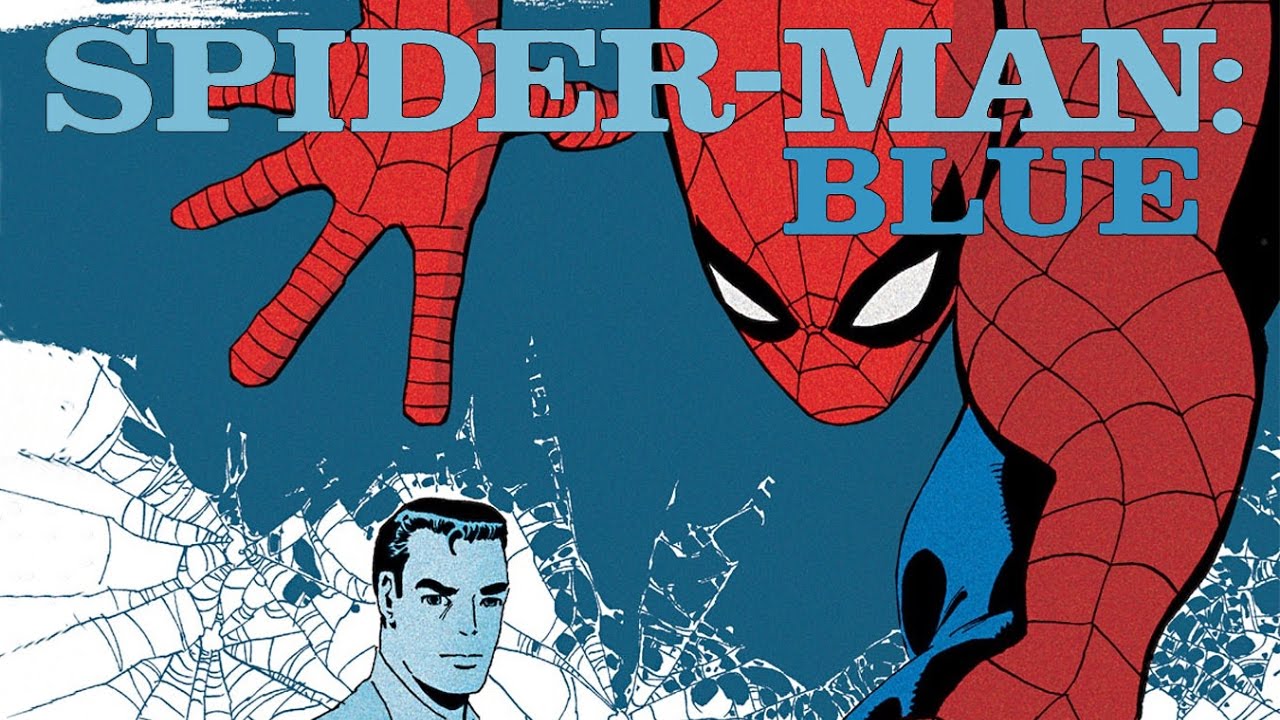
 There are, in Spider-Man's vast library, a handful of stories that are not about fights but about the heart. Spider-Man: Blue is one of them - perhaps even the most beautiful of all. Published in 2002 by writer Jeph Loeb and artist Tim Sale, this six-issue mini-series invents no new super-villain and upends no continuity. It does something rarer: it takes an adult Peter Parker, one Valentine's night, and lets him speak aloud to the woman he lost. The result is a heartbreaking elegy about first love, grief and memory, and it has become one of the best-loved works in the whole spider universe. Here is why, more than twenty years on, Spider-Man: Blue still brings readers to tears - readers who thought they knew everything about the web-slinger.
A love letter to a lost love: the concept behind Spider-Man: Blue
The narrative device fits into a single image. On Valentine's night, in the flat he shares with Mary Jane, Peter Parker picks up a tape recorder and starts talking to Gwen Stacy - his first great love, gone years earlier. The whole story is that recorded confession: Peter traces his youth back, from meeting Gwen at university to the moments that sealed their story. The reader, meanwhile, already knows how it all ends, and that is precisely what makes every page devastating.
For Spider-Man: Blue is haunted by an event fans know by heart: the loss of Gwen, one of the most traumatic turning points in comics, which we break down in our feature on the death of Gwen Stacy, the arc that changed Spider-Man forever. Loeb and Sale do not tell that death - they tell the love that came before it, knowing the reader will carry the weight of the ending through every one of Gwen's smiles. It is an emotional tour de force: turning nostalgia into suspense, and memory into sorrow.
Loeb and Sale: masters of colour as emotion
Spider-Man: Blue is not a one-off. It belongs to a run of stories Jeph Loeb and Tim Sale built around a colour and an emotion: Daredevil: Yellow, Hulk: Gray, Captain America: White. Each title revisits a hero's origins through the prism of one dominant feeling. For Spider-Man, it is blue - the colour of melancholy, of the blues, of a sadness that never quite lifts.
Tim Sale's artwork does a good half of the job. His supple silhouettes, expressive faces and play of shadow give Peter's early New York the warmth of a memory, like a yellowed photo pulled out of a drawer. It is an open tribute to the character's golden age, the one shaped by Marvel's pioneers - a lineage you appreciate all the better by reading our profile of Steve Ditko, the visual architect of Spider-Man. Loeb and Sale do not copy the old masters: they contemplate them fondly, and invite the reader to do the same.

The golden age on your wall
Spider-Man Retro Comics Poster
The look of the classic comic pages that inspired Tim Sale, straight onto your wall. The ideal gift for anyone who loves the web-slinger's golden age.
€22.90 View the poster
The love triangle: Gwen, Mary Jane and the ghost of choice
At the heart of Spider-Man: Blue beats the most famous love triangle in comics. On one side, Gwen Stacy: serious, brilliant, the police captain's daughter. On the other, Mary Jane Watson: flamboyant, unpredictable, the one who bursts into Peter's life with her famous line 'Face it, Tiger… you just hit the jackpot'. Loeb captures that moment of youth when Peter does not yet know who he loves, or who he will become.
All the melancholy of the story comes from the fact that the reader knows what happens next: Gwen will die, and it is Mary Jane who will become his partner for life. We explore those crossed destinies in detail in Gwen Stacy versus Mary Jane: who is Spider-Man's true partner? and in our retrospective on Spider-Man's love life, from Gwen to MJ. Spider-Man: Blue gives new depth to what the influence of Mary Jane on Peter Parker really means: if Peter can finally speak to Gwen, it is precisely because MJ taught him to love again. The story does not set the two women against each other - it shows how one made the other possible.
A golden age revisited: the classic era seen with hindsight
If Spider-Man: Blue feels so familiar, it is because it replays, with an adult's eye, the great moments of the founding era of the comics. We meet again Peter's first big battles against a gallery of enemies who have become legends: the fearsome Vulture, the raw power of Rhino, the scientific tragedy of Spider-Man against the Lizard, and the obsessive hunt of Kraven the Hunter. Those fights are not the point: they are the backdrop to the real story, the one about Peter's heart.
The shadow of the worst enemy of all hangs over it too. This is the era when Norman Osborn prowls through the lives of the young Parker and Osborn, a prelude to tragedy. To understand the weight of that presence, revisit our profiles of Norman Osborn, the man behind the mask and why the Green Goblin is Peter Parker's worst nightmare. The relationship between Peter and Harry Osborn, his flatmate and fragile friend, adds another layer to this portrait of a youth on the brink.

The timeless Spider-Man
Classic Spider-Man Figure
The original red and blue suit, the one Spider-Man: Blue puts centre stage. A collector's figure to honour the web-slinger's golden age on your shelf.
€89.90 View the figure
Why Spider-Man: Blue hits so hard: grief and memory
The power of Spider-Man: Blue reaches well beyond comics fans. Its real subject is grief - the way we keep talking to those who are gone, reliving the happy moments while knowing they are over. Peter does not tell Gwen's story in order to suffer: he tells it so as not to forget her, and to understand how he was able to love again without betraying her. That is universal, and it is what places this story among the saddest moments in Spider-Man's history.
The story also speaks, at a distance, to another great drama in the character's life: the pact with Mephisto that erased Peter and MJ's marriage. Where One More Day changed everything by sacrificing love for continuity, Spider-Man: Blue does the opposite: it sanctifies love, and shows how long it lasts, what it costs and how beautiful it is. And it reminds us, by implication, of what The Wedding, the legendary marriage of Peter and Mary Jane celebrated. Reading these stories together is to grasp the whole romantic tragedy that has run through the character for sixty years.
The final scene: Mary Jane and the last word
We will not give everything away, but the last sequence of Spider-Man: Blue is one of the truest ever written for the character. As Peter finishes the recording addressed to Gwen, Mary Jane walks into the room. She has heard it. And instead of the jealousy you might expect, she offers Peter an understanding of devastating maturity. That is where the story reveals its true heart: it is not only about the woman you lost, but about the one who stays, and who loves enough to share her place with a ghost.
This scene sums up everything the character of Mary Jane brings to Peter: not the replacement of one love by another, but the proof that a broken heart can rebuild itself without denying what it has lost. Few superhero stories dare such delicacy - and that is why this one has become an absolute benchmark.

Wearing the nostalgia
Premium Vintage Spider-Man T-Shirt
The faded, period-comics graphic, for fans who love Spider-Man in his most classic and most moving form. Premium cut, soft to the touch.
€39.90 View the t-shirt
Should you read Spider-Man: Blue? Our verdict
If you have never opened a Spider-Man comic, Blue is one of the best possible ways in: no prerequisites, immediate emotion, and a complete story in a single volume. It is a staple of our selection of which comics to read to get started with the Spider-Man universe. And if you are already a seasoned reader, the story takes on extra depth, because you weigh every allusion, every silence, every panel that foreshadows the drama to come - as in the legendary If This Be My Destiny, another high point of the classic era.
Spider-Man: Blue has neither the ambition of a big crossover nor the din of a cosmic saga. Its power lies elsewhere: in a man, a tape recorder, and a love that never truly dies. It is, perhaps, the most moving proof that Spider-Man is not a story about powers, but a story about the heart. To carry on the journey into the character's psyche, dive into our full profile of Peter Parker, the real face behind Spider-Man - the man who, behind the mask, never stopped loving.

