

14-Day Money-Back Guarantee
0
The short answer
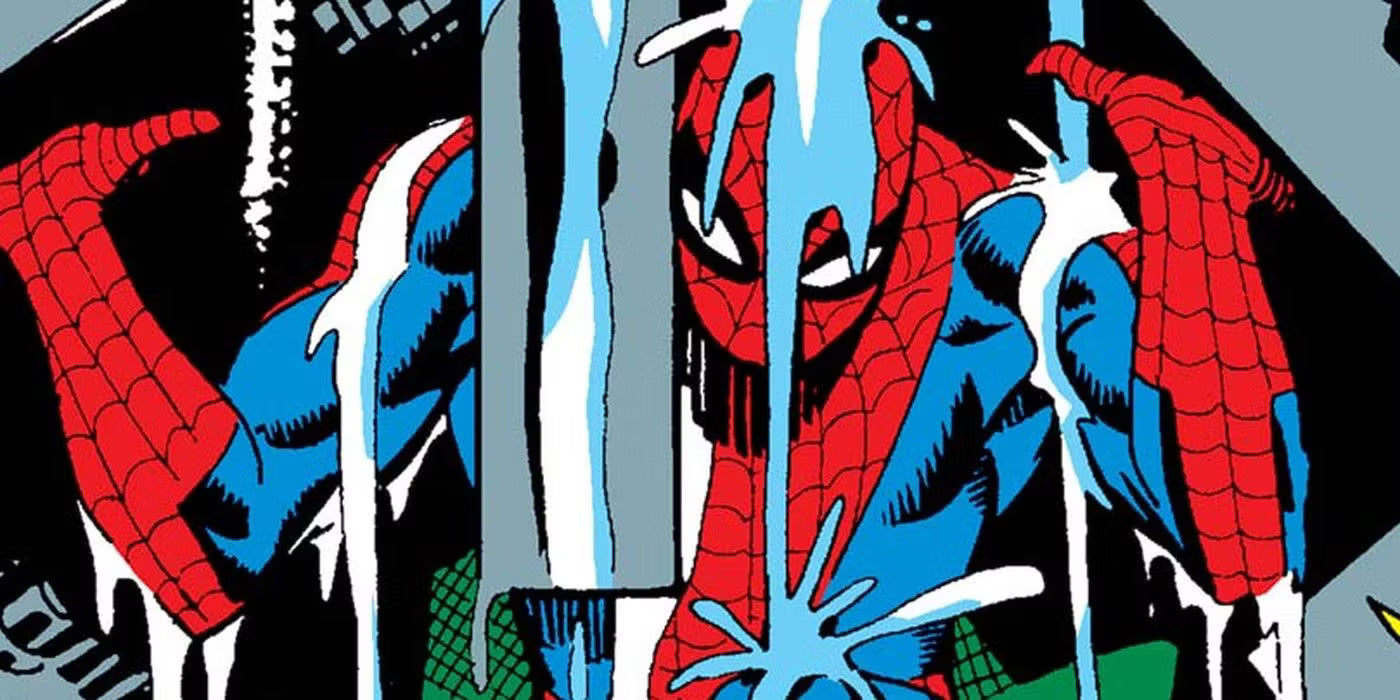
Three issues published in 1965 in which Aunt May's life hangs on a rare serum held by the Master Planner. To get hold of it, Peter takes on a submerged lair, then frees himself alone from a mass of steel across five unbroken pages drawn by Ditko. The full sequence and its significance are set out below.
First published in 1965 in “The Amazing Spider-Man” #31 to #33, the If This Be My Destiny…! arc remains one of the most emblematic stories in the whole history of the web-slinger. Written by Stan Lee and superbly illustrated by Steve Ditko, this dramatic triptych marks a turning point in Peter Parker's development. This is the moment when Spider-Man stops being just a masked teenager and becomes a true hero, morally and physically.
This story influenced a whole generation of readers and even inspired several scenes on the big screen, most notably in Spider-Man: Homecoming. The famous scene in which Peter lifts a pile of rubble comes straight from this legendary arc.

But beyond the action and Ditko's powerful artwork, this story explores strong themes: the burden of responsibility, resilience in the face of adversity and family love. It is also the start of a new era for Spider-Man, one where personal and emotional stakes take precedence over the simple fight against crime.
In the lines that follow, we look in detail at this unforgettable adventure and at its lasting impact on Spider-Man mythology. And if you want to go further into the hero's greatest moments, do take a look at our ultimate guide to Spider-Man merchandise or our page dedicated to the Spider-Verse.
The story of “If This Be My Destiny…”: tension, emotion and heroism distilled

The arc opens in “Amazing Spider-Man #31”, where Peter Parker is starting his first year at university. Far from his masked adventures, he tries to fit into academic life while juggling his family responsibilities. But a new danger is looming in the shadows: a mysterious enemy known as the Master Planner is orchestrating a wave of technology thefts across New York, threatening the fragile balance between his private life and his super-hero activities.
The stakes quickly become personal: Aunt May falls seriously ill. Her survival depends on a rare serum containing a radioactive isotope, and only the Master Planner seems to have any. Peter then has just one option: dive into the depths of a submerged lair and take on the villain's henchmen to recover that precious remedy. What looked like an ordinary mission quickly turns into an initiation trial of unmatched intensity.
An iconic scene: Spider-Man buried under the rubble
In issue #33, Spider-Man finds himself pinned beneath a huge metal structure. It is arguably one of the most iconic sequences in the whole Marvel saga. Just as all seems lost, Peter draws on his memories, his love for Aunt May and his own determination to get back on his feet.
- An inner battle: beyond physical strength, it is his willpower that wins out.
- Staging on a grand scale: Ditko stretches the scene across five uninterrupted pages, building a dramatic crescendo that was rare for the time.
- Powerful symbolism: the weight he lifts stands for his crushing responsibilities… and his legendary resilience.
- A modern inspiration: the scene was reprised in Spider-Man: Homecoming, proof of its lasting influence.
That moment, with its rare emotional power, marks a turning point. Spider-Man becomes the hero we know today, capable of lifting far more than steel girders. From then on he embodies the perseverance and nobility of a crime-fighter who never gives up, even in the face of the impossible.
If you want to know more about other unforgettable moments from the web-slinger, have a look at our article on the Miles Morales & Spider-Gwen duo or explore our collection of Spider-Man figures to relive the greatest scenes from the comics and the films.
A founding turning point in Spider-Man mythology
“If This Be My Destiny...” is not just a run of spectacular fights. This narrative arc marks a major shift in the building of the Spider-Man myth. Until then, Peter Parker had faced threats that were certainly impressive, but usually outside his intimate world. Here, everything changes. The drama becomes personal, visceral. Aunt May's illness acts as an emotional catalyst, forcing Peter to confront his doubts and his fears, but also his inner strength. Stan Lee's writing, combined with Steve Ditko's staging, gives the story a depth that was unheard of at the time. The idea that heroism lies not only in powers but in the ability to get back up, to hold firm whatever the circumstances, becomes a cornerstone of the character.
This arc is also one of the first examples of strong continuity storytelling in the Marvel universe. Where many super-hero adventures could be read in isolation, “If This Be My Destiny...” imposes a serialised thread, a narrative stake that runs across several issues. The reader is gripped, hooked on every cliffhanger, witness to a dramatic build-up that culminates in a sequence that has become the stuff of legend. It is this ability to generate emotional attachment and constant dramatic tension that helped make Spider-Man such a striking character in the comics landscape.
More broadly, this saga has inspired generations of writers and readers. Its imprint can be found in modern arcs such as Maximum Carnage, where personal pain and the fight against adversity take precedence over a simple opposition between good and evil. The principle of responsibility, so central to Spider-Man's philosophy, is tested here by suffering and loneliness. Far from being just a super-hero, Peter Parker becomes a symbol of resilience in the face of the world's cruelty, a mirror for everyone who has to fight for the people they love.
The influence of this arc is just as clear in modern adaptations. Whether in Spider-Man: No Way Home with the loss of Aunt May, or in the moral dilemmas Miles Morales faces in the Spider-Verse, the traces of that founding philosophy are everywhere. Peter Parker is not just a hero who saves the city; he is a young man caught between crushing responsibilities and a complicated personal life. “If This Be My Destiny...” is the first stone of that vision. In that sense it is not simply a successful story arc: it is a manifesto, a statement of intent about what Spider-Man should be in the hearts of readers.
A legacy set in stone in Spider-Man comics

“If This Be My Destiny...” remains to this day one of the most powerful arcs ever written for Spider-Man. It shaped the very essence of the character: his resilience, his humanity, his suffering... and his greatness. Even now, it continues to inspire modern writers and die-hard fans of the web-slinger alike.
🛍️ For die-hard fans
Decorate your room with our Spider-Man posters inspired by the comics, or dive into the whole universe through our page on Spider-Man merchandise.
📌 Key takeaways
- “If This Be My Destiny...” is one of the most significant arcs in the history of Spider-Man.
- It marks the birth of the hero's emotional resilience, far beyond his powers.
- The sequence where Peter lifts the rubble has become iconic and is often referenced in other media.
- You can explore more key storylines through our Spider-Man story arcs page.

