
14-Day Money-Back Guarantee
0
The short answer
The alien entity multiplies Peter Parker's power before turning him aggressive and dependent, until he tears it away using the sonic vibrations of a church's bells. The creature then bonds with Eddie Brock, and later spawns Carnage through Cletus Kasady. We walk through every stage below.
Of all the stories that have shaped Spider-Man's mythology, few are as deep, as dark or as durable as that of the symbiote. What begins in 1984 in the pages of Secret Wars as a simple costume change becomes, over forty years, one of the most complex relationships in mainstream Marvel. The symbiote is not a costume. Nor is it a villain. It is a partner whose presence transforms everything it touches — and which, when it meets Peter Parker, permanently changes the grammar of the hero.
This article retraces the full arc of that relationship: the encounter, the addiction, the rejection, the birth of Venom, the expansion into Carnage and beyond. To place this saga within the wider mythology of the web-slinger, a detour through the complete history of the symbiotes, from Venom to Carnage sets out the theoretical frame — every detail counts, because the lineage of the symbiotes is one of the only editorial dynasties as sprawling as that of the Avengers.
When Peter Parker meets the black suit
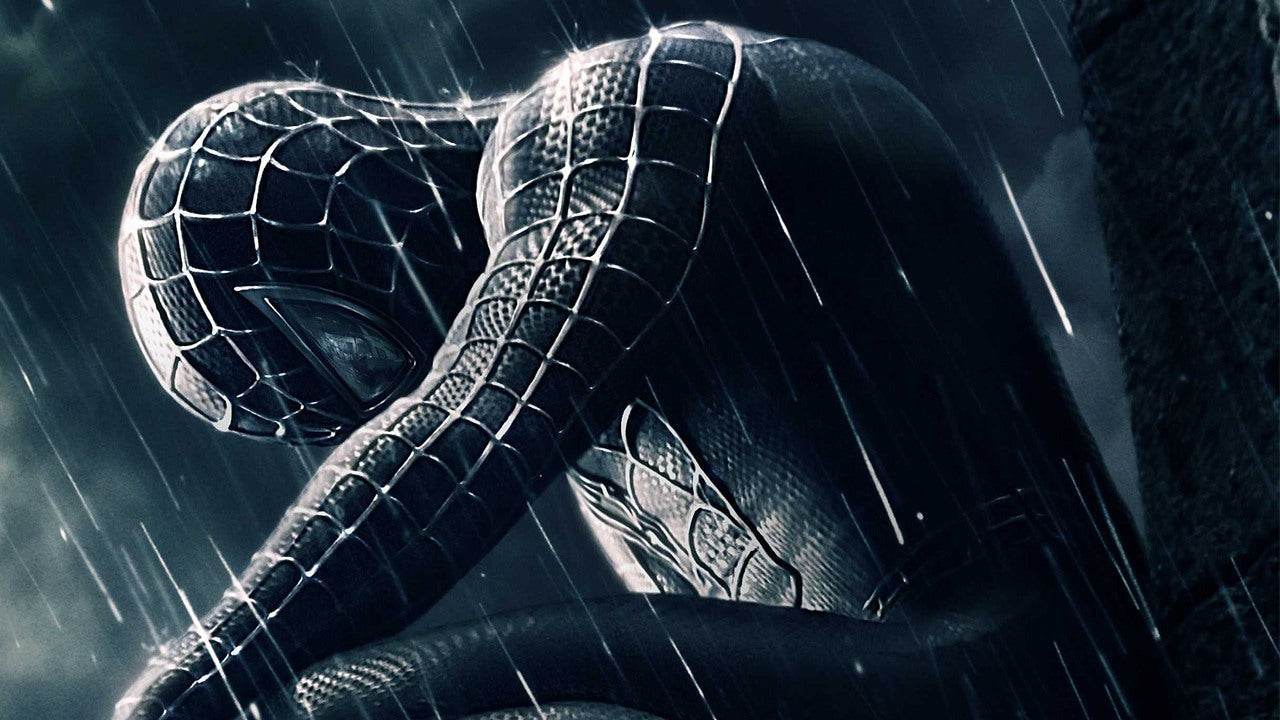
It all begins during the events of Secret Wars, the cult 1980s crossover that carries Marvel's heroes and villains off to a distant planet. Peter Parker's red and blue costume is damaged in a fight. To re-equip himself, he approaches an unknown machine meant to manufacture a new suit. Instead of fabric, a black, fluid entity pours out — an alien creature, intelligent, alive. Peter has no idea what he has just pulled on.
At first, the black suit seems perfect. It answers Peter's thoughts, removes the need for mechanical web-shooters by generating its own organic material, amplifies the hero's strength, and heals his wounds while he sleeps. For the first time in his life, the web-slinger is more efficient, faster, more powerful. The dream of a hero worn down by his own limits. That immediate upgrade explains why Peter resists giving up the symbiote for so long, even once the first warning signs appear.
The warning signs, precisely. Peter becomes more aggressive, more impulsive, sometimes cruel. He sleeps less. When he does sleep, he goes out on patrol with no memory of the night. His relationship with Mary Jane grows tense. His enemies watch him change. This dynamic of addiction is rare in superhero mythology — most arcs show heroes facing enemies from outside, few show enemies that live inside them. To dig into the psychological dimension, a detour through Back in Black, where Peter drops his morals after Aunt May's death is essential: the black suit already announces that inner drift, without needing a symbiote to set it off.
The other dimension that makes this first phase so striking is the inversion of a taboo. Before Peter, no superhero had ever worn a black costume for any length of time. Black was the colour of villains, not protectors. By letting the wall-crawler wear it, Marvel opens an aesthetic path that dozens of other heroes would follow in the years that came after. The black suit becomes a stance, not simply a colour.
Rejecting the symbiote and the birth of Venom
When Peter finally understands the nature of the symbiote — a living organism trying to bond with him for good — he decides to get rid of it. The scene has become iconic. Taking refuge in a church bell tower, Peter exploits the symbiote's sensitivity to high sound frequencies. The bells ring out. The symbiote screams, tears free, slides to the floor, wounded.
But the story does not stop there. Inside the church, a few metres from Peter, stands another man — Eddie Brock. A journalist discredited by the web-slinger's investigations, Eddie has come to confess to God the hatred he holds for Peter Parker. His rage is so intense that it draws in the wounded symbiote. The bonding is immediate. From that marriage between a vengeful creature and a man eaten away by hatred, Venom is born, one of the most emblematic enemies Spider-Man has ever faced. To dig into Eddie's psychology, Eddie Brock and Peter Parker, two faces of the same tragedy offers a deep analysis.

The suit just before the fall
Spider-Man Costume - The Blue Symbiote
The black-and-blue symbiote suit is the most iconic version of the darker web-slinger. This costume captures exactly the narrative moment when Peter Parker, still in control, does not yet know that the suit is going to devour his soul. For cosplay, conventions or a statement look.
149,90 €
See the symbiote costume →Venom is no ordinary villain. He knows Peter's secret identity. He shares part of his memories. He has a sharp sense of theatre. And above all, he has the same powers as the web-slinger — multiplied by rage. That technical kinship makes Venom a unique enemy in Peter's rogues' gallery. To compare his role with the other dark figures of the mythology, a detour through the Green Goblin, Peter Parker's worst nightmare is illuminating: Spider-Man's two great enemies stand for two distinct fears — madness for the Goblin, the mirror image for Venom.
Carnage: the symbiote turned into pure violence
If Venom is the first offspring of the original symbiote, Carnage is its most terrifying culmination. Born of a forced separation — Eddie Brock briefly shares the symbiote with his cellmate Cletus Kasady — Carnage is what happens when a symbiote meets a mind that is already broken. Where Eddie remains capable of restraint, Cletus is a pure serial killer. The symbiote, bonded to him, loses all sense of limits. To go further on this subject, see also Spider-Man Symbiote, Venom & Anti-Venom Costumes: The Dark Side Cosplay Guide. To go further on this subject, see also Mania: Andi Benton's symbiote, the heir to Agent Venom.
Carnage is therefore a creature with no moral brake. Where Venom sometimes follows a personal code, Carnage kills for sport, by instinct, out of habit. That absence of restraint makes him one of the most dangerous villains ever set against the web-slinger. To dig into his story, the dark history of Cletus Kasady, alias Carnage, the most unstable enemy of them all is indispensable — it is the arc that lays the foundations of the modern character. The same thread runs through Go Down Swinging: the Red Goblin, the arc where Norman Osborn merges with Carnage.
The symbolism of Carnage counts as much as his violence. If Venom embodies channelled rage, Carnage embodies rage with no purpose. That theoretical nuance left a deep mark on Marvel mythology, and went on to inspire an entire line of sub-symbiotes: Anti-Venom, Toxin, Hybrid, Mania, Scorn. To grasp that genealogy, a detour through the alternative versions of Venom across the multiverse gives you the full panorama.
The symbiote as a metaphor for control and addiction
Beyond the action, the symbiote arc is one of the most powerful allegories in Marvel mythology. The symbiote is not only a living costume — it is a metaphor. A metaphor for addiction, for burnout, for the loss of control, for the toxic companion. That dimension explains why the arc resonates so strongly with adult readers, where other Spider-Man stories stay anchored in pure adventure.
When Peter Parker wears the symbiote, he lives through what many adults live through: the seduction of a performance boost, then the silent addiction, then the hidden cost. That narrative progression is also the one at work in the hero's more recent arcs, where the cost of heroism becomes a central question. To understand how that tension runs through the whole mythology of the web-slinger, the key moments when Peter nearly gave up his role as a hero is illuminating — the symbiote arc is only one case among many.

Capturing the bonding as a collectible
Spider-Man and Symbiote Collectible Figure
This collectible figure captures the exact moment when Peter Parker and the symbiote become one. An iconic piece for fans who want to give physical form to the most striking turning point in the web-slinger's mythology.
99,90 €119,90 €
See the collectible figure →The strength of this metaphor lies in how many readings it allows. The symbiote can be read as a literal addiction, as a toxic relationship, as professional burnout, as a masked depression. Every generation of readers projects its own demons onto it. That is precisely what gives the arc its longevity — it does not date, because it speaks to questions that never date.
The other hosts of the symbiote in the wider mythology
Over the decades, the original symbiote has had several notable hosts beyond Peter and Eddie. Mac Gargan, the Scorpion, briefly becomes Venom in the 2000s. Flash Thompson, Peter's old school friend, wears the symbiote in the Agent Venom series — where he uses it for military missions under control. To dig into how the symbiote evolves under Gargan, the Scorpion, a forgotten but formidable enemy sets the scene.
Each host changes the narrative colour of the symbiote. When Mac wears it, it turns more brutal and more unstable. When Flash wears it, it turns more disciplined, more military, almost heroic. That malleability reflects a fascinating trait of the symbiote: it adapts to its host, and ends up becoming the psychological mirror of whoever it inhabits. The symbiote in itself is neither good nor evil — it amplifies what is already there.
That logic of amplification has inspired entire arcs of recent Marvel mythology. Symbiote Avengers, X-Men temporarily infected, alternative futures where the whole of humanity has become a symbiote host: the original creature from the church bell tower has ended up colonising the entire Marvel universe. To measure that expansion, Planet of the Symbiotes, the total invasion of the alien parasites is a revelation.
The symbiote on screen: from Venom to the Marvel franchises
On screen, the symbiote's trajectory is every bit as turbulent as it is in the comics. Sam Raimi introduces the symbiote in Spider-Man 3 (2007), where Peter wears the black suit in a sequence that became memorable despite the criticism aimed at the film. The Raimi version remains influential, if only because it proves that a mainstream audience can accept a darker Peter Parker.
Sony relaunches the saga with its own Venom franchise from 2018 onwards, with no Peter Parker in the credits. Tom Hardy plays Eddie Brock in three films that turn into a considerable commercial success. The Marvel franchises still to come could finally bring Peter and Venom together on screen, as Sony has announced — but the date keeps moving. To place each film within the overall chronology, the complete list of MCU films in chronological order gives you the timeline.

The final face of the symbiote
Spider-Man Mask - Venom
When the symbiote meets Eddie Brock, the face that emerges is Venom's. This official mask reproduces the iconic silhouette — torn fangs, tongue, black markings. The essential piece for convention cosplay or a grown-up Halloween statement.
39,90 €
See the Venom mask →Video games have also played a key part in modernising the myth. Marvel's Spider-Man 2 on PS5, released in 2023, puts the symbiote arc at the heart of its main storyline. The game's Peter pulls on the black suit, lives the addiction, fights the loss of control, then tears the symbiote off. To measure the cultural impact of that adaptation, Marvel's Spider-Man 2 on PS5, a new era for the wall-crawler breaks down the narrative choices made by the Insomniac studio.
The symbiote in the multiverse: variants and endless expansion
With the narrative rise of the multiverse, the symbiote has exploded into alternative variants. Recent arcs introduce parallel Spider-Men and parallel Venoms, each with its own history and its own symbolism. Knull, the primordial god of the symbiotes, reveals that the creature's origin goes back long before the meeting with Peter Parker — an entire cosmic mythology opens up.
That expansion lets Marvel reinvent the symbiote without breaking canon. A Spider-Man from dimension X can have his own symbiote without contradicting the Peter Parker of the main dimension. That narrative flexibility is probably what guarantees the longevity of the concept. To grasp the sheer scale of the multiverse, a detour through the Spider-Verse explained simply is indispensable — every Spider-Man in the multiverse can have a symbiote variant.
The other interesting reading is that the symbiote has ended up becoming a universal Marvel theme, well beyond Spider-Man. A symbiote Iron Man, a symbiote Wolverine, entire symbiote teams: the creature from the church bell tower has colonised the editorial imagination. To compare its role with the other cosmic figures of the Marvel universe, Knull, god of the symbiotes and his threat to the Marvel universe offers a fascinating theological frame.
Why this story is still central in 2026
Forty years after Secret Wars, the relationship between the web-slinger and the symbiote remains one of the most debated arcs in Marvel mythology. There are three reasons for that longevity.
First reason: symbolic richness. The arc works on several levels — adventure, psychology, sociology, theology. Every re-read reveals a new layer. That density makes the symbiote arc a text you can read at 12 and again at 40, understanding something different each time.
Second reason: the quality of the design. The web-slinger's black suit, Venom's face, Carnage's markings: all of these visual elements are among the most iconic in pop culture. They transcend their original medium. You can be a fan of the black suit without ever having read a comic. That purely visual reach guarantees a staying power independent of the publications.
Third reason: continued narrative relevance. Marvel never stops rewriting the arc. Each decade brings its new variation — Carnage in the 90s, Mac-Venom in the 2000s, Knull in the 2020s. That constant updating stops the arc from turning into a relic. To measure the place of the symbiote in the wider story of the web-slinger, The Other, when Spider-Man dies and is reborn is illuminating — the symbiote arc still inspires stories that borrow its grammar.
The symbiote, a metaphor that still holds
To conclude, the relationship between Spider-Man and the symbiote is arguably the finest narrative achievement of the whole Spider-Man ecosystem. It asks a simple question — what happens when you accept an upgrade you do not understand? — and gives it forty years of variations without ever exhausting it. That is what great myths do: they ask questions, they never hand out definitive answers.
For fans who want to take the exploration further, three final leads. First, Spider-Man No More, when Peter hangs up the costume — to understand the hero's other tipping points. Next, Superior Spider-Man, when Doctor Octopus becomes Peter Parker — another arc of identity fusion, with no symbiote but the same logic. Finally, Spider-Man Identity Crisis, when Peter becomes four heroes at once — where Peter explores other facets of himself with no symbiote to amplify the process.
One thing is certain: as long as Marvel publishes comics, the symbiote will remain a character in its own right. Not a costume, not a villain, not an accessory. A partner — demanding, dangerous, fascinating — whose relationship with Spider-Man goes on writing one of the finest dark stories ever to come out of a Marvel pencil.

