

14-Day Money-Back Guarantee
0
The short answer
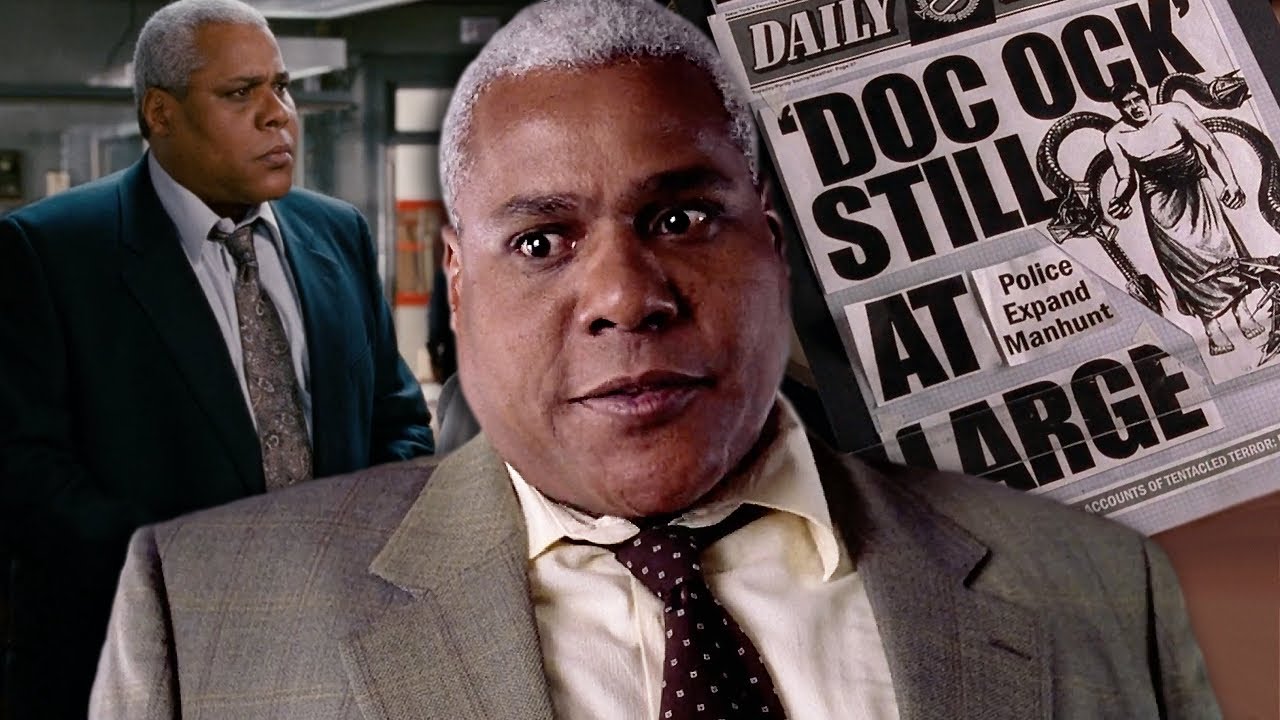
As assistant editor-in-chief of the Daily Bugle, Robbie Robertson acts as a counterweight to J. Jonah Jameson: he defends the web-slinger when his boss demonises him. Created in 1967, the character also carries a heavy secret tied to Tombstone, one he eventually confronts by testifying. A detailed look at his journey below.
Among the many supporting characters in the world of Spider-Man, few are as respected and well balanced as Joseph 'Robbie' Robertson. At a time when heroes and villains battle it out in the streets of New York, Robbie stands as a pillar of stability, reason and humanity within the media turmoil of the Daily Bugle. A journalist of real integrity, he is far more than a mere editor: he is one of the few who sees beyond appearances - including behind Spider-Man's mask.
Beginnings shaped by integrity and justice
First appearing in The Amazing Spider-Man #51 (1967), Robbie Robertson is one of the first major African American characters in the Marvel universe to hold a position of authority within a large company. As assistant editor-in-chief of the Daily Bugle, he stands apart from his superior J. Jonah Jameson with a measured, honest and respectful approach to journalism.
While Jameson wages a relentless crusade against the web-slinger, Robbie is the voice of reason. He understands that Spider-Man is not a threat but a misunderstood vigilante. That duality between the two journalists deepens the moral richness of the Bugle, making Robbie the **human mirror of the truth**, facing a Jameson blinded by his own hatred.
A genuine friendship with Peter Parker
Robbie quickly recognised in Peter Parker far more than a simple photographer. Behind the young man's shyness, he senses a sense of duty and a moral uprightness he deeply respects. In many stories, he is the one who backs Peter up when Jameson belittles him or when the press twists his photographs.

This unspoken fatherly bond makes Robbie a figure of balance in Peter's life, much as Uncle Ben once was. His advice is never preachy, but full of wisdom, illustrating the famous lesson: 'With great power comes great responsibility.'
In recent adaptations such as Sam Raimi's Spider-Man trilogy or the game Spider-Man PS4, Robbie continues to embody that moral steadiness, a beacon in the ocean of ambiguity surrounding the web-slinger.
For fans of this journalistic, New York world, have a look at our collection of vintage Spider-Man posters or our Daily Bugle mugs, perfect for anyone who loves the paper's iconic atmosphere.
A painful past: Robbie facing Tombstone, the spectre of silence
Behind Robbie Robertson's calm, professional facade lies a darker side, marked by fear and guilt. Long before becoming assistant editor-in-chief of the Daily Bugle, Robbie was already an investigative journalist. In his younger years, he had uncovered the crimes of one Lonnie Lincoln - an albino thug known as Tombstone.


Frightened of reprisals, Robbie chose silence. That silence, however human, would haunt him for years. Tombstone meanwhile became a feared hitman, working with various mobsters and even with criminal organisations linked to Kingpin. When their paths crossed again, Robbie was forced to confront his own past - that of a man who had not had the courage to act.
The confession and the redemption
In the story arc 'The Spectacular Spider-Man' #139-#150, the tension between Robbie and Tombstone reaches its peak. When the journalist finally testifies against the criminal, he puts his life on the line. Kidnapped, beaten and imprisoned alongside him, he survives thanks to his determination and the web-slinger's intervention. This passage marks a genuine moral rebirth: Robbie finally chooses the truth, whatever the cost.
This story is one of the most moving in the Spider-Man universe, because it reminds us that courage lies not only in physical combat, but in the ability to face up to one's own mistakes. Robbie Robertson thus becomes one of the few 'ordinary' characters to be given a complete redemption arc - a silent hero of sorts.
A parallel with Spider-Man's creed
Robbie's journey echoes the web-slinger's philosophy: 'With great power comes great responsibility.' He has no superpowers, but he has the pen - and the truth. In a world where the media shape opinion, Robbie embodies the journalistic responsibility that Peter Parker defends through his photographs and his actions.
Their unspoken alliance illustrates Spider-Man's duality: the fight against injustice both visible (criminals) and invisible (moral corruption). That is also why fans see Robbie as a human pillar of the web-slinger's world.
If you want to carry on this dark, urban mood, explore our Spider-Man masks or our Spider-Man figurines inspired by the 1980s and 1990s, the era when this tragic rivalry shaped the hero's mythology.

Robbie Robertson and the Daily Bugle: the man of truth in a world of spin
The Daily Bugle has always been at the heart of Spider-Man's world. It is far more than a newspaper: it is the mirror of New York society, a place where the truth is often blurred by prejudice and a thirst for sensationalism. And in that editorial chaos, Robbie Robertson embodies moral uprightness and nuance. Where J. Jonah Jameson sees a threat in Spider-Man, Robbie sees a symbol of hope, a flawed young man guided by justice.
His role goes well beyond that of an assistant editor-in-chief. He is the conscience of the paper, the fragile balance between journalistic truth and the Bugle's economic or political imperatives. In a world ruled by disinformation, Robbie represents the **moral resistance** at the heart of the media machine - a role that resonates more than ever in modern adaptations.
Jameson versus Robbie: the Bugle's ethical duel
For decades, the relationship between Robertson and Jameson has remained a central narrative pillar. Their opposition goes beyond the professional: it stands for two visions of journalism. Jameson wants a hero to bring down, a designated culprit; Robbie, for his part, is after the truth, even when it is inconvenient. That tension gives the Daily Bugle a rare depth - an ideological battlefield where fear and reason collide.
Some arcs even show Robbie ready to stand up to Jameson head-on, risking his career to defend Spider-Man's reputation. That loyalty to the web-slinger echoes the loyalty of other human allies such as Gwen Stacy or Mary Jane Watson: all of them reminders that Peter Parker is never alone in his fight.
A father figure in a hostile environment
Robbie also acts as a mentor to the Bugle's young journalists, embodying an unshakeable professional ethic. He teaches patience, fact-checking and responsibility for every word published. His office becomes a refuge for honest minds in an industry eaten away by the race for clicks - a direct echo of today's digital culture.
His influence reaches beyond the Bugle's offices: it is felt right through to modern adaptations such as Spider-Man: No Way Home or the game Spider-Man PS4, where the press plays a central part in how the hero is perceived.
And for fans who want to carry on that retro Bugle atmosphere, explore our selection of Spider-Man Pyjamas and Spider-Man T-shirts inspired by the hero's journalistic, urban world.
Robbie Robertson's legacy: a moral compass at the heart of the myth
In a world dominated by superpowers, Robbie Robertson is the hero without a costume. He slings no webs and climbs no walls, but every day he fights very real enemies: fear, corruption and the manipulation of information. His courage lies in speech, in uprightness, in that ability to state the truth even when it is uncomfortable.
That role as moral conscience makes him an invisible yet essential pillar of Spider-Man mythology. Like May Parker or Ben Parker, he reminds Peter of what he has to protect: not only lives, but values. In every line of dialogue, in every decision at the Bugle, Robbie carries the web-slinger's spirit - that of a man who chooses good despite the complexity of the world.
Robbie in modern adaptations
In recent films and video games alike, Robbie's presence is subtle but essential. In Sam Raimi's adaptations, he is one of the few to defend Peter Parker against Jameson's fury. In the game Spider-Man PS4, he even becomes editor-in-chief of the Daily Bugle Online, adapting his journalistic ethic to the digital age.

His evolution illustrates the shift from print journalism to a modern press, while keeping the essence of truth and justice. It is that continuity that makes him one of the most respected human characters in the Spider-Man universe.
A supporting character who became essential
Robbie Robertson is not merely a supporting character: he is the moral backbone of Peter Parker's world. His choices, his silences and his stands have deeply shaped Spider-Man storytelling for more than half a century. He represents the human dimension the hero tries to preserve against the madness of supervillains such as the Green Goblin or Doctor Octopus.
In a sense, Robbie is the privileged witness to Peter's drama: he watches the city change, heroes fall, monsters return... and he keeps believing in the light. It is that faith in people, rather than in power, that makes him a quiet legend.
Conclusion: truth, the last power left to man
Robbie Robertson embodies a line Spider-Man himself might say: 'Even without powers, anyone can choose to be a hero.' His legacy goes beyond journalism - it is a universal message about responsibility, honesty and courage. In a world where truth is becoming rare, he remains one of the last to hold on to it firmly.

