
14-Day Money-Back Guarantee
0
The short answer
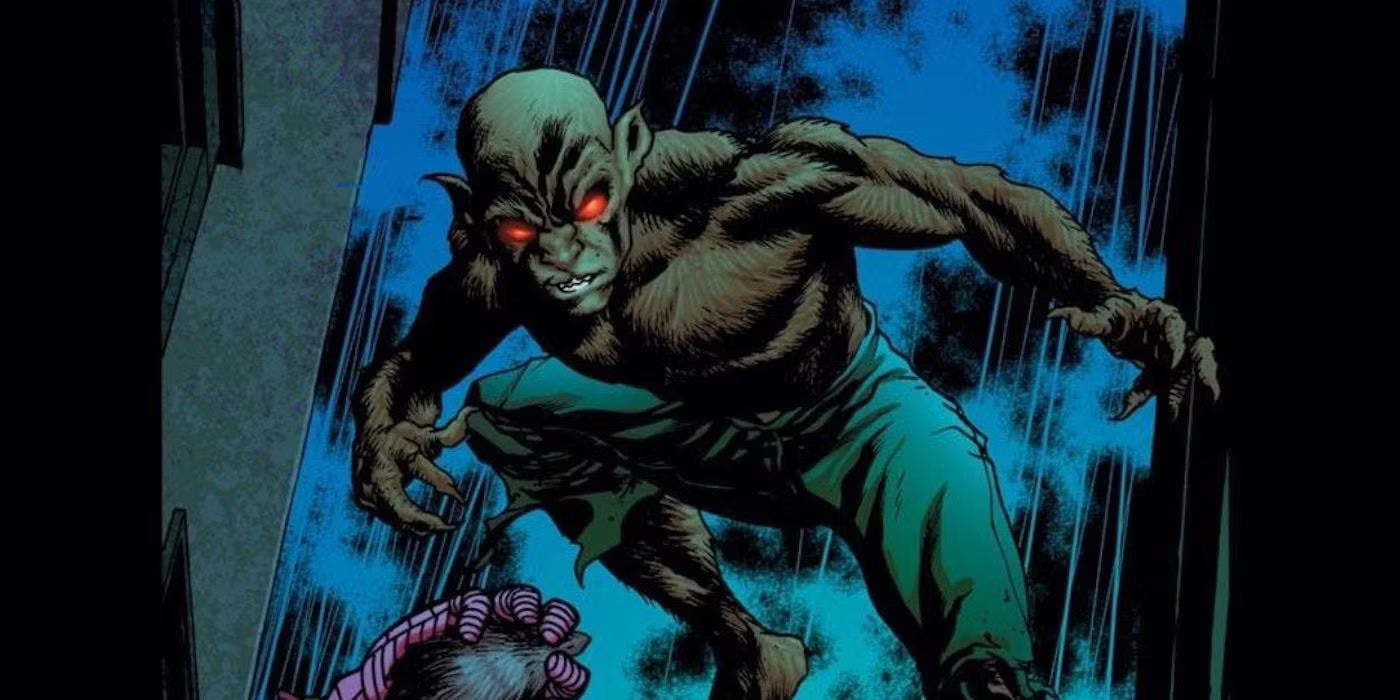
Behind the gnawing creature hides Edward Whelan, a researcher disfigured by experiments that reduced his mind to survival reflexes. Holed up in the New York sewers where he rules over an army of rats, he serves as Kraven's psychological weapon to break the web-slinger. His full story below.
Contents
Among the gallery of enemies facing Spider-Man, some embody scientific madness, others a thirst for power. But Vermin, alias Edward Whelan, embodies a far more visceral horror: the animal, monstrous part that sleeps inside every one of us. This tragic half-man, half-rat character is a nightmarish reflection of the themes closest to the web-slinger: mutation, duality and the fight against your own darkness.
Created by J.M. DeMatteis and Mike Zeck, Vermin first appeared in the 1980s, right in the middle of the dark age of comics. Through him, the writers set out to explore the limits of humanity and to confront Spider-Man with a threat more disturbing than spectacular. Unlike charismatic enemies such as the Green Goblin or Mysterio, Vermin stands out for his repulsive appearance and his tragic story.
Edward Whelan: a victim before he was a monster
Before he became Vermin, Edward Whelan was a brilliant scientist. But he was turned into a guinea pig during cruel experiments carried out by Doctor Octopus and Baron Zemo. That tampering transformed him into a hybrid creature ruled by his animal instincts. More than a simple villain, he is a living tragedy: a man destroyed by the ambition and the cruelty of others.
His fate recalls other failed experiments in the Marvel universe, such as the ones that led to the creation of the Rhino or the Lizard. But unlike them, Vermin embodies the total loss of humanity, which makes him even more terrifying.
In his earliest appearances he lives in the New York sewers, where he rules over an army of rats. That sordid, suffocating setting sharpens his image as a primal predator. For Spider-Man, facing him means descending into the deepest darkness of the city… and of himself.
If you want to recreate that dark universe, explore our Spider-Man figurines, some of which capture these iconic fights against his most monstrous opponents.
A victim turned monster
A brilliant scientist, Edward Whelan was turned into a hybrid creature by the experiments of Doctor Octopus and Baron Zemo, then ruled over the rats of the sewers.
Vermin versus Spider-Man and Captain America: the defining clashes
One of the first major stories involving Vermin unfolds in the saga Captain America #272, where he takes on both Spider-Man and Captain America. That face-off became a cult favourite because it pits two symbols of American heroism against a creature that literally embodies human degeneration. Where Steve Rogers represents the enhanced man in his perfection, Edward Whelan is his exact opposite: a deformed man, prisoner of his most basic instincts.

For Spider-Man, the fight against Vermin is not just a question of strength. Although his superhuman powers let him stand up to the creature, Peter Parker is above all struck by his opponent's suffering and distress. Vermin is not after world domination or wealth: he acts out of hunger, fear and instinct. That makes him unpredictable and particularly dangerous.

In the saga Kraven's Last Hunt, Vermin takes on crucial importance. Manipulated by Kraven the Hunter, he becomes an instrument of psychological torture designed to break Spider-Man. This macabre use of the character deepens a story still regarded as one of the bleakest in the web-slinger's universe. To get to grips with this narrative masterpiece, I also recommend our article: Kraven's Last Hunt: why this arc is a Spider-Man masterpiece.
These clashes show just how far Vermin is from being a simple 'monster to beat'. He acts as a mirror for the heroes themselves, reminding them that the line between humanity and monstrosity can be a thin one. Where Spider-Man fights to reconcile his responsibilities with his personal life, Vermin represents the complete surrender of his humanity.
To carry on with these landmark stories, have a look at our Spider-Man masks collection, ideal for reliving the adaptations where the themes of shadow and light intertwine.
| Story | Vermin's role |
|---|---|
| Captain America #272 | Takes on both Spider-Man and Captain America |
| Kraven's Last Hunt | Manipulated by Kraven to break Spider-Man |
The psychology of Vermin: a metaphor for fear and marginalisation
What makes Vermin particularly interesting is not only his monstrous appearance or his physical strength, but the deeply tragic and psychological side of his character. Edward Whelan, before he became Vermin, was a brilliant scientist. His transformation into a half-man, half-rat creature did not only disfigure his body, it shattered his mind.
Vermin lives in a constant state of fear and paranoia. He hides in the New York sewers, terrified of daylight and convinced that he no longer belongs to the world of men. That rejection and isolation are themes that come up often in Spider-Man stories, notably through figures such as the Rhino or the Lizard, who also embody this blurred line between humanity and monstrosity.

Vermin's case is all the more poignant because, unlike more calculating enemies such as the Green Goblin, he has no real machiavellian plan. Survival is his only driver. That animal nature makes him both terrifying and deeply pitiable, and it is this contrast that grips readers.
In the Marvel universe, Vermin is often used to explore the themes of marginalisation, fear of the other and the loss of humanity. Those themes echo Peter Parker's own experience, constantly juggling his 'normal' life with the shadow side tied to his secret identity. It is also what makes Spider-Man a universal hero: his enemies are not only physical threats, but reflections of his own inner struggles.
To dig further into these complex themes, you can read our pillar page Who is Peter Parker?, which looks in depth at the human and heroic duality of the web-slinger.
Survival as his only driver
Terrified of daylight, Vermin has no machiavellian plan: he embodies marginalisation, fear of the other and the loss of humanity.
Vermin's legacy and most notable appearances
Although Vermin is a lesser-known character than iconic figures such as Venom or Mysterio, he has left a lasting mark on the Spider-Man universe. His role in the arc Kraven's Last Hunt is probably his most memorable appearance: there he is captured, manipulated and used as a weapon by Kraven the Hunter, which underlines just how traumatic his existence is.
An interesting aside: Vermin even faced Captain America alongside Spider-Man, showing how serious a threat his physical power can be, even against Marvel's greatest heroes. But beyond his fights, he remains a tragic figure who symbolises the horror of transformation and the price of lost humanity.
In some more recent stories, writers have tried to soften his portrait by stressing his inner suffering rather than his brutality. It is a reminder of how far the character belongs to a tradition of 'tragic' Spider-Man enemies, in the mould of Doctor Octopus or Hydro-Man, who waver between monstrosity and humanity.
Vermin, in his marginality and his pain, also reminds the reader that the world of superheroes is not only about glory and victories. It is also a universe peopled with broken fates, rejected creatures and lives ruined by science or madness.
If you want to carry on this dive into the dark antagonists of Peter Parker's universe, take a look at our analysis of the Inheritors, even more mystical enemies who hunt the Spider-Totems across the multiverse. And to bring your favourite villain to life at home, explore our Spider-Man backpack collection where heroes and enemies come alive.
His most memorable appearance
In Kraven's Last Hunt, Vermin is captured, manipulated and used as a weapon by Kraven the Hunter.
Vermin, a mirror of human fears and urban horror
What makes Vermin fascinating is how close he comes to pure horror. Where opponents such as the Green Goblin embody madness and Kraven the Hunter symbolises obsession, Vermin is a pure product of visceral fear: fear of the sewers, of rats, of the animality that sleeps inside us. He is an allegory of what Peter Parker could become if he lost his humanity entirely and let himself be devoured by his darkest urges.

In pop culture, Vermin recalls certain tragic monsters, such as Gollum in The Lord of the Rings or the misshapen mutants of gothic tales. Like them, he provokes both revulsion and pity. The comics have often used him to push Spider-Man to the limit of his compassion: can you still save a being who has lost all human dignity?
This psychological dimension makes Vermin a unique opponent, one who enriches the web-slinger's rogues' gallery by breaking out of the simple 'supervillain' mould. He brings a touch of pure horror to the Marvel universe, rarely explored with such intensity. That is probably why his role in Kraven's Last Hunt is still considered one of the darkest arcs in the whole history of Spider-Man.
And while Vermin remains fairly rare in mainstream adaptations, his potential is huge. Imagine an appearance in a future film centred on the horror side of the Marvel universe, alongside characters such as Morbius or Carnage. The sewer monster could become a cult icon, at the crossroads of the superhero and the horror film.
A touch of pure horror
Like Gollum, Vermin provokes revulsion and pity: he shows what Peter Parker could become if he lost his humanity entirely.

