

14-Day Money-Back Guarantee
0
The short answer
A canon event is a fixed point in the story: a bereavement, a betrayal or a sacrifice that every version of Spider-Man ends up living through, whatever universe they come from. Miguel O’Hara sees it as an unbreakable law of the multiverse, while Miles Morales chooses to challenge it. We unpack the debate below.
With the rise of the Spider-Verse, one idea has taken on huge importance: the canon event. If you have seen Across the Spider-Verse, you have probably heard the term more than once. But what exactly is a canon event? Why does it matter so much in the multiverse? And how does it shape the life of every Spider-hero?
What is a canon event?
A canon event is a fixed, unavoidable moment that has to happen in the life of every Spider-Man across the multiverse. These events are narrative milestones meant to keep each destiny coherent. Without them, the balance between dimensions risks falling apart.
Among the best-known canon events, you will find:
- The loss of someone close, such as Uncle Ben or Captain Stacy
- A doomed romance, usually involving MJ or Gwen Stacy
- A betrayal, or an identity reveal that changes everything
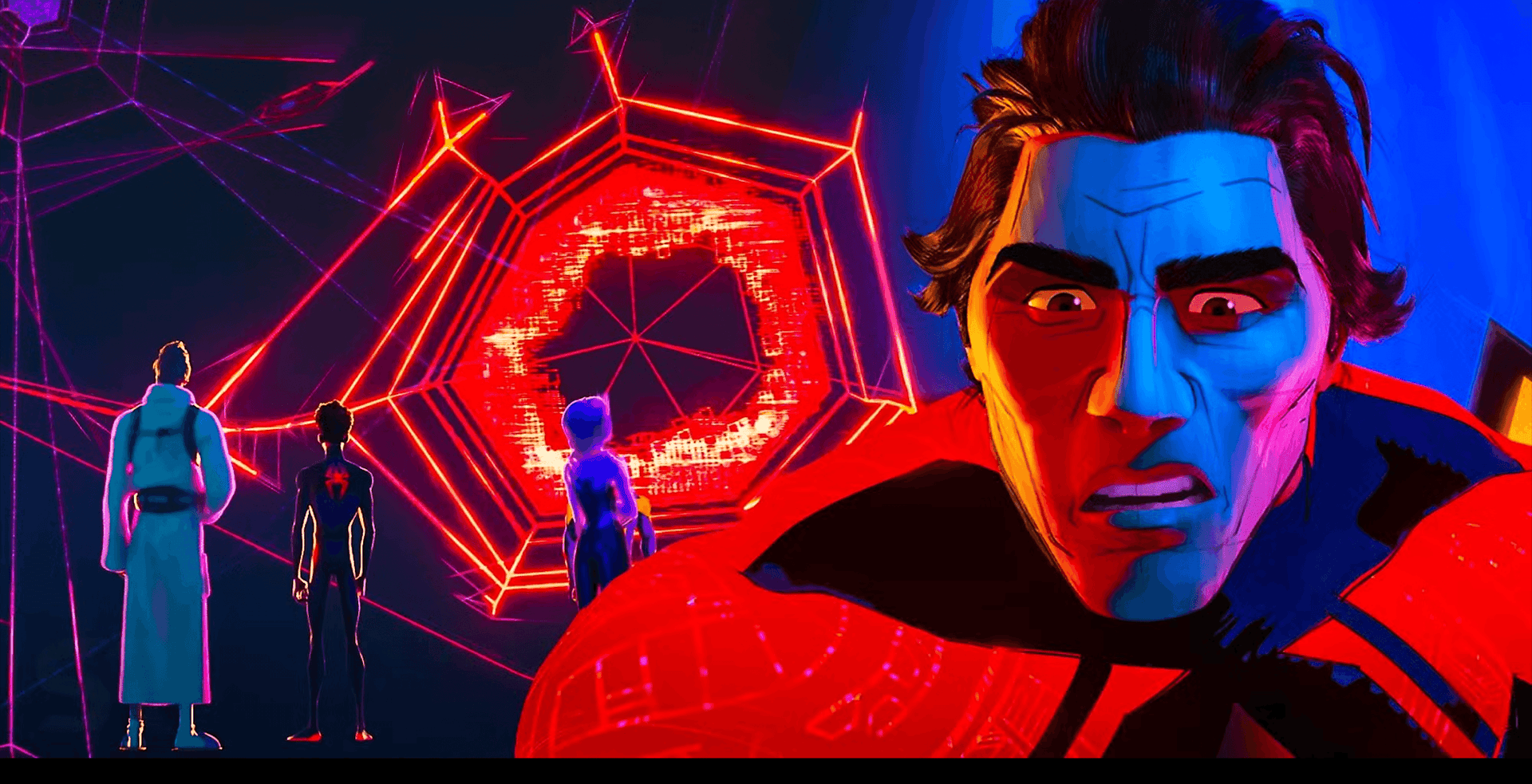
This idea sits at the very heart of the conflict in Spider-Man: Across the Spider-Verse, where Miguel O’Hara (Spider-Man 2099) tries to impose a predetermined fate on Miles Morales, despite the young hero’s determination to change the rules.
👉 To discover every version of the web-slinger touched by these events, have a look at our dedicated Spider-Verse page.
Tragic events... but necessary ones?
Canon events are often tragic: deaths, sacrifices, break-ups. And yet they are seen as essential to building the hero. Without them, the Spider-Man in question would never develop his sense of responsibility, or grasp the full weight of his powers.
In the Marvel universe, it is a way of explaining why the Spider-Men, for all their differences in origin and appearance, follow such similar paths. It is what makes them an interdimensional family, bound together by hardship.
But that fatalistic logic is called into question by Miles Morales in Across the Spider-Verse. Refusing to let his father die simply to respect the ‘imposed’ script, Miles decides to carve out his own path. This rebellion against canon events becomes a founding act: the assertion of his individuality, beyond destiny.

These themes of sacrifice and destiny are just as central in the comics. One of the most heartbreaking story arcs of all is that of Gwen Stacy — an unavoidable canon event for Peter Parker across many versions.
💡 Take a look at our Spider-Man figures collection and relive the standout scenes of the Spider-Verse at home.
Canon events: necessary suffering or narrative fatalism?
A canon event is not just a memorable moment for fans: it is often a deep wound in the hero’s life. For Peter Parker, it is the death of Uncle Ben. For Gwen Stacy, it is the tragic loss of Peter Parker. These events are so embedded in Spider-Man’s history that they have become immovable pillars of the character… until Miles Morales called that inevitability into question.
But do you really have to suffer to become a hero? Plenty of fans are asking the question. What some call ‘necessary steps’ can just as easily read as lazy, even dehumanising storytelling. By refusing to sacrifice his father in Across the Spider-Verse, Miles Morales is not rejecting responsibility — he is redefining what being a hero means. He refuses to accept grief as a compulsory condition for greatness.

That challenge sparks a genuine revolution in the Spider-Man universe. It is exactly why Spider-Man: Beyond the Spider-Verse is so eagerly awaited: Miles does not only want to save his own reality, he wants to save the very principles that govern the multiverse.
🧠 The debate also runs hot on forums, in fan analyses and in film reviews. Some see it as a critique of determinism, others as the logical extension of Miles’s growth into a Spider-Man who is free, independent and more human than ever.
A storytelling device found right across the Marvel multiverse
Beyond Spider-Man, canon events turn up throughout the Marvel multiverse. They act as a kind of narrative anchor, often a tragic one, that gives heroes their depth. You find them with Peter Parker, but also with Doctor Strange, Scarlet Witch and Loki on their own multiversal journeys.
The idea has been amplified by the explosion of multiverse stories in the MCU, notably in Doctor Strange in the Multiverse of Madness and the series Loki, where we learn that key events have to happen or the universe collapses. It is a logic of narrative stability, though it raises one central question: is destiny truly fixed?
Spider-Man, true to his identity as a tormented hero, is the one who challenges that logic most fiercely. Miles Morales is the first to dare to stand against fate, even if it means upending the whole interdimensional balance. That is what makes him such a revolutionary figure in the Spider-Verse.
🎬 To understand how these stakes play out on screen, have a look at our complete guide to the Spider-Man films, from the MCU to the animated versions.
💥 You can also explore our Spider-Man masks collection and take on the heroes behind the most striking canon events yourself, from Peter Parker to Spider-Gwen.

Conclusion: follow your canon event, or break it?
Canon events stand for the weight of destiny, but also for the chance to break free of it. They sit at the heart of the dramatic tension in the Spider-Man saga: accept the suffering in order to become a hero, or refuse the inevitable and change the rules of the game?
In that fight, Miles Morales stands for a new era. He is not simply a different Spider-Man, he is a Spider-Man who refuses to submit. That resistance to the established order is what makes him so strong a character, narratively and symbolically alike.
So what would you do in his shoes?

