
14-Day Money-Back Guarantee
0
The short answer
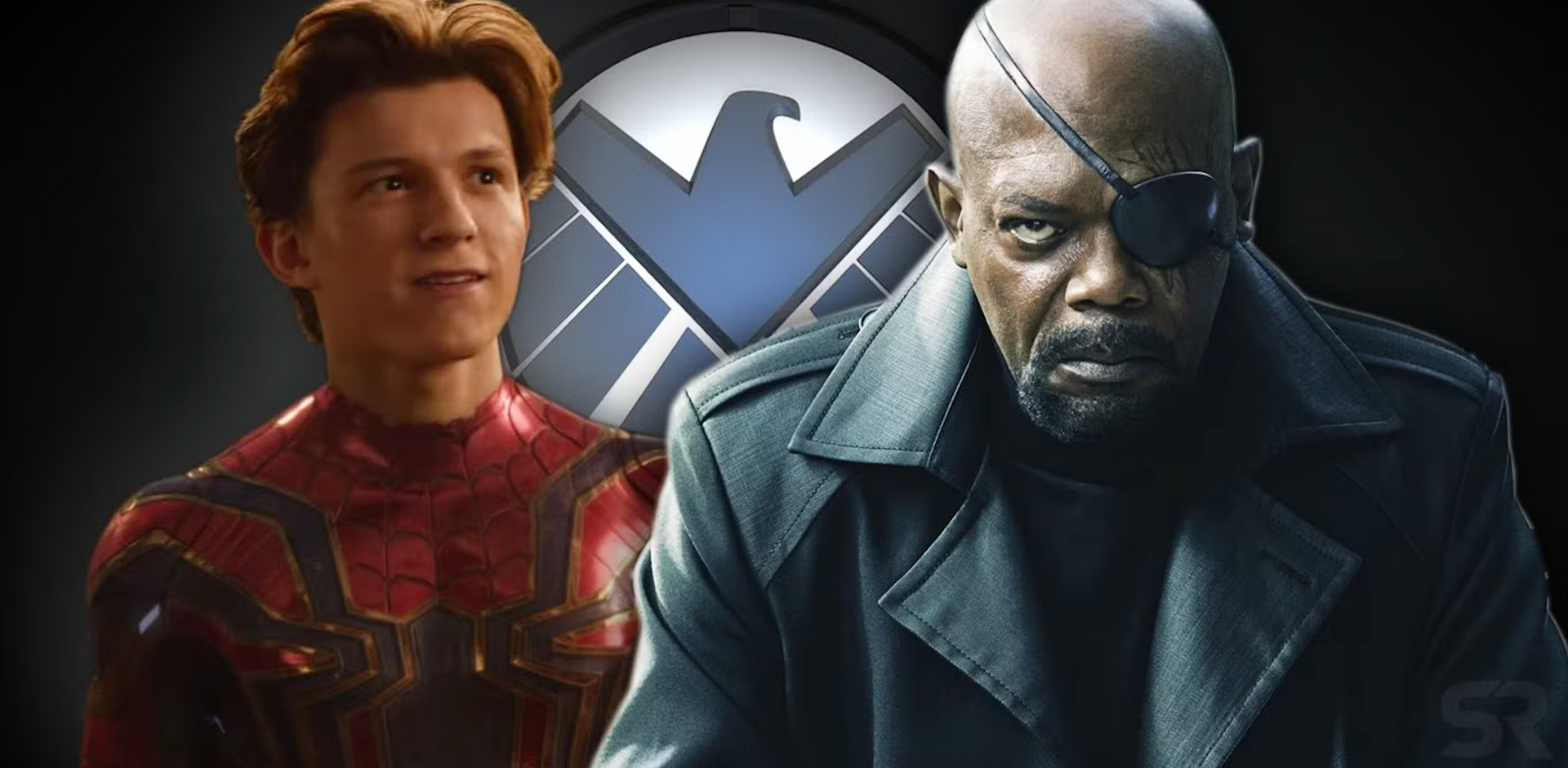
The S.H.I.E.L.D. director treats Peter Parker as a field agent rather than an heir: in place of the father-son bond Tony Stark offered, he hands over a mission and a piece of stealth kit. This article runs through his film appearances, then his comics version. The three readings of the character are broken down below.
When the Marvel universe comes up, you think first of costumed superheroes, spectacular fights and cosmic threats that endanger Earth every six weeks. But in the shadow of those clashes, one man moves without a mask, without powers and without the slightest need for public recognition: Nick Fury. A former S.H.I.E.L.D. agent, a military strategist with a sharp eye and few words, he is the discreet stage manager behind almost every major modern battle. And when he crosses paths with Peter Parker, he isn't meeting an ordinary teenager in tights: he is meeting a chess piece he has already placed on the board, without asking its opinion.
Understanding Nick Fury means understanding how Spider-Man became an Avenger without ever sitting the entrance exam. It also means understanding why, after Tony Stark's death, the web-slinger no longer had the luxury of being mentored as before. This article traces Nick Fury's exact role alongside Peter Parker, from the MCU through to the densest comics, untangling the three possible readings of the character: patient mentor, cynical strategist, or calculating manipulator. To place that journey within the wider chronology, the best starting point is the full run of Spider-Man films ranked by order and universe, which set out the framework Fury steps into.
Back in the game: why the web-slinger needed a mentor in the shadows
The first time Nick Fury really steps into the web-slinger's life, it isn't a formality. It happens in Spider-Man: Far From Home, right after the Blip and Tony Stark's death. Peter Parker is grieving his mentor, hesitating to go back on duty, and trying to forget the suit for the length of a school trip around Europe. Fury walks into a Venice hotel room the way you walk into an office you never left, and puts the hero in a position he will never get out of: that of a soldier you call when you have run out of options.
That dynamic says a great deal about Fury's philosophy. To understand why Tony Stark had built an almost therapeutic father-son relationship around Peter, a detour through the Peter–Tony relationship, between fatherhood and toxic collaboration is essential. Fury offers no fatherhood. He offers a protocol. When the fragile hero stands in front of him, he gets no hug and no reassuring speech: he gets a file, a threat and a black suit. The shift is brutal, and that is precisely what the S.H.I.E.L.D. strategist wants: to forge an operational hero, not a son.
To gauge the scale of the identity shock Peter goes through at that moment, you have to revisit the web-slinger's impossible choice in No Way Home, where the weight of the decisions taken under Fury's eye comes fully into the open. What the hero decides then is no longer the decision of a teenager: it is the decision of a field agent. And behind every decision lies the strategic grammar he was taught in silence, somewhere between Venice and Berlin.
Nick Fury's key appearances alongside Peter Parker in the MCU
Far From Home is the one everyone remembers, but Fury leaves his mark well beyond it. In Spider-Man: Homecoming, his shadow hangs over everything through S.H.I.E.L.D. and the remains of the Tri-Carrier. And in Spider-Man: No Way Home, Fury's absence at key moments is itself a political message: he knows, but he lets it happen, because the priority of the moment lies elsewhere, in a multiversal equation bigger than Peter.
Mysterio, the weapon of doubt
One of Fury's greatest manipulations of Peter runs through Mysterio, the master of illusion. By orchestrating the European deployment, Fury gives the web-slinger only partial information. It is deliberate: he wants to test the hero's ability to function without a parental figure, without Iron Man, without a clear answer. The result? Peter hands the EDITH glasses to an enemy disguised as an ally. Fury hadn't anticipated that level of naivety. But he had planned for Peter to be tested. The lesson is a cruel one, and it lays the psychological foundations of the Phase 4 Spider-Man.
Happy Hogan, the go-between who changes boss
Along the way, the role of Happy Hogan in Peter's trajectory shifts under the Fury era. Where Happy was an emotional cocoon under Stark, he becomes a liaison officer under Fury — a courier of objectives, a witness to the hero's isolation, sometimes a suspect, sometimes a support. That mutation is telling: around Peter, nobody is neutral any more, everybody is useful. It is the Fury doctrine applied day to day.
The final vanishing act in No Way Home
The height of Fury's control over Peter is, paradoxically, his absence at the end of No Way Home. When MJ no longer remembers Peter Parker, and the hero becomes anonymous again, Fury — like everyone else — forgets him. But the strategic net he wove around the web-slinger does not disappear. S.H.I.E.L.D. always ends up finding its agents again.
The Nick Fury of the comics: from super-spy to architect of the Avengers
If the cinematic Fury became the character's emblematic face thanks to Samuel L. Jackson, the comics Fury has a far denser genealogy. The historical Nick Fury — the Howling Commandos version, then the classic S.H.I.E.L.D. director — is a Second World War fighter, an inveterate smoker and a permanent manipulator. The Fury of the Ultimate universe is the direct mould for the MCU Fury: black, bald, cynical, always several moves ahead.
In the comics, Fury turns up wherever Peter runs into a geopolitical stake. When a Marvel alliance has to be activated to handle the symbiote crisis — worth revisiting the full history of the symbiotes, from Venom to Carnage on that subject — Fury is in the room, or failing that, on the radio. When the choice is between ethics and efficiency, as in Back in Black, Fury keeps his silence — a silence that weighs heavier than an order.
There is also the Fury of Secret War, the one who recruits Peter for an off-the-books mission in Latveria without telling the Avengers. That mission marks a turning point: Peter discovers that serving Fury means accepting that his heroic acts get absorbed into a bigger, sometimes less clean machine. To measure what that tension changes for the web-slinger, a detour through the Marvel teams Peter Parker has belonged to outside the Avengers is illuminating: not one of them is free of charge, all of them served a calculation.
Strategist, mentor or manipulator? The three readings of the character
The debate among fans often comes down to a simple question: does Nick Fury really want what is best for Peter Parker? It is tempting to answer yes, because without Fury, Peter would probably have been devoured by the Green Goblin or by his own guilt long before Phase 4. But Fury does not put Peter at the centre of his dashboard out of love or loyalty — he puts him there because the Avengers equation does not work without a young hero able to embody what comes next.
The mentor
Fury as a mentor is the image many fans prefer. He guides, he steers, he offers a framework when Peter drifts. That reading is credible, especially when you read the arc Spider-Man No More, where Peter hangs up the suit. Those moments of doubt are precisely the ones where Fury's intervention makes the difference between a broken career and a hero who comes back.
The strategist
More prosaically, Fury the strategist has no time for sentiment. He has one objective — protect the planet — and Peter is an asset. That reading is reinforced by Brand New Day and the great reset, where Peter has to relearn everything. Fury does not step in to soften the blow: he steps in to make sure the new version stays operational. The end justifies the means, and the means wears a red and blue suit.
The manipulator
The darkest reading is also the one most faithful to the texts. In several arcs, Fury manipulates Peter without his consent — including by sending disguised Skrulls his way, or letting him believe in false threats. That Fury is a cousin of the Mephisto who hangs over Peter's destiny: not literally diabolical, but structurally willing to sacrifice the hero's soul for a result. Peter's clear-sightedness about that dynamic grows over the years — he eventually learns to recognise the moment he is being handled.
The Fury legacy: what he passes on (or imposes) to Peter Parker
What is left of Nick Fury's influence on the web-slinger by the end of the journey? A great deal, but rarely what you would expect. Fury passes on no morality to him, still less a faith. He passes on a grammar of decision-making: choose fast, choose without support, choose even when the right choice does not exist. That grammar changes everything for Peter, who goes from a hero driven by guilt (Uncle Ben's death, the ever-present family debt) to a hero driven by operational clear-sightedness.
That transformation is measured over time. Peter's struggle to reconcile private life and heroism does not disappear with Fury — it gets worse, because S.H.I.E.L.D. has never respected the boundaries of private life. But Peter learns to function under that pressure, and that is probably the director's most lasting poisoned gift. To understand how this conditioning echoes through the true face of Peter Parker, you have to accept that implicit debt: without Fury, the modern web-slinger would not exist in the form we know.
The effect is not only individual. No Way Home, which changes everything for the web-slinger's universe, is largely the indirect product of the Fury doctrine — a universe where the stakes outgrow the individual, where collective security takes priority over personal comfort, and where every hero is, whether they like it or not, an adjustment variable. The complete list of MCU films in chronological order shows just how dominant that doctrine has become: you barely come across a hero who hasn't been recruited, manipulated or assessed by Fury's services at some point.
One question remains, and it is almost touching: can Peter Parker ever free himself from that tutelage? The answer is nuanced. As long as the threats keep their global dimension, no. But when Peter regains the possibility of an ordinary life, as he does in certain comics arcs, he almost always chooses distance. Which says a lot: Fury will never have been a father, barely a mentor, sometimes a strategist — and always a weight you learn to do without.
The web-slinger of the Fury era and the figures around him
To finish mapping Peter Parker's ecosystem in Nick Fury's shadow, two detours are needed. First, understanding how the complete universe of Spider-Man's characters takes in that gallery of relay figures — Happy Hogan, Maria Hill, Quentin Beck, Pepper Potts. Then, measuring the place the enemies hold in that equation — because Fury does not neutralise them, he uses them. A detour through the complete guide to the web-slinger's emblematic villains shows just how far the Fury doctrine rests on the idea that a living enemy is more useful than a defeated one.
You find that same strategic grammar in the figure of Wraith, or in that of Madame Web and her first appearances in the comics — all these figures who see further than Peter and who, like Fury, steer him along the path of destiny. The web-slinger is never in charge of his own agenda. He is a supervised hero, a watched hero, and ultimately a hero who learns to exist in spite of the attention paid to him.

The suit of forced evolution
Spider-Man Costume - Evolve Suit
The Evolve Suit embodies what Fury expects of Peter: a hero who adapts, who mutates, who survives impossible missions. This is the suit of the operative, not the beginner.
149,90 €
See the Evolve Suit costume →The black suit, as it happens, deserves a mention: it almost always accompanies the phases where Fury weighs most heavily on the hero. That is no accident. To grasp the symbolic meaning of black in the web-slinger's mythology, a detour through Spider-Man and the symbiote, a dark and legendary relationship is essential. Black, for Peter, is never a fashion statement — it is a strategic state.

Wear the identity Fury forged
Oversized Spider-Man T-Shirt Black - Symbiote
The black suit almost always accompanies the phases where Fury weighs most heavily on the hero. This T-shirt translates that narrative tension into an everyday piece.
29,90 €39,90 €
See this T-shirt →What Fury will never have understood about Peter Parker
To conclude, we have to admit that Nick Fury's great limitation is his emotional blindness. The S.H.I.E.L.D. director understands global stakes, balances of power, protocols. But he does not understand why Peter Parker became Peter Parker in the first place. What drives the web-slinger is not strategy: it is guilt, a promise and — let's be honest — loneliness. Fury sees a hero where he should have seen a teenager trying to survive his own choices.
It is that blindness which explains why, despite every service rendered, the Fury–Peter relationship will never become affectionate. To understand the emotional depth Fury lacks, you only have to go back to Mary Jane Watson's influence on Peter Parker, and compare. MJ understands Peter without ever needing a file. Fury understands the Peter Parker function without ever understanding the man. That difference is everything.
The web-slinger's trajectory under the Fury era is therefore a tactical success and a half-defeat in human terms. Peter Parker comes out of it stronger, more effective and more alone. That is Fury's signature — and it is probably why, even weakened, the S.H.I.E.L.D. director remains one of the most decisive characters in the hero's journey, in the MCU as much as in the comics. To take the exploration further, you can turn to the question of whether Spider-Man really needs the MCU to exist today.

Play the hero recruited by S.H.I.E.L.D.
Adult Spider-Man 2099 Costume Miguel O'Hara
From the official mask to the full costume, an outfit that lets you replay every solo mission handed out by Nick Fury — cosplay, themed party or Halloween.
79,90 €
See this costume →
