
14-Day Money-Back Guarantee
0
The short answer
Four turning points explain its status: the multiverse moving from a theory to a narrative engine, Tom Holland, Tobey Maguire and Andrew Garfield sharing the screen at the same time, a moral code that cures the villains instead of cutting them down, and finally Peter Parker being erased from everyone's memory. Each consequence is detailed below.
Released in December 2021, Spider-Man: No Way Home is not just one more blockbuster in the web-slinger's long screen career. It is an earthquake. In two and a half hours, the film opened up the MCU's multiverse, brought three generations of Spider-Man together on screen, redefined the character of Peter Parker and broke records at the worldwide box office. For millions of fans, it will remain the moment when the Spider-Man universe shifted for good. But what exactly changed everything? Here is a complete analysis of the impact of No Way Home, on both the narrative and the symbolic level. To go further on this subject, see also Spider-Man: Brand New Day is already breaking box office records before it even opens. To go further on this subject, see also Ned Leeds in the MCU: from guy in the chair to MIT — the journey of Peter's best friend (Jacob Batalon).
The multiverse opened for good
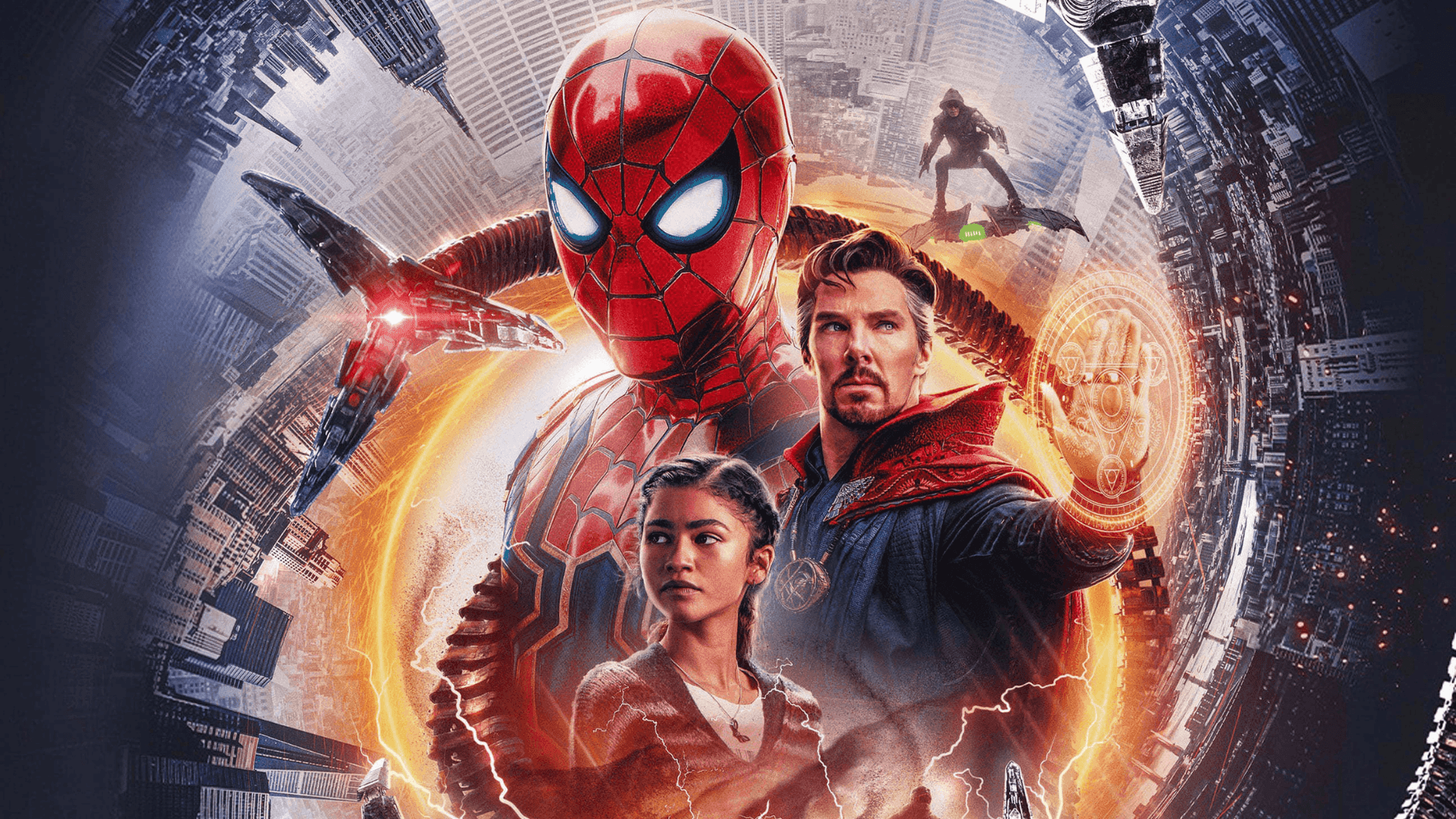
Before No Way Home, the Marvel multiverse was a theoretical promise, hinted at in series and post-credits scenes. With this film it becomes a concrete, spectacular reality. When Doctor Strange's spell goes wrong, the boundaries between realities crack open, and characters from other universes step through into the MCU. This is not a simple wink at the audience: it is the first time a Marvel film has fully used the narrative potential of the multiverse, reaching into other film franchises to bring their characters into the plot.
That opening has consequences that reach far beyond Spider-Man. No Way Home lays the foundations of the multiverse that the whole of the MCU's next Phase will explore. The film turns a comics idea — the existence of parallel universes — into the central engine of modern Marvel cinema. That exploration then continued in animation with Across the Spider-Verse, confirming that the multiverse has become the favourite playground of the spider franchise.
The historic reunion of the three Spider-Men
The emotional heart of No Way Home — and the reason for its cult status — is the on-screen reunion of Tom Holland, Tobey Maguire and Andrew Garfield. For the first time, the three actors who have played Spider-Man on the big screen share the same scenes, in the same reality. What had been nothing more than a fan fantasy for years became real, setting off a wave of emotion never seen before in cinemas around the world.
This reunion achieves something deeper than a simple marketing coup. It symbolically repairs the interrupted arcs of the two previous Spider-Men: Tobey Maguire, whose trilogy was brought to an abrupt halt, and above all Andrew Garfield, whose Amazing Spider-Man adventure was cut short. The film gives each of them a form of closure and redemption — Garfield in particular, who symbolically makes up for the most painful failure of his version of the character. By bringing three generations of fans together around a single film, No Way Home created a bridge between generations that is unique in the history of superhero cinema.

The film that changed everything
Spider-Man No Way Home Figure
The collector's figure from the most memorable film in the saga. Tom Holland's final suit, the symbol of the web-slinger's new era, ready to take pride of place on your shelf.
79,90 €
View the figure
Curing rather than defeating: a new moral code
No Way Home does not simply bring back the old villains — Green Goblin, Doctor Octopus, Electro, Sandman and the Lizard — for the pleasure of nostalgia. It gives them revolutionary treatment: rather than sending them back to their own realities, where certain death awaits them, Peter Parker decides to cure them. That idea — healing the villains instead of fighting them — upends the usual logic of the superhero film.
This moral choice runs deep in the essence of Spider-Man. Where other heroes would settle for neutralising the threat, Peter sees a victim to be saved in every villain. It is a statement of his deepest values, inherited from Uncle Ben's lesson about responsibility. But that choice comes at a terrible cost: it is by trying to save everyone that Peter loses everything. The film turns its gallery of legendary villains into a mirror of the hero's moral greatness — and into the instrument of his personal tragedy.
The final sacrifice: Peter Parker erased from every memory
This is the decision that defines the whole film, and the one that 'changes everything' in the most literal sense. To close the cracks in the multiverse and protect the people he loves, Peter asks Doctor Strange to cast a spell that will erase the existence of Peter Parker from the memory of the entire world. Everyone will forget him — MJ, Ned, his classmates, the people closest to him. Spider-Man will go on existing, but Peter Parker will no longer be recognised by anyone.
That sacrifice is unbelievably cruel for an MCU hero, used to lighter, more collective endings. Peter does not die, but he gives up everything that made up his life: his love, his friendships, his place in the world. This theme of sacrifice is Spider-Man's very signature, and it echoes other great renunciations in the character's mythology, such as the heartbreaking bargain of One More Day in the comics, where Peter already sacrificed his marriage. The question of whether MJ remembers Peter at the end of the film has haunted fans ever since release, so open and devastating is that ending. For an in-depth analysis of that moment, our feature on Spider-Man's impossible choice unpacks the whole moral stake of the scene.

The legendary reunion
Tobey Maguire Figure from No Way Home
The return of Tobey Maguire, one of the most moving moments in superhero cinema. A collector's figure to celebrate the reunion of the three Spider-Men.
99,90 €
View the figure
Back to the roots: a Spider-Man finally faithful to the comics
The ending of No Way Home achieves something fans had been asking for ever since Spider-Man joined the MCU: taking Peter Parker back to his roots. For three films, Peter had grown up in Tony Stark's protective shadow, kitted out with high-tech armour and a support network. After No Way Home, he finds himself alone, with no money, no mentor and no Avengers — exactly like the Peter Parker of the earliest comics.
The final scene, in which Peter sews his own new suit — a classic red and blue design, with no Stark gadgets — is deeply symbolic. It is the return of the friendly neighbourhood Spider-Man, the broke hero who protects New York out of pure responsibility, with no recognition and no reward. That shift finally brings the screen version of the character close to his original essence: an ordinary young man, alone with his mission. This new direction shows up even in the merchandise, where the hand-sewn suit and the 'street' look are winning over the fans who grew up with this Spider-Man.
What No Way Home sets up for the future
By resetting Peter to zero, No Way Home does not close a door: it opens dozens of them. This lonelier, anonymous, more mature Spider-Man lays the groundwork for a rich narrative future. The next film, Spider-Man: Brand New Day, looks set to be a return to a more urban, street-level tone, free of the Avengers' guardianship.
This new mood opens the way to fresh connections with the darkest characters in the MCU. Daredevil, already teased in the film, could become a recurring ally, as could the possible return of Kingpin as a major urban antagonist. And now that the multiverse is open, it is entirely credible that we could one day see Miles Morales in live action, or multiverse crossovers on a scale never seen before. No Way Home is not an ending: it is a launch pad.

The film as wall art
Spider-Man No Way Home Poster
At under 25 €, the ideal poster for showing off the most memorable film in the saga. The multiverse look of No Way Home, straight onto your walls.
22,90 €
View the poster
A cultural and commercial phenomenon
Beyond its narrative impact, No Way Home is a social phenomenon. The film delivered one of the biggest openings in the history of cinema, bringing audiences back into cinemas at a time when the industry was struggling to get back on its feet. Its success proved that the emotional attachment to Spider-Man crosses generations, and that the multiverse, used well, is a powerful engine of engagement.
The film also showed the power of fan service when it is handled well. Where a pile-up of references can ring hollow, No Way Home uses every return, every iconic line, every reunion as an element serving the emotion and the story. That control explains why the film left such a lasting mark on popular culture, reviving interest in the older Spider-Man films and creating a new wave of passion around the character. To place this film within the whole of the web-slinger's screen mythology, our complete guide to the Spider-Man films puts every version back into its context.
Conclusion: the film that redefined Spider-Man
No Way Home is not just another sequel: it is a tipping point. It opened up the MCU's multiverse, brought three generations of Spider-Man together, reinvented the way villains are treated, and handed Peter Parker the most heartbreaking sacrifice of his screen career. By taking him back to his origins — alone, anonymous, faithful to the comics — the film closed one era and opened another, more mature and more promising.
For all these reasons, No Way Home will remain one of the most important films in the history of Spider-Man: a moving tribute to the fans, a major narrative turning point, and proof that the web-slinger remains, more than ever, at the heart of the Marvel universe. To carry on exploring, dive into our full analysis of the multiverse arriving in the MCU and discover the detailed portrait of Peter Parker, the hero at the heart of this upheaval.

