
14-Day Money-Back Guarantee
0
The short answer
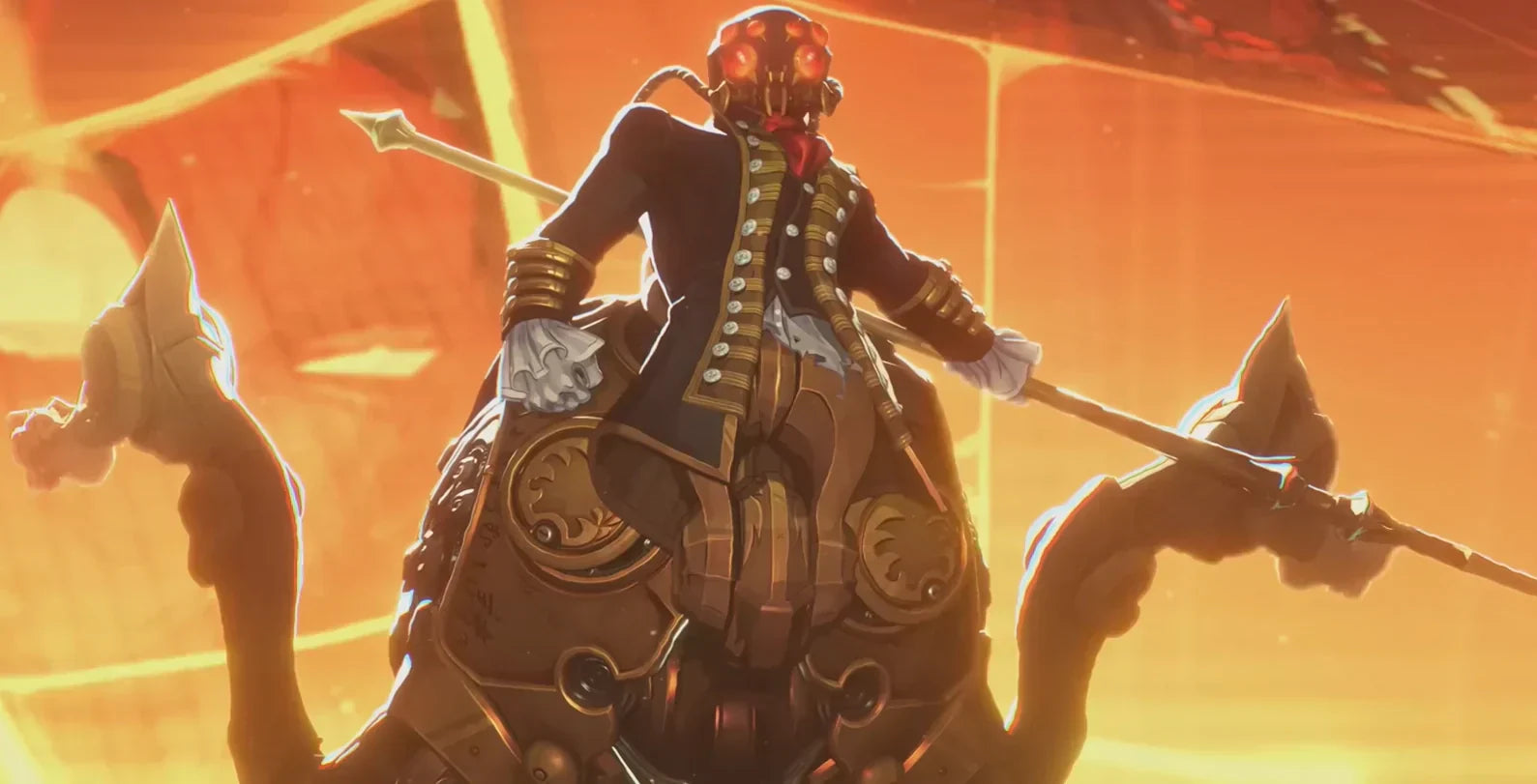
The Weaver is presented as the mystical entity that orders the web linking every Spider-Totem across the multiverse. He never fights anyone head-on: he sets the founding trials in advance, where the Inheritors simply devour. A role decoded in detail below.
The Weaver: the invisible architect of the Spider-Verse
In the sprawling universe of Spider-Man, some enemies strike through sheer violence, others through intelligence. But there are entities far more unsettling still, whose threat is measured neither in blows landed nor in cities destroyed. The Weaver belongs to those almost metaphysical figures, able to influence not just Spider-Man but the whole of the realities of the Spider-Verse.
The Weaver is not a classic supervillain. He never faces Peter Parker, Miles Morales or Gwen Stacy directly. His power is far more insidious: he weaves the very destiny of the Spider-Totems, those beings mystically bound to the spider, right across the multiverse.
Where threats like Morlun or the Inheritors hunt and devour the Spider-Totems, the Weaver works upstream. He shapes the invisible threads tying each Spider-Man to his role, to his trials and sometimes to his downfall. His existence forces you to rethink the whole mythology of the web-slinger, far beyond simple scientific accidents.
Spider-Man is no accident
For decades, Spider-Man stories have rested on one simple idea: an accidental bite, an ordinary teenager and a crushing responsibility. But the mystical arcs have gradually introduced another reading. What if Peter Parker had never been 'chosen at random'?
The concept of Spider-Totems reveals that each Spider-Man is one piece of a cosmic balance. The Weaver would then be the entity charged with maintaining that balance, making sure every thread of the multiverse follows a precise trajectory.
That idea overturns the classic reading of the character. Spider-Man would no longer be merely a reactive hero, but a central knot in an infinitely vaster cosmic web. Every loss, every sacrifice, every victory would be part of a larger plan, at times a cruel one.
This cosmic, mystical side of the Spider-Verse has left a deep mark on fans' imaginations. You find it today across countless collectables, not least the Spider-Man figures staging the web-slinger's different incarnations across the multiverse, as well as the Spider-Man posters inspired by the Spider-Verse sagas, where the web of fate becomes a central visual symbol of the Marvel universe.
An entity above heroes and villains
Unlike the traditional antagonists covered in the pillar page on the enemies of Spider-Man, the Weaver seeks neither domination nor destruction. He has no need to conquer New York or to beat Spider-Man in a fight.
His power lies in the storytelling itself. He acts on the key events: the bite, the loss of a loved one, the arrival of an enemy, the awakening of a new Spider-Totem in a parallel reality. Where the Green Goblin breaks Peter psychologically, the Weaver sets the rules of the game long before the fight begins.
It is this near-divine dimension that makes the Weaver as fascinating as he is unsettling. He reminds you that, in Spider-Man's universe, even freedom of choice can be an illusion.
In the next part, we look at how the Weaver fits into the mythology of the Spider-Totems, and why his role goes well beyond that of the multiverse's mere hunters.
The Weaver and the Spider-Totems: a perfectly orchestrated cosmic web
To grasp the Weaver's role fully, you have to step away from the classic superhero view and dive into the mystical side of the Spider-Verse. Here, Spider-Man is no longer just an individual: he is a totem, a living embodiment of a fundamental principle bound to the spider.

The Spider-Totems represent every variant of Spider-Man across the realities: Peter Parker, Miles Morales, Gwen Stacy, Spider-Man 2099, Spider-Noir… Each has their own story, yet all share an invisible link, like anchor points joined by one and the same cosmic web.
The Weaver is said to be the entity charged with keeping that web coherent. He makes sure every Spider-Totem exists, grows and faces the trials the multiverse's balance requires. Without him, the web would unravel and leave nothing but total chaos.

Why the Spider-Totems have to suffer
One element comes back constantly in Spider-Man stories: suffering. The loss of a loved one, guilt, personal sacrifice. That pattern is no accident. It sits at the very heart of what the Spider-Totems are for.
The Weaver imposes, knowingly or not, founding trials on every Spider-Man. Uncle Ben's death for Peter, the loss of loved ones in other realities, or the moral dilemmas forced on Miles Morales are no coincidence. They forge that sense of responsibility, the true pillar of the web-slinger's mythology, explored in depth in the story of Peter Parker.
Without those sacrifices, Spider-Man would be just another hero. It is that recurring pain that makes him universal, deeply human and, paradoxically, essential to the cosmic balance.
The Weaver against the Inheritors: architect versus predators
Where the Weaver creates and maintains, the Inheritors destroy. This family of vampiric entities, led by Morlun, feeds on the life energy of the Spider-Totems. Their aim is simple: break the web by eliminating its pillars.

The clashes described in the arc of the battle against the Inheritors are therefore not merely physical wars. They stand for an ideological struggle: the Weaver defends the very existence of the Spider-Men, while the Inheritors embody predation and erasure.
That opposition puts Spider-Man in a unique position. He is no longer just a local hero protecting New York, but a vital part of a multiversal ecosystem. Every win or loss echoes far beyond his own reality.
In the next part, we look at how the Weaver directly shapes the great events of the Spider-Verse, and why certain deaths or resurrections are never trivial.

The Weaver and the great Spider-Verse events: is destiny really written?
In the Spider-Man universe, some events feel inevitable. Turning points, sometimes called canon events, come back in different forms in almost every reality: the loss of a mentor, a major failure, a sacrifice that cannot be avoided. Those repetitions raise one central question: Does Spider-Man really choose his own fate?
The Weaver would be at the heart of that mechanism. As architect of the multiverse's web, he wouldn't dictate every action, but would lay down compulsory waypoints, narrative knots that every Spider-Totem has to pass through to keep the overall balance. A logic you find again in the analysis of the canon events of the Spider-Verse.
Free will, or a neatly woven illusion?
Peter Parker always acts by choice. He decides to save, to help, to sacrifice himself. Yet those decisions lead him systematically to the same consequences: loss, pain, responsibility. The Weaver doesn't force him to act, but he steers what is possible.

It is this ambiguity that makes Spider-Man so unique among Marvel heroes. Where others fight tyrants or visible cosmic threats, Peter faces an abstract force: moral necessity. He makes the right choice, even knowing it will hurt. A dimension explored in the analysis of great power and great responsibility.
In that reading, the Weaver is neither good nor evil. He is the embodiment of a principle: without trials, without sacrifices, Spider-Man cannot exist as a universal symbol.
When the web tears: anomalies, deaths and resurrections
When certain events are avoided or altered, the web starts to crack. The multiverse then reacts violently: unstable realities, temporal anomalies, deaths that should never happen… or resurrections just as unnatural.
Arcs like Spider-Geddon or End of the Spider-Verse show clearly that defying the Weaver's pattern comes at a cost. Every attempt to sidestep destiny sets off a chain reaction, often a catastrophic one.
That logic deepens the character's tragedy. Spider-Man isn't the prisoner of a tyrant, but of a cosmic system that needs him exactly as he is: brave, responsible… and broken. A theme you find again in the saddest moments in Spider-Man's history.
In the next and final part, we look at why the Weaver makes Spider-Man an eternal pillar of the multiverse, and what that reveals about the deep affection readers have had for the web-slinger for more than 60 years.
The Weaver as the ultimate metaphor: why Spider-Man can never be happy
The more you analyse the Weaver, the clearer one thing becomes: he isn't only a cosmic entity. He is a metaphor for the story itself. The Weaver stands for the invisible structure that has kept Spider-Man standing for more than 60 years: a story built on loss, responsibility and sacrifice.
Unlike other Marvel heroes, Peter Parker is never rewarded for long. Every time he seems to touch happiness – a steady relationship, a balanced personal life, some recognition – the web tightens. An event happens. A decision has to be made. And the sacrifice comes back.
That pattern isn't gratuitous cruelty: it is what lets Spider-Man exist as a universal hero. Without pain, without renunciation, Peter would be just another superhero.
Why the Weaver makes Spider-Man a pillar of the multiverse
In the logic of the Spider-Verse, every reality rests on anchor figures. Spider-Man is one of them. Whatever the version – child, adult, man, woman, human or hybrid – the moral pattern stays the same.
The Weaver therefore has no need to control every Spider-Totem. It is enough that the Spider-Man principle is respected: someone who always chooses to do what is right, even when it wrecks his own life. That consistency is what keeps the multiverse's web stable.
That is exactly why the Inheritors want the Spider-Totems gone: they know that as long as this morality exists, the multiverse regenerates. An in-depth analysis of that cosmic war is available in this article on the Inheritors.

The Weaver and us: why we identify with Spider-Man so much
Spider-Man is the only hero whose fate looks like ours. He does everything 'right'… and still life doesn't always pay him back. He fails, he loses, he doubts. But he carries on. And that is precisely what the Weaver protects.
Every reader, every viewer, every child who pulls on a Spider-Man costume or falls asleep in a pair of Spider-Man pyjamas doesn't want to be invincible. They want to be able to make the right choice.
The Weaver doesn't just weave fictional destinies. He weaves a modern myth: that of a hero who tells you the worth of a life isn't measured by its comfort, but by its ability to stay just in an unjust world.
Conclusion: the Weaver isn't the enemy… he's the reason Spider-Man exists
The Weaver is neither a cruel god nor a tyrannical master. He is the guarantor of one fundamental truth: Spider-Man is defined not by his powers, but by what he agrees to lose in order to protect others.
Without the Weaver, there would be no Spider-Verse. Without Spider-Man, the web of the multiverse would collapse. And without that permanent tragedy, Spider-Man wouldn't be the most loved hero in the world.
Because deep down, we don't love him because he always wins… We love him because he keeps going, even when he knows he's going to lose.

