
14-Day Money-Back Guarantee
0
The short answer
A military surgeon who lost his right arm, Curt Connors develops a reptile serum to grow it back; the limb does return, but his whole body mutates and his mind regresses towards animal instinct. Introduced in the comics in 1963, he embodies the scientist caught out by his own discovery. His arc, his fights and his adaptations are set out below.
Of all the enemies the web-slinger has faced, the Lizard — alias Dr Curt Connors — is one of the most tragic. Victim and executioner at once, he stands for the dangers of science pushed to the extreme and for the consequences of an obsession with healing that ends up devouring the man it was meant to save. Half man, half reptile, he is no ordinary villain: he is a dark reflection of what Peter Parker might have become had his own origin accident tipped towards the monstrous rather than the heroic.
In this article we retrace the character's complete arc: his scientific origins, his motives, his defining clashes with the hero, and the adaptations that shaped his reputation on screen as much as on the page. To place the Lizard among the other tragic scientific figures of the mythology, a detour through the Jackal, the most tragic scientific enemy is illuminating — Connors and the Jackal share this same dynamic of scientists who get lost inside their own experiments.
Curt Connors, the scientist who simply wanted to heal
The Lizard's story begins with a private pain. Curt Connors is a military surgeon whose right arm was amputated during an operation overseas. The return to civilian life is brutal: he cannot operate, he cannot help anyone, he cannot accept the amputation. Connors takes refuge in scientific research and develops a single obsession: regrowing the lost limb by drawing on reptiles, which can rebuild their tails after losing them.
The serum he develops works — far too well. The arm grows back, but his entire body mutates. Connors becomes the Lizard, a reptilian creature with superhuman strength, a fighting tail, thick scales and a mental regression towards animal logic. That mutation echoes another archetype of Marvel mythology: the scientist who pays for his own discovery. To understand the tradition Connors belongs to, a detour through Electro and his complete story and through Shocker, a powerful villain of the Spider-Man universe puts things in perspective: radioactive or electrical science transforms, but it always isolates. To go further on this subject, see also Stegron the Dinosaur Man: why this overlooked villain finally deserves a major comeback in 2026. To go further on this subject, see also Six-Armed Spider-Man: the night Peter Parker turned into a monster in Amazing Spider-Man #100.

The pantheon of scientific villains
Spider-Man Toy Figure - Electro
Like Connors with his reptile serum, Max Dillon is a man transformed by science. This Electro figure rounds off the collection of the great scientific villains who face the web-slinger.
29,90 €
See the Electro figure →What sets Connors apart is that he knows. Unlike many villains, he keeps — between two crises — a sharp awareness of what he is doing. When he becomes human again, he weeps, he regrets, he tries to control himself. That periodic lucidity makes him one of the very few enemies of the web-slinger capable of asking forgiveness. To measure what this nuance changes in the gallery of villains, it is worth rereading why Morbius is an enemy apart: Connors and Morbius share that same tragic status of men who wake up as monsters.
A powerful creature and a symbolic threat
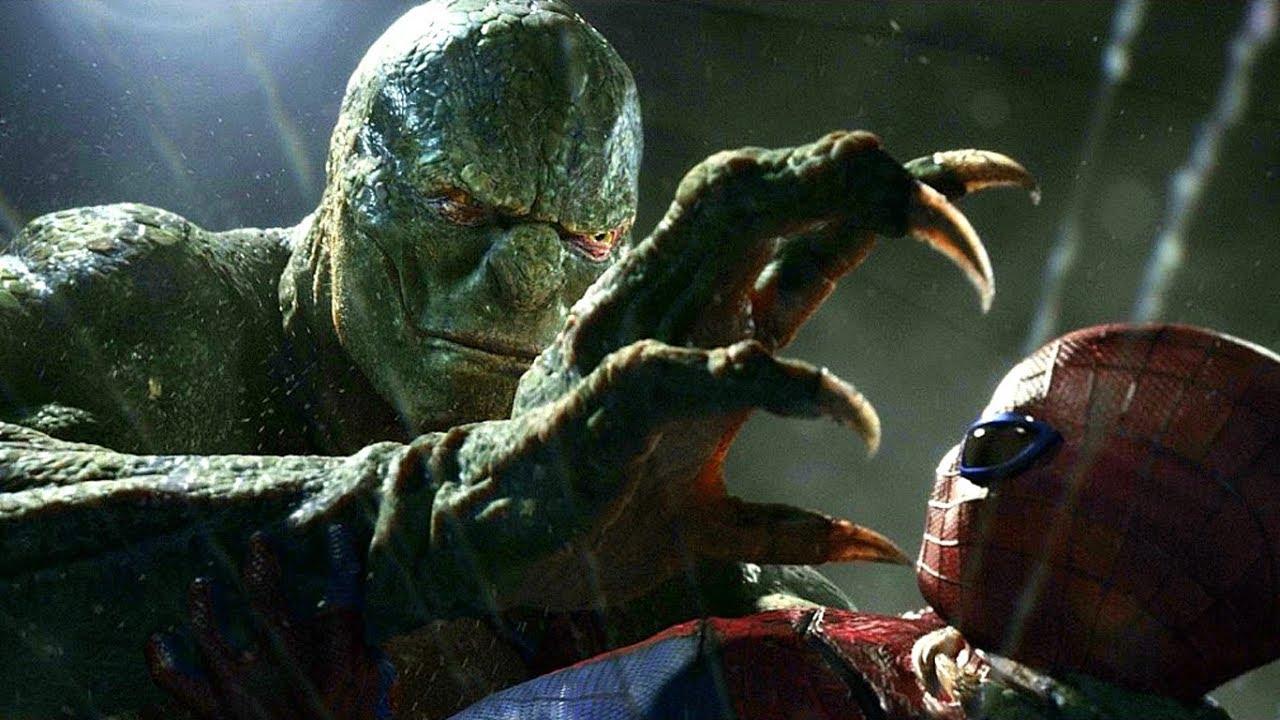
Physically, the Lizard is a beast. His strength lets him lift several tonnes, his resilience absorbs the wall-crawler's most violent blows, his claws cut through steel, and his articulated tail strikes with the precision of a whip. In a straight fight, few of the hero's enemies can match him. To gauge his level of physical danger, a detour through the complete analysis of the seven most powerful enemies of the web-slinger is instructive: Connors does not always come out on top, but he regularly ranks among the ten most formidable.
But it is his symbolic dimension that makes him memorable. The Lizard asks a question that few other villains ask: what if Peter Parker, too, had been devoured by his transformation? The radioactive spider turned Peter into a hero because his engine was responsibility. The reptile serum turns Connors into a monster because his engine was frustration. That opposition — hero through responsibility against monster through frustration — is the thematic heart of the arc.
This symbolic reading echoes arcs such as Back in Black, where Peter drops his morals after Aunt May's death. For a while, the web-slinger looks like Connors: a wounded man letting his pain deform him. The final difference is a thin one — and that is exactly what this comparison reveals.

The look of the comics origins
Spider-Man Comic Book Poster
The Lizard first appeared in the comics back in 1963. This comic book poster captures exactly that vintage look of the web-slinger's golden years — the golden age in which Connors was born.
22,90 €
See the comics poster →The defining fights between Spider-Man and the Lizard
Several confrontations have stayed in the fans' memory. The first face-off in the comics, in 1963, already sets the formula: Peter fights the monster, but he also has to save the man. The ending is never binary. That ambiguity runs through every major Lizard arc, including the most recent ones.
The turning point comes on screen with The Amazing Spider-Man in 2012, where Rhys Ifans plays a Connors more human than ever. The final scene, where the Lizard becomes the broken scientist again, is a peak of emotion. To place that adaptation within the films as a whole, the complete list of MCU films in chronological order gives a framework — Connors does not appear in the main MCU, but his cinema version remains the most accomplished.
Beyond the cinema, the comics arcs keep digging into the character. In Shed (2010), Connors loses control for good and accidentally kills his own son Billy. That arc is perhaps the darkest of the Lizard's career: he becomes a major tragic figure there, comparable to the greatest villains of the house. To measure the Lizard's place among the landmark villains, a detour through the question: who is the most powerful enemy of the web-slinger? is illuminating — Connors comes back regularly in those rankings.
An enemy unlike the others: the tragedy of the Lizard
What definitively sets the Lizard apart is his domestic tragedy. Connors has a family — his wife Martha and his son Billy. That family dimension, rare among the enemies of the web-slinger, turns every fight into a wider drama. When the Lizard strikes, it is not only Connors striking: it is also Martha weeping, it is also Billy fearing his father.
That emotional charge makes the Lizard a relative of the great tragic villains of the mythology. Eddie Brock and Peter Parker, two sides of the same tragedy and the dark story of Cletus Kasady, alias Carnage set the scene for this gallery: broken men whom transformation amplifies instead of saving.
The other singularity is that Connors is one of the very few villains to count Peter Parker as a personal friend. Before the transformation, the two men cross paths in scientific circles, and Peter deeply respects the surgeon's work. That relationship complicates every fight: Peter is not only fighting a creature, he is fighting a friend he is trying to save. To grasp the depth of that dynamic, a detour through the blurred line between justice and revenge is essential: with Connors, Peter never kills — he saves. It is the exact opposite of the dynamic he has with more purely evil villains.
Why the Lizard remains an essential character
In 2026, the Lizard holds a paradoxical place in Spider-Man culture: very well known among fans, yet rarely pushed to the front of the big recent editorial events. That discretion is partly explained by how difficult the character is to write. Connors is so tragic that you cannot recycle him on a loop without diluting his impact. Every Lizard arc demands real writing, real stakes, a real emotional resolution.
And yet his potential remains immense. With the rise of psychological storytelling and of television adaptations that take the time to dig into their villains, Connors is one of the perfect candidates for a major comeback. To compare his potential with that of other underused enemies, a detour through which enemies of the web-slinger would deserve a solo film is enlightening — the Lizard lands high on that list.
The other narrative avenue open to the Lizard is the multiverse. As the Spider-Verse concept expands, several alternative versions of Connors could appear. Imagine a Connors who had pulled off his regeneration without mutating, or a Connors who had chosen to mutate deliberately in order to become an openly anti-heroic figure. To grasp the narrative scope the multiverse offers, the Spider-Verse explained simply gives a framework. The Lizard has his place in it.
The Lizard in the wider mythology
To finish the tour of the character, two pieces of perspective. First, placing Connors in the overall ecosystem of Spider-Man villains. Return of the Sinister Six, the explosive union of the iconic enemies and Spot, the most unexpected and most dangerous enemy of the Spider-Verse give the range — the Lizard is more tragic than most, but far less used than many.
Then, and this is probably the most important part, understanding that the Lizard embodies a philosophical question Marvel rarely asks this head-on: how far are we prepared to go to repair what life has taken from us? Connors's answer is tragic. But it forces every reader to ask the question for themselves. And that is precisely why — far more than for his fights — the Lizard will remain an essential character in the mythology of the web-slinger.

The improvised suit of a resourceful hero
Spider-Man Costume - Homemade Suit
Facing the Lizard, Peter always improvises. Just as Connors tinkers with his serums, the web-slinger tinkers with his fights. This Homemade Suit costume embodies that logic of a hero who never cheats his way through.
59,90 €
See the Homemade costume →
