

14-Day Money-Back Guarantee
0
The short answer
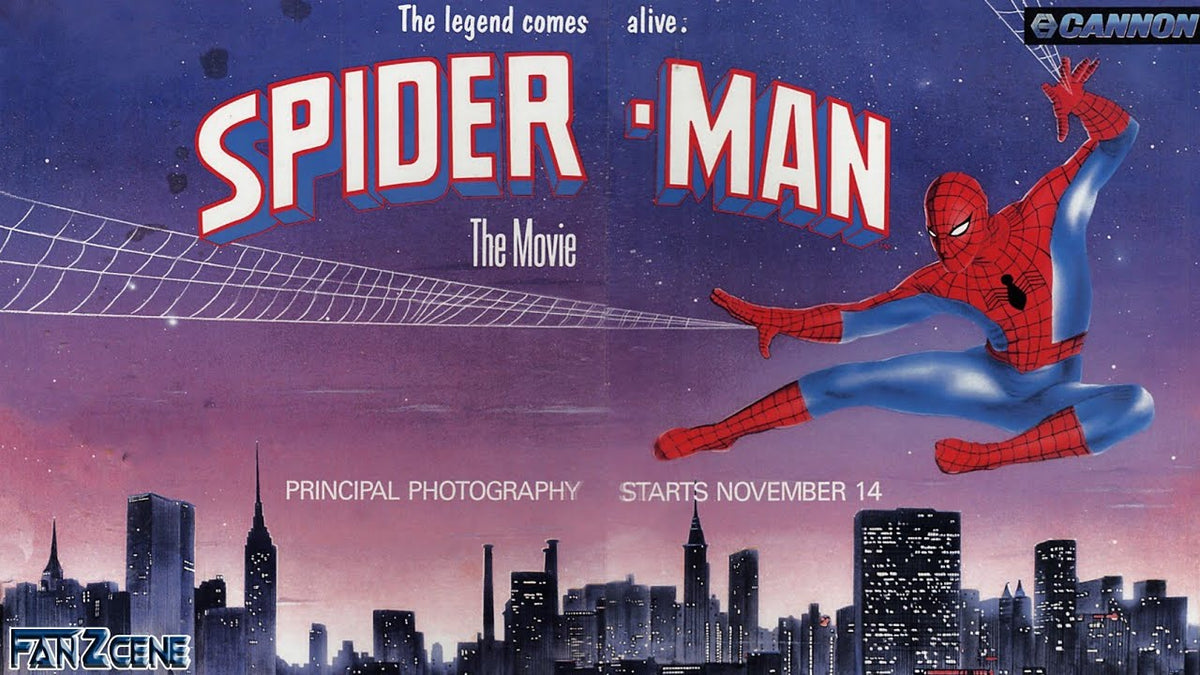
Before Sam Raimi's Spider-Man, released in 2002, the hero went through nearly fifteen years of aborted projects. In 1985, Cannon Films acquired the character's film rights for five years, for $225,000, without ever shooting the film. Carolco then hired James Cameron, who wrote a scriptment, part screenplay and part treatment, running to more than fifty pages. A cascade of lawsuits blocked everything until 1999, when Marvel granted Sony the right to produce Spider-Man films.
Contents
Fifteen years of projects at a glance1985: Cannon Films gets its hands on Spider-ManA monster Spider-Man: Tobe Hooper's horror versionDoctor Octopus, Joseph Zito and the rewritesAlbert Pyun, Masters of the Universe 2 and the birth of Cyborg1989: Menahem Golan walks off with the rightsJames Cameron's Spider-Man: what the scriptment toldYears of lawsuits and three bankruptcies1999: Sony secures the Spider-Man film rightsCameron, looking back
Fifteen years of projects at a glance
Sam Raimi's Spider-Man was released in the United States on 3 May 2002. Between Cannon's purchase of the rights and that release, the character's film rights passed from studio to studio, changed hands several times and ended up at the heart of lawsuits that paralysed every project. The table below sums up who held the rights at each stage. What happened after 2002, between Sony, Marvel and Disney, is explained in our article on the Spider-Man rights.
| Year | What happens | Film rights |
|---|---|---|
| 1985 | Marvel grants the rights for five years to Menahem Golan and Yoram Globus's Cannon, for $225,000 | Cannon |
| 1987 | After the flops of Superman IV and Masters of the Universe, the film's budget is cut sharply | Cannon |
| 1989 | Golan leaves Cannon and takes the rights with him to his company, 21st Century Film Corporation | 21st Century |
| 1990 | Carolco buys the film rights for $5 million | Carolco |
| 1991 | James Cameron receives $3 million to write and direct the film | Carolco |
| 1993 | Variety reports that Carolco has received Cameron's text; Golan sues Carolco | Carolco (rights disputed) |
| 1995 | Carolco files for bankruptcy protection | In dispute |
| 1996 | Marvel Entertainment Group in turn files for Chapter 11 protection, on 27 December | In dispute |
| 1999 | Rulings in Marvel's favour, licence granted to Sony, settlement with MGM | Sony |
| 2002 | Sam Raimi's Spider-Man is released in the United States on 3 May | Sony |
1985: Cannon Films gets its hands on Spider-Man
Cannon was not the first to try. In the early 1980s, producer Roger Corman, a specialist in low-budget films, held an option on a Spider-Man adaptation. His project was based on a text written by Stan Lee, in which the hero takes on Doctor Octopus. The two men clashed over money: Corman wanted a quick, cheap action film, while Stan Lee wanted a big-budget production. The option came to nothing. The career of the writer, who created the character with artist Steve Ditko, is traced in our portrait of Stan Lee.
In 1985, Marvel sold the Spider-Man film rights to Menahem Golan and Yoram Globus's Cannon, the studio then making Chuck Norris's action films. The price: $225,000, plus a percentage of the gross receipts. The Los Angeles Times would later call it a 'bargain-basement' price. The contract ran for five years: if no film was made within that time, the rights reverted to Marvel. Cannon was aiming for a budget of $15 million according to the Los Angeles Times, $20 million according to Den of Geek.
The Cannon deal in figures
Price paid to Marvel$225,000 + a percentage
Length of the rightsfive years
Target budget$15 to 20 million
Film shotnone
To wear the suit, Cannon chose stuntman Scott Leva, who was already posing as Spider-Man for Marvel. He is the one on the cover of The Amazing Spider-Man #262, dated March 1985: the first photographic cover of a Spider-Man issue, with the photo taken by Marvel employee Eliot R. Brown. A poster was produced with him under the mask, and a short promotional film of around eighteen seconds, according to /Film, was shot. For Peter Parker, Cannon considered Tom Cruise. According to Edward Gross's book Spider-Man Confidential, published in 2002, other names were considered without any role being offered: Bob Hoskins as Doctor Octopus, Christopher Lee as a scientist, Lauren Bacall or Katharine Hepburn as Aunt May. The actors who eventually wore the suit are gathered in our article on the Spider-Man film actors and in our page on every cast.
A monster Spider-Man: Tobe Hooper's horror version
Menahem Golan and Yoram Globus barely knew the character. They saw him as a horror-film creature, a variation on the werewolf of old monster movies. The first director attached to the project was Tobe Hooper, the man behind The Texas Chain Saw Massacre. He eventually left the project.
The first treatment was handed to Leslie Stevens, creator of the series The Outer Limits. In it, Spider-Man becomes a spider in the literal sense. Peter Parker is not bitten: a corporate scientist, Dr Zork, deliberately exposes him to radiation, and the young man turns into a giant eight-armed spider hybrid. Zork then wants him to lead his army of half-human, half-animal mutants, but the creature turns against him.
The horror version at a glance
First director attachedTobe Hooper
First treatmentLeslie Stevens
The heroa giant eight-armed spider
The villainDr Zork
Stan Lee's verdictrejected
Stan Lee rejected this version and insisted that Cannon stick to the real comics. The treatment was dropped. The Peter Parker Stan Lee championed, a hard-up schoolboy eaten up by guilt, is covered in our Peter Parker page. It is the masked hero, not an eight-armed monster, that you will find on our Spider-Man posters.
Doctor Octopus, Joseph Zito and the rewrites
Writers Ted Newsom and John Brancato then wrote a much more classic version. Otto Octavius becomes Peter Parker's teacher and mentor, and a single cyclotron accident, according to Wikipedia, gives birth to both Spider-Man and Doctor Octopus. The scientist with mechanical arms is profiled in our portrait of Doctor Octopus, and all the hero's adversaries in our guide to Spider-Man's villains.
Joseph Zito replaced Tobe Hooper in the director's chair. He had made Friday the 13th: The Final Chapter, released in 1984, and, for Cannon, the Chuck Norris films Missing in Action (1984) and Invasion U.S.A. (1985). He brought in writer Barney Cohen, who had written Friday the 13th: The Final Chapter for him, to rewrite Newsom and Brancato's first draft.
1
Leslie Stevens, with Tobe Hooper. The horror treatment: Peter turned into a giant eight-armed spider by Dr Zork.
2
Ted Newsom and John Brancato. The return to the comics: Otto Octavius as Peter's mentor, Doctor Octopus as the adversary.
3
Barney Cohen, for Joseph Zito. The rewrite of Newsom and Brancato's first draft, before the budget melted away.
The project then ran into Cannon's finances. In 1987, the studio was struggling: Superman IV, whose budget had been cut from $36 million to $17 million, and Masters of the Universe, released in August 1987, both disappointed. After these two flops, Spider-Man's budget was cut sharply, and Joseph Zito left the project. The Doctor Octopus he was meant to film would have to wait for Sam Raimi's Spider-Man 2; the hero and his adversaries can now be found among our Spider-Man figures.

Spider-Man Toy Figure - Dr Octopus
The comic-book Doctor Octopus, in his green and yellow suit, round glasses and four articulated mechanical arms: the villain cinema eventually gave Spider-Man.
View product — €29.90Albert Pyun, Masters of the Universe 2 and the birth of Cyborg
Cannon did not give up straight away. The studio gave Albert Pyun the job of directing Spider-Man and Masters of the Universe 2, two films to be shot almost back to back, with shared sets. But the money ran out. Cannon lost its deals with Mattel, owner of He-Man, and with Marvel: both films were abandoned together, by which time the studio had already spent around $2 million, mostly on sets and costumes.
Spider-Man
Given to Albert Pyun, abandoned when Cannon lost its deal with Marvel.
Masters of the Universe 2
Planned straight afterwards with the same sets, abandoned when Cannon lost its deal with Mattel.
Cyborg
Written in one weekend to reuse the sets and costumes, shot in 23 days.
To recoup those sets and costumes, Albert Pyun wrote the story for a new film in a single weekend, initially titled Slinger. It became Cyborg, shot in 23 days for under $500,000, with Jean-Claude Van Damme as Gibson Rickenbacker: it was Menahem Golan who imposed the actor. Cyborg was released in the United States on 7 April 1989 and grossed $10,166,459 in total in North America. It reached French cinemas on 7 June 1989, still distributed by Cannon. Spider-Man had already been played in live action on American television, as told in our article on the 1977 Spider-Man TV film.
1989: Menahem Golan walks off with the rights
In the late 1980s, Cannon came under the control of Pathé Communications, the company of Italian financier Giancarlo Parretti, funded by Crédit Lyonnais. Menahem Golan left Cannon in 1989; on 1 March 1989, the New York Times ran a headline on his departure to set up his own company. Yoram Globus, for his part, stayed at Pathé. As part of his severance package, Golan took the Spider-Man film rights to his company, 21st Century Film Corporation, which he then headed. According to Wikipedia, the Captain America rights went the same way.
To finance the film, Golan sold the worldwide television rights to the future Spider-Man to Viacom, and its video rights to RCA/Columbia, later Columbia TriStar. In 1990, Carolco Pictures, the studio behind Terminator 2, bought the film rights from 21st Century for $5 million. The sale came with one condition: Menahem Golan had to be credited as the film's producer. Carolco billed its project as a $50 million live-action Spider-Man.
Who held what in the early 1990s
Film rightsCarolco ($5 million)
TV rights to the future filmViacom
Video rights to the future filmColumbia TriStar
Producer creditpromised to Menahem Golan
This carve-up of the rights between several companies was the ticking time bomb of the whole affair. During those film-less years, the hero lived on in the comics. His classic suit can now be found among our Spider-Man costumes and masks, and our tapestries display it in large format.
James Cameron's Spider-Man: what the scriptment told
In 1991, Carolco paid James Cameron $3 million to write and direct Spider-Man. His contract gave him a say over the film's credits, and he refused to credit Menahem Golan as producer. Cameron's text dates from 1991; on 1 September 1993, Variety reported that Carolco had received it. In the meantime, the contract with Marvel had been renegotiated, with a new deadline set for May 1996.
This text is not a conventional screenplay but a 'scriptment', a hybrid of dialogue script and narrative treatment. Stan Lee would describe it as a very detailed treatment of more than fifty pages. Peter Parker is 17. The spider that bites him comes from a lab carrying out genetic recoding experiments on fruit flies. Above all, the web does not come from a gadget: it shoots out of Peter's body, through organic spinnerets at the wrists, a metaphor for puberty according to Cameron. The film-maker sums up his hero in one phrase, 'He's Spider-Kid': a lonely, unpopular schoolboy. The classic origin is kept: Peter refuses to stop a thief fleeing a local TV station, and that thief later kills Uncle Ben, a tragedy told in our article on Uncle Ben's death.
Peter Parker
17, a lonely schoolboy, organic webbing that shoots from his wrists.
Carlton Strand
A corrupt businessman able to manipulate electricity since being struck by lightning: Cameron's Electro.
Boyd
Strand's right-hand man, able to turn his body into sand: Cameron's Sandman.
Mary Jane
Rescued by Spider-Man from Strand's clutches at the top of the World Trade Center.
The villains are new, even though they borrow their powers from two comic-book adversaries. The main antagonist, Carlton Strand, is a corrupt businessman able to manipulate electricity since surviving a lightning strike: he is Cameron's take on Electro. His right-hand man, Boyd, can turn his body into sand, like Sandman. Doctor Octopus, the villain of the Cannon scripts, does not appear. The tone is dark and aimed at adults: the characters, Peter included, swear profusely. The text includes a love scene between Peter and Mary Jane at the top of one of the towers of the Brooklyn Bridge, and the final showdown takes place at the top of the World Trade Center.

Spider-Man Toy Figure - Electro
Electro in his green and yellow lightning-bolt suit and star-shaped mask: the comic-book supervillain who inspired James Cameron's Carlton Strand, as a figure for the bedroom.
View product — €29.90Years of lawsuits and three bankruptcies
Cameron's film would never be shot: lawsuits and bankruptcies were about to block everything. In April 1993, Menahem Golan sued Carolco to have his contract cancelled, since he had been denied his producer credit. Carolco in turn sued Viacom and Columbia TriStar, in February 1994 according to the Los Angeles Times, to have their TV and video rights cancelled, and the two studios countersued. In the mid-1990s, MGM, which had been tied to Pathé in the Parretti era, claimed to be the heir to Cannon's former rights and sued Golan, Globus, Parretti, 21st Century, Viacom, Tri-Star and Marvel for fraud.
The bankruptcies piled up. Carolco filed for Chapter 11 protection under US bankruptcy law in 1995. Cutthroat Island, which it produced, was released on 22 December 1995 in the United States and on 14 February 1996 in France: that flop was among those that sank a studio already in bankruptcy. On 27 December 1996, Marvel Entertainment Group in turn sought Chapter 11 protection; Golan's 21st Century also went bankrupt, in 1996 according to Wikipedia. Carolco, 21st Century and Marvel all found themselves bankrupt during the lawsuits. Marvel emerged on 1 October 1998, when Toy Biz absorbed it and took the name Marvel Enterprises. The role Spider-Man had previously played in the publisher's rise is told in our article on the history of Marvel.
What you often read, and what is wrong
- 'Cannon wanted to make Spider-Man a werewolf.' The werewolf sums up Golan and Globus's misreading; Leslie Stevens's treatment turns him into an eight-armed spider-monster.
- 'Arnold Schwarzenegger was going to play Doctor Octopus for Cameron.' That is a rumour: Doctor Octopus does not even appear in the scriptment.
- 'Leonardo DiCaprio was signed to play Peter Parker.' His name was only mentioned; no statement from Cameron confirms it.
- 'Sony bought Spider-Man during Marvel's bankruptcy.' Marvel came out of bankruptcy on 1 October 1998; the licence granted to Sony dates from March 1999.
1999: Sony secures the Spider-Man film rights
The resolution came in 1999. In February, the California courts issued a summary judgment in Marvel's favour and rejected MGM's claims. On 1 March 1999, Eric Ellenbogen, Marvel's CEO, Avi Arad, its chief creative officer, and John Calley, CEO of Sony Pictures Entertainment, announced their agreement; the next day, the Los Angeles Times ran the headline 'Studio Rights to Spider-Man Are Untangled'. Marvel granted Sony the right to produce Spider-Man films in return for a non-refundable advance on royalties, the amount of which Marvel's annual report does not disclose.
That left MGM. In March 1999, MGM, Sony and Marvel settled their last disputes out of court, at the cost of a surprising trade-off: for MGM to give up Spider-Man, Sony abandoned its rival James Bond film projects, based on the rights of Kevin McClory, co-writer of the Thunderball story. The same year, the Los Angeles Superior Court ruled that Viacom had no rights to a Spider-Man film.
Sony hired screenwriter David Koepp, whose first draft drew directly on Cameron's text. In January 2000, Sam Raimi was chosen to direct the film: on 27 January, The Hollywood Reporter said he was in final negotiations. Spider-Man was released in the United States on 3 May 2002. Its making is told in our article on the 2002 film, the saga that followed in Sam Raimi's trilogy, and the order of all the films in our page on the Spider-Man films. The films released since 2002 can be rewatched with our Spider-Man DVDs and Blu-rays.
What Raimi kept from Cameron
Organic web-shooters. In Sam Raimi's film, the web comes out of Peter's wrists, just as in James Cameron's scriptment. The other versions, mechanical or organic, are compared in our web-shooter comparison.
Cameron, looking back
Cameron has expressed his regrets. In his book Tech Noir: The Art of James Cameron, extracts of which were published in the press on 6 December 2021, he calls his Spider-Man 'the greatest movie I never made'. He wanted a Spider-Man grounded in the real world, in the vein of Terminator and Aliens.
After Carolco's collapse, he tried to persuade 20th Century Fox to buy the rights. Fox refused to commit: the rights were tangled, and Sony, in his view, had a 'very questionable' claim to them. Cameron explains that this failure pushed him to stop working on other people's intellectual property and to develop his own films, such as Titanic and then Avatar. Spider-Man has had other films that were never shot, covered in our articles on Sam Raimi's Spider-Man 4 and on the cancellation of The Amazing Spider-Man 3.

Spider-Man Vintage Comics Alarm Clock
A cube alarm clock with a digital display, illustrated with Spider-Man in old-school comic style: the hero as people read him during the years when his films stayed on the pages of scripts.
View product — €29.90Key takeaways
Between 1985 and 1999, Spider-Man was in turn a Cannon project, a giant eight-armed spider, a film pitting him against Doctor Octopus, a James Cameron scriptment and the prize in lawsuits that accompanied three bankruptcies. In Sam Raimi's film, the most visible legacy of those lost years is the organic web-shooters dreamt up by James Cameron. In the shop, the mechanical version from the comics, the one Cameron had replaced with organic spinnerets, can be found among our web-shooters; our Spider-Man T-shirts, alarm clocks and gift ideas bring the hero into everyday life, and our page on all the characters presents his whole universe.

