
14-Day Money-Back Guarantee
0
The short answer
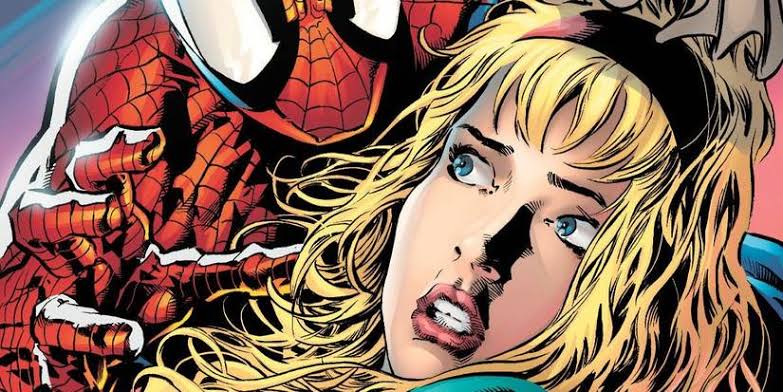
Written by J. Michael Straczynski and drawn by Mike Deodato Jr., this arc published in issues 509 to 514 was originally meant to make Peter the twins' father. Editorial imposed the Green Goblin instead. That compromise explains a good part of the unease, detailed below.
In 2004, a story arc landed in the pages of Amazing Spider-Man and, in six issues alone, turned the web-slinger's mythology into an emotional battlefield. That arc is called Sins Past, and nearly twenty years on, British readers discovering this story still feel the same discomfort that caused such a scandal at the time. Peter Parker learns that Gwen Stacy, the woman whose death defined him, had supposedly borne two children from a night with Norman Osborn. That revelation, published thirty-one years after the fall from the Brooklyn Bridge, divided the fandom as few events had before it.
Unlike the great sagas that shake the whole Marvel universe — Spider-Verse, End of the Spider-Verse or the big cosmic crossovers — Sins Past is an intimate event, almost a chamber piece. There is no invasion, no global threat. There is Peter, his memory, Mary Jane, a letter, two adult twins, and the ghost of Gwen Stacy brought back to say what she never said in life. This article looks back at the genesis, the revelations, the consequences and the complicated legacy of this singular arc.
An arc the fandom has never entirely digested
Published between July and December 2004 in issues 509 to 514 of Amazing Spider-Man, Sins Past was written by J. Michael Straczynski, then in the middle of a run considered one of the most literary the modern web-slinger has had. Artist Mike Deodato Jr. gives the pages a twilight, almost noir tone that contrasts with the warmer colours of the neighbouring arcs. Straczynski's initial idea was even more radical: he wanted Peter to learn that he himself had fathered those two children with Gwen. Editorial refused, judging that Peter as biological father changed too much of the character's DNA. Straczynski then substituted Norman Osborn as the father, without ever publicly endorsing that compromise.
That detail explains almost everything that follows. The arc was not conceived as a Norman story. It was conceived as a Peter and Gwen story. The writer had to rework the internal logic to fit the Green Goblin into a role tailored for him after the fact, with tight time skips, a secret stay in Europe, and a biology accelerated by the Osborn formula. The result: a plot that appears to work on the surface, but that creaks the moment you read the panels twice.
The context: where is Peter Parker in 2004?
When the arc came out, Peter is married to Mary Jane, he teaches at Midtown secondary school, and the emotional scars left by Gwen's death seem to have finally healed. The Straczynski run had spent the previous months rehabilitating Aunt May as an adult confidante — May's renewed centrality alongside Peter — and exploring the totemic origins of the Web. This is a mature, thoughtful, committed web-slinger who believes he has closed the heaviest drawers of his youth.
That stability is precisely what Sins Past sets out to target. The arc opens with the discovery, at home, of a letter. Handwriting recognisable among thousands: Gwen's. Peter, incredulous, reads it, rereads it, has it analysed. The letter speaks of children. The letter is genuine. The whole mythology built up since The Night Gwen Stacy Died in 1973 is shaken in a handful of panels. Anyone who grew up with Peter Parker's great moments of moral rupture understands immediately why the arc caused so many waves.
Back from the grave: two twins and a secret buried for thirty years
Sins Past reveals that, a few months before her death, Gwen Stacy went to France, supposedly to study. There, in an isolated manor house, she is said to have had a brief and catastrophic relationship with Norman Osborn. From that affair two twins are born, Gabriel and Sarah, hidden from Peter and entrusted to Osborn, who raises them in secret. The formula that turned Norman into the Green Goblin alters the twins' biology: they age at an accelerated rate, reaching physical maturity within a few years, but they also inherit cellular weaknesses that will hasten their decline.
The letter Peter reads at the start of the arc was written by Gwen just before her death, to be handed to her children or to Peter in the event of an accident. Nobody sent it in time. It resurfaces thirty years later because Gabriel and Sarah, now adults, have decided to make it public. In their minds, Peter is the father — then Peter is their mother's murderer — then Peter is the one who abandoned them. Each new revelation fuels their hatred, meticulously cultivated by Norman behind the scenes since childhood.
COLLECTION — PREMIUM FIGURE

Green Goblin Collector's Figure — No Way Home
299,90 €
The centrepiece for any collector who wants to celebrate Peter's ultimate nemesis, the one who haunts every major arc of the modern mythology — from Gwen's death to Sins Past.
Discover the figure →Gabriel and Sarah Stacy: two children born of a betrayal
Gabriel Stacy is presented as a dark mirror of Peter: sensitive, tormented, burning with a resentment he does not entirely understand. His sister Sarah is more stable on the surface, more of a field operative — she ends up a SHIELD agent in the arc's follow-ups. The two twins hunt Peter down in Paris, then in New York, with the aim of bringing the web-slinger down by forcing him to admit something he never did. That is where the narrative cruelty of the arc lies: Peter is punished for a crime he never committed, while the real culprit, Norman, pulls the strings from the shadows.
The accelerated biology becomes central: the twins know they will die young, unless they receive a full blood transfusion from Peter. That ingredient echoes the great family tragedies of the mythology and turns the confrontation into a moral dilemma. Should you save those who are hunting you? The web-slinger will of course choose life, but the arc forces him through the same questions raised by Ben Reilly during the Clone Saga, where biological identity and moral legacy were already at stake.
The breaking point: Peter facing Gwen's memory
The most discussed scene in Sins Past is probably the cemetery one, where Peter kneels before the headstone and has to accept that the woman he loved had a part of her life he never knew. The implicit question is a terrible one: does what Gwen did in France call into question what she lived through with Peter in New York? Straczynski does not settle it. He leaves Peter with the doubt, which sparks the anger of a section of readers attached to an almost sacred vision of Peter Parker's first great love story.
Mary Jane, for her part, plays the unexpected role of mediator. She knew. She had known for a long time. Gwen had confided the secret to her shortly before her fall from the bridge, and MJ had chosen to say nothing, to protect Peter and to protect the memory of a lost friend. That confession, almost an aside, is one of the strongest moments of the arc and permanently changes how you read Mary Jane as Peter Parker's partner. She is no longer only the woman loved after Gwen: she is the one who carried an impossible secret for three decades.
J. Michael Straczynski, the man behind the arc that fractured the fans
Straczynski, known elsewhere for Babylon 5, had taken the reins of Amazing Spider-Man in 2001. His run is the one that introduces the spider totem idea, reinvents Ezekiel, resurrects Morlun, deepens the Peter-Aunt May relationship and lays the bricks for what would later become the Spider-Verse arc. He is an ambitious writer, willing to take risks.
Sins Past embodies those risks pushed to the extreme. Straczynski himself acknowledged, in several later interviews, that the published version did not match his original vision. In his view, imposing Norman as the biological father created the logical contradictions that later justified the subsequent retcons. It is a rare example of a star writer publicly stating that he would have done it differently, which still feeds today's discussions about One More Day and the great continuity ruptures that followed.
COLLECTION — PETER B. PARKER FIGURE

Peter B. Parker Figure — Spider-Verse Edition
89,90 €
The tired, married Peter, battered by the great defeats of the multiverse. A version that speaks directly to anyone who has read Sins Past and understood the weight Peter carries every day.
See the figure →Grey Goblin and the shockwave: the long-term consequences
Gabriel Stacy briefly takes on the Grey Goblin identity at the end of the arc, before a brain injury tips him into mental illness. He is captured, committed, then reappears sporadically in later runs, notably around American Son and the Dark Reign era led by Norman Osborn. Sarah, more resilient, pursues a parallel career and never wears the mask again after this arc, but her existence remains canon in the corners of continuity.
The real shockwave is not in the fate of the two twins. It is in the way Sins Past acts retroactively on every earlier story. Every reread of Amazing Spider-Man #121-122, every revisit of Gerry Conway's run, every mention of the girl who fell from the bridge — everything is coloured differently. The fans who could not stomach that reframing loudly demanded a return to the 'pure' version of Gwen. That pressure indirectly fed the editorial climate that made One More Day possible three years later, with the Mephistophelean pact that erased Peter and MJ's marriage and repositioned the whole mythology.
Why Sins Past has remained an event apart in the web-slinger's history
Most of the great events of the mythology are regularly commemorated in iconic posters and prints, quoted in official retrospectives, brought back in special issues. Sins Past, for its part, is almost always passed over in silence. Marvel long avoided naming it in its omnibus collections. Recent adaptations, including video games such as Insomniac Spider-Man or the animated series, never mention it. There is a kind of polite conspiracy of silence around this arc, somewhere between editorial embarrassment and an ambiguous respect for the memory of an otherwise much-loved run.
That distancing paradoxically strengthens the arc's aura among demanding readers. Like the original arc of Gwen Stacy's death, Sins Past has become a piece of heritage you approach like a precious, damaged object. People know it, quote it, debate it, but leave it in its place, in a dark corner of continuity, between Spectacular Spider-Man #200 and the beginning of the Clone Saga.
The forgotten arc that partly explains why One More Day exists
It is impossible to talk about Sins Past without mentioning the shadow it casts over the events that followed. Three years after its publication, in 2007, Marvel launched One More Day, with an openly stated editorial goal: to erase Peter and MJ's marriage. The pact with Mephisto redefined continuity and repositioned Peter as a single hero, closer to the character's classic roots. Many commentators see it as a reaction — unconscious or explicit — to the accumulation of heavy material during the Straczynski run, of which Sins Past is the high point in terms of controversy.
This indirect link is essential for understanding the great modern arcs. Brand New Day, the post-One More Day editorial arc was built on the need to start again on lighter, more serialised foundations, closer to the classic urban serial. Without the scars left by Sins Past, editorial would probably not have had the political legitimacy to reconfigure the character quite so radically.
Sins Past and the web-slinger's DNA: can you still read this arc today?
For a reader discovering Sins Past in 2026, the best approach is probably the historical one. The arc does not read like a classic blockbuster. It reads like a moment of editorial tension, almost an archaeological artefact of what Marvel dared to do in the mid-2000s. The six issues are available in several collections, notably the hardcover Spider-Man: Sins Past which reprints the whole arc, along with the follow-up Sins Remembered published in 2010 by Joe Kelly.
The link with the later events — Grim Hunt and the bloody hunt led by Kraven, the Superior Spider-Man experiment with Otto Octavius, or End of the Spider-Verse and the closing of a multiverse cycle — makes the reading richer as you move further into continuity. Sins Past is not an entry point. It is a chapter to open once you already know the emotional geography of Peter's two great loves.
COLLECTION — HERITAGE PRINT

The Web-Slinger and the Green Goblin Print
22,90 €
The iconic duel in a single image. To hang above a comics bookcase as a daily reminder that Peter's real villain was never an outside monster, but the man who knew exactly where to strike.
See the print →What Sins Past still tells us today about the web-slinger's mythology
Sins Past is not only a controversy. It is proof that the mythology around Peter Parker is alive, ready to be shaken, ready to absorb editorial shocks that make it creak. A myth that cannot be challenged is a myth with nothing left to say. The great figures of the Web — available as collector's figures, as iconic cosplay costumes or as vintage comics mugs — are all evidence that these arcs have fed popular culture far beyond the original fandom.
The saga reinforces, by implication, Norman Osborn's stature as the ultimate adversary. Where the Sinister Six represent the organised threat and where Kraven embodies the animal hunt, Norman is the only villain capable of attacking Peter through memory itself. He makes Peter lose things he believed were untouchable. He turns the past into a minefield. That is precisely what Sins Past reveals with the most brutality, and that is why the arc, despite its logical flaws, deserves to exist in continuity.
Going further into the mythology of the Web
Sins Past fits into a dense narrative fabric. For readers who want to dig deeper, several complementary readings follow naturally. Understanding the character of Peter starts with the complete biography of Peter Parker, which places each major arc in its chronological and editorial order. Exploring Peter's loves and losses continues with the Daily Bugle, the professional epicentre of his civilian life, where Gwen's memory and Norman's omnipresence cross paths regularly.
The recent extensions of the Straczynski run and the arcs that followed remain readable through New Ways to Die, the explosive Norman Osborn Thunderbolts arc and Ends of the Earth, Doctor Octopus's climate threat. These two arcs extend the editorial logic born of the Sins Past waves, reactivating the old nemeses to test the resilience of a post-marriage Peter Parker.
Finally, the Spider-Gwen collection dedicated to multiverse figures and accessories remains a valuable detour for approaching, from another angle, the figure of Gwen Stacy reinvented in the modern multiverse. It is a reminder that a heroine can have several lives, several versions, several truths — a theme Sins Past had dared to tackle in its own way, before the Spider-Verse universe made the idea mainstream and accepted.
Twenty years after its release, J. Michael Straczynski's arc is still there, in the margin, unsettling and fascinating. For every reader building their Spider-Man knowledge on depth as much as on blockbusters, Sins Past remains essential reading — not because it succeeds, but because it is symptomatic of everything the web-slinger's mythology is able to endure, absorb and turn into contested legend.

