

14-Day Money-Back Guarantee
0
The short answer
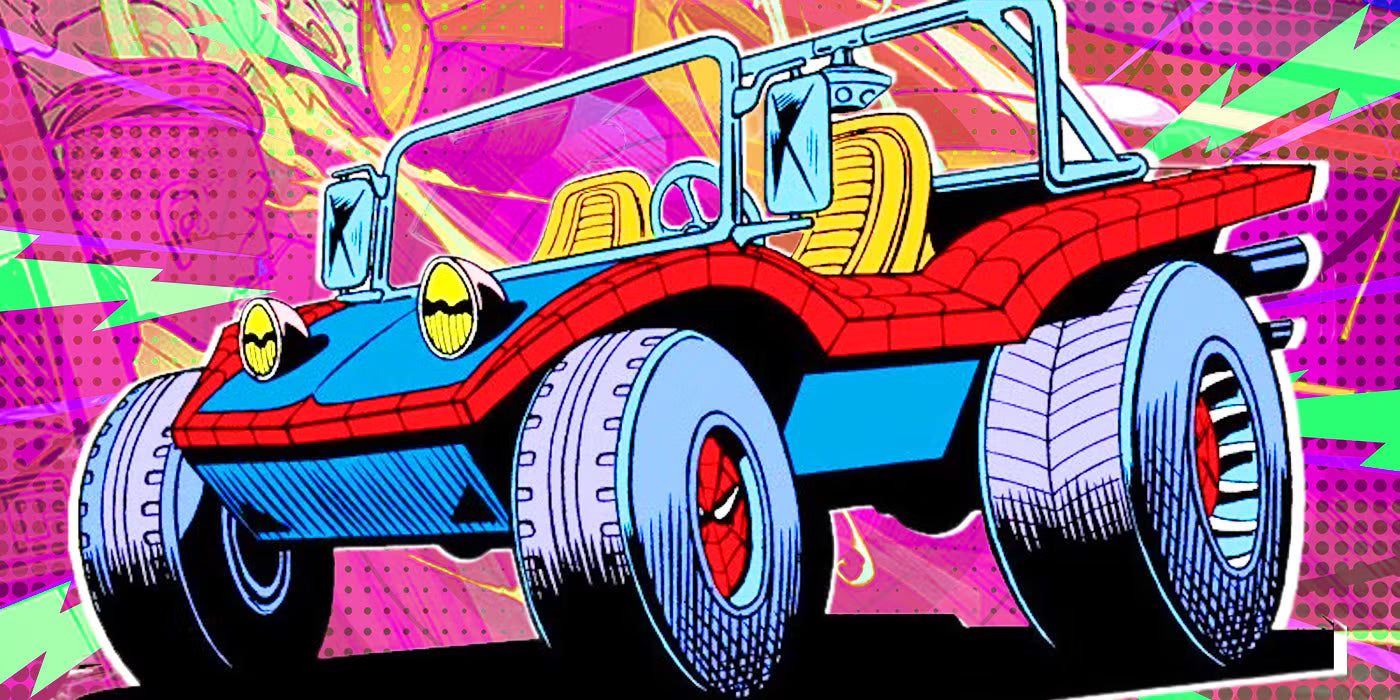
Born of an advertising deal rather than any real need of the web-slinger's, the Spider-Mobile is that red and blue convertible Peter agrees to drive for a fee. It became a running gag, then a wreck fished out of the Hudson, and it now enjoys the status of a kitsch icon. We retrace its journey below.
The origins of an unlikely project
Among the many gadgets and unusual objects that punctuate the story of Peter Parker, there is one vehicle that left its mark, sometimes for good reasons… sometimes for bad ones: the Spider-Mobile. First appearing in the comics of the 1970s, this colourful car was meant to give the hero a new commercial and marketing dimension.
In reality, this project did not come from Peter Parker himself but from the editorial demands of the day: Marvel wanted to ride the popularity of superheroes and sell toys and merchandise more easily. The result: Spider-Man, who has never been a fan of driving (and who spends most of his time swinging from building to building), found himself behind the wheel of a kitsch-looking red and blue convertible.
The concept jarred straight away. Plenty of fans wondered: 'Why does Spider-Man need a car when he can cross Manhattan faster than any taxi?'. That contradiction turned the Spider-Mobile into a cult object, but also into a symbol of the editorial absurdity that could sometimes creep into the comics.
And yet, behind that ridiculous side hides a genuine pop icon. Today the Spider-Mobile is seen as a cult part of Spidey's mythology, on a par with certain emblematic costumes or memorable gadgets. It has even been brought back in several recent story arcs and video games, confirming its status as an essential object, as mocked as it is loved.
To dive back into the web-slinger's other surprising inventions, you can explore our pillar page on the Spider-Man films where some of those references appear, or browse our collection of Spider-Man figures which sometimes feature this car quite unlike any other.
A colourful design and improbable gadgets
True to the exuberant pop spirit of the 1970s, the Spider-Mobile sports a red and blue design taken straight from Spider-Man's costume. A convertible, fitted with artificial web-shooter nets and even able to climb certain walls in the comics, it was meant to be both cool for readers and 'bankable' for the toy shelves.
Among its features you would find:

- A mechanical web-shooter built in, meant to mimic the hero's powers.
- Tyres able to grip unusual surfaces, sometimes shown as capable of climbing walls.
- A customised cockpit, designed to echo the visual world of the comics.

These innovations were more symbolic than credible, though. Spider-Man, used to his freedom in the air, often looked clumsy behind the wheel. In some stories Peter himself pokes fun at how ridiculous it is to drive a car through New York traffic, stuck in a jam like any other citizen.
That contrast between the iconic image of the superhero and the down-to-earth side of a plain car is exactly what made the Spider-Mobile a cult item. It embodies the border between marketing logic and narrative consistency, which still fascinates fans and collectors today.

If you want to take this nod to Spidey's history further, explore our Spider-Man mugs which pick up the colourful designs of the comics, or our selection of Spider-Man cases for smartphones: perfect for keeping a vintage, pop-culture touch in your day-to-day.
The Spider-Mobile in the comics: between ridicule and nostalgia
The introduction of the Spider-Mobile in 1974, in The Amazing Spider-Man #130, struck readers as completely off-beat. In the story it is not Peter or his practical sense that justifies the vehicle's existence, but a marketing operation run by an advertising firm keen to promote a brand of eco-friendly cars. Peter, who needed the money, agrees to take part in the project and drive this strange 'sponsored' car.
The Spider-Mobile quickly becomes a running gag in the comics. Spider-Man himself ends up embarrassed by it, not least when he gets stuck in New York traffic or admits he cannot really drive. It is eventually abandoned and found… at the bottom of the Hudson River!
Despite that 'ridiculous gadget' side, writers have sometimes managed to rehabilitate it. In more recent stories the Spider-Mobile returns as a meta wink, a nostalgic object that amuses fans while enriching the web-slinger's folklore. In the video game Spider-Man: Miles Morales, for example, it is mentioned as a comic relic of the past.
That blend of tongue-in-cheek humour and passion makes the Spider-Mobile a genuine collector's piece for fans of the universe. Like certain retro figures or pieces of merchandise, it carries that 'kitsch' charm you love to show off in a collection. That is why our Spider-Man pyjamas and our Spider-Man posters are perfect for recreating that colourful vintage atmosphere at home.
The Spider-Mobile, from object of mockery to cult icon
Over time, the Spider-Mobile has outgrown its status as a simple marketing gadget to become a genuine pop-culture icon. You will find it in 1970s toys, in collector's figures, but also in modern versions such as Lego Spider-Man sets or exclusive goodies. It is now one of those 'off-beat' elements that make the web-slinger's universe so rich.
Plenty of fans love owning a miniature model of the Spider-Mobile, just as they do figures of Venom, the Green Goblin or Iron Man. For merchandise enthusiasts it is an essential nostalgic piece, a symbol of the sometimes absurd but always endearing side of Marvel comics. That is exactly what you will find in our Spider-Man toys and in our Lego Spider-Man sets which keep that tradition alive.

From a storytelling point of view, the Spider-Mobile also mirrors Marvel's particular tone at the time: a mix of self-mockery and a wish to humanise its heroes. Unlike Batman, whose Batmobile is a symbol of power, the Spider-Mobile is deliberately imperfect and clumsy — just like Peter Parker. It embodies the difference in tone between the two universes. If you want to dig into that comparison, you can read our pillar page on the Spider-Man films where that approach shows up on screen too.
Even today the Spider-Mobile keeps turning up as a humorous wink in certain story arcs or adaptations. It is the perfect example of how even secondary elements help build the Spider-Man legend. If the subject intrigues you, you can explore our story-arc analyses such as Spider-Man: Life Story, where the evolution of Peter's symbols and accessories plays a major role.

