
14-Day Money-Back Guarantee
0
The short answer
The threat comes from proximity, not brute force: Norman Osborn moves inside the web-slinger’s inner circle, knows who hides behind the mask, and strikes at the people he loves. Gwen Stacy’s death remains the deepest scar of all. Below, the detail of that mental war.
Contents
A personal enemy, not just a villainThe murder of Gwen Stacy: the ultimate traumaBoundless madness, sharpened by extreme intelligenceA dark mirror of Peter ParkerA threat that never truly diesConclusion: Spider-Man’s ultimate nightmareThe Green Goblin on screen: a masterful performanceA mental war as much as a physical one
Of all Spider-Man’s iconic enemies, none embodies evil as deeply as the Green Goblin. Behind that terrifying mask hides Norman Osborn, a brilliant, powerful man… and a completely unstable one. Spider-Man has faced criminals, mutants and monsters, but the Green Goblin is the only one who has broken Peter Parker psychologically.
A personal enemy, not just a villain
What makes the Green Goblin unique is that he is not simply a masked villain. He is the father of Harry Osborn, Peter’s best friend, and a man Peter once looked up to. Their bond is intimate, complex, tragic. When Norman becomes the Goblin, Peter is no longer fighting a stranger: he is facing a face he knows, a man who has betrayed his own humanity. You will find that same thread in Go Down Swinging: the Red Goblin, the arc where Norman Osborn merges with Carnage.
A familiar face
Norman Osborn is the father of Harry, Peter’s best friend: facing the Goblin, Peter is facing a man he once admired.
The murder of Gwen Stacy: the ultimate trauma
In the comics, it is the Green Goblin who brings about the death of Gwen Stacy from the top of a bridge. That tragic moment is one of the darkest turning points in Spider-Man’s history. It is not simply a loss, but a personal failure for Peter, who could not save the woman he loved. The Goblin does not merely attack physically, he destroys from the inside.
A personal failure
The Green Goblin throws Gwen Stacy from the top of a bridge: Peter could not save the woman he loved.
Boundless madness, sharpened by extreme intelligence
Norman Osborn is not just a madman. He is a scientific genius, a formidable strategist and an influential industrialist. His madness does not make him weak, it makes him unpredictable. He strikes where nobody expects it. He knows that Peter is Spider-Man. He knows his weak points. And he exploits them with cruelty.
An unpredictable madman
A scientific genius and a strategist, Norman knows that Peter is Spider-Man, knows his weak points and exploits them with cruelty.
A dark mirror of Peter Parker
Peter and Norman share a great deal: an extraordinary intelligence, a sense of responsibility, a double life. But where Peter chooses good, Norman embraces power in order to dominate. The Green Goblin represents what Spider-Man could have become had he given in to anger and pride. In that sense, he is Peter’s evil reflection.
The evil reflection
Same intelligence, same double life: where Peter chooses good, Norman embraces power in order to dominate.
A threat that never truly dies
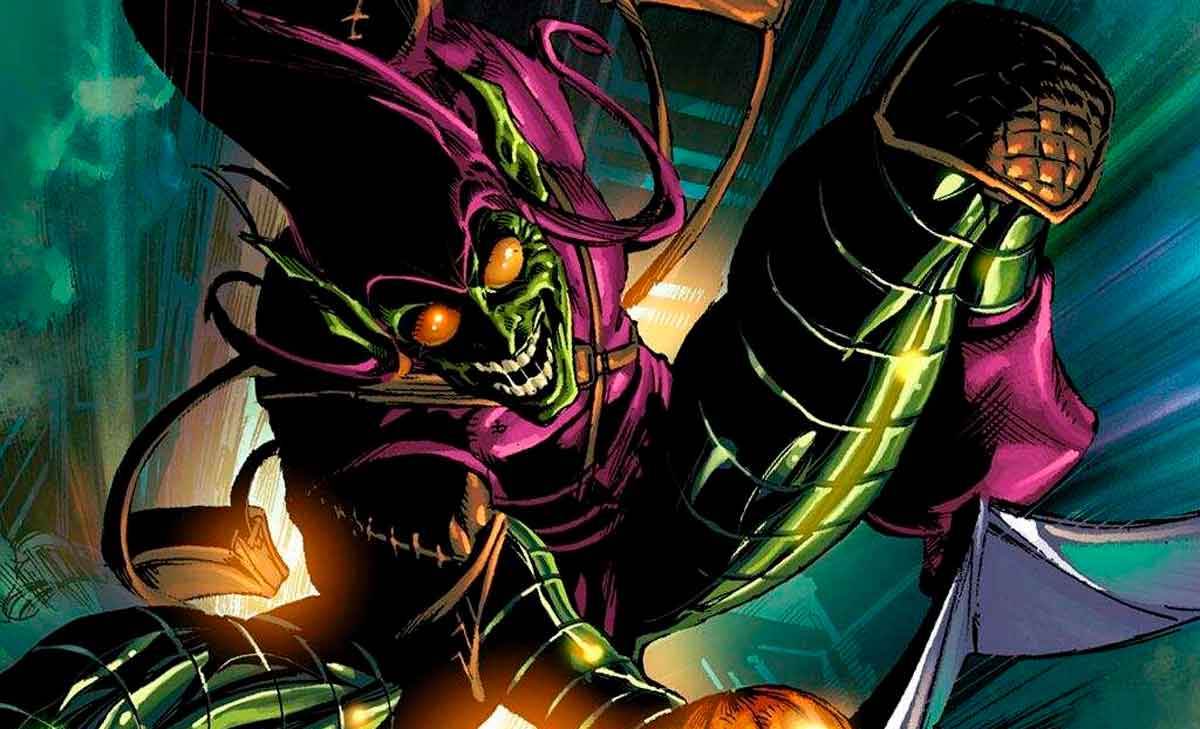
Whether in the comics, the films or the video games, the Green Goblin always comes back. Even when you think he is dead, he reappears, crueller than ever. His chilling laugh, his glider, his pumpkin bombs… everything about the character is designed to haunt Peter, again and again. He is not just an opponent. He is an obsession, a living scar.
He always comes back
Even when you think he is dead, the Goblin returns with his chilling laugh, his glider and his pumpkin bombs.
Conclusion: Spider-Man’s ultimate nightmare
The Green Goblin is far more than an enemy. He is terror made flesh in the world of Spider-Man. Because he knows Peter Parker better than anyone, because he destroyed his life, and because he keeps haunting him at every stage of his journey. He is, and will remain, Spider-Man’s worst nightmare.
🧠 To discover Peter’s other iconic enemies, do not miss our complete guide to the villains of Spider-Man.
🎭 And if the Goblin fascinates you, explore our Spider-Man figures collection or our posters inspired by the greatest villains.
Terror made flesh
He knows Peter better than anyone, destroyed his life and keeps haunting him at every stage.
The Green Goblin on screen: a masterful performance
In the film Spider-Man (2002) by Sam Raimi, Willem Dafoe plays a chilling Norman Osborn. He manages to convey the character’s duality: respected businessman and tortured monster. His devilish laugh, his double-edged dialogue and his wild stares make him one of the finest villains ever seen in a Marvel film. His return in No Way Home proved just how much of a cult enemy he remains.
Willem Dafoe, chilling
In Spider-Man (2002) by Sam Raimi, Willem Dafoe conveys the duality of Norman Osborn; his return in No Way Home confirms his cult status.
A mental war as much as a physical one
The Green Goblin does not take on Spider-Man with weapons and a glider alone. He uses psychological manipulation, blackmail and threats against the people closest to him. He puts Peter in front of impossible choices, plays with his emotions and tries to bring him down morally rather than physically. It is that invisible war that makes him so formidable.
An invisible war
Manipulation, blackmail, threats against loved ones: the Goblin sets out to bring Peter down morally, not physically.
An enemy who changes, but stays eternal
In some versions, it is Harry Osborn who takes on the role of the Green Goblin, succeeding his father. That adds an even more tragic dimension: Peter is forced to fight his own best friend. The costume changes, the bombs evolve, but the pain stays. The Green Goblin is a generational curse for Spider-Man.
A generational curse
When Harry Osborn succeeds his father, Peter is forced to fight his own best friend.
His legacy in the Spider-Verse
The Goblin exists in several variants across the multiverse. In Into the Spider-Verse, he takes on a monstrous, almost bestial form. In other realities, he merges with other technologies or symbiotes. Whatever the universe, he always represents an absolute threat. He is the symbol of chaos, madness and suffering in every version of the spider’s world.
All in all, the Green Goblin is more than a simple villain. He is living proof that evil can come from the people we love. He reminds Peter Parker that sometimes the hardest battle is not fought in the air… but in the heart.
A multiversal threat
In Into the Spider-Verse, the Goblin takes on a monstrous form; in every universe, he remains an absolute threat.

